
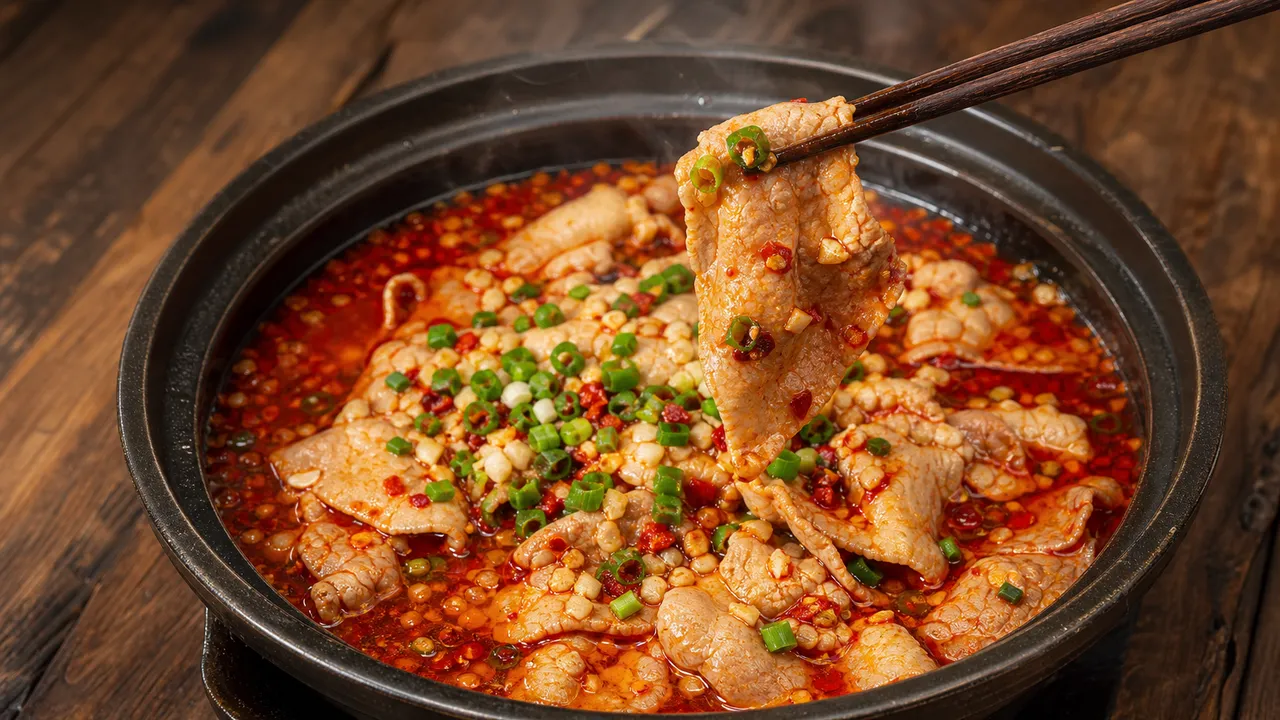
Sichuan-Style Shuizhu Rou Pian: Authentic Mala Pork Slices
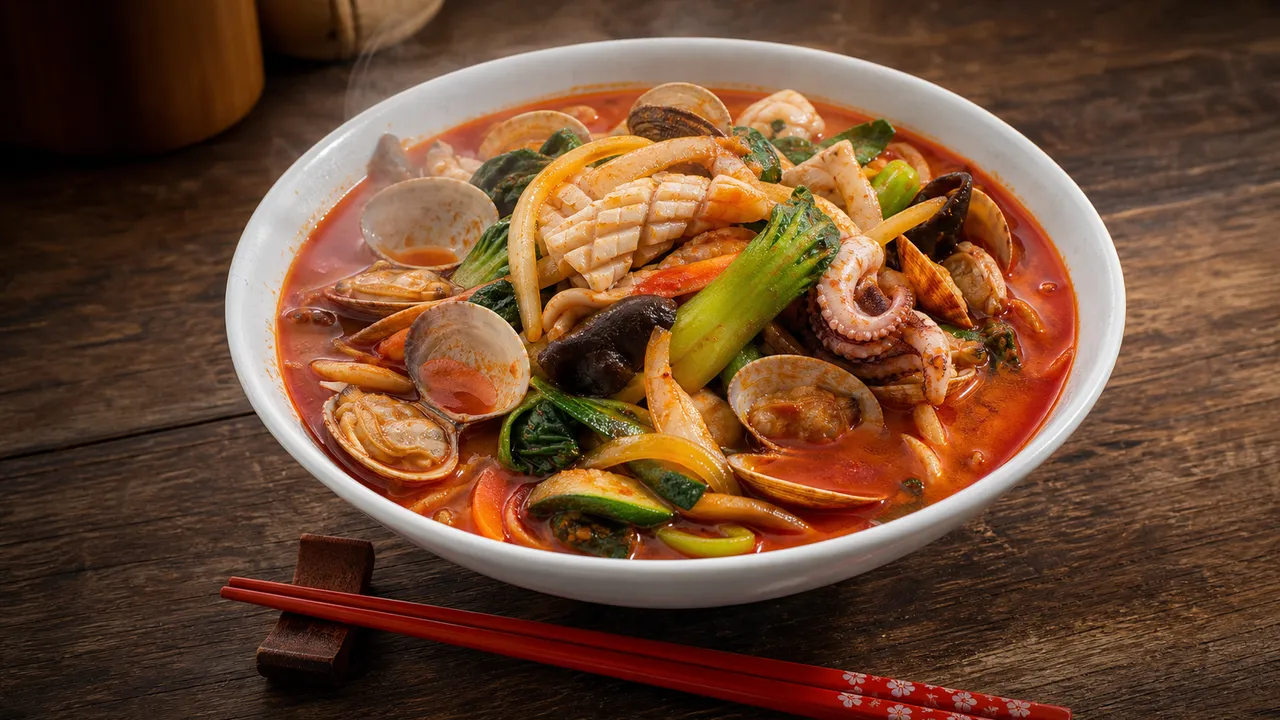
* 이미지는 AI가 생성한 참고 이미지로, 실제 조리 결과물과 다를 수 있습니다.
This is an authentic Sichuan-style Shuizhu Rou Pian recipe featuring tender pork tenderloin and crisp stem lettuce (gung-chae) bathed in a spicy and numbing mala sauce.
📝 Editor's Notes
Today's recipe is an authentic Sichuan-style Shuizhu Rou Pian, featuring an exquisite harmony of tender pork tenderloin and crisp stem lettuce.
This dish, served submerged in spicy and numbing mala sauce, might seem complex in preparation and cooking, but meticulous care will yield a profoundly delicious flavor.
The key to this dish is ensuring the pork tenderloin is cooked to tenderness and preserving the unique crunch of the stem lettuce.
This exotic Shuizhu Rou Pian will transform any ordinary dinner into a special occasion, perfect for families to gather and enjoy.
We hope you fully experience the distinct charm of Sichuan cuisine.
🛒 Ingredient Tips
The key ingredients that determine the taste of Shuizhu Rou Pian are pork tenderloin, stem lettuce (gung-chae / 궁채), and Sichuan peppercorns.
For pork tenderloin, choose fresh meat that has a vibrant pink color and a glossy sheen to ensure a tender texture.
Avoid meat that has accumulated blood or appears dull in color.
If you're using dried stem lettuce (gung-chae / 궁채), it's important to rehydrate it thoroughly to restore its crisp texture; if using fresh, wash it cleanly.
For the numbing sensation of mala, select Sichuan peppercorns that are fragrant and clean to enhance the flavor.
If they are difficult to find locally, I recommend looking for high-quality products like 'Inchun Sichuan peppercorns (인차 화자오)' at online Chinese grocery stores.
Good ingredients make good food.
🔄 Substitution Guide
While the core ingredients of this recipe—pork tenderloin, stem lettuce (gung-chae / 궁채), and Sichuan peppercorns—are difficult to substitute, there are some alternatives if necessary.
For pork tenderloin, you can use tender pork loin or chicken tenderloin, though the unique tenderness and meaty flavor of pork tenderloin might be diminished.
Stem lettuce (gung-chae / 궁채) offers a delightful crunch; if you're looking for a similar texture, try rehydrated wood ear mushrooms or thinly sliced boiled lotus root.
However, the bitter and fresh taste unique to gung-chae will be absent.
If Sichuan peppercorns are hard to find, you can use regular sansho pepper (Japanese peppercorns) or combine Cheongyang chili peppers (Korean green chili peppers) and bird's eye chilies to achieve spiciness.
Be aware that the characteristic numbing sensation (mala) of Sichuan cuisine will be weaker.
🥘 Ingredients
👨🍳 Cooking Points
There are a few important cooking points to make delicious Shuizhu Rou Pian.
First, pork tenderloin can easily become tough if cooked for too long, so it's crucial to blanch it quickly until the pink color just disappears to maintain its tenderness. This is key!
Second, stem lettuce (gung-chae / 궁채) is a core ingredient responsible for the unique crisp and crunchy texture of Shuizhu Rou Pian, so it's best not to substitute it with other vegetables.
Without this texture, it's hard to call it Shuizhu Rou Pian.
Third, to bring out the numbing sensation (mala) of the Sichuan peppercorns, stir-fry them almost like deep-frying in oil over low heat until fragrant, then chop them finely for the sauce to enjoy a deeper flavor.
If you remember these three points, you can make delicious Shuizhu Rou Pian without fail.
👨🍳 Directions
Slice 1.1 lbs (500g) of pork tenderloin thinly, about 0.2 inches (0.5 cm) thick.
Season the sliced pork tenderloin with 0.18 oz (5g) salt, 0.18 oz (5g) black pepper, 1 tbsp Haichuan Light Soy Sauce (해천간장), and 1 tbsp Fenggang Jiu (봉강주) (Shaoxing wine). Mix well by hand to marinate.
Separate the whites from 2 eggs. Add 2 tbsp potato starch to the egg whites and mix well to create an egg starch slurry.
Pour the egg starch slurry over the marinated pork, mixing well to coat all the meat. Then, add 1 tbsp cooking oil and mix again. Refrigerate briefly.
Slice 5 stalks of stem lettuce (gung-chae / 궁채), 5 stalks of scallions, and 5 stalks of water celery (minari / 미나리) into bite-sized pieces suitable for eating with the pork. Rinse thoroughly with water.
Finely mince a thumb-sized piece of ginger (to avoid noticeable pieces when eating) and prepare about 15 cloves of minced garlic. (Reserve some for topping).
In a wok, add 0.35 oz (10g) Inchun Sichuan peppercorns (인차 화자오) and 1.23 oz (35g) Zhaotian dried chili peppers (조천 건고추). Pour in a generous amount of canola oil and stir-fry over low heat until almost deep-fried. Once the chili peppers are crisp, strain them with a sieve to remove the chili peppers and Sichuan peppercorns from the oil.
Finely chop the fried chili peppers and Sichuan peppercorns with a knife to make "Dou Gu Gochu" (chopped chili-peppercorn mix).
Add more canola oil to the same wok. Sauté minced ginger and minced garlic (1:1 ratio) until fragrant, then add 1.06 oz (30g) Pixian Doubanjiang (비현 두반장) and stir-fry to create a red chili oil (Hong You).
Once the oil turns red, add 3 1/3 cups (800ml) water, 1 tsp salt, 1 tsp Ajinomoto MSG (아지노모토 미원), 0.1 oz (3g) sugar, and 0.1 oz (3g) black pepper. Bring to a boil.
Gradually add 2-3 tbsp starch slurry, adjusting the consistency while considering the difference in thickness when hot versus cool.
Once the sauce boils, add the refrigerated pork tenderloin. Cook until the pink color disappears, then immediately turn off the heat to stop the cooking process.
In a serving bowl, first arrange the prepared stem lettuce (gung-chae / 궁채), scallions, water celery (minari / 미나리), 30 pieces of Sichuan peppercorns, 15 pieces of dried chili peppers, and a pinch of salt.
Place the cooked pork tenderloin and sauce over the vegetables. Then, evenly sprinkle the prepared Dou Gu Gochu and the reserved minced garlic for topping.
Heat fresh canola oil in a pan until it starts smoking or reaches its smoke point. Carefully pour the hot oil over the toppings to finish the dish.
Garnish with minced scallions for topping, as desired.
💡 Tips
Pork tenderloin can become tough if overcooked, so blanch it quickly until the pink color just disappears to maintain its tender texture.
Stem lettuce (gung-chae / 궁채) is a crucial ingredient that determines the texture of Shuizhu Rou Pian, so be sure to use it and do not substitute it with other vegetables like scallions or water celery (minari). (However, scallions and water celery can be used as substitutes for young garlic sprouts or Chinese celery.)
To experience the rich aroma and numbing sensation (mala) of Sichuan peppercorns, use a good quality product. If difficult to find locally, try searching online Chinese grocery stores.
Shuizhu Rou Pian is a dish that uses ample oil to enhance the flavor of the ingredients. Although the generous amount of oil might seem greasy after cooking, you can fully enjoy the flavor by picking up the meat and vegetables together, letting excess oil drip off slightly, and eating it with rice.
📦 Storage & Reuse
Shuizhu Rou Pian is best enjoyed warm immediately after preparation.
Store any leftovers in the refrigerator and consume within 2-3 days.
Freezing is not recommended as it may alter the sauce's consistency and the vegetables' texture.
However, you can freeze the sauce separately and cook fresh meat and vegetables to serve with it later.
To reheat refrigerated Shuizhu Rou Pian, gently warm it in a pot over low heat or steam it to maintain its moisture, rather than using a microwave.
Adding a little water can also prevent the sauce from reducing too much.
🥢 Who This Is For
This Shuizhu Rou Pian is highly recommended for those who love spicy and numbing flavors.
It's especially great to enjoy with family or friends on a rainy day or when you're craving something spicy to relieve stress.
It makes an excellent side dish for rice and pairs wonderfully with a cold beer or Chinese baijiu.
For accompanying dishes, consider preparing plain egg fried rice or a soft tofu dish to balance the intense flavors.
It will make for a rich and satisfying meal.
🔥 Nutrition Info
One serving of Shuizhu Rou Pian, based on its ingredients, is rich in protein and contains a fair amount of fat.
Using 1.1 lbs (500g) of pork tenderloin as a baseline, you can expect approximately 350-450 kcal per serving.
It's estimated to contain about 30-40g of protein, 20-30g of fat, and 15-25g of carbohydrates (excluding rice).
Pork tenderloin, in particular, is a low-fat, high-protein food, making it good for nutritional replenishment after exercise.
However, due to the cooking oil and Pixian Doubanjiang (비현 두반장) in the mala sauce, the fat content can be high.
If you need to manage calories, you can adjust the amount of sauce or reduce the amount of oil used.
With plenty of vegetables, it's a balanced meal that also provides vitamins and dietary fiber.
💬 Frequently Asked Questions
- Q. What ingredients do I need for Sichuan-Style Shuizhu Rou Pian: Authentic Mala Pork Slices?
- Main ingredients include Pork tenderloin, Salt, Black pepper, Haichuan Light Soy Sauce (해천간장), Fenggang Jiu (봉강주) (Shaoxing wine). The key ingredients that determine the taste of Shuizhu Rou Pian are pork tenderloin, stem lettuce (gung-chae / 궁채), and Sichuan peppercorns. For pork tenderloin, choose fresh meat that has a vibrant pink color and a glossy sheen to ensure a tender texture. Avoid meat that has accumulated blood or appears dull in color. If you're using dried stem lettuce (gung-chae / 궁채), it's important to rehydrate it thoroughly to restore its crisp texture; if using fresh, wash it cleanly. For the numbing sensation of mala, select Sichuan peppercorns that are fragrant and clean to enhance the flavor. If they are difficult to find locally, I recommend looking for high-quality products like 'Inchun Sichuan peppercorns (인차 화자오)' at online Chinese grocery stores. Good ingredients make good food.
- Q. What are the key tips for making Sichuan-Style Shuizhu Rou Pian: Authentic Mala Pork Slices?
- There are a few important cooking points to make delicious Shuizhu Rou Pian. First, pork tenderloin can easily become tough if cooked for too long, so it's crucial to blanch it quickly until the pink color just disappears to maintain its tenderness. This is key! Second, stem lettuce (gung-chae / 궁채) is a core ingredient responsible for the unique crisp and crunchy texture of Shuizhu Rou Pian, so it's best not to substitute it with other vegetables. Without this texture, it's hard to call it Shuizhu Rou Pian. Third, to bring out the numbing sensation (mala) of the Sichuan peppercorns, stir-fry them almost like deep-frying in oil over low heat until fragrant, then chop them finely for the sauce to enjoy a deeper flavor. If you remember these three points, you can make delicious Shuizhu Rou Pian without fail.
- Q. How should I store leftover Sichuan-Style Shuizhu Rou Pian: Authentic Mala Pork Slices?
- Shuizhu Rou Pian is best enjoyed warm immediately after preparation. Store any leftovers in the refrigerator and consume within 2-3 days. Freezing is not recommended as it may alter the sauce's consistency and the vegetables' texture. However, you can freeze the sauce separately and cook fresh meat and vegetables to serve with it later. To reheat refrigerated Shuizhu Rou Pian, gently warm it in a pot over low heat or steam it to maintain its moisture, rather than using a microwave. Adding a little water can also prevent the sauce from reducing too much.
- Q. How many calories are in Sichuan-Style Shuizhu Rou Pian: Authentic Mala Pork Slices?
- One serving of Shuizhu Rou Pian, based on its ingredients, is rich in protein and contains a fair amount of fat. Using 1.1 lbs (500g) of pork tenderloin as a baseline, you can expect approximately 350-450 kcal per serving. It's estimated to contain about 30-40g of protein, 20-30g of fat, and 15-25g of carbohydrates (excluding rice). Pork tenderloin, in particular, is a low-fat, high-protein food, making it good for nutritional replenishment after exercise. However, due to the cooking oil and Pixian Doubanjiang (비현 두반장) in the mala sauce, the fat content can be high. If you need to manage calories, you can adjust the amount of sauce or reduce the amount of oil used. With plenty of vegetables, it's a balanced meal that also provides vitamins and dietary fiber.
- Q. Can I substitute ingredients in Sichuan-Style Shuizhu Rou Pian: Authentic Mala Pork Slices?
- While the core ingredients of this recipe—pork tenderloin, stem lettuce (gung-chae / 궁채), and Sichuan peppercorns—are difficult to substitute, there are some alternatives if necessary. For pork tenderloin, you can use tender pork loin or chicken tenderloin, though the unique tenderness and meaty flavor of pork tenderloin might be diminished. Stem lettuce (gung-chae / 궁채) offers a delightful crunch; if you're looking for a similar texture, try rehydrated wood ear mushrooms or thinly sliced boiled lotus root. However, the bitter and fresh taste unique to gung-chae will be absent. If Sichuan peppercorns are hard to find, you can use regular sansho pepper (Japanese peppercorns) or combine Cheongyang chili peppers (Korean green chili peppers) and bird's eye chilies to achieve spiciness. Be aware that the characteristic numbing sensation (mala) of Sichuan cuisine will be weaker.
💬 Comments
No comments yet. Be the first to comment!