
The Secret to Deep-Flavored Seafood Jjamppong: Achieve Resta
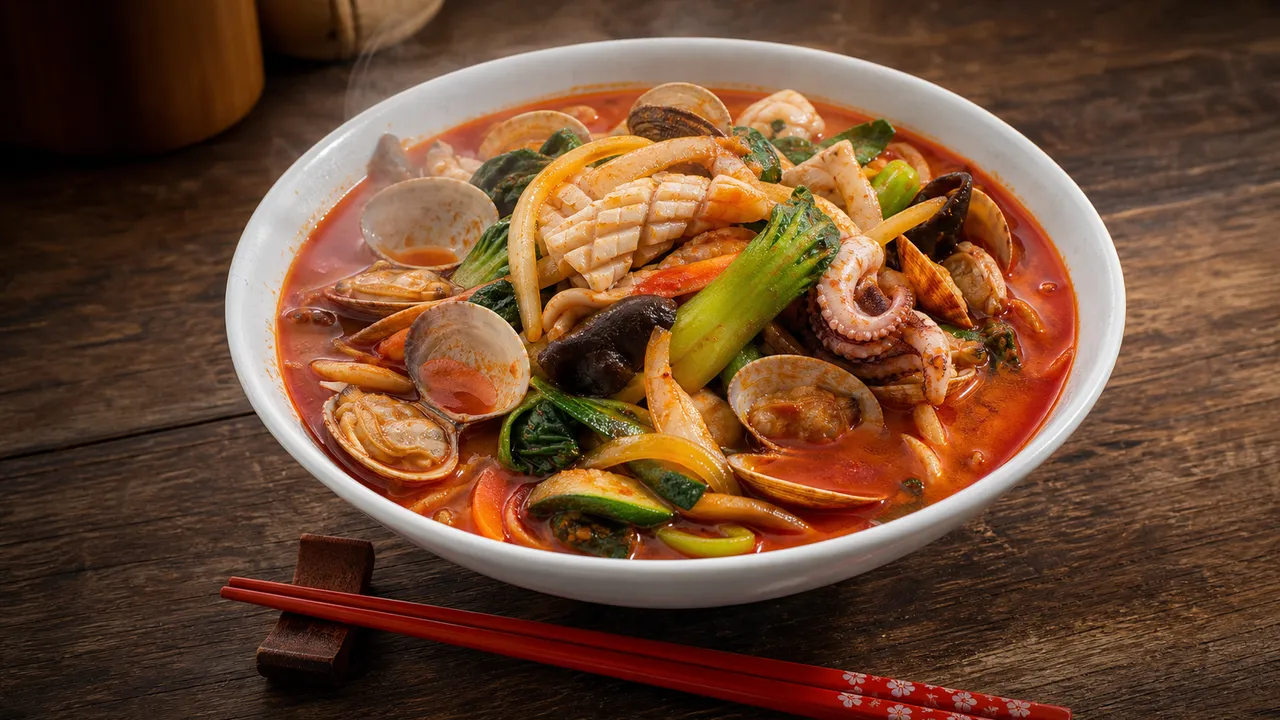
* 이미지는 AI가 생성한 참고 이미지로, 실제 조리 결과물과 다를 수 있습니다.
This recipe for seafood jjamppong features a generous amount of squid and Manila clams, emphasizing the proper stir-frying order and the role of each ingredient to create an authentic spicy and refreshing jjamppong right in your own kitchen.
📝 Editor's Notes
Today's recipe introduces seafood jjamppong, a dish where you can enjoy both the refreshing coolness and deep flavor of seafood with plenty of squid and Manila clams.
By simply following the stir-frying order, you can easily make a spicy and refreshing jjamppong at home in about 30 minutes, rivalling those found in Chinese restaurants.
It's especially perfect on a chilly day when you crave a warm soup, or as a special meal for the whole family to enjoy together.
If you like it spicier, feel free to add more Cheongyang chili (청양고추) to your taste.
It's a jjamppong recipe that anyone can easily follow, but the taste is far from ordinary.
🛒 Ingredient Tips
The freshness of squid and Manila clams, key ingredients for this seafood jjamppong, dictates the taste.
For squid, choose those with a transparent and firm body, clear eyes, and intact ink sac.
Note that you can easily peel off the skin by gently rubbing it with a bit of salt.
For Manila clams, fresh ones are well-purged, with unbroken and tightly closed shells.
After purchase, soaking them in saltwater in a dark place will help them purge better.
For pork, using thinly sliced bulgogi (불고기) or shabu-shabu style cuts will reduce cooking time and provide a tender texture.
🔄 Substitution Guide
You can use shrimp or other seafood instead of squid.
Shrimp will add a softer texture and sweeter flavor, while mussels or blue crab will make the broth even more refreshing.
If Manila clams are unavailable, other types of clams like short-neck clams or surf clams can be used as a substitute.
Adjust the soaking time for purging and cooking time depending on the type of clam.
Beef or chicken can be used instead of pork, but note that pork's unique savory flavor blends particularly well with jjamppong broth.
For vegetables, feel free to use various vegetables you have at home (such as bean sprouts, different types of mushrooms, or chives), and spinach or cabbage can be used instead of bok choy.
🥘 Ingredients
👨🍳 Cooking Points
The most crucial cooking points in this jjamppong recipe are the 'stir-frying order' and 'stir-frying the gochugaru (고춧가루)'.
First, stir-frying green onion, garlic, and pork first is essential to fully develop their aromatics, which creates a deep flavor base.
This is one of the secrets to achieving the 'wok hei' flavor in Chinese cuisine.
Second, when adding and stir-frying gochugaru, it's key to do it quickly over high heat to prevent burning.
Gochugaru develops its aroma and vibrant color when it meets oil, but stir-frying it for too long can result in a bitter taste.
Therefore, stir-fry it rapidly for 10-20 seconds before immediately adding the squid and moving to the next step.
Third, add the Manila clams last and only cook them until they open their shells.
Remember this point as overcooking can make them tough and cloud the broth.
👨🍳 Directions
Slice the Korean zucchini in half lengthwise, then thinly slice it. Thinly slice the button mushrooms as well.
Trim the root end of the Napa cabbage heart and cut it into bite-sized pieces. Trim the root end of the bok choy and separate the leaves.
Finely chop some of the white and green parts of 1 stalk of green onion for green onion oil. Cut the remaining green onion into long strips for stir-frying.
Thinly slice the onion. Roughly crush the 8 cloves of garlic.
Cut the squid in half, remove the ears and eyes, and cut the tentacles in half into bite-sized pieces. Cut the body in half, clean it carefully without bursting the internal organs, then wash it in clean water. Rub the body gently with salt to peel off the skin. Score the back of the squid body with fine cross-hatch cuts.
Slice the pork thinly. Trim the hard ends of the rehydrated wood ear mushrooms with scissors.
Heat a generous amount of cooking oil in a preheated pan. Add the finely chopped green onion, crushed garlic, and thinly sliced pork, and stir-fry first.
Add all remaining vegetables (Korean zucchini, button mushrooms, Napa cabbage heart, onion, long-sliced green onion, wood ear mushrooms) except bok choy. Add salt to taste and stir-fry well until softened.
Add 1 tbsp of gochugaru (고춧가루) and quickly stir-fry over high heat to prevent burning. Then, add the prepared squid and continue stir-frying.
Pour in 2.5 cups (600ml) of water and bring to a rolling boil.
Add the bok choy, 2 tbsp of Beksul Premium Oyster Sauce, and 1 tbsp of chicken stock powder. Mix well and bring to a boil.
Add 21 oz (600g) of Manila clams and cook until they open their shells.
Adjust seasoning by adding spicy Cheongyang chili (청양고추) or black pepper, according to personal preference.
In a separate pot, prepare boiling water and cook 3 servings of Chinese-style noodles for about 5 minutes.
Rinse the cooked noodles in cold water, drain them well, and place them in a bowl. Ladle a generous amount of the finished seafood jjamppong broth over the noodles.
💡 Tips
When stir-frying gochugaru (고춧가루), it develops more aroma and deep flavor when it meets the oil. However, if stir-fried for too long, it can become bitter, so quickly move to the next step over high heat.
The squid skin can be easily peeled by gently rubbing it with salt.
Jjamppong is not simply about adding ingredients and boiling them; it's crucial to understand the stir-frying order and the role of each ingredient to achieve a balanced flavor.
You can adjust the taste by adding spicy Cheongyang chili (청양고추), black pepper, or MSG according to personal preference.
📦 Storage & Reuse
It's best to store the cooked jjamppong noodles separately.
The broth and solids can be stored in an airtight container in the refrigerator for up to 2-3 days.
Since noodles can get soggy over time, it's recommended to cook them just before serving and add them to the broth.
While freezing is possible, it's not recommended as seafood can become tough.
Leftover broth can be enjoyed the next day with rice or even repurposed into a delicious seafood soft tofu stew.
When reheating, warm it gently over medium heat, and adjust any missing seasoning with salt or oyster sauce at the end.
🥢 Who This Is For
This seafood jjamppong is highly recommended for anyone who loves spicy and refreshing soup dishes.
It's especially perfect on a rainy day or a chilly evening when you crave a warm bowl of soup.
It's also a fantastic weekend lunch option for the whole family to enjoy together.
For side dishes, we recommend crispy tangsuyuk (탕수육) or savory gunmandu (군만두) (fried dumplings).
They will help balance the spiciness of the jjamppong while enriching the overall Chinese-style dining experience.
Serving it with refreshing danmuji (단무지) (pickled radish) or pickled onions will make it even more enjoyable.
🔥 Nutrition Info
Based on a 1-serving portion of this seafood jjamppong (including Chinese-style noodles), the estimated calorie count is approximately 600-700 kcal.
You can expect to consume about 30-40g of protein from squid, Manila clams, and pork, about 20-30g of fat from pork and cooking oil, and about 70-80g of carbohydrates from the Chinese-style noodles and vegetables.
Notably, taurine, abundant in seafood, helps with fatigue recovery, and iron found in Manila clams is good for preventing anemia.
Various vegetables provide vitamins and dietary fiber, contributing to a balanced nutritional intake.
However, the sodium content can be high, so it's advisable to moderate your broth consumption.
💬 Frequently Asked Questions
- Q. What ingredients do I need for The Secret to Deep-Flavored Seafood Jjamppong: Achieve Restaurant-Quality Taste by Mastering the Stir-Frying Order?
- Main ingredients include Korean zucchini (애호박), Pork, Button mushrooms, Bok choy, Green onion. The freshness of squid and Manila clams, key ingredients for this seafood jjamppong, dictates the taste. For squid, choose those with a transparent and firm body, clear eyes, and intact ink sac. Note that you can easily peel off the skin by gently rubbing it with a bit of salt. For Manila clams, fresh ones are well-purged, with unbroken and tightly closed shells. After purchase, soaking them in saltwater in a dark place will help them purge better. For pork, using thinly sliced bulgogi (불고기) or shabu-shabu style cuts will reduce cooking time and provide a tender texture.
- Q. What are the key tips for making The Secret to Deep-Flavored Seafood Jjamppong: Achieve Restaurant-Quality Taste by Mastering the Stir-Frying Order?
- The most crucial cooking points in this jjamppong recipe are the 'stir-frying order' and 'stir-frying the gochugaru (고춧가루)'. First, stir-frying green onion, garlic, and pork first is essential to fully develop their aromatics, which creates a deep flavor base. This is one of the secrets to achieving the 'wok hei' flavor in Chinese cuisine. Second, when adding and stir-frying gochugaru, it's key to do it quickly over high heat to prevent burning. Gochugaru develops its aroma and vibrant color when it meets oil, but stir-frying it for too long can result in a bitter taste. Therefore, stir-fry it rapidly for 10-20 seconds before immediately adding the squid and moving to the next step. Third, add the Manila clams last and only cook them until they open their shells. Remember this point as overcooking can make them tough and cloud the broth.
- Q. How should I store leftover The Secret to Deep-Flavored Seafood Jjamppong: Achieve Restaurant-Quality Taste by Mastering the Stir-Frying Order?
- It's best to store the cooked jjamppong noodles separately. The broth and solids can be stored in an airtight container in the refrigerator for up to 2-3 days. Since noodles can get soggy over time, it's recommended to cook them just before serving and add them to the broth. While freezing is possible, it's not recommended as seafood can become tough. Leftover broth can be enjoyed the next day with rice or even repurposed into a delicious seafood soft tofu stew. When reheating, warm it gently over medium heat, and adjust any missing seasoning with salt or oyster sauce at the end.
- Q. How many calories are in The Secret to Deep-Flavored Seafood Jjamppong: Achieve Restaurant-Quality Taste by Mastering the Stir-Frying Order?
- Based on a 1-serving portion of this seafood jjamppong (including Chinese-style noodles), the estimated calorie count is approximately 600-700 kcal. You can expect to consume about 30-40g of protein from squid, Manila clams, and pork, about 20-30g of fat from pork and cooking oil, and about 70-80g of carbohydrates from the Chinese-style noodles and vegetables. Notably, taurine, abundant in seafood, helps with fatigue recovery, and iron found in Manila clams is good for preventing anemia. Various vegetables provide vitamins and dietary fiber, contributing to a balanced nutritional intake. However, the sodium content can be high, so it's advisable to moderate your broth consumption.
- Q. Can I substitute ingredients in The Secret to Deep-Flavored Seafood Jjamppong: Achieve Restaurant-Quality Taste by Mastering the Stir-Frying Order?
- You can use shrimp or other seafood instead of squid. Shrimp will add a softer texture and sweeter flavor, while mussels or blue crab will make the broth even more refreshing. If Manila clams are unavailable, other types of clams like short-neck clams or surf clams can be used as a substitute. Adjust the soaking time for purging and cooking time depending on the type of clam. Beef or chicken can be used instead of pork, but note that pork's unique savory flavor blends particularly well with jjamppong broth. For vegetables, feel free to use various vegetables you have at home (such as bean sprouts, different types of mushrooms, or chives), and spinach or cabbage can be used instead of bok choy.
💬 Comments
No comments yet. Be the first to comment!