
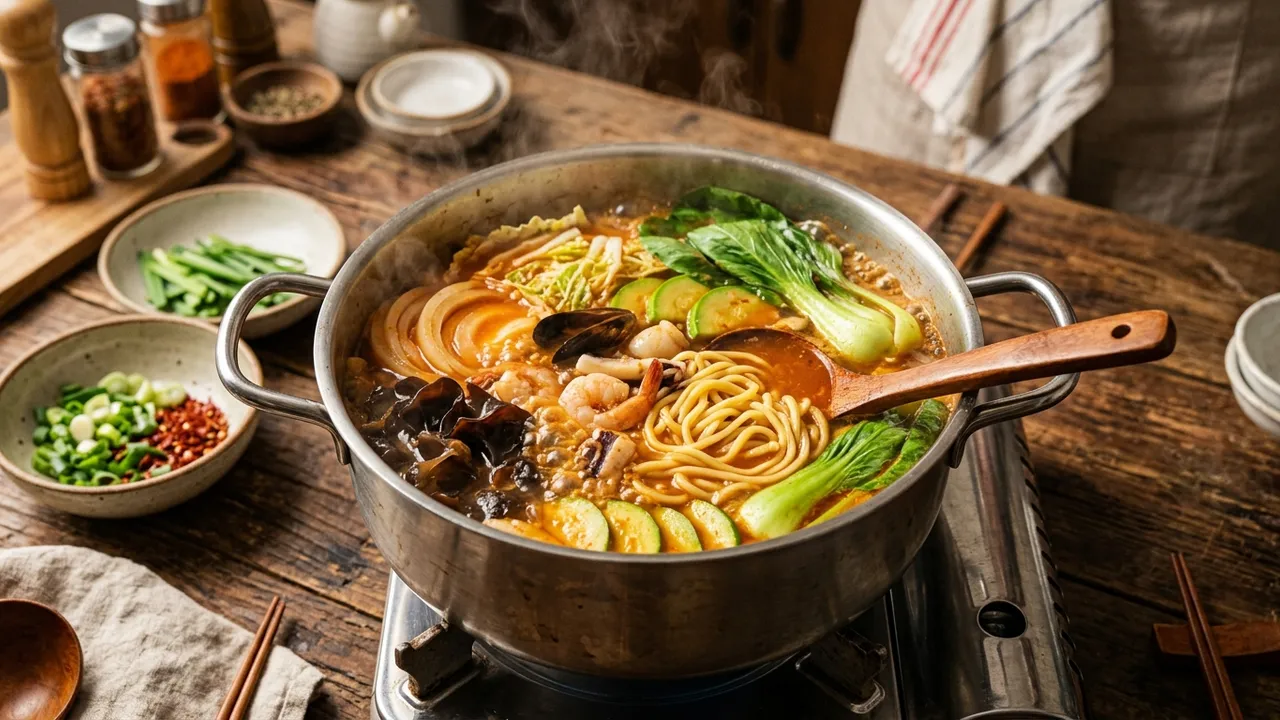
Chef Lee Yeon-bok's Old-fashioned Jjamppong Recipe
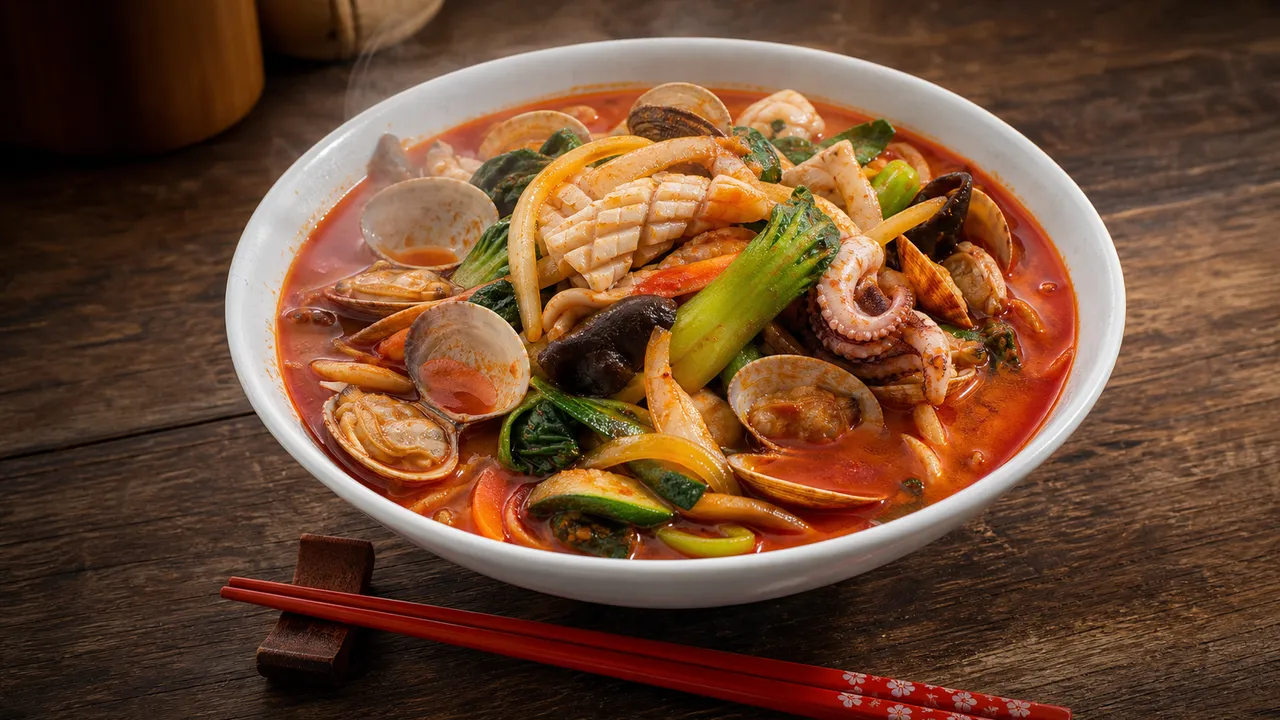
* 이미지는 AI가 생성한 참고 이미지로, 실제 조리 결과물과 다를 수 있습니다.
Chef Lee Yeon-bok's authentic old-fashioned Jjamppong recipe, revealing industry secrets.
📝 Editor's Notes
Chef Lee Yeon-bok's old-fashioned Jjamppong recipe is a precious recipe that even reveals industry secrets, allowing you to enjoy the deep flavors of authentic Chinese cuisine at home.
The combination of various seafood, fresh vegetables, and pork creates a refreshing yet spicy and rich broth that is simply exquisite.
While it involves preparing various ingredients and stir-frying, by following the chef's tips, even beginners can achieve a profound flavor, making it an intermediate-level dish.
It's an excellent dish to enjoy with family on chilly or rainy days, or for special occasions.
🛒 Ingredient Tips
The key ingredients that determine the taste of Jjamppong are fresh seafood, pork, and aromatic vegetables.
For Manila clams and hard-shell clams, it's important to choose those that are well-purged, free from any fishy odor, and plump.
Select shrimp with firm shells and a glossy sheen, and lively small octopus.
For pork, pork shoulder or pork belly is recommended; less fatty cuts will result in a cleaner broth.
Using seasonal produce will add even fresher flavors and nutrients.
Onions, baby napa cabbage, and bok choy should be firm and vibrantly colored.
🔄 Substitution Guide
Most ingredients in this Jjamppong recipe can be substituted.
If you have seafood allergies or difficulty finding specific ingredients, you can use mussels, other types of clams (such as littleneck clams), or squid instead of Manila clams and hard-shell clams to still achieve a refreshing broth flavor.
For small octopus or shrimp, you can use webfoot octopus or cocktail shrimp.
If pork is not preferred, you can substitute it with beef brisket for a richer flavor, or enjoy it as a seafood Jjamppong made solely with seafood.
For vegetables, you can use what you have in your refrigerator, such as cabbage, Korean zucchini, or bean sprouts.
While using substitute ingredients may result in subtle differences in taste and texture, the fundamental flavor of Jjamppong will be maintained, so don't worry.
🥘 Ingredients
👨🍳 Cooking Points
The core cooking points for Chef Lee Yeon-bok's Jjamppong are threefold.
First, stir-fry the pork first to fully develop its flavor, then add soy sauce to infuse a smoky flavor.
This is the secret to adding depth to the broth.
Second, stir-fry the vegetables and gochugaru (고춧가루) with 0.5 cup of water.
Stir-frying gochugaru with oil extracts chili oil, creating Jjamppong's characteristic red color and spicy, pungent flavor.
Be careful not to burn it over too high heat, and stir-fry evenly.
Third, seafood must be added when the broth comes to a vigorous boil.
Adding it too early or cooking it for too long can make the seafood tough and diminish its refreshing taste.
Keeping these points in mind will help you cook a delicious Jjamppong.
👨🍳 Directions
Julienne 1/4 onion. Slice 3 baby napa cabbage leaves diagonally. Cut some zucchini and 2 heads of bok choy into appropriate sizes. Slice wood ear mushrooms, bamboo shoots, button mushrooms, and 1 Cheongyang chili (청양고추). Cut 1.75 oz of pork into bite-sized pieces. Prepare small octopus, 5 shrimp, 7-8 Manila clams, and hard-shell clams.
In a pan, add 3 tbsp cooking oil, chopped green onions, and 0.5 tbsp minced garlic and sauté. Then add 1.75 oz pork and 1 Cheongyang chili (청양고추) and stir-fry first. Once the pork is fully cooked, add 0.5 tbsp soy sauce and stir-fry again.
Add the prepared vegetables (onion, baby napa cabbage, zucchini, wood ear mushrooms, bamboo shoots, button mushrooms) and stir-fry together. Then add 1 tbsp gochugaru (고춧가루) and 0.5 cup water, and stir-fry until the gochugaru is evenly mixed and develops a rich color.
Pour in 2.5 cups of water and bring to a boil. Then add 0.5 tbsp chicken powder, 1/3 tsp salt, and 1.5 tbsp oyster sauce, and mix well.
When the broth comes to a rolling boil, add all the 7-8 Manila clams, 5 shrimp, small octopus, and hard-shell clams and cook. Finally, add the remaining green leaves of bok choy and give it one more stir to complete the Jjamppong.
Optionally, add 1 pinch of MSG to further enhance the Jjamppong's flavor.
💡 Tips
When cooking at home, do not use excessively high heat.
Stir-fry the pork before adding other vegetables. This ensures the meat cooks thoroughly.
Seafood (Manila clams, shrimp, small octopus, hard-shell clams, etc.) should be added when the broth comes to a rolling boil.
If using plain water, adding a small amount of chicken powder or MSG can significantly enhance the Jjamppong's flavor.
📦 Storage & Reuse
It is best to store the completed Jjamppong's broth and noodles separately.
The broth can be refrigerated for 2-3 days or frozen for up to 1-2 weeks.
After thawing, gently reheat over low heat, and cook the noodles fresh each time you serve to ensure you can enjoy them deliciously without becoming soggy.
Leftover seafood can be used in other stir-fries or pasta dishes, and vegetables can be reused in fried rice or soups, allowing you to make economical use of ingredients.
If you have a lot of broth, enjoying it the next day with rice as Jjamppong-bap (짬뽕밥) is also a special treat.
🥢 Who This Is For
Chef Lee Yeon-bok's old-fashioned Jjamppong is highly recommended for those who love spicy and refreshing noodle soups.
It is perfect as an impressive main dish for family meals on weekends or when hosting guests for special occasions.
On rainy days or during chilly seasons, a warm bowl of Jjamppong will provide a comforting experience for both body and soul.
Recommended side dishes include crispy fried dumplings (군만두) or sweet and sour pork (탕수육).
The 'Jajangmyeon (짜장면) + Jjamppong (짬뽕)' combination is also a great choice, isn't it?
🔥 Nutrition Info
This Jjamppong recipe, with its diverse ingredients, can be a nutritionally balanced meal.
Based on a single serving (excluding noodles; approx.
700-800kcal with noodles), the estimated calories are about 400-500kcal, with approximately 30-40g of protein, 20-30g of fat, and 20-30g of carbohydrates (including vegetables and sauce, excluding noodles).
Pork and seafood provide high-quality protein, while Manila clams and hard-shell clams are rich in minerals such as iron and zinc.
Various vegetables provide dietary fiber and vitamins A, C, K, potassium, etc., helping to boost immunity and promote gut health.
However, the sodium content can be high due to oyster sauce, chicken powder, and salt, so it is advisable to control your broth intake.
💬 Frequently Asked Questions
- Q. What ingredients do I need for Chef Lee Yeon-bok's Old-fashioned Jjamppong?
- Main ingredients include Onion, Baby Napa Cabbage Leaves, Zucchini, Bok Choy, Wood Ear Mushrooms. The key ingredients that determine the taste of Jjamppong are fresh seafood, pork, and aromatic vegetables. For Manila clams and hard-shell clams, it's important to choose those that are well-purged, free from any fishy odor, and plump. Select shrimp with firm shells and a glossy sheen, and lively small octopus. For pork, pork shoulder or pork belly is recommended; less fatty cuts will result in a cleaner broth. Using seasonal produce will add even fresher flavors and nutrients. Onions, baby napa cabbage, and bok choy should be firm and vibrantly colored.
- Q. What are the key tips for making Chef Lee Yeon-bok's Old-fashioned Jjamppong?
- The core cooking points for Chef Lee Yeon-bok's Jjamppong are threefold. First, stir-fry the pork first to fully develop its flavor, then add soy sauce to infuse a smoky flavor. This is the secret to adding depth to the broth. Second, stir-fry the vegetables and gochugaru (고춧가루) with 0.5 cup of water. Stir-frying gochugaru with oil extracts chili oil, creating Jjamppong's characteristic red color and spicy, pungent flavor. Be careful not to burn it over too high heat, and stir-fry evenly. Third, seafood must be added when the broth comes to a vigorous boil. Adding it too early or cooking it for too long can make the seafood tough and diminish its refreshing taste. Keeping these points in mind will help you cook a delicious Jjamppong.
- Q. How should I store leftover Chef Lee Yeon-bok's Old-fashioned Jjamppong?
- It is best to store the completed Jjamppong's broth and noodles separately. The broth can be refrigerated for 2-3 days or frozen for up to 1-2 weeks. After thawing, gently reheat over low heat, and cook the noodles fresh each time you serve to ensure you can enjoy them deliciously without becoming soggy. Leftover seafood can be used in other stir-fries or pasta dishes, and vegetables can be reused in fried rice or soups, allowing you to make economical use of ingredients. If you have a lot of broth, enjoying it the next day with rice as Jjamppong-bap (짬뽕밥) is also a special treat.
- Q. How many calories are in Chef Lee Yeon-bok's Old-fashioned Jjamppong?
- This Jjamppong recipe, with its diverse ingredients, can be a nutritionally balanced meal. Based on a single serving (excluding noodles; approx. 700-800kcal with noodles), the estimated calories are about 400-500kcal, with approximately 30-40g of protein, 20-30g of fat, and 20-30g of carbohydrates (including vegetables and sauce, excluding noodles). Pork and seafood provide high-quality protein, while Manila clams and hard-shell clams are rich in minerals such as iron and zinc. Various vegetables provide dietary fiber and vitamins A, C, K, potassium, etc., helping to boost immunity and promote gut health. However, the sodium content can be high due to oyster sauce, chicken powder, and salt, so it is advisable to control your broth intake.
- Q. Can I substitute ingredients in Chef Lee Yeon-bok's Old-fashioned Jjamppong?
- Most ingredients in this Jjamppong recipe can be substituted. If you have seafood allergies or difficulty finding specific ingredients, you can use mussels, other types of clams (such as littleneck clams), or squid instead of Manila clams and hard-shell clams to still achieve a refreshing broth flavor. For small octopus or shrimp, you can use webfoot octopus or cocktail shrimp. If pork is not preferred, you can substitute it with beef brisket for a richer flavor, or enjoy it as a seafood Jjamppong made solely with seafood. For vegetables, you can use what you have in your refrigerator, such as cabbage, Korean zucchini, or bean sprouts. While using substitute ingredients may result in subtle differences in taste and texture, the fundamental flavor of Jjamppong will be maintained, so don't worry.
💬 Comments
No comments yet. Be the first to comment!