
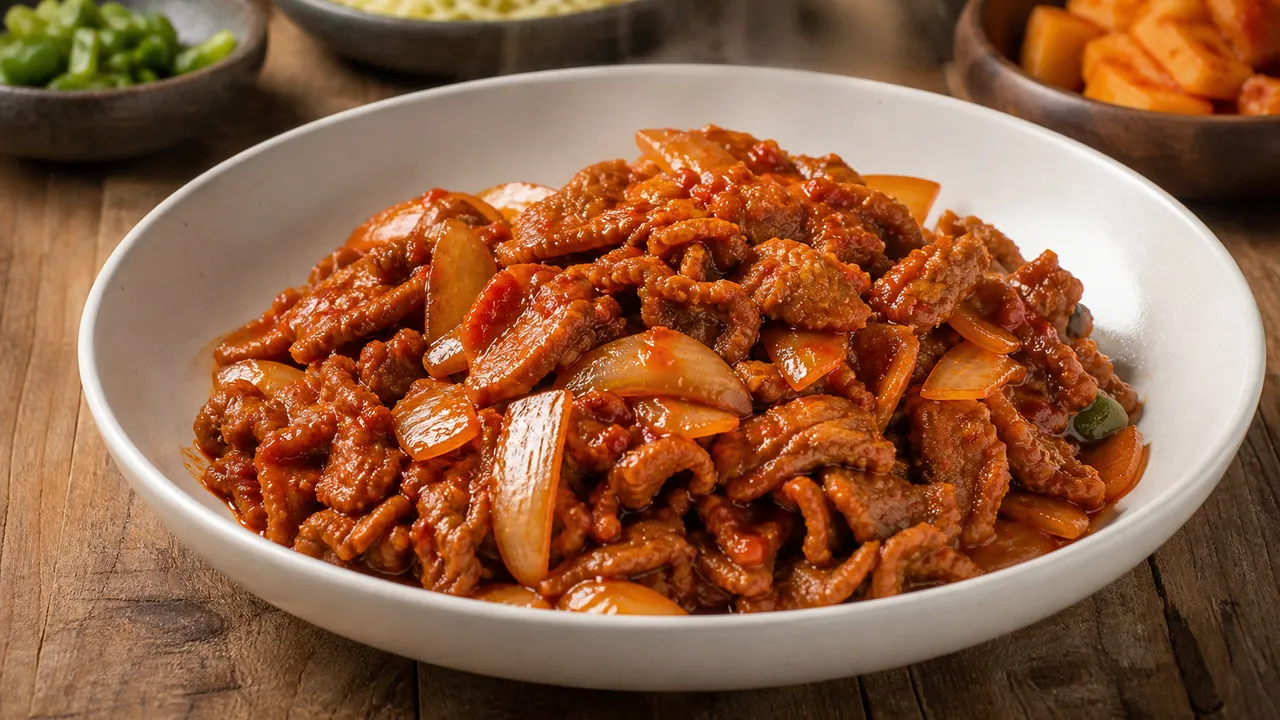
Szechuan-Style Spicy Bulgogi Stir-fry: A Tender, Umami-Rich
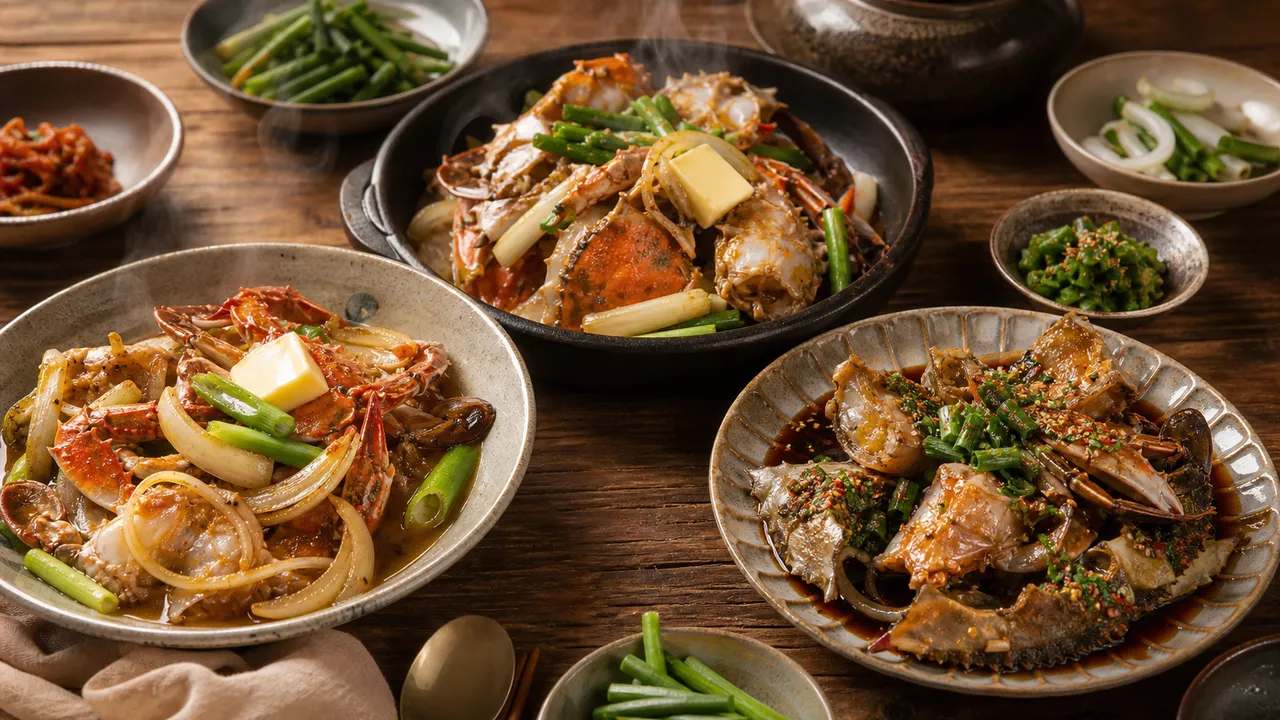
* 이미지는 AI가 생성한 참고 이미지로, 실제 조리 결과물과 다를 수 있습니다.
This Szechuan-style bulgogi stir-fry features tender pork shoulder and onions, seasoned and stir-fried with chili oil (la-yu), Maggi seasoning, and doubanjiang (두반장). It's characterized by its tender meat, pleasant spiciness, and rich umami flavor.
📝 Editor's Notes
This Szechuan-style spicy bulgogi stir-fry can be made in just 30 minutes with only pork shoulder and onions.
It's a beginner-friendly dish, as you just need to pre-mix it with chili oil (la-yu) and marinate for 10 minutes for a foolproof result.
The deep umami from doubanjiang (두반장) and Maggi seasoning, combined with the kick of gochugaru (고춧가루), creates a 'rice thief' side dish that will have you finishing a whole bowl of rice in no time.
It's perfect for a summer evening when your appetite lags or a chilly night when you crave something spicy, fitting for any family dinner.
🛒 Ingredient Tips
Choose thinly sliced pork shoulder.
A good balance of lean meat and fat will ensure it remains tender and not dry when stir-fried.
Fresh pork should have a bright, rosy color with white fat.
For onions, select ones with dry, crisp outer skins, a heavy feel, and firm root ends.
Spring and autumn onions are particularly sweet.
Once opened, doubanjiang (두반장) should be refrigerated.
A deep reddish-brown color with a glossy sheen indicates a rich umami flavor.
🔄 Substitution Guide
Pork shoulder can be substituted with pork neck or pork hind leg.
Pork neck will be slightly more tender, while pork hind leg is leaner but can be a bit drier, so consider increasing the marinating time.
If doubanjiang (두반장) is difficult to find, you can substitute it with 0.5 tbsp gochujang (고추장) mixed with a tiny bit of doenjang (된장), though the unique fermented umami flavor might be slightly milder.
If you don't have Maggi seasoning, oyster sauce or regular soy sauce can be used.
Oyster sauce provides a similar umami but adds sweetness, so it's good to reduce the sugar slightly.
If chili oil (la-yu) is unavailable, you can make spicy oil by lightly sautéing gochugaru (고춧가루) in cooking oil.
🥘 Ingredients
👨🍳 Cooking Points
The most crucial step is the marinating time.
Marinating for exactly 10 minutes after mixing with chili oil (la-yu) and seasoning allows the flavors to penetrate the meat and makes it significantly more tender.
Be careful not to marinate for too long, as it can become too salty.
Heat the pan with chili oil (la-yu) over medium heat, then add the pork.
The key is to stir-fry slowly over medium heat for 2-3 minutes, not high heat.
Too high a flame will burn the outside and give the sauce a bitter taste.
Instead of flipping the meat frequently, let each side cook slightly to develop a nice sear, which enhances the umami flavor.
👨🍳 Directions
Slice the onion thinly, and mince the garlic.
Prepare thinly sliced pork shoulder. If the pieces are large, cut them into 3-4 smaller pieces.
In a bowl, combine the pork, minced garlic, 1 tbsp chili oil (la-yu), 1 tbsp Maggi seasoning, 0.5 tbsp doubanjiang (두반장), 1 tbsp gochugaru (고춧가루), and 0.5 tbsp sugar. Mix well.
Add the sliced onion to the bowl and mix lightly. Marinate for about 10 minutes.
Heat 1 tbsp chili oil (la-yu) in a pan.
Add all the marinated meat to the hot pan and stir-fry slowly for 2-3 minutes, or until the meat is cooked through.
Transfer the stir-fry to a plate and serve.
💡 Tips
Marinating the pork with chili oil (la-yu) first allows the oil to penetrate the meat, resulting in a much more tender stir-fry.
Marinating the meat and onion in the sauce for about 10 minutes ensures good seasoning and tenderizes the meat.
If you like it spicier, you can adjust the heat by adding Cheongyang chili peppers (청양고추) or dried chilies.
For a family meal, it's best to cook it to a pleasant level of spiciness and umami, without making it overly hot.
📦 Storage & Reuse
Once cooked, let the stir-fry cool completely, then store it in an airtight container.
It can be kept in the refrigerator for 2-3 days or frozen for up to 2 weeks.
When reheating, it's better to warm it gently in a pan with a splash of water or chili oil (la-yu) over low heat, rather than in a microwave, to prevent the meat from becoming tough.
If frozen, thaw it naturally in the refrigerator before reheating for better texture.
Leftover stir-fry can be enjoyed as fried rice by mixing it with rice, or as a delicious rice bowl (덮밥) by adding chives and an egg.
🥢 Who This Is For
This is a spicy yet not overly aggressive side dish, perfect for the whole family.
It pairs wonderfully with white rice, and also with lettuce or perilla leaves (깻잎) for ssam (쌈 - Korean wraps).
Serving it with cucumber salad or a refreshing cold seaweed soup (미역냉국) helps balance the richness.
It's also an excellent accompaniment for beer or soju, and any leftovers are fantastic for making fried rice.
🔥 Nutrition Info
Per serving, this dish is estimated to be approximately 350-420 calories.
The pork shoulder provides a generous 22-26g of protein, making it a hearty meal.
Fat, combining chili oil (la-yu) and pork fat, is around 20-26g, and carbohydrates from onions and sugar are about 8-12g.
Pork is rich in Vitamin B1, which aids in fatigue recovery, and also contains iron and zinc.
The allicin in onions helps with Vitamin B1 absorption, making them a good pairing.
However, due to doubanjiang (두반장) and Maggi seasoning, the sodium content tends to be high, so it's recommended to season a bit more lightly to taste.
💬 Frequently Asked Questions
- Q. What ingredients do I need for Szechuan-Style Spicy Bulgogi Stir-fry: A Tender, Umami-Rich Golden Recipe?
- Main ingredients include Pork Shoulder, Onion, Minced garlic, Chili oil (la-yu), Maggi Seasoning. Choose thinly sliced pork shoulder. A good balance of lean meat and fat will ensure it remains tender and not dry when stir-fried. Fresh pork should have a bright, rosy color with white fat. For onions, select ones with dry, crisp outer skins, a heavy feel, and firm root ends. Spring and autumn onions are particularly sweet. Once opened, doubanjiang (두반장) should be refrigerated. A deep reddish-brown color with a glossy sheen indicates a rich umami flavor.
- Q. What are the key tips for making Szechuan-Style Spicy Bulgogi Stir-fry: A Tender, Umami-Rich Golden Recipe?
- The most crucial step is the marinating time. Marinating for exactly 10 minutes after mixing with chili oil (la-yu) and seasoning allows the flavors to penetrate the meat and makes it significantly more tender. Be careful not to marinate for too long, as it can become too salty. Heat the pan with chili oil (la-yu) over medium heat, then add the pork. The key is to stir-fry slowly over medium heat for 2-3 minutes, not high heat. Too high a flame will burn the outside and give the sauce a bitter taste. Instead of flipping the meat frequently, let each side cook slightly to develop a nice sear, which enhances the umami flavor.
- Q. How should I store leftover Szechuan-Style Spicy Bulgogi Stir-fry: A Tender, Umami-Rich Golden Recipe?
- Once cooked, let the stir-fry cool completely, then store it in an airtight container. It can be kept in the refrigerator for 2-3 days or frozen for up to 2 weeks. When reheating, it's better to warm it gently in a pan with a splash of water or chili oil (la-yu) over low heat, rather than in a microwave, to prevent the meat from becoming tough. If frozen, thaw it naturally in the refrigerator before reheating for better texture. Leftover stir-fry can be enjoyed as fried rice by mixing it with rice, or as a delicious rice bowl (덮밥) by adding chives and an egg.
- Q. How many calories are in Szechuan-Style Spicy Bulgogi Stir-fry: A Tender, Umami-Rich Golden Recipe?
- Per serving, this dish is estimated to be approximately 350-420 calories. The pork shoulder provides a generous 22-26g of protein, making it a hearty meal. Fat, combining chili oil (la-yu) and pork fat, is around 20-26g, and carbohydrates from onions and sugar are about 8-12g. Pork is rich in Vitamin B1, which aids in fatigue recovery, and also contains iron and zinc. The allicin in onions helps with Vitamin B1 absorption, making them a good pairing. However, due to doubanjiang (두반장) and Maggi seasoning, the sodium content tends to be high, so it's recommended to season a bit more lightly to taste.
- Q. Can I substitute ingredients in Szechuan-Style Spicy Bulgogi Stir-fry: A Tender, Umami-Rich Golden Recipe?
- Pork shoulder can be substituted with pork neck or pork hind leg. Pork neck will be slightly more tender, while pork hind leg is leaner but can be a bit drier, so consider increasing the marinating time. If doubanjiang (두반장) is difficult to find, you can substitute it with 0.5 tbsp gochujang (고추장) mixed with a tiny bit of doenjang (된장), though the unique fermented umami flavor might be slightly milder. If you don't have Maggi seasoning, oyster sauce or regular soy sauce can be used. Oyster sauce provides a similar umami but adds sweetness, so it's good to reduce the sugar slightly. If chili oil (la-yu) is unavailable, you can make spicy oil by lightly sautéing gochugaru (고춧가루) in cooking oil.
💬 Comments
No comments yet. Be the first to comment!