
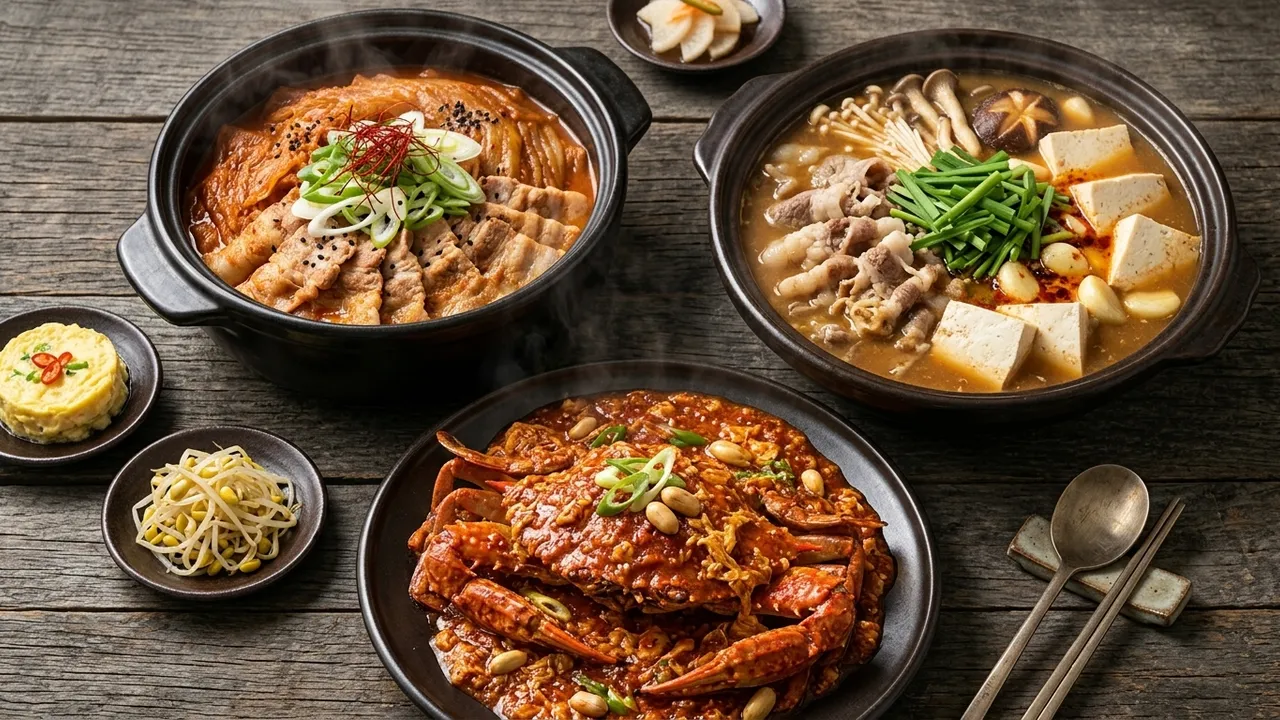
Shinji & Moonwon's Three Rice Thief Recipes
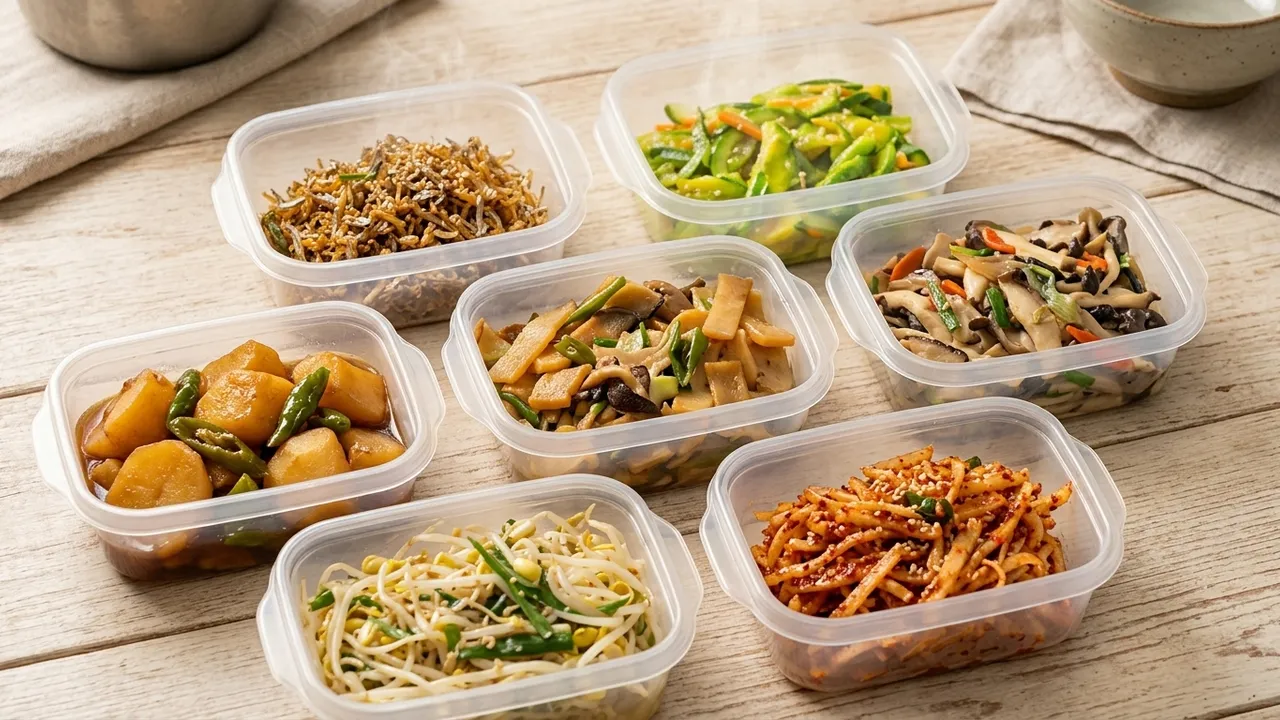
* 이미지는 AI가 생성한 참고 이미지로, 실제 조리 결과물과 다를 수 있습니다.
A collection of K-Chili Crab, Thin-Sliced Pork Belly Kimchi Stew, and Brisket Soft Tofu Doenjang Stew recipes, made to the preferences of Shinji and Moonwon. A key feature is that all ingredients are prepared into bite-sized pieces and cooked to a soft texture, considering Shinji's weak temporomandibular joint (TMJ).
📋 3 recipes — Select to view
This is a special K-Chili Crab made with seasonal female blue crabs (in May), enhanced with a spicy-sweet Korean-style sauce and rich butter flavor. The crab meat is carefully shelled to create a tender texture, making this 'rice thief' dish easy for anyone to enjoy, even those with sensitive jaws.
📝 Editor's Notes
The K-Chili Crab we're introducing today is a special dish featuring plump seasonal female blue crabs (in May), enhanced with a spicy-sweet Korean-style sauce and a rich butter flavor.
A major advantage is that the crab meat is shelled to achieve a tender texture, making it easy for even those with jaw problems to enjoy.
This dish truly lives up to its nickname 'rice thief' with its addictively delicious taste, making it a perfect menu item for the whole family to gather around and enjoy.
The sauce, a blend of chili oil, oyster sauce, and anchovy fish sauce (멸치액젓), offers a savory umami that perfectly suits the Korean palate.
The final touch of rich butter adds a creamy, risotto-like texture.
With a short cooking time of about 10 minutes, it's also ideal as a main course for entertaining guests or for special occasions.
🛒 Ingredient Tips
Female blue crabs, the key ingredient for K-Chili Crab, are in season in May, making them plump with meat and full of roe – the perfect time for the best flavor.
To choose fresh crabs, first pick ones that feel heavy and firm when lifted.
It's also important to check that the belly flap is white and firm and that all legs are attached.
A fresh crab will have a glossy shell and minimal fishy odor.
For onions, choose ones that are not too large, firm, and have smooth skins.
For large green onions (대파) and chives (쪽파), select those with vibrant green parts and no wilting, ensuring a fresher taste.
Remember, good ingredients are the foundation of delicious cooking!
🔄 Substitution Guide
If blue crab is difficult to find or if you have a seafood allergy, you can enjoy the flavor of K-Chili Crab by substituting chicken or shrimp.
For chicken, using boneless chicken thigh meat will ensure a tender texture.
For shrimp, plump black tiger prawns or whiteleg shrimp are recommended.
The cooking method remains the same; simply stir-fry with the sauce.
If anchovy fish sauce (멸치액젓) is unavailable, you can substitute it with tuna fish sauce or sand lance fish sauce (까나리액젓) to add umami.
Stevia was used as a sugar substitute; if you don't have stevia, you can use an equal amount of sugar or another alternative sweetener.
However, if using sugar, it's advisable to adjust the quantity considering its impact on blood sugar levels.
Understanding and adjusting for the characteristics of each substitute ingredient will help you achieve a taste comparable to the original recipe.
🥘 Ingredients
👨🍳 Cooking Points
There are two crucial points for making delicious K-Chili Crab.
First, it's essential to arrange the crabs in the steamer so that their internal organs do not spill out when steaming.
Add water and a splash of soju (소주) to the steamer, then place the cleaned crabs and steam for 10 minutes.
This preserves the full flavor of the crab and firms up the meat for a better texture when stir-fried later.
Second, when adding the sauce and stir-frying, it's important to quickly toss and stir-fry over high heat.
After sautéing the onion and large green onion (daepa) in butter until golden, add the sauce.
Finally, add the steamed crab and quickly stir-fry for about 1-2 minutes over high heat.
Remember this point to avoid overcooking and making the crab meat tough, ensuring you create a delicious chili crab every time.
👨🍳 Directions
Using a brush, thoroughly clean the body and leg joints of the female blue crabs.
Cut off the belly flap and the tips of the legs of the female blue crabs with scissors.
Separate the back shell of the female blue crabs, then remove the sandbag, mouth, and gills.
Pour water into a steamer, add a splash of soju (소주), then place the cleaned female blue crabs inside and steam for 10 minutes. (Arrange the crabs so their internal organs do not spill out.)
Cut the steamed crabs into four pieces.
Finely chop 1 onion and 1 large green onion (daepa), and mince 2 sprigs of chives (jjokpa).
In a bowl, combine 3 tbsp fine gochugaru (고춧가루), 2 tbsp soy sauce, 3 tbsp cooking wine, 3 tbsp chili oil, 1.5 tbsp oyster sauce, 1.5 tbsp anchovy fish sauce (멸치액젓), 1.5 tbsp minced garlic, 1.5 tbsp stevia, 1.5 tbsp oligosaccharide syrup, 1 tsp minced ginger, and pepper to taste. Mix well to prepare the sauce.
Melt 40g butter in a heated pan, then add the finely chopped onion and large green onion (daepa) and stir-fry until golden brown.
Once the onion is golden brown, add the prepared sauce and stir-fry together.
Add the prepared crab and quickly stir-fry over high heat, ensuring the sauce coats evenly.
Transfer to a plate, sprinkle with minced chives (jjokpa), and serve!
💡 Tips
Steaming the crabs in advance prevents them from releasing excess water during stir-frying and firms up the meat.
When storing gochugaru (고춧가루), placing a wooden chopstick in the container can absorb moisture, keeping it dry and fresh.
The added butter flavor creates a rich, creamy texture, similar to a risotto.
📦 Storage & Reuse
The finished K-Chili Crab can be stored in an airtight container in the refrigerator for 2-3 days, maintaining its freshness.
While crab dishes are best enjoyed as soon as possible, leftovers can be refrigerated.
Freezing is not recommended as it can make the crab meat dry and affect its texture.
To reheat refrigerated chili crab, microwave for 2-3 minutes, or gently stir-fry in a pan over low heat.
Be careful not to overheat, as this can make the crab meat tough.
When reheating in a pan, adding a tablespoon or two of water can help keep the sauce moist and prevent it from drying out.
🥢 Who This Is For
This K-Chili Crab is an excellent choice for a family dinner on a special occasion or as a dish for entertaining guests.
It's highly recommended for those who love spicy-sweet flavors and seafood enthusiasts.
As its nickname 'rice thief' suggests, it's perfect with warm white rice.
You can also enjoy it by dipping bread or baguette into the rich sauce for a delightful treat.
It pairs wonderfully as a snack with a cold beer or makgeolli (막걸리).
Any leftover sauce can be mixed with rice or even pasta noodles for another fantastic meal.
Serving it with a mild steamed egg custard (계란찜) or a refreshing soybean sprout soup (콩나물국) can balance the spicy flavors and create an even richer dining experience.
🔥 Nutrition Info
K-Chili Crab, made with seasonal female blue crabs, is a dish rich in protein and essential amino acids.
The estimated calorie count per serving is approximately 450-550 kcal, with protein around 30-40g, fat around 25-35g, and carbohydrates around 25-35g.
Crabs are rich in taurine, which can help with fatigue recovery and liver health, and chitosan, which contributes to lowering cholesterol levels.
Onions, large green onions (daepa), and chives (jjokpa) add vitamins and dietary fiber, while minced garlic and ginger play a beneficial role in boosting immunity.
However, since seasonings like butter, chili oil, and oyster sauce may contain relatively high amounts of fat and sodium, it is advisable to consume an appropriate amount with health in mind.
The use of stevia and oligosaccharide syrup (올리고당) to reduce sugar content can be beneficial for blood sugar management.
💬 Frequently Asked Questions
- Q. What ingredients do I need for Shinji & Moonwon's Three Rice Thief Recipes?
- Main ingredients include Female blue crab, Onion, Green onion (large), Green onion (small), Butter. The freshness of the female blue crabs, the star ingredient of this K-Chili Crab, is paramount. When choosing live crabs, select those with firm bodies when pressed, all legs attached, and active movement. Female blue crabs with a wide, rounded, and orange-tinted belly flap are typically full of delicious roe. They are best enjoyed in season (spring: April-June, autumn: September-October) when their meat is plumper and the roe is richer. For onions, choose those with shiny, firm skins and thin root ends. Select large green onions with vibrant green leaves and crisp white stalks.
- Q. What are the key tips for making Shinji & Moonwon's Three Rice Thief Recipes?
- There are two crucial cooking points for this recipe. First, preparing the crabs by steaming them beforehand. Steaming them for 10 minutes with a splash of soju (소주) helps remove any fishy odor and firms up the crab meat. This prevents water from forming during stir-frying and preserves the crab's natural flavor. Second, when sautéing the sauce, it's important to thoroughly sauté the onion and large green onion in butter until golden. The butter's aroma infuses into the vegetables, deepening the overall flavor of the dish. Finally, when adding the crabs and mixing with the sauce, stir-fry quickly over high heat to ensure the sauce is evenly coated. Be careful not to overcook, as this can make the crab meat tough.
- Q. How should I store leftover Shinji & Moonwon's Three Rice Thief Recipes?
- Once prepared, K-Chili Crab can be enjoyed for about 2-3 days when stored in an airtight container in the refrigerator. It's best to consume crab dishes as quickly as possible. To reheat, microwave or stir-fry in a pan over low heat. Be careful not to overheat, as this can make the crab meat dry. The leftover sauce can be mixed with rice or noodles for another delicious meal. Another good idea is to pick out the remaining crab meat and use it as an ingredient for fried rice.
- Q. How many calories are in Shinji & Moonwon's Three Rice Thief Recipes?
- This K-Chili Crab, with female blue crab as its main ingredient, is a dish rich in protein and minerals. The estimated calorie count per serving is approximately 350-450 kcal, with protein estimated at 25-35g, fat at 20-30g, and carbohydrates at 15-25g. Crab is rich in essential amino acids, calcium, and phosphorus, contributing to bone health. It also contains abundant taurine, which helps with fatigue recovery and liver function. Onions and large green onions add vitamins and dietary fiber, balancing the nutrition. The use of stevia and oligosaccharide to reduce sugar intake is also noteworthy.
- Q. Can I substitute ingredients in Shinji & Moonwon's Three Rice Thief Recipes?
- If female blue crabs are difficult to find or too expensive, you can substitute them with whiteleg shrimp or cocktail shrimp to make a shrimp chili dish. Shrimp meat is softer and easier to prepare than crab, but it may lack the distinctive umami and richness of crab roe. If you have allergies, you can replace seafood with chicken breast or tofu for a spicy stir-fry, but the taste and texture will be entirely different. You can use sugar instead of stevia, but stevia is a better choice if you are mindful of sugar intake. If you don't have oyster sauce, you can adjust the ratio of soy sauce and sugar.
💬 Comments
No comments yet. Be the first to comment!