
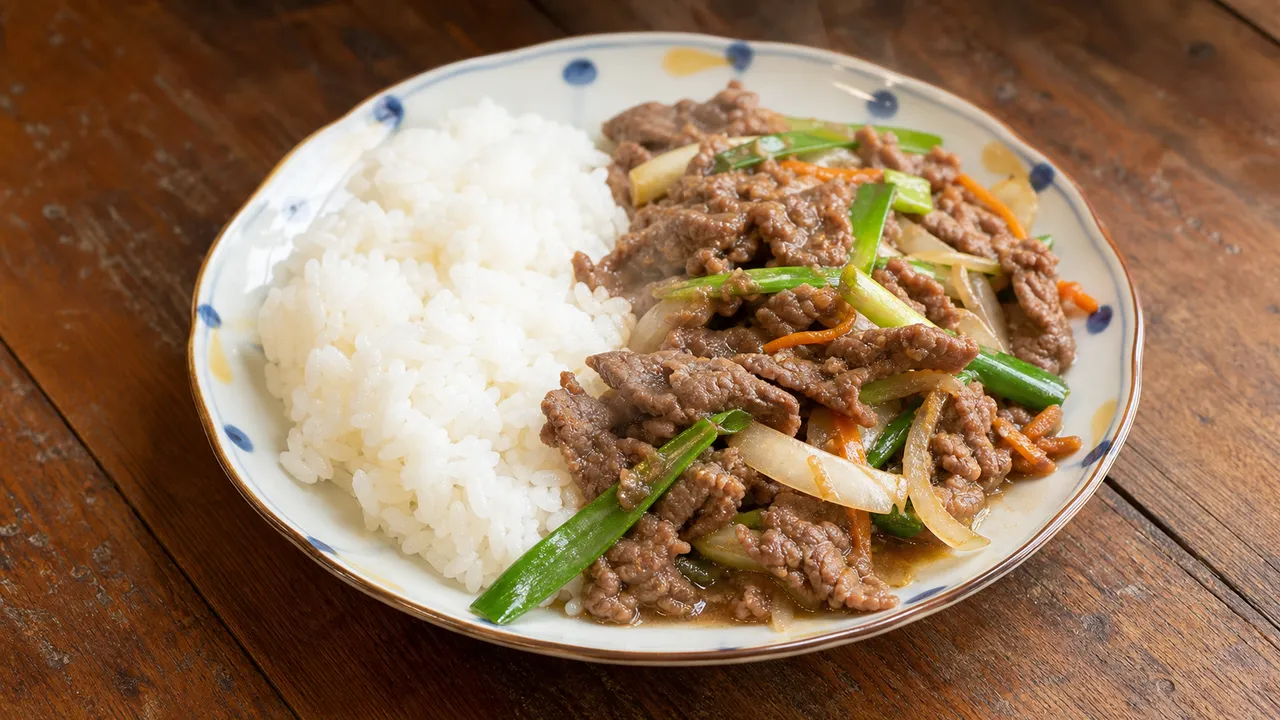
Soft Hanwoo Bulgogi (한우 불고기) for Post-Dental Treatment Recov
* 이미지는 AI가 생성한 참고 이미지로, 실제 조리 결과물과 다를 수 있습니다.
This nutritious bulgogi (불고기) recipe is specially designed for post-dental treatment recovery. It uses finely minced Hanwoo (한우) beef and finely chopped vegetables, ensuring a soft texture that requires minimal chewing. It's an excellent recovery meal for patients due to its gentle nature.
📝 Editor's Notes
This soft bulgogi (불고기) patient meal is tailored for recovery periods after dental treatment, where chewing is difficult.
Thinly sliced Hanwoo (한우) beef is very finely minced, and vegetables are grated or chopped, creating a texture that can be swallowed with minimal chewing.
Seasoned subtly with soy sauce, sesame oil, and onion juice, it's low in irritation and highlights the natural umami of the meat.
It's an easy recipe, suitable regardless of season for those who have recently undergone tooth extraction, implants, or braces, or for seniors and patients with weakened digestion.
It's delicious and gentle when served warm over rice.
🛒 Ingredient Tips
For Hanwoo (한우) beef for bulgogi (불고기), choose cuts with a tender grain like sirloin or front leg for a smoother texture when minced.
A vibrant red color and white fat are signs of freshness.
For shiitake mushrooms, choose ones with thick caps and bright, tightly packed gills; soggy or browned ones have a weaker aroma.
For Korean chives, look for dark green leaves that are firm all the way to the tips; thin, tender spring chives are especially soft and well-suited for patient meals.
Firm and heavy onions yield more juice.
🔄 Substitution Guide
If Hanwoo (한우) beef is too expensive, you can use finely minced pork tenderloin (han-don, 한돈) or chicken breast.
Chicken breast is leaner and lighter but can be dry, so add a little more sesame oil to keep it moist.
If shiitake mushrooms' strong aroma is undesirable, oyster mushrooms or king oyster mushrooms can be substituted for a milder flavor.
If Korean chives are unavailable or their scent is too strong, finely chopped blanched spinach or grated zucchini can be used for a similar soft texture.
If using guk-ganjang (국간장) instead of regular soy sauce (jin-ganjang, 진간장), the color will be lighter, but it's saltier, so it's best to reduce the amount slightly.
🥘 Ingredients
👨🍳 Cooking Points
The key is to mince the meat and vegetables as finely as possible.
For the meat, repeatedly chop it with a knife to ensure it doesn't clump and is easy to swallow.
When stir-frying, cook on medium-low heat for only 3-4 minutes, just until the meat changes color.
Stir-frying for too long on high heat will dry out the moisture, making it tough and stiff.
The seasoning should be added after the vegetables are cooked to prevent burning and ensure even flavoring.
For the Korean chives, definitely turn off the heat and mix them in with the residual heat for only 20-30 seconds.
This is crucial, as overcooking will make them mushy and lose their aroma.
👨🍳 Directions
Finely grate the onion using a hand grinder and prepare the onion juice.
Finely grate the carrot using a hand grinder and set aside.
Finely chop the shiitake mushrooms and Korean chives and set aside.
Finely mince the Hanwoo (한우) beef for bulgogi (불고기) with a knife.
In a bowl, combine 1 tsp of soy sauce, 1/2 tsp of sesame oil, 1 tbsp of onion juice, and a small amount of minced garlic. Mix well to create the seasoning sauce.
In a pan, add the minced beef and stir-fry. Then add the finely grated carrot and chopped shiitake mushrooms and stir-fry together.
Once the vegetables are cooked, add the seasoning sauce and stir-fry until well combined.
Turn off the heat. Finally, add the finely chopped Korean chives and gently mix them in with the residual heat to finish.
Serve the soft bulgogi (불고기) on a plate with rice.
💡 Tips
To reduce the burden of chewing after dental treatment, it is recommended to finely mince or grate all ingredients.
It is advisable to avoid irritating ingredients like sesame seeds and spicy gochugaru (고춧가루) in the bulgogi (불고기) seasoning for patient meals.
It is best to use onion in the form of onion juice. The remaining grated onion pulp can be used to make onion oil for regular cooking.
To maintain a soft texture, the Korean chives should be added at the end, after turning off the heat, and gently mixed with the residual heat, almost like a topping.
📦 Storage & Reuse
Once cooked, let the bulgogi (불고기) cool slightly, then store it in an airtight container in the refrigerator for 2-3 days.
If divided into single servings and frozen, it can last up to about 2 weeks.
When reheating, it's better to warm it gently in a pan with a tablespoon of water or broth over low heat rather than in a microwave, to maintain its moisture.
Leftover minced vegetables can be used in steamed eggs (gyeran-jjim, 계란찜) or porridge, and leftover onion juice can be used as a tenderizer when marinating other meats.
🥢 Who This Is For
This dish is well-suited for those who have difficulty chewing, such as immediately after tooth extraction, implants, or wisdom tooth surgery, as well as for seniors with weak digestion or patients in recovery.
Served with soft white porridge, thick rice, steamed eggs (gyeran-jjim, 계란찜), or mild soup like seaweed soup (miyeok-guk, 미역국), it makes a hearty and comforting meal.
Pairing it with watery kimchi (nabak-kimchi, 나박김치 or mul-kimchi, 물김치) helps refresh the palate.
🔥 Nutrition Info
Per serving (based on approximately 3.5 oz / 100g of meat), it provides roughly 250-300 kcal.
Protein content is about 20-24g, aiding muscle regeneration during recovery.
Fat is about 14-18g, and carbohydrates from vegetables and seasoning are relatively low at about 6-9g.
Hanwoo (한우) beef is rich in iron, zinc, and vitamin B12, which help prevent anemia and promote wound healing.
Beta-carotene from carrots and dietary fiber and vitamin D from shiitake mushrooms also contribute.
Serving with rice adds approximately 130 kcal of carbohydrates per 3.5 oz (100g) of rice.
💬 Frequently Asked Questions
- Q. What ingredients do I need for Soft Hanwoo Bulgogi (한우 불고기) for Post-Dental Treatment Recovery?
- Main ingredients include Hanwoo (한우) beef for bulgogi, Onion, Carrot, Shiitake mushroom, Korean chives. For Hanwoo (한우) beef for bulgogi (불고기), choose cuts with a tender grain like sirloin or front leg for a smoother texture when minced. A vibrant red color and white fat are signs of freshness. For shiitake mushrooms, choose ones with thick caps and bright, tightly packed gills; soggy or browned ones have a weaker aroma. For Korean chives, look for dark green leaves that are firm all the way to the tips; thin, tender spring chives are especially soft and well-suited for patient meals. Firm and heavy onions yield more juice.
- Q. What are the key tips for making Soft Hanwoo Bulgogi (한우 불고기) for Post-Dental Treatment Recovery?
- The key is to mince the meat and vegetables as finely as possible. For the meat, repeatedly chop it with a knife to ensure it doesn't clump and is easy to swallow. When stir-frying, cook on medium-low heat for only 3-4 minutes, just until the meat changes color. Stir-frying for too long on high heat will dry out the moisture, making it tough and stiff. The seasoning should be added after the vegetables are cooked to prevent burning and ensure even flavoring. For the Korean chives, definitely turn off the heat and mix them in with the residual heat for only 20-30 seconds. This is crucial, as overcooking will make them mushy and lose their aroma.
- Q. How should I store leftover Soft Hanwoo Bulgogi (한우 불고기) for Post-Dental Treatment Recovery?
- Once cooked, let the bulgogi (불고기) cool slightly, then store it in an airtight container in the refrigerator for 2-3 days. If divided into single servings and frozen, it can last up to about 2 weeks. When reheating, it's better to warm it gently in a pan with a tablespoon of water or broth over low heat rather than in a microwave, to maintain its moisture. Leftover minced vegetables can be used in steamed eggs (gyeran-jjim, 계란찜) or porridge, and leftover onion juice can be used as a tenderizer when marinating other meats.
- Q. How many calories are in Soft Hanwoo Bulgogi (한우 불고기) for Post-Dental Treatment Recovery?
- Per serving (based on approximately 3.5 oz / 100g of meat), it provides roughly 250-300 kcal. Protein content is about 20-24g, aiding muscle regeneration during recovery. Fat is about 14-18g, and carbohydrates from vegetables and seasoning are relatively low at about 6-9g. Hanwoo (한우) beef is rich in iron, zinc, and vitamin B12, which help prevent anemia and promote wound healing. Beta-carotene from carrots and dietary fiber and vitamin D from shiitake mushrooms also contribute. Serving with rice adds approximately 130 kcal of carbohydrates per 3.5 oz (100g) of rice.
- Q. Can I substitute ingredients in Soft Hanwoo Bulgogi (한우 불고기) for Post-Dental Treatment Recovery?
- If Hanwoo (한우) beef is too expensive, you can use finely minced pork tenderloin (han-don, 한돈) or chicken breast. Chicken breast is leaner and lighter but can be dry, so add a little more sesame oil to keep it moist. If shiitake mushrooms' strong aroma is undesirable, oyster mushrooms or king oyster mushrooms can be substituted for a milder flavor. If Korean chives are unavailable or their scent is too strong, finely chopped blanched spinach or grated zucchini can be used for a similar soft texture. If using guk-ganjang (국간장) instead of regular soy sauce (jin-ganjang, 진간장), the color will be lighter, but it's saltier, so it's best to reduce the amount slightly.
💬 Comments
No comments yet. Be the first to comment!