
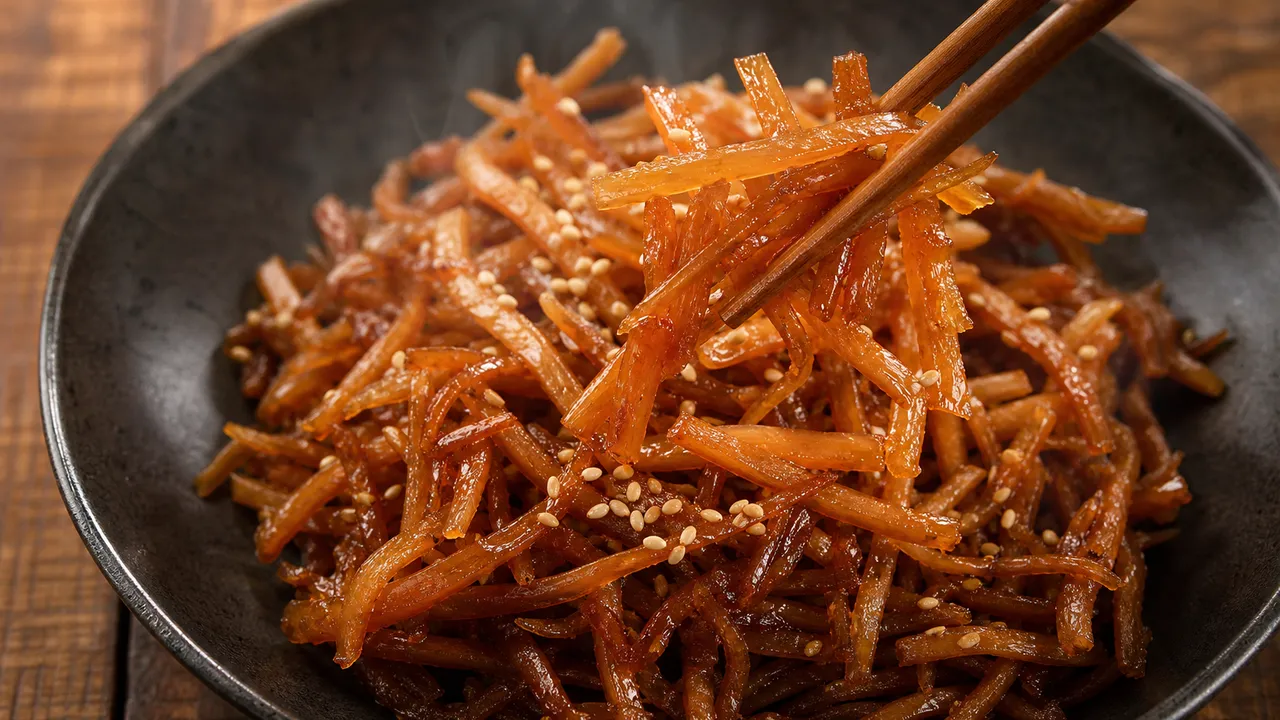
Golden Recipe for Soft Braised Dried Shredded Squid (Jinmich
* 이미지는 AI가 생성한 참고 이미지로, 실제 조리 결과물과 다를 수 있습니다.
This 'rice thief' dish features dried shredded squid (jinmichae) that has been softened by rinsing in cold water to remove additives, then simmered down in a savory and sweet soy sauce glaze.
📝 Editor's Notes
This is a foolproof side dish for beginners, completed in just 30 minutes with dried shredded squid (jinmichae) and soy sauce seasoning.
The soft jinmichae, rehydrated in cold water, is simmered in a savory and sweet soy sauce glaze, infusing it with deep umami flavor.
It's a 'rice thief' when served over freshly cooked rice and also perfect for lunchboxes.
This all-season side dish is great to prepare in advance for days when you lack appetite in summer or need a convenient side dish, providing a few days of satisfying meals.
🛒 Ingredient Tips
When choosing dried shredded squid (jinmichae), it's best to select pieces that have a pale, creamy color rather than being excessively white or glossy.
Fresh jinmichae feels moist and tears easily when handled; if it's too hard or crumbly, it's likely old.
Use brewed soy sauce for a rich umami flavor.
Oligosaccharide syrup, used for sweetness, is less sticky and cleaner than corn syrup, which helps prevent the braised dish from hardening.
Sesame oil loses its aroma if opened for too long, so use fresh sesame oil for finishing.
🔄 Substitution Guide
If dried shredded squid (jinmichae) is unavailable, you can substitute it with dried shredded regular squid or dried filefish (jipochaet - 쥐포채).
Dried filefish (jipochaet) is slightly firmer and chewier, so soak it a bit longer in water.
Brewed soy sauce can be replaced with regular soy sauce (jin ganjang - 진간장), but the color may become darker and the sweetness slightly stronger.
Oligosaccharide syrup can be substituted with corn syrup or honey.
Corn syrup is stickier and can harden easily when cooled, so reduce the amount slightly.
Honey has a strong aroma, so adjust the amount to about 3 tablespoons.
If mirin is unavailable, you can use sake with a pinch of sugar or omit it entirely.
🥘 Ingredients
👨🍳 Cooking Points
The key to this dish lies in two main points.
First, dried shredded squid (jinmichae) must be rinsed in cold water to absorb moisture and become soft.
Always use cold water, as warm water will make it mushy; if it's tough, soak it for an additional 2-3 minutes.
Second, the crucial step is to reduce the sauce until it's slightly thick before adding the jinmichae.
Beginners often add the jinmichae first and overcook it, making it tough and chewy.
When reducing the sauce, use medium-low heat.
Only use high heat for a short period when adding the jinmichae and letting the sauce cling to it.
Sesame oil and toasted sesame seeds should be added after turning off the heat to preserve their aroma.
👨🍳 Directions
Cut 7 oz (200g) of dried shredded squid (jinmichae) into bite-sized pieces with kitchen shears.
Fill a bowl with plenty of cold water and submerge the cut jinmichae. Gently rub and rinse it to remove any additives and allow it to absorb water, making it soft. (If the jinmichae is very tough, soak it for an additional 2-3 minutes. Use cold water, as warm water can make the jinmichae too mushy.)
Squeeze out any excess water from the softened jinmichae thoroughly and set it aside.
In a pan, add 1 tbsp of cooking oil and 1 tbsp of minced garlic. Turn the heat to medium-low and sauté until the garlic is fragrant and lightly coated in the oil.
Add 4 tbsp of brewed soy sauce, 2 tbsp of mirin (or cooking wine), and 4 tbsp of oligosaccharide syrup (or corn syrup). Simmer the sauce over medium-low heat, reducing it until it thickens slightly.
Once the sauce has reduced sufficiently, turn off the heat. Add the prepared jinmichae and toss well to ensure it's evenly coated with the sauce.
Turn the heat to high and continue to cook, stirring constantly, until any remaining sauce has reduced and clings tightly to the jinmichae.
Once the sauce is well-adhered to the jinmichae, turn off the heat. Add 1 tbsp of sesame oil and 1 tbsp of toasted sesame seeds, and toss everything together to complete the Braised Dried Shredded Squid (Jinmichae Ganjang Jorim).
💡 Tips
Cutting the jinmichae into bite-sized pieces makes it easier and neater to eat.
Gently rinsing jinmichae in cold water removes additives and softens it by absorbing water. If it's too tough, soak it for 2-3 minutes.
To prevent the jinmichae from becoming tough, fully reduce the sauce first before adding the jinmichae.
When braising, it's best to use a large, wide pan to allow moisture to evaporate quickly and prevent burning.
📦 Storage & Reuse
Once finished, let the Braised Dried Shredded Squid (Jinmichae Ganjang Jorim) cool slightly, then store it in an airtight container in the refrigerator for 5-7 days.
Since it contains sesame oil, it can become soggy if left at room temperature for too long, so refrigeration is essential.
Freezing is possible but may result in a tougher texture, so refrigeration is recommended.
You can enjoy it as is without reheating.
If it clumps together, microwave it for about 10 seconds to soften it.
Leftovers can be used as a filling for gimbap (김밥) or jumeokbap (주먹밥 - rice balls).
🥢 Who This Is For
This dish is particularly suitable for college students or single individuals who need side dishes, or those who frequently pack lunchboxes.
Its savory and sweet flavor pairs well with plain white rice and also makes a great filling for gimbap (김밥).
It perfectly balances a meal when served alongside mild dishes like steamed egg custard (gyeranjjim - 계란찜), braised tofu (dubu jorim - 두부조림), or seaweed soup (miyeokguk - 미역국).
It even surprisingly goes well as a snack with beer.
🔥 Nutrition Info
This recipe yields approximately 4 servings, with one serving estimated at about 180 kcal.
Dried shredded squid (jinmichae), being dried squid, is rich in protein, providing about 12-15g per serving.
Fat comes from cooking oil and sesame oil, amounting to about 5-6g, while carbohydrates primarily come from the sugars in soy sauce and oligosaccharide syrup, totaling about 12-15g.
It's relatively low in calories compared to its protein content, making it satisfying yet light.
However, since it contains 4 tablespoons of soy sauce, the sodium content is on the higher side.
If it tastes too salty, it is recommended to increase the amount of oligosaccharide syrup and mirin slightly to balance the flavor, and serve it with vegetable side dishes.
💬 Frequently Asked Questions
- Q. What ingredients do I need for Golden Recipe for Soft Braised Dried Shredded Squid (Jinmichae Ganjang Jorim)?
- Main ingredients include Dried shredded squid (jinmichae), Cooking oil, Minced garlic, Sesame oil, Toasted sesame seeds. When choosing dried shredded squid (jinmichae), it's best to select pieces that have a pale, creamy color rather than being excessively white or glossy. Fresh jinmichae feels moist and tears easily when handled; if it's too hard or crumbly, it's likely old. Use brewed soy sauce for a rich umami flavor. Oligosaccharide syrup, used for sweetness, is less sticky and cleaner than corn syrup, which helps prevent the braised dish from hardening. Sesame oil loses its aroma if opened for too long, so use fresh sesame oil for finishing.
- Q. What are the key tips for making Golden Recipe for Soft Braised Dried Shredded Squid (Jinmichae Ganjang Jorim)?
- The key to this dish lies in two main points. First, dried shredded squid (jinmichae) must be rinsed in cold water to absorb moisture and become soft. Always use cold water, as warm water will make it mushy; if it's tough, soak it for an additional 2-3 minutes. Second, the crucial step is to reduce the sauce until it's slightly thick before adding the jinmichae. Beginners often add the jinmichae first and overcook it, making it tough and chewy. When reducing the sauce, use medium-low heat. Only use high heat for a short period when adding the jinmichae and letting the sauce cling to it. Sesame oil and toasted sesame seeds should be added after turning off the heat to preserve their aroma.
- Q. How should I store leftover Golden Recipe for Soft Braised Dried Shredded Squid (Jinmichae Ganjang Jorim)?
- Once finished, let the Braised Dried Shredded Squid (Jinmichae Ganjang Jorim) cool slightly, then store it in an airtight container in the refrigerator for 5-7 days. Since it contains sesame oil, it can become soggy if left at room temperature for too long, so refrigeration is essential. Freezing is possible but may result in a tougher texture, so refrigeration is recommended. You can enjoy it as is without reheating. If it clumps together, microwave it for about 10 seconds to soften it. Leftovers can be used as a filling for gimbap (김밥) or jumeokbap (주먹밥 - rice balls).
- Q. How many calories are in Golden Recipe for Soft Braised Dried Shredded Squid (Jinmichae Ganjang Jorim)?
- This recipe yields approximately 4 servings, with one serving estimated at about 180 kcal. Dried shredded squid (jinmichae), being dried squid, is rich in protein, providing about 12-15g per serving. Fat comes from cooking oil and sesame oil, amounting to about 5-6g, while carbohydrates primarily come from the sugars in soy sauce and oligosaccharide syrup, totaling about 12-15g. It's relatively low in calories compared to its protein content, making it satisfying yet light. However, since it contains 4 tablespoons of soy sauce, the sodium content is on the higher side. If it tastes too salty, it is recommended to increase the amount of oligosaccharide syrup and mirin slightly to balance the flavor, and serve it with vegetable side dishes.
- Q. Can I substitute ingredients in Golden Recipe for Soft Braised Dried Shredded Squid (Jinmichae Ganjang Jorim)?
- If dried shredded squid (jinmichae) is unavailable, you can substitute it with dried shredded regular squid or dried filefish (jipochaet - 쥐포채). Dried filefish (jipochaet) is slightly firmer and chewier, so soak it a bit longer in water. Brewed soy sauce can be replaced with regular soy sauce (jin ganjang - 진간장), but the color may become darker and the sweetness slightly stronger. Oligosaccharide syrup can be substituted with corn syrup or honey. Corn syrup is stickier and can harden easily when cooled, so reduce the amount slightly. Honey has a strong aroma, so adjust the amount to about 3 tablespoons. If mirin is unavailable, you can use sake with a pinch of sugar or omit it entirely.
💬 Comments
No comments yet. Be the first to comment!