
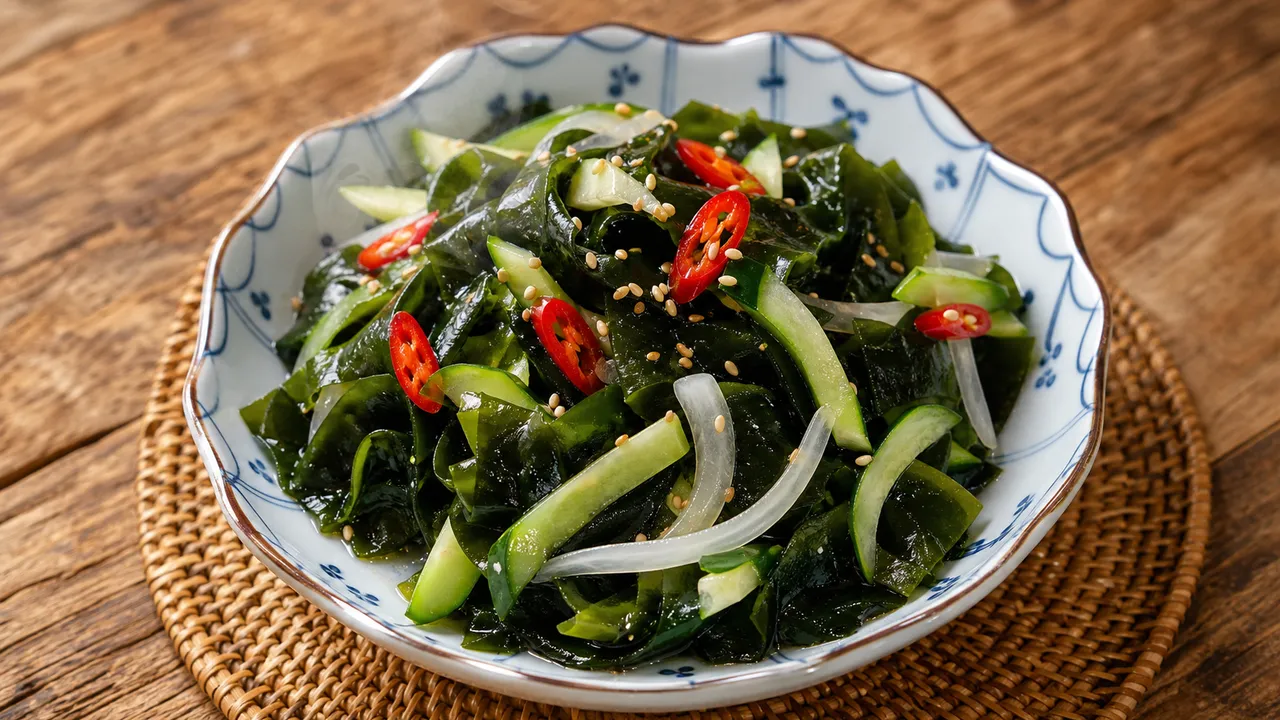
Refreshing Seaweed Salad (Miyeok-muchim): A Golden Summer Si
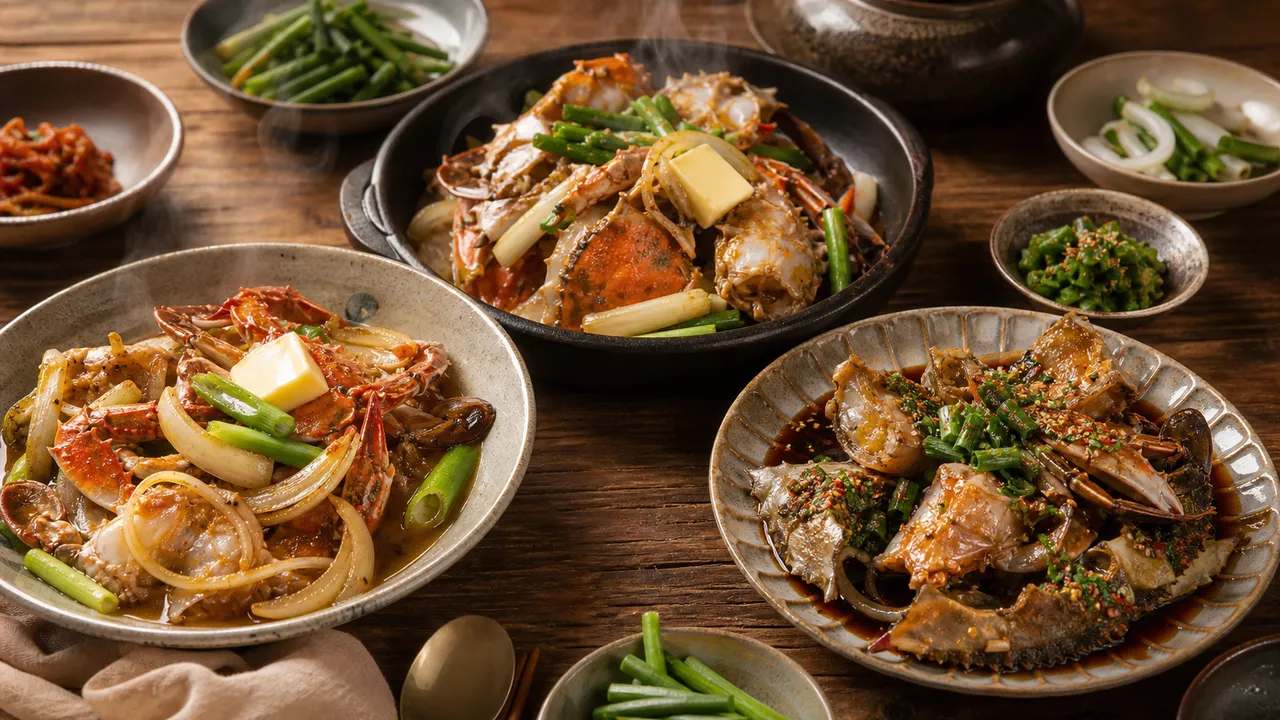
* 이미지는 AI가 생성한 참고 이미지로, 실제 조리 결과물과 다를 수 있습니다.
This super-easy recipe, completed in just 30 minutes, creates a special sweet and sour summer side dish featuring chewy dried miyeok (seaweed) and crunchy cucumber.
📝 Editor's Notes
This is a sweet and sour summer side dish that can be made in 30 minutes with just dried miyeok (seaweed) and cucumber.
It only requires chopping and mixing, making it easy enough for beginner cooks to try.
The brown rice vinegar and prepared mustard (yeon-gyeojja) give it a refreshing taste with a pungent, savory aftertaste, while the crispness of the cucumber and the chewiness of the miyeok create a delightful texture.
It's perfect to eat over rice on hot summer days when you have no appetite, and it also pairs well with naengmyeon (cold noodles) or other noodles.
🛒 Ingredient Tips
Good quality dried miyeok (seaweed) has a deep dark green to bluish-black color.
Natural miyeok from Wando or Gijang is known for its good aroma and texture; choose whole, wide leaves rather than overly broken pieces.
Cucumbers are in season in summer, so they are crispiest then; choose ones with sharp bumps on the surface and a firm feel.
Chwicheong-oi (green cucumber) has a firmer texture than baek-oi (white cucumber), so it doesn't get soft when pickled.
For Cheongyang peppers (청양고추), choose ones with fresh stems and vibrant colors.
🔄 Substitution Guide
If you don't have prepared mustard (yeon-gyeojja) or if children are eating, you can omit it, but it will have a milder flavor without the pungent kick.
Brown rice vinegar can be replaced with apple cider vinegar or regular brewed vinegar; using apple cider vinegar will give it a softer aroma and a slight fruity note.
Zucchini (aeahobak) or radish (mu) can be julienned and pickled in the same way to achieve a crunchy texture instead of cucumber.
Brown sugar can be substituted with white sugar or oligosaccharide; using only oligosaccharide will result in a subtle sweetness and more sheen.
If using guk-ganjang (soup soy sauce) instead of regular soy sauce (jin-ganjang), the color will be lighter, but it's saltier, so reduce the amount.
🥘 Ingredients
👨🍳 Cooking Points
The most important step is pickling the cucumber.
After pickling it in coarse salt, vinegar, and oligosaccharide for at least 20 minutes, you must squeeze out the water thoroughly.
This prevents the salad from getting soggy and helps it stay crisp longer.
Skipping this step will make it watery and bland over time.
Soak miyeok for only 10-20 minutes; soaking it for too long will make it mushy and lose its chewy texture.
Prepared mustard (yeon-gyeojja) should be fully dissolved in the sauce beforehand to prevent clumps, and sesame oil and toasted sesame seeds should be added last to preserve their aroma.
👨🍳 Directions
Place 30g of dried miyeok (seaweed) in a bowl, pour in water, and soak for 10-20 minutes. Then, rinse thoroughly two or three times and drain through a sieve.
Cut the soaked miyeok into bite-sized pieces.
Trim both ends of 1 cucumber, halve it lengthwise, and then julienne it diagonally.
Thinly julienne 1/2 onion (80g). Halve 2 Cheongyang peppers (청양고추), remove the seeds, and chop them.
Halve 1 red chili pepper, remove the seeds, and julienne it lengthwise.
Grate 1 small onion (160g) to prepare 3 tablespoons (160g) of grated onion. (This grated onion will be used in the seasoning sauce.)
Place the julienned cucumber in a bowl, add 1 teaspoon of coarse salt, 1 tablespoon of oligosaccharide, and 1 tablespoon of vinegar. Mix gently by hand and pickle for about 20 minutes.
After 20 minutes, thoroughly squeeze out the water from the pickled cucumber.
In a separate bowl, combine 3 tablespoons of soy sauce (Ganjang), 2 tablespoons of brown sugar, 6 tablespoons of brown rice vinegar, 1/2 tablespoon of minced garlic, and 2 teaspoons of prepared mustard (yeon-gyeojja). Mix until the prepared mustard is well dissolved to create the seasoning sauce.
Add the prepared miyeok and 3 tablespoons of grated onion to the seasoning sauce and mix gently by hand.
Once the miyeok is somewhat mixed with the sauce, add the pickled and squeezed cucumber, julienned onion, Cheongyang peppers, and red chili pepper. Mix gently by hand again.
Finally, add 1 tablespoon of sesame oil and a generous 1 tablespoon of toasted sesame seeds. Mix gently by hand one more time, and your miyeok-muchim (seaweed salad) is complete.
💡 Tips
To enjoy a soft texture, soak the miyeok (seaweed) in water for 10-20 minutes, then rinse thoroughly before use.
For an extra crisp texture and tangy flavor, pickle the cucumber with coarse salt, oligosaccharide, and vinegar for 20-30 minutes, then squeeze out the water before using.
The amount of Cheongyang pepper (청양고추) can be adjusted or omitted according to your preference.
📦 Storage & Reuse
It can be stored in an airtight container in the refrigerator for about 3-4 days.
However, over time, it can become watery, so pour off a little of the liquid before eating to maintain crispiness.
Freezing is not recommended for mixed salads, as the texture becomes soft.
It's best eaten cold, without reheating.
If you have leftover miyeok, you can soak it and use it for miyeok-guk (seaweed soup) or oi-naengguk (cold cucumber soup).
🥢 Who This Is For
This is a perfect family side dish in the summer when appetites often wane due to the heat.
It serves as a refreshing accompaniment to rich meat dishes or grilled fish, cutting through their richness.
It's also great as a topping for Janchi-guksu (banquet noodles) or Bibim-guksu (spicy mixed noodles).
Its tangy flavor makes it a "rice thief" (meaning it's so good you'll eat a lot of rice with it), perfect for lunchboxes, and also suitable as a banchan (side dish) for guests.
🔥 Nutrition Info
For 2-3 servings, the total is around 320 kcal, making it a light side dish of about 110-160 kcal per serving.
Estimated per serving: approximately 3g protein, 4g fat, and 15g carbohydrates; the carbohydrate content is slightly higher due to sugar and oligosaccharide.
Miyeok (seaweed) is low in calories, rich in dietary fiber, iodine, and calcium, while cucumber is high in water and potassium, which helps reduce swelling.
Unsaturated fats and Vitamin E can also be supplemented from sesame oil and toasted sesame seeds.
💬 Frequently Asked Questions
- Q. What ingredients do I need for Refreshing Seaweed Salad (Miyeok-muchim): A Golden Summer Side Dish Recipe?
- Main ingredients include Dried seaweed (miyeok), Onion, Cucumber, Cheongyang pepper (청양고추), Red chili pepper. Good quality dried miyeok (seaweed) has a deep dark green to bluish-black color. Natural miyeok from Wando or Gijang is known for its good aroma and texture; choose whole, wide leaves rather than overly broken pieces. Cucumbers are in season in summer, so they are crispiest then; choose ones with sharp bumps on the surface and a firm feel. Chwicheong-oi (green cucumber) has a firmer texture than baek-oi (white cucumber), so it doesn't get soft when pickled. For Cheongyang peppers (청양고추), choose ones with fresh stems and vibrant colors.
- Q. What are the key tips for making Refreshing Seaweed Salad (Miyeok-muchim): A Golden Summer Side Dish Recipe?
- The most important step is pickling the cucumber. After pickling it in coarse salt, vinegar, and oligosaccharide for at least 20 minutes, you must squeeze out the water thoroughly. This prevents the salad from getting soggy and helps it stay crisp longer. Skipping this step will make it watery and bland over time. Soak miyeok for only 10-20 minutes; soaking it for too long will make it mushy and lose its chewy texture. Prepared mustard (yeon-gyeojja) should be fully dissolved in the sauce beforehand to prevent clumps, and sesame oil and toasted sesame seeds should be added last to preserve their aroma.
- Q. How should I store leftover Refreshing Seaweed Salad (Miyeok-muchim): A Golden Summer Side Dish Recipe?
- It can be stored in an airtight container in the refrigerator for about 3-4 days. However, over time, it can become watery, so pour off a little of the liquid before eating to maintain crispiness. Freezing is not recommended for mixed salads, as the texture becomes soft. It's best eaten cold, without reheating. If you have leftover miyeok, you can soak it and use it for miyeok-guk (seaweed soup) or oi-naengguk (cold cucumber soup).
- Q. How many calories are in Refreshing Seaweed Salad (Miyeok-muchim): A Golden Summer Side Dish Recipe?
- For 2-3 servings, the total is around 320 kcal, making it a light side dish of about 110-160 kcal per serving. Estimated per serving: approximately 3g protein, 4g fat, and 15g carbohydrates; the carbohydrate content is slightly higher due to sugar and oligosaccharide. Miyeok (seaweed) is low in calories, rich in dietary fiber, iodine, and calcium, while cucumber is high in water and potassium, which helps reduce swelling. Unsaturated fats and Vitamin E can also be supplemented from sesame oil and toasted sesame seeds.
- Q. Can I substitute ingredients in Refreshing Seaweed Salad (Miyeok-muchim): A Golden Summer Side Dish Recipe?
- If you don't have prepared mustard (yeon-gyeojja) or if children are eating, you can omit it, but it will have a milder flavor without the pungent kick. Brown rice vinegar can be replaced with apple cider vinegar or regular brewed vinegar; using apple cider vinegar will give it a softer aroma and a slight fruity note. Zucchini (aeahobak) or radish (mu) can be julienned and pickled in the same way to achieve a crunchy texture instead of cucumber. Brown sugar can be substituted with white sugar or oligosaccharide; using only oligosaccharide will result in a subtle sweetness and more sheen. If using guk-ganjang (soup soy sauce) instead of regular soy sauce (jin-ganjang), the color will be lighter, but it's saltier, so reduce the amount.
💬 Comments
No comments yet. Be the first to comment!