
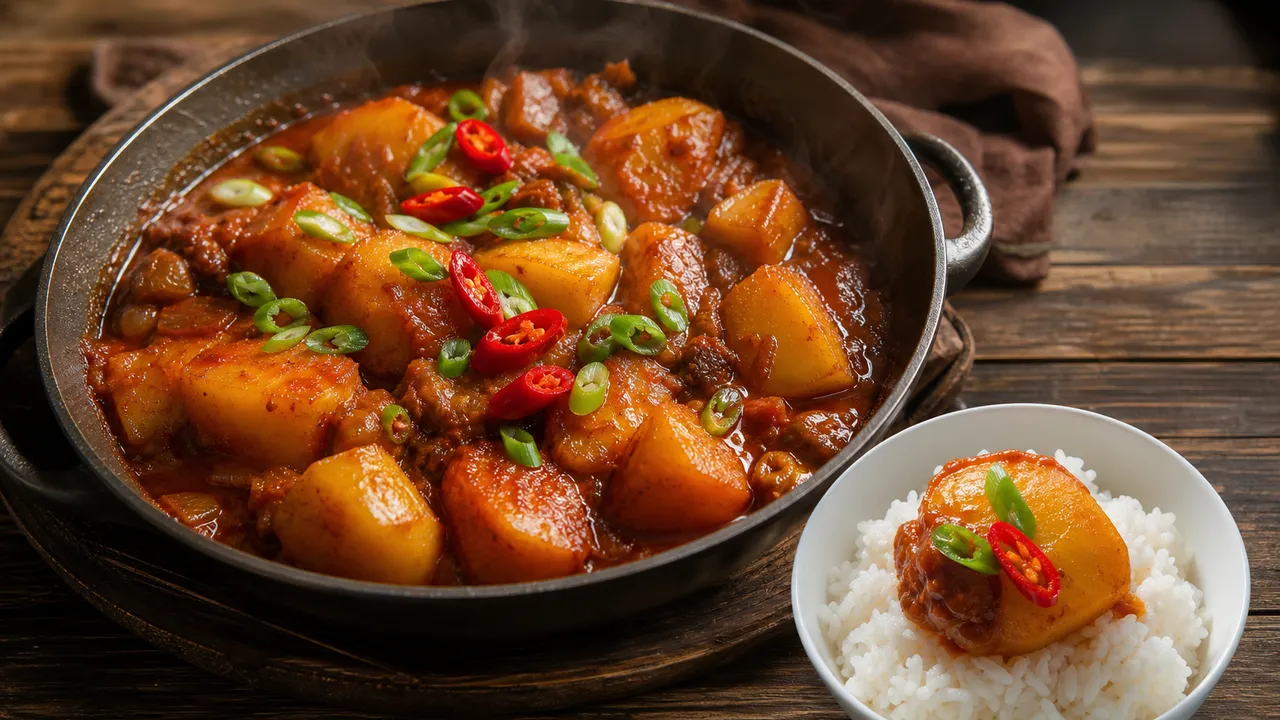
Spicy and Savory Braised Tuna and Potatoes (Chamchi Gamja Jo
* 이미지는 AI가 생성한 참고 이미지로, 실제 조리 결과물과 다를 수 있습니다.
This Tuna and Potato Jorim features fluffy new potatoes and canned tuna simmered in a spicy and savory sauce that soaks in perfectly, making it impossible to stop at just one bowl of rice.
📝 Editor's Notes
Fluffy new potatoes, savory canned tuna, and a spicy-savory sauce combine in this Tuna and Potato Jorim, a 'rice thief' side dish that comes together in just 10 minutes.
Anyone can make it easily and quickly without special skills, making it perfect for a hearty meal even on busy days.
Its spicy flavor is loved by the whole family and is great for stimulating the appetite, especially when served over warm rice.
It's highly recommended in autumn or winter when seasonal potatoes are at their best.
🛒 Ingredient Tips
As potatoes are the star of this dish, it's crucial to choose good ones.
Fresh potatoes have smooth, firm skin and no blemishes.
New potatoes have thin skins and high moisture content, allowing you to fully enjoy their fluffy texture.
For canned tuna, draining a little bit of the oil but adding the liquid back in enhances the umami flavor, but you can also completely drain the oil if preferred.
Choose green onions (대파), Cheongyang chili peppers (청양고추), and red chili peppers that are fresh, vibrant in color, and firm for the best taste and aroma.
🔄 Substitution Guide
You can use sweet potatoes instead of regular potatoes for a sweeter and different flavor.
Sweet potatoes may take a bit longer to cook than regular potatoes, so adjust the cooking time accordingly.
If you don't have canned tuna, you can use canned chicken breast or finely diced pork shoulder.
Chicken breast is high in protein and lean, while pork can add a richer umami flavor.
If Cheongyang chili peppers (청양고추) are too spicy, try using regular green chili peppers or bell peppers for color and a crunchy texture.
For a cleaner, more natural flavor, use anchovy broth instead of Dashida (다시다).
🥘 Ingredients
👨🍳 Cooking Points
There are two key cooking points for this dish.
First, it's important not to cut the potatoes too small; slice them thickly, larger than for curry.
This prevents them from breaking apart during simmering and helps maintain their fluffy texture.
Second, you need to pan-fry the potatoes in cooking oil until lightly browned first.
This slightly cooks the surface of the potatoes, preventing them from breaking easily, and adds a nutty flavor, deepening the overall taste of the jorim.
Stir-fry over medium heat for about 5 minutes until adequately browned.
Finally, the secret to success is to adjust the seasoning by tasting rather than adding all of it at once.
If it's bland, season with tuna fish sauce (참치액젓); if it's too salty, add a little more water to adjust.
👨🍳 Directions
Cut 3 potatoes into thick, bite-sized pieces, slightly larger than those for curry.
Thinly slice 2 Cheongyang chili peppers (청양고추) and 1 red chili pepper. Chop the green onion (대파) into rounds.
Prepare 1/4 of an onion and slice it thinly.
Make the seasoning sauce. In a bowl, combine 1 tbsp minced garlic, 2 tbsp soy sauce, 1/2 tbsp Dashida (다시다), 3 tbsp corn syrup, and 3 tbsp gochugaru (고춧가루). Mix well until the sauce is smooth.
Heat a pan over medium heat, add a moderate amount of cooking oil, then add the sliced potatoes and stir-fry until lightly browned.
Once the potatoes are lightly browned, pour in enough water to just barely cover them.
Add the prepared seasoning sauce, sliced green onion (대파), Cheongyang chili peppers (청양고추), red chili pepper, and onion all at once.
Add 1 can of undrained tuna, then close the lid and simmer over medium heat for about 10 minutes until the sauce has reduced.
Taste and adjust seasoning. If it's too bland, add 1 tbsp tuna fish sauce (참치액젓) to enhance the flavor.
💡 Tips
To fully enjoy the fluffy texture, avoid cutting the potatoes too small; slice them thickly.
It's best to adjust the seasoning by tasting rather than adding too much at first. You can't fix it if it's too salty, but if it's bland, you can adjust the seasoning with tuna fish sauce (참치액젓) to add more umami.
New potatoes have a naturally strong sweetness, so you can omit sugar or adjust the amount to your preference.
📦 Storage & Reuse
Store leftover Tuna and Potato Jorim in an airtight container in the refrigerator for 2-3 days.
For longer storage, you can freeze it, but the potatoes might become slightly softer in texture.
When freezing, it's convenient to portion it into individual servings.
To reheat, microwave for 2-3 minutes or gently simmer in a pan over low heat until warmed through to enjoy the original flavor.
You can also transform leftovers into a delicious fried rice by mixing them with rice, crushed seaweed, and sesame oil.
🥢 Who This Is For
This Spicy and Savory Braised Tuna and Potatoes is excellent as a side dish, especially with steaming hot white rice, where you'll easily find yourself finishing two bowls.
It's recommended as an easy and hearty meal for students living alone or newlyweds, and by adjusting the spice level, it can be a delightful side dish for the whole family, including children.
Pairing it with a refreshing bean sprout soup or seaweed soup will complete the perfect meal.
🔥 Nutrition Info
For a single serving of this Tuna and Potato Jorim, you can expect approximately 350-450 calories.
Protein is estimated at about 20-25g, fat at about 15-20g, and carbohydrates at about 30-40g.
Canned tuna provides high-quality protein and Omega-3 fatty acids, while potatoes are rich in Vitamin C and potassium.
New potatoes, in particular, are high in dietary fiber, which can aid in gut health.
Onions and chili peppers contribute vitamins and antioxidants, helping to balance the nutrition.
The carbohydrate content and calories may vary depending on the amount of sugar or corn syrup used.
💬 Frequently Asked Questions
- Q. What ingredients do I need for Spicy and Savory Braised Tuna and Potatoes (Chamchi Gamja Jorim): An Irresistible Rice Thief Side Dish?
- Main ingredients include Potatoes, Green onion (대파), Cheongyang chili pepper (청양고추), Red chili pepper, Onion. As potatoes are the star of this dish, it's crucial to choose good ones. Fresh potatoes have smooth, firm skin and no blemishes. New potatoes have thin skins and high moisture content, allowing you to fully enjoy their fluffy texture. For canned tuna, draining a little bit of the oil but adding the liquid back in enhances the umami flavor, but you can also completely drain the oil if preferred. Choose green onions (대파), Cheongyang chili peppers (청양고추), and red chili peppers that are fresh, vibrant in color, and firm for the best taste and aroma.
- Q. What are the key tips for making Spicy and Savory Braised Tuna and Potatoes (Chamchi Gamja Jorim): An Irresistible Rice Thief Side Dish?
- There are two key cooking points for this dish. First, it's important not to cut the potatoes too small; slice them thickly, larger than for curry. This prevents them from breaking apart during simmering and helps maintain their fluffy texture. Second, you need to pan-fry the potatoes in cooking oil until lightly browned first. This slightly cooks the surface of the potatoes, preventing them from breaking easily, and adds a nutty flavor, deepening the overall taste of the jorim. Stir-fry over medium heat for about 5 minutes until adequately browned. Finally, the secret to success is to adjust the seasoning by tasting rather than adding all of it at once. If it's bland, season with tuna fish sauce (참치액젓); if it's too salty, add a little more water to adjust.
- Q. How should I store leftover Spicy and Savory Braised Tuna and Potatoes (Chamchi Gamja Jorim): An Irresistible Rice Thief Side Dish?
- Store leftover Tuna and Potato Jorim in an airtight container in the refrigerator for 2-3 days. For longer storage, you can freeze it, but the potatoes might become slightly softer in texture. When freezing, it's convenient to portion it into individual servings. To reheat, microwave for 2-3 minutes or gently simmer in a pan over low heat until warmed through to enjoy the original flavor. You can also transform leftovers into a delicious fried rice by mixing them with rice, crushed seaweed, and sesame oil.
- Q. How many calories are in Spicy and Savory Braised Tuna and Potatoes (Chamchi Gamja Jorim): An Irresistible Rice Thief Side Dish?
- For a single serving of this Tuna and Potato Jorim, you can expect approximately 350-450 calories. Protein is estimated at about 20-25g, fat at about 15-20g, and carbohydrates at about 30-40g. Canned tuna provides high-quality protein and Omega-3 fatty acids, while potatoes are rich in Vitamin C and potassium. New potatoes, in particular, are high in dietary fiber, which can aid in gut health. Onions and chili peppers contribute vitamins and antioxidants, helping to balance the nutrition. The carbohydrate content and calories may vary depending on the amount of sugar or corn syrup used.
- Q. Can I substitute ingredients in Spicy and Savory Braised Tuna and Potatoes (Chamchi Gamja Jorim): An Irresistible Rice Thief Side Dish?
- You can use sweet potatoes instead of regular potatoes for a sweeter and different flavor. Sweet potatoes may take a bit longer to cook than regular potatoes, so adjust the cooking time accordingly. If you don't have canned tuna, you can use canned chicken breast or finely diced pork shoulder. Chicken breast is high in protein and lean, while pork can add a richer umami flavor. If Cheongyang chili peppers (청양고추) are too spicy, try using regular green chili peppers or bell peppers for color and a crunchy texture. For a cleaner, more natural flavor, use anchovy broth instead of Dashida (다시다).
💬 Comments
No comments yet. Be the first to comment!