
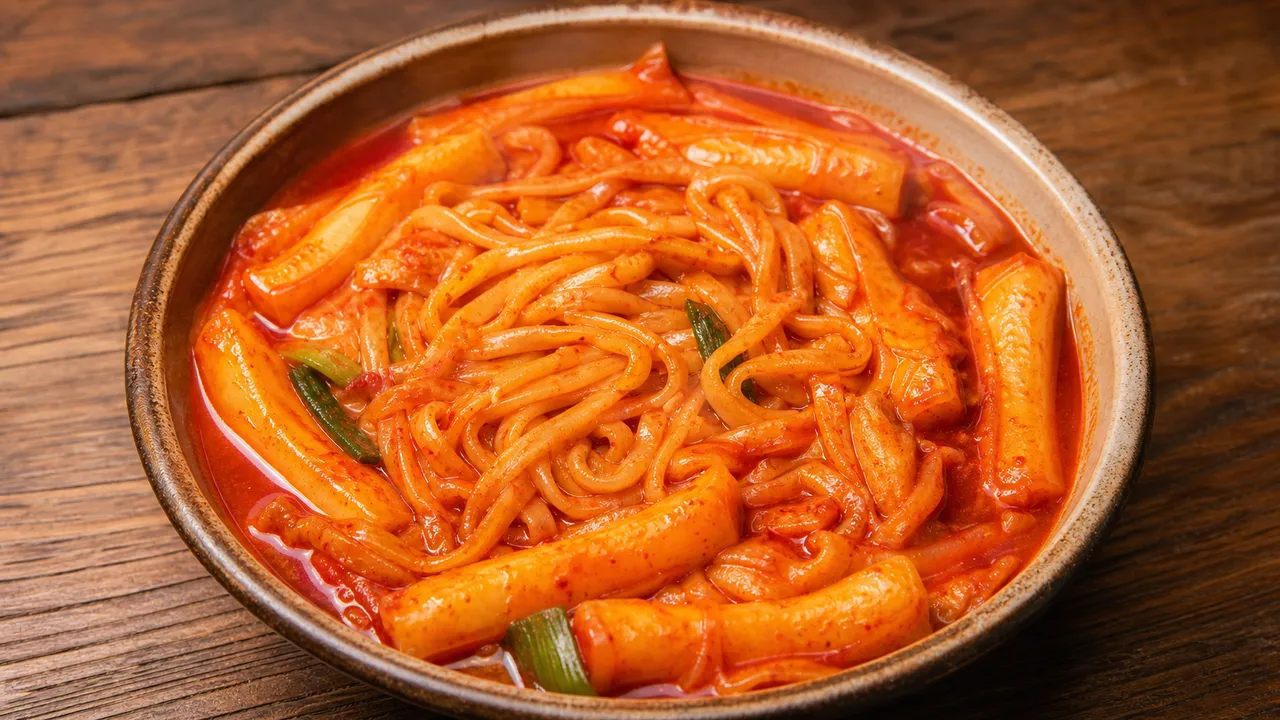
Flavorful Burst! 4 Instant Rosé, Mala, and Cream Tteokbokki
* 이미지는 AI가 생성한 참고 이미지로, 실제 조리 결과물과 다를 수 있습니다.
Here are 4 tteokbokki (떡볶이) recipes that offer a variety of flavors. From Myeolchi Kal-guksu (멸치칼국수) Instant Tteokbokki, Sarigomtang (사리곰탕) Rosé Tteokbokki, Mala Tteokbokki, to Cream Tteokbokki, choose your favorite and enjoy!
📋 4 recipes — Select to view
This instant tteokbokki maximizes umami by utilizing Nongshim Myeolchi Kalguksu (멸치칼국수) powder soup. It features a spicy yet refreshing seafood umami flavor, making it perfect as a meal or a snack with drinks.
📝 Editor's Notes
This Nongshim Myeolchi Kalguksu (멸치칼국수) Instant Tteokbokki (떡볶이) offers deep umami flavor in just 15 minutes, thanks to the Myeolchi Kalguksu powder soup.
Its spicy yet refreshing seafood broth taste is exceptional, making it perfect not only as a meal but also as a delightful accompaniment to drinks.
It's an ideal dish for a warm and hearty meal on a chilly day, or when gathering with friends for a fun time.
The rich flavor of the anchovy broth combined with the spiciness creates an irresistibly addictive taste.
🛒 Ingredient Tips
For tteokbokki (떡볶이) rice cakes, you can choose between wheat tteok (밀떡) or rice tteok (쌀떡) based on your preference.
Wheat tteok (밀떡) absorbs sauce well and has a chewy texture, while rice tteok (쌀떡) is glutinous and more filling.
For eomuk (어묵), using thick Busan-style fish cakes (부산 어묵) will make it even tastier.
Choose fresh, firm cabbage and cut it into large pieces; as it boils, it will release sweetness, enriching the tteokbokki (떡볶이) flavor.
Use both the white and green parts of the green onion to add aroma and color.
🔄 Substitution Guide
Instead of Myeolchi Kalguksu (멸치칼국수) powder soup, you can use regular kelp and anchovy broth.
However, since the unique umami and seasoning of the powder soup might be lacking, adjust the flavor by adding gukganjang (국간장) (Korean soy sauce for soup) or fish sauce, and a bit more Dashida (다시다) to deepen the taste.
If you don't have beef Dashida (다시다), you can use about 1/3 tbsp of Yeondu (연두) or another all-purpose seasoning.
The flavor profile might change slightly, but the basic umami will be maintained.
You can also enjoy it as rabokki (라볶이) by adding only ramen noodles instead of tteok (떡), or by adding sundae (순대) (blood sausage) or dumplings, which are also very delicious.
🥘 Ingredients
👨🍳 Cooking Points
There are two key cooking points for this recipe.
First, fully dissolve the powder soup and seasoning in water, then add the tteok (떡) and eomuk (어묵), and bring it to a rolling boil over high heat.
This allows the ingredients to absorb the seasoning evenly.
Second, once the tteok (떡) plump up, it's crucial to reduce the heat to medium-low and simmer gently for 10 to 15 minutes.
During this process, the tteok (떡) and eomuk (어묵) will absorb the sauce deeply, making them much more delicious.
Be careful with the heat control, as boiling too vigorously for too long can quickly reduce the broth and burn the ingredients.
👨🍳 Directions
In a pan, add 2 ½ cups of water and Nongshim Myeolchi Kalguksu (멸치칼국수) powder soup. Stir well until the powder is fully dissolved.
Add 1.5 tbsp of fine gochugaru (고춧가루), 0.5 tbsp of spicy gochugaru (고춧가루), 1.5 tbsp of sugar, 1/3 tbsp of beef Dashida (다시다) seasoning, 1/3 tbsp of minced garlic, and 1 tbsp of corn syrup. Mix well.
Add the tteok (떡), eomuk (어묵), large-cut cabbage, and chopped green onions.
Add Nongshim Myeolchi Kalguksu (멸치칼국수) noodles and boiled eggs on top. Bring to a rolling boil over high heat.
Once the tteok (떡) plump up, reduce the heat to medium-low and simmer gently for about 10 to 15 minutes.
Finally, sprinkle black pepper to finish.
After enjoying the tteokbokki (떡볶이), if there's sauce left at the bottom, add cooked rice, crushed gim (김), and sesame oil to the remaining sauce. Stir-fry over high heat until the moisture evaporates and it becomes a crispy fried rice. Enjoy!
💡 Tips
Once the tteokbokki (떡볶이) comes to a boil and the tteok (떡) plump up, reduce the heat to medium-low and simmer gently for 10-15 minutes.
After enjoying the tteokbokki (떡볶이), you can make delicious fried rice by adding cooked rice, crushed gim (김), and sesame oil to the remaining sauce and stir-frying it over high heat until crispy.
📦 Storage & Reuse
Store leftover tteokbokki (떡볶이) in an airtight container in the refrigerator for 2-3 days.
When reheating, warm it slowly over low heat or microwave it.
Adding a little water or broth at this time can help keep the sauce from reducing too much, ensuring it remains moist.
If you have leftover sauce, you can freeze it and use it for future eomuk-tang (어묵탕) (fish cake soup) or other stews.
For leftover fried rice seasoning, you can mix it with rice, crushed gim (김), and sesame oil, freeze it, and stir-fry it later.
🥢 Who This Is For
Thanks to its spicy yet refreshing flavor, this Myeolchi Kalguksu (멸치칼국수) Instant Tteokbokki (떡볶이) is a dish that anyone, regardless of age or gender, will love.
We highly recommend it particularly to those who enjoy spicy food or prefer seafood-based umami flavors.
It's excellent as a weekend lunch, an evening snack with drinks, or a main dish for a home party with friends, sure to earn you compliments.
It can be enjoyed even more deliciously with a cold beer or makgeolli (막걸리) (rice wine), and adding jumeokbap (주먹밥) (rice balls) or gim-mari (김말이) (fried seaweed rolls) will make for an even more generous spread.
🔥 Nutrition Info
One serving of this Myeolchi Kalguksu (멸치칼국수) Instant Tteokbokki (떡볶이), including noodles, is estimated to be around 500-600 kcal.
The main ingredients, tteok (떡) and noodles, provide approximately 80-100g of carbohydrates, while eomuk (어묵) and boiled eggs contribute about 15-20g of protein.
About 10-15g of fat will be present from the sauce and fish cakes.
While cabbage and green onions offer small amounts of vitamins and dietary fiber, the sodium content can be high, so it's advisable to control broth intake.
Please remember that consuming it with fried rice will further increase calorie and carbohydrate intake.
💬 Frequently Asked Questions
- Q. What ingredients do I need for Flavorful Burst! 4 Instant Rosé, Mala, and Cream Tteokbokki Recipes?
- Main ingredients include Water, Nongshim Myeolchi Kal-guksu (멸치칼국수) Powdered Soup Base, Fine Gochugaru (고춧가루), Spicy Gochugaru (고춧가루), Sugar. For tteok (떡), you can choose between wheat rice cakes (mil-tteok (밀떡)) or rice flour rice cakes (ssal-tteok (쌀떡)) according to your preference, but if you prefer a chewy texture, mil-tteok (밀떡) is recommended. For eomuk (어묵), rather than very thin ones, choose thick square or bar-shaped fish cakes, as they will retain a better texture when boiled. Select fresh and firm cabbage, and for green onions, use ones with more white stalk than green leaves for a richer sweetness and aroma. The Myeolchi Kal-guksu (멸치칼국수) powdered soup base is a key ingredient for this recipe, so be sure to prepare it.
- Q. What are the key tips for making Flavorful Burst! 4 Instant Rosé, Mala, and Cream Tteokbokki Recipes?
- The most important cooking points are, first, completely dissolving the powdered soup base and seasonings in the water. Stir thoroughly to avoid lumps. Second, it's crucial to correctly time when the tteok (떡) plump up after adding the rice cakes, fish cakes, and vegetables and bringing it to a rolling boil over high heat. Be careful not to overcook, as the rice cakes can become mushy. Third, once the tteok (떡) plump up, reduce the heat to medium-low and simmer gently for about 10-15 minutes. This process allows the seasoning to deeply penetrate the rice cakes, resulting in a richer flavor. Lastly, always sprinkle black pepper at the very end to preserve its aroma.
- Q. How should I store leftover Flavorful Burst! 4 Instant Rosé, Mala, and Cream Tteokbokki Recipes?
- Cooked tteokbokki (떡볶이) is best stored in an airtight container in the refrigerator for about 2-3 days. Storing it for too long may cause the rice cakes to harden or the sauce flavor to change. Freezing is not recommended as the texture of the rice cakes can easily change. To reheat, warm slowly over low heat, stirring occasionally, or microwave. Adding a little water or broth at this time can help keep the rice cakes from drying out and ensure they reheat moistly. Leftover ingredients like green onions and cabbage can be used in other stir-fries or added to dishes like doenjang jjigae (된장찌개).
- Q. How many calories are in Flavorful Burst! 4 Instant Rosé, Mala, and Cream Tteokbokki Recipes?
- This tteokbokki (떡볶이) recipe's nutritional content varies depending on the ingredient amounts, but it is estimated to be around 400-550 kcal per serving. Carbohydrate content is relatively high, at approximately 60-80g, due to the tteok (떡), noodles, sugar, and corn syrup. Protein intake is about 15-25g from eomuk (어묵), beef dashida (다시다), and eggs. Fat content is around 10-20g from eomuk (어묵) and sesame oil. Notably, cabbage and green onions provide Vitamin C and dietary fiber, and the umami components of the Myeolchi Kal-guksu (멸치칼국수) soup also contribute nutritionally. Enjoying fried rice as well will further increase calorie and carbohydrate intake.
- Q. Can I substitute ingredients in Flavorful Burst! 4 Instant Rosé, Mala, and Cream Tteokbokki Recipes?
- Instead of Myeolchi Kal-guksu (멸치칼국수) powdered soup base, you can use a seafood dashi (다시) pack or anchovy broth to achieve a cleaner, deeper seafood broth flavor. However, the unique umami of the powdered soup base may be slightly reduced. If you don't have beef dashida (다시다), you can use a small amount of oyster sauce or other types of seasoning, but the flavor profile might change slightly. If you dislike eomuk (어묵) or are vegetarian, you can add fried tofu pouches (yubu (유부)), mushrooms, or pumpkin to enhance texture and nutrition. For a fresher spicy kick, you can substitute spicy gochugaru (고춧가루) with thinly sliced Cheongyang chili peppers (청양고추).
💬 Comments
No comments yet. Be the first to comment!