
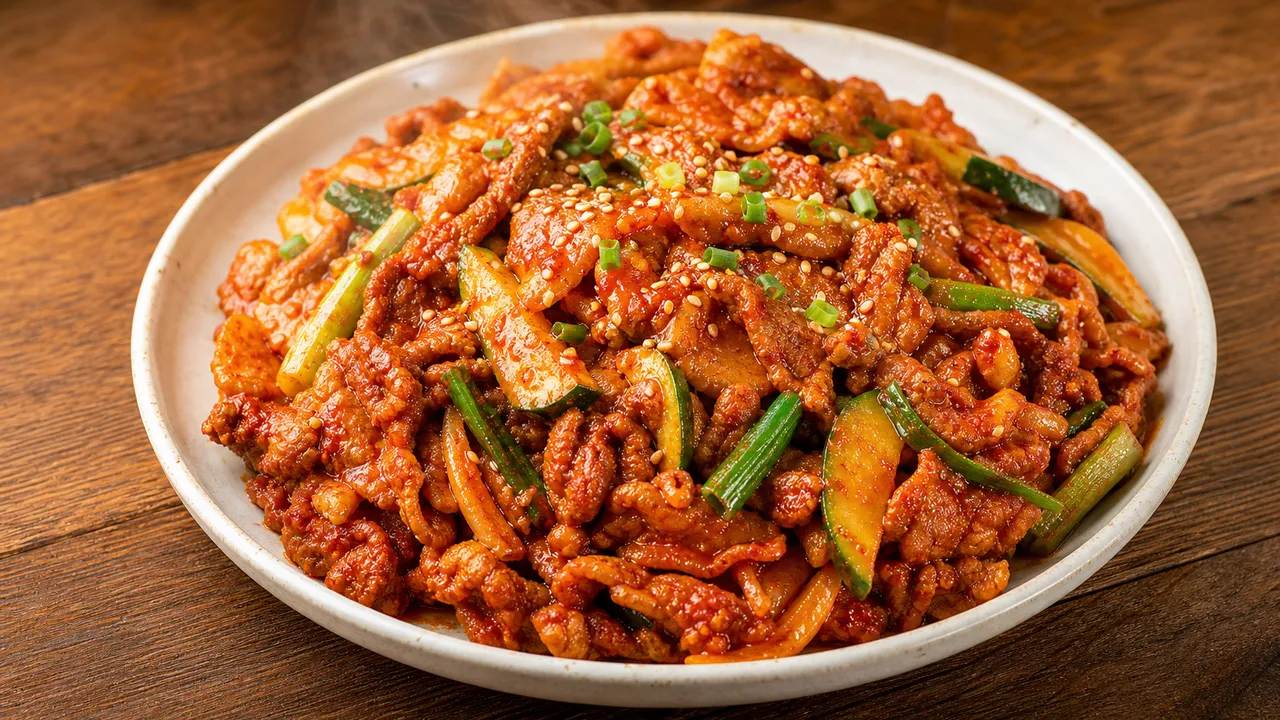
Super Easy Spicy Pork Stir-fry (Jeyuk-bokkeum) with Thinly S
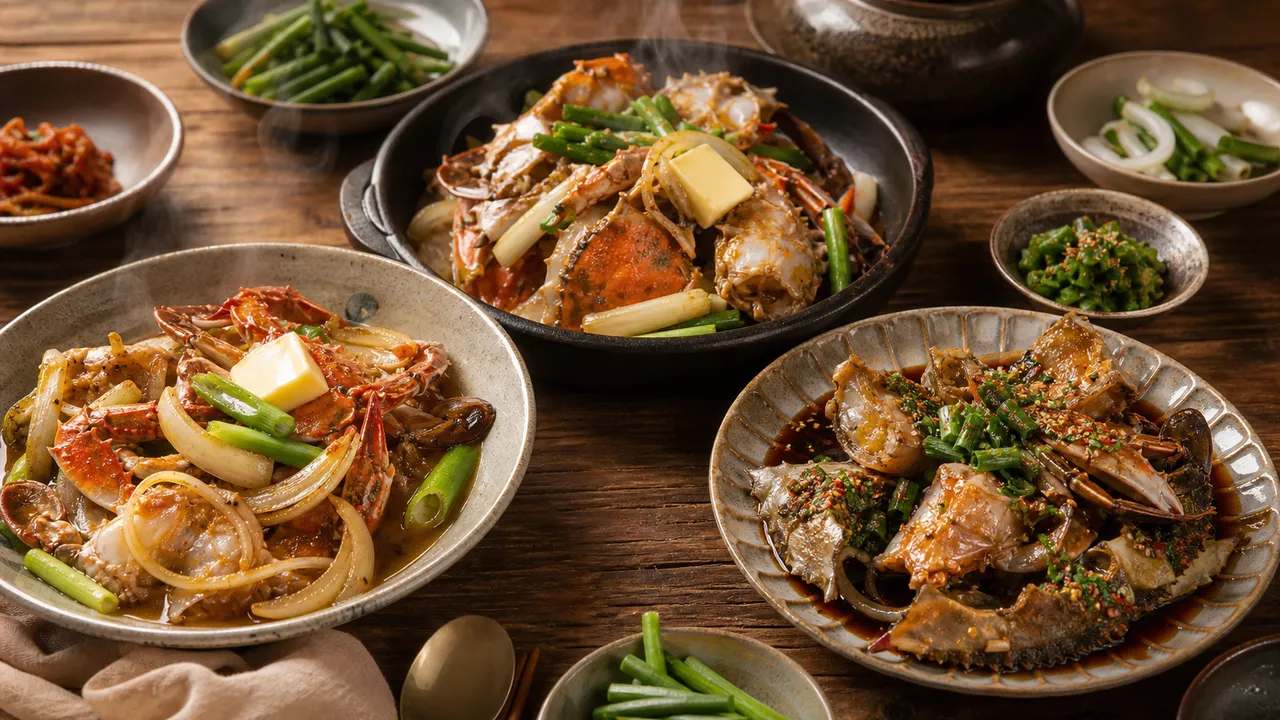
* 이미지는 AI가 생성한 참고 이미지로, 실제 조리 결과물과 다를 수 있습니다.
This super easy Jeyuk-bokkeum (제육볶음), made with 1.1 lb (500g) of thinly sliced pork belly (대패삼겹살) and vegetables, is stir-fried in just 15 minutes. It's characterized by a rich, smoky flavor and tender meat, achieved by cooking quickly over high heat.
📝 Editor's Notes
This recipe introduces a super easy Jeyuk-bokkeum (제육볶음) that comes together in just 15 minutes with 1.1 lb (500g) of thinly sliced pork belly (대패삼겹살) and various vegetables.
Quickly stir-fried over high heat, the meat is tender and boasts a smoky flavor, which, combined with the spicy-sweet sauce, makes for a truly satisfying meal.
We highly recommend it for busy weeknight dinners or weekend lunches.
This fiery and delicious dish is sure to relieve stress and can be enjoyed by the whole family.
🛒 Ingredient Tips
Thinly sliced pork belly (대패삼겹살) has the advantage of a short cooking time due to its thin cut.
When purchasing, choose meat with a vibrant red color and white fat for freshness and good taste.
For onions, select ones with firm, glossy skin that feel heavy.
For large green onions, look for clear, firm green leaves and white stalks.
For butterhead lettuce, choose fresh, crisp leaves that are not wilted to best enjoy them as ssam (쌈 - lettuce wraps).
🔄 Substitution Guide
Instead of thinly sliced pork belly (대패삼겹살), you can use thinly sliced pork neck or pork shoulder.
However, cooking time may be longer if the meat is thicker, so adjust accordingly.
The texture might also be chewier than with thinly sliced pork belly.
If you don't have gochujang (고추장), you can increase the amount of gochugaru (고춧가루) and add about 0.5 tbsp of doenjang (된장 - Korean fermented soybean paste) for extra umami.
Note that adding doenjang will alter the flavor profile.
For ssam (쌈 - lettuce wraps), feel free to use your favorite leafy greens like regular lettuce, perilla leaves (깻잎 - kkaennip), or chicory instead of butterhead lettuce.
Each vegetable offers a unique aroma and texture for a different culinary experience.
🥘 Ingredients
👨🍳 Cooking Points
The key to this Jeyuk-bokkeum (제육볶음) lies in 'heat control' and 'cooking time'.
First, add the thinly sliced pork belly (대패삼겹살) to a preheated pan and stir-fry quickly over high heat to prevent the meat from becoming tough and to achieve that distinct smoky flavor.
Stir-fry until the meat is about halfway cooked.
Second, after adding the seasoning, reduce the heat to low to prevent the sauce from burning and to allow it to be well absorbed by the meat.
It's important to stir continuously to prevent burning.
Third, the crucial point is to add the vegetables when the meat is about halfway cooked.
Adding them too early can make them mushy, while adding them too late can result in a loss of their crisp texture.
Try to complete all cooking within approximately 15 minutes.
👨🍳 Directions
Cut 1/2 large onion into large, bite-sized pieces and slice 1 large green onion into large pieces to prepare the vegetables.
In a preheated pan, add 1.1 lb (500g) of thinly sliced pork belly (대패삼겹살) and stir-fry quickly over high heat until about halfway cooked.
Reduce the heat to low. Add 2 tbsp mirin (맛술), 1 tbsp oligosaccharide syrup, 2 tbsp gochugaru (고춧가루), 3 tbsp soy sauce, 1 tbsp minced garlic, 1 tbsp gochujang (고추장), 0.5 tbsp sugar, and black pepper to taste. Stir and cook until the sauce is well incorporated into the meat.
Add the sliced onion and large green onion. Stir-fry for about 15 minutes until the vegetables have softened.
Transfer the finished Jeyuk-bokkeum (제육볶음) to a plate, drizzle with sesame oil, and sprinkle with toasted sesame seeds for garnish.
Serve with butterhead lettuce and enjoy.
💡 Tips
Thinly sliced pork belly (대패삼겹살) cooks quickly, making it suitable for busy individuals.
For Jeyuk-bokkeum (제육볶음), stir-fry quickly over high heat to prevent the meat from becoming tough and to enhance its smoky flavor.
After adding the seasoning, reduce the heat to low to prevent burning. Add the vegetables when the meat is about halfway cooked.
Instead of regular lettuce, using butterhead lettuce for ssam (쌈 - lettuce wraps) offers a softer yet crisp texture, making it even more delicious.
📦 Storage & Reuse
Store leftover Jeyuk-bokkeum (제육볶음) in an airtight container in the refrigerator for 2-3 days.
For longer storage, portion it out and freeze.
It can be kept in the freezer for about 2 weeks.
To reheat, microwave or stir-fry in a pan until warm.
When reheating frozen Jeyuk-bokkeum, moisture may form during thawing, so stir-fry it quickly over high heat to evaporate the water for a better taste.
Using leftover Jeyuk-bokkeum to make fried rice with rice, shredded seaweed, and sesame oil is also a great idea.
🥢 Who This Is For
This Jeyuk-bokkeum (제육볶음) is especially recommended for busy professionals and beginner cooks, as it allows you to complete a fantastic meal in a short amount of time.
If you enjoy a spicier kick, feel free to add a bit more gochugaru (고춧가루) or gochujang (고추장).
Enjoy it as a rice bowl over warm rice, or serve it alongside a warm bean sprout soup or seaweed soup for a more hearty meal.
It also pairs wonderfully with a cold beer.
🔥 Nutrition Info
This recipe is for 2 servings, with approximately 650-700 calories per serving.
Each serving contains about 30-35g of protein, 50-55g of fat, and 20-25g of carbohydrates.
Thinly sliced pork belly (대패삼겹살) contains various nutrients found in pork, particularly rich in protein and B vitamins, which help with fatigue recovery.
Onions and large green onions provide vitamin C and dietary fiber, beneficial for boosting immunity and digestion.
Gochujang (고추장) and gochugaru (고춧가루) contain capsaicin, which helps to stimulate metabolism.
Serving with butterhead lettuce provides additional vitamins and minerals, making for a more balanced meal.
💬 Frequently Asked Questions
- Q. What ingredients do I need for Super Easy Spicy Pork Stir-fry (Jeyuk-bokkeum) with Thinly Sliced Pork Belly?
- Main ingredients include Thinly Sliced Pork Belly (대패삼겹살), Onion, Large Green Onion, Mirin (맛술), Oligosaccharide Syrup. Thinly sliced pork belly (대패삼겹살) has the advantage of a short cooking time due to its thin cut. When purchasing, choose meat with a vibrant red color and white fat for freshness and good taste. For onions, select ones with firm, glossy skin that feel heavy. For large green onions, look for clear, firm green leaves and white stalks. For butterhead lettuce, choose fresh, crisp leaves that are not wilted to best enjoy them as ssam (쌈 - lettuce wraps).
- Q. What are the key tips for making Super Easy Spicy Pork Stir-fry (Jeyuk-bokkeum) with Thinly Sliced Pork Belly?
- The key to this Jeyuk-bokkeum (제육볶음) lies in 'heat control' and 'cooking time'. First, add the thinly sliced pork belly (대패삼겹살) to a preheated pan and stir-fry quickly over high heat to prevent the meat from becoming tough and to achieve that distinct smoky flavor. Stir-fry until the meat is about halfway cooked. Second, after adding the seasoning, reduce the heat to low to prevent the sauce from burning and to allow it to be well absorbed by the meat. It's important to stir continuously to prevent burning. Third, the crucial point is to add the vegetables when the meat is about halfway cooked. Adding them too early can make them mushy, while adding them too late can result in a loss of their crisp texture. Try to complete all cooking within approximately 15 minutes.
- Q. How should I store leftover Super Easy Spicy Pork Stir-fry (Jeyuk-bokkeum) with Thinly Sliced Pork Belly?
- Store leftover Jeyuk-bokkeum (제육볶음) in an airtight container in the refrigerator for 2-3 days. For longer storage, portion it out and freeze. It can be kept in the freezer for about 2 weeks. To reheat, microwave or stir-fry in a pan until warm. When reheating frozen Jeyuk-bokkeum, moisture may form during thawing, so stir-fry it quickly over high heat to evaporate the water for a better taste. Using leftover Jeyuk-bokkeum to make fried rice with rice, shredded seaweed, and sesame oil is also a great idea.
- Q. How many calories are in Super Easy Spicy Pork Stir-fry (Jeyuk-bokkeum) with Thinly Sliced Pork Belly?
- This recipe is for 2 servings, with approximately 650-700 calories per serving. Each serving contains about 30-35g of protein, 50-55g of fat, and 20-25g of carbohydrates. Thinly sliced pork belly (대패삼겹살) contains various nutrients found in pork, particularly rich in protein and B vitamins, which help with fatigue recovery. Onions and large green onions provide vitamin C and dietary fiber, beneficial for boosting immunity and digestion. Gochujang (고추장) and gochugaru (고춧가루) contain capsaicin, which helps to stimulate metabolism. Serving with butterhead lettuce provides additional vitamins and minerals, making for a more balanced meal.
- Q. Can I substitute ingredients in Super Easy Spicy Pork Stir-fry (Jeyuk-bokkeum) with Thinly Sliced Pork Belly?
- Instead of thinly sliced pork belly (대패삼겹살), you can use thinly sliced pork neck or pork shoulder. However, cooking time may be longer if the meat is thicker, so adjust accordingly. The texture might also be chewier than with thinly sliced pork belly. If you don't have gochujang (고추장), you can increase the amount of gochugaru (고춧가루) and add about 0.5 tbsp of doenjang (된장 - Korean fermented soybean paste) for extra umami. Note that adding doenjang will alter the flavor profile. For ssam (쌈 - lettuce wraps), feel free to use your favorite leafy greens like regular lettuce, perilla leaves (깻잎 - kkaennip), or chicory instead of butterhead lettuce. Each vegetable offers a unique aroma and texture for a different culinary experience.
💬 Comments
No comments yet. Be the first to comment!