

Clean-Tasting Kimchi Jjigae: A Recipe to Enhance Umami by Wa
* 이미지는 AI가 생성한 참고 이미지로, 실제 조리 결과물과 다를 수 있습니다.
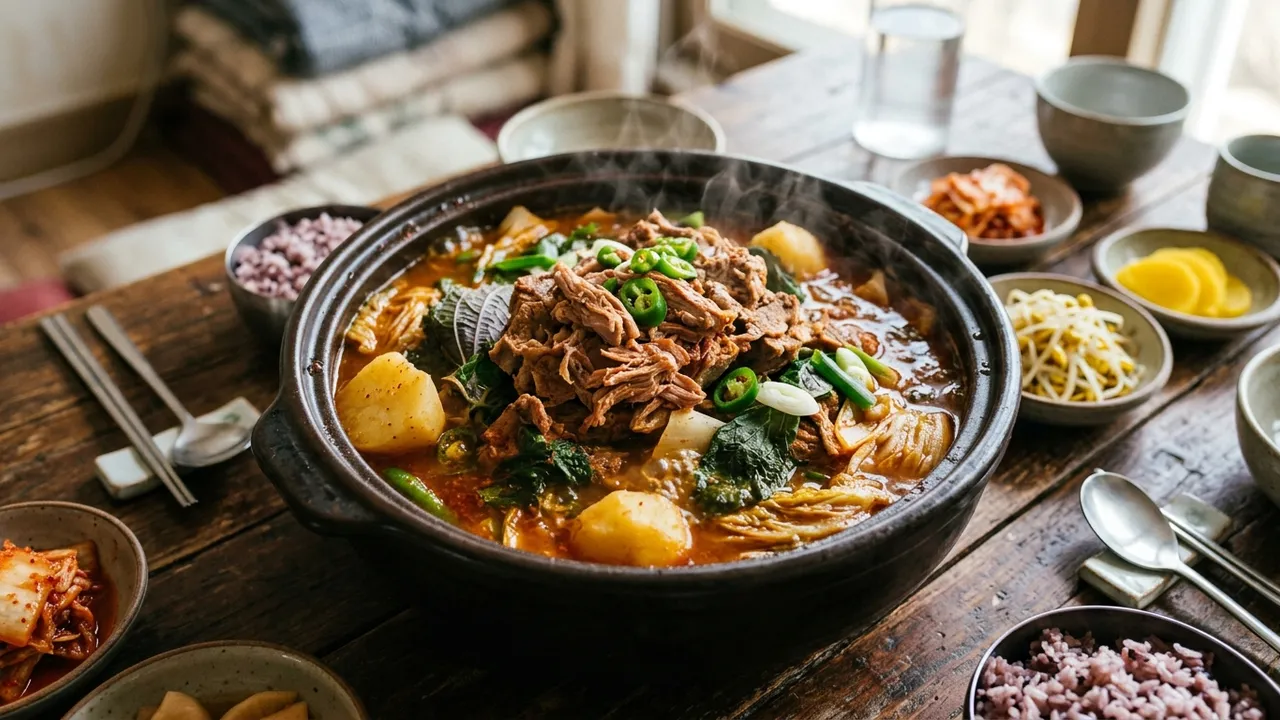
This Kimchi Jjigae (김치찌개) features lean pork hind leg and aged kimchi, washed and simmered to create a clean and deeply savory flavor. Ready in just 35 minutes, it's a light and comforting dish that the whole family, including children, can enjoy.
📝 Editor's Notes
This Kimchi Jjigae (김치찌개), made by simmering lean pork hind leg and thoroughly washed Mugeunji (묵은지), is characterized by its clean yet deeply savory flavor, ready in just 35 minutes.
With less fat, it boasts a light taste, where the refreshing coolness of aged kimchi harmonizes with the subtle umami of tomatoes.
It's a flavor that the whole family, from children to adults, can enjoy without feeling heavy.
It's especially recommended for those who prefer a refreshing and invigorating broth, making it a perfect and hearty meal with a warm bowl of rice on chilly days.
🛒 Ingredient Tips
For this recipe's key ingredient, Mugeunji (묵은지), it's important to choose one that isn't excessively sour or has a strong 'old' smell.
Overly sour Mugeunji (묵은지) can retain its strong flavor even after a light rinse.
Pork hind leg is excellent for achieving a clean-tasting broth due to its low fat content.
Fresh pork hind leg should be pinkish-red, firm, and odorless.
Choose medium-sized tomatoes that are firm and have glossy skins.
Ripe tomatoes will add a deep umami flavor to the broth.
🔄 Substitution Guide
For an even lighter and lower-calorie option, you can substitute the pork hind leg with 1.3 lbs (600g) of chicken breast.
Chicken breast cooks faster than pork, so adjust the broth simmering time accordingly.
The flavor will be slightly lighter and cleaner than with pork.
If Mugeunji (묵은지) is unavailable, well-fermented napa cabbage kimchi can be used, but since it might be less sour, you can add 1/2 tbsp of vinegar to compensate for the acidity.
If you don't have dried anchovies for broth or powdered anchovy broth, you can make the broth with 2-3 pieces of kelp (dashima).
Kelp is a good alternative for those with seafood allergies.
To avoid bitterness, remove the kelp after simmering for about 10 minutes.
🥘 Ingredients
👨🍳 Cooking Points
The first secret to this Kimchi Jjigae (김치찌개) lies in its 'broth.' It's crucial to simmer the pork, onion, green onions, and tomato for at least 30 minutes to create a deep, flavorful broth.
The longer the tomato simmers, the more its umami intensifies, so make sure to cook it sufficiently.
The second point is how to prepare the Mugeunji (묵은지): lightly rinse off excessive seasoning and the aged smell, but be careful not to wash it until it's completely pale, as this can diminish the kimchi's authentic flavor.
Finally, the key to seasoning is to first use 1/2 tbsp of Saeujeot (새우젓), and then add a very slight amount of salt if more seasoning is needed.
The Saeujeot (새우젓) adds depth, while the salt provides a clean finish to the taste.
👨🍳 Directions
Add 1.3 liters of water to a pot, along with 7-10 large dried anchovies for broth or 2 packets of powdered anchovy broth.
Next, add 1.3 lbs (600g) of pork hind leg, 1/2 onion cut in half, the white parts of 2 large green onions cut into three pieces, and 1 medium tomato quartered (peel and remove the tough stem part). Cover the pot and simmer for at least 30 minutes to make the broth.
Once the broth is ready, remove the onion, the white parts of the green onions, and the dried anchovies. If tomato skins have floated to the surface, remove them as well.
Lightly rinse 1/4 head of Mugeunji (묵은지) and the shredded radish (무채) from inside the kimchi under running water, just enough to remove excessive seasoning and some of the aged smell. Squeeze out the water. (Be careful not to wash the kimchi until it's completely pale.)
Cut the washed Mugeunji (묵은지) into bite-sized pieces (about four sections) and add them to the broth. Bring to a boil.
Add 1 tbsp of Gochugaru (고춧가루), cover the pot, and simmer for about 5 more minutes until the flavors from the kimchi are fully released.
Season with 1/2 tbsp of Saeujeot (새우젓) (using only the shrimp solids), and add a very slight amount of salt if needed.
Finally, garnish with the green parts of the green onions and serve.
💡 Tips
Simmering the tomato for a long time when making the broth will double the umami, enhancing the deep flavor of the kimchi jjigae.
Using lean pork hind leg results in a cleaner and lighter-tasting broth.
When washing Mugeunji (묵은지), only rinse lightly to primarily remove the aged smell and excessive seasoning.
Using a cast-iron pot, which retains heat well, is excellent for simmering stews for a long time to develop rich flavors.
📦 Storage & Reuse
The finished kimchi jjigae can be stored in an airtight container in the refrigerator for 3-4 days.
If you've made a generous amount of broth, portioning it out and freezing it is a good idea.
It can be frozen for up to approximately one month.
When reheating, gently simmer over medium heat, adjusting the seasoning with Saeujeot (새우젓) or salt if needed.
Leftover kimchi jjigae broth can be transformed into delicious kimchi fried rice by stir-frying it with rice, shredded gim (김, dried seaweed), and sesame oil, or it makes a fantastic meal with added instant ramen noodles.
🥢 Who This Is For
This clean-tasting Kimchi Jjigae (김치찌개) is perfect for those who dislike greasy foods or are looking for a non-spicy dish that can be enjoyed with children.
It's especially ideal for soothing the richness after holidays or when you want a light yet hearty meal.
It pairs wonderfully with freshly cooked white rice, and serving it with Gyeran-mari (계란말이, rolled omelet) or Dubu-jorim (두부조림, braised tofu) will create an even more abundant meal.
The refreshing anchovy broth makes it even more invigorating.
🔥 Nutrition Info
This Kimchi Jjigae (김치찌개) is estimated to be around 300-350 kcal per serving.
Based on 1.3 lbs (600g) of pork hind leg for 4 servings, each serving will contain about 5.3 oz (150g) of meat, providing approximately 30g of protein.
Due to the use of pork hind leg, the fat content is low, around 10g, and carbohydrates from Mugeunji (묵은지) and vegetables will be approximately 20-25g.
Mugeunji (묵은지) is rich in probiotics, and tomatoes are high in lycopene, an antioxidant, making this a healthy meal.
It also provides Vitamin C and dietary fiber, adding to its nutritional value.
💬 Frequently Asked Questions
- Q. What ingredients do I need for Clean-Tasting Kimchi Jjigae: A Recipe to Enhance Umami by Washing Aged Kimchi?
- Main ingredients include Mugeunji (묵은지), Onion, Green onions, Medium tomato, Pork hind leg. For this recipe's key ingredient, Mugeunji (묵은지), it's important to choose one that isn't excessively sour or has a strong 'old' smell. Overly sour Mugeunji (묵은지) can retain its strong flavor even after a light rinse. Pork hind leg is excellent for achieving a clean-tasting broth due to its low fat content. Fresh pork hind leg should be pinkish-red, firm, and odorless. Choose medium-sized tomatoes that are firm and have glossy skins. Ripe tomatoes will add a deep umami flavor to the broth.
- Q. What are the key tips for making Clean-Tasting Kimchi Jjigae: A Recipe to Enhance Umami by Washing Aged Kimchi?
- The first secret to this Kimchi Jjigae (김치찌개) lies in its 'broth.' It's crucial to simmer the pork, onion, green onions, and tomato for at least 30 minutes to create a deep, flavorful broth. The longer the tomato simmers, the more its umami intensifies, so make sure to cook it sufficiently. The second point is how to prepare the Mugeunji (묵은지): lightly rinse off excessive seasoning and the aged smell, but be careful not to wash it until it's completely pale, as this can diminish the kimchi's authentic flavor. Finally, the key to seasoning is to first use 1/2 tbsp of Saeujeot (새우젓), and then add a very slight amount of salt if more seasoning is needed. The Saeujeot (새우젓) adds depth, while the salt provides a clean finish to the taste.
- Q. How should I store leftover Clean-Tasting Kimchi Jjigae: A Recipe to Enhance Umami by Washing Aged Kimchi?
- The finished kimchi jjigae can be stored in an airtight container in the refrigerator for 3-4 days. If you've made a generous amount of broth, portioning it out and freezing it is a good idea. It can be frozen for up to approximately one month. When reheating, gently simmer over medium heat, adjusting the seasoning with Saeujeot (새우젓) or salt if needed. Leftover kimchi jjigae broth can be transformed into delicious kimchi fried rice by stir-frying it with rice, shredded gim (김, dried seaweed), and sesame oil, or it makes a fantastic meal with added instant ramen noodles.
- Q. How many calories are in Clean-Tasting Kimchi Jjigae: A Recipe to Enhance Umami by Washing Aged Kimchi?
- This Kimchi Jjigae (김치찌개) is estimated to be around 300-350 kcal per serving. Based on 1.3 lbs (600g) of pork hind leg for 4 servings, each serving will contain about 5.3 oz (150g) of meat, providing approximately 30g of protein. Due to the use of pork hind leg, the fat content is low, around 10g, and carbohydrates from Mugeunji (묵은지) and vegetables will be approximately 20-25g. Mugeunji (묵은지) is rich in probiotics, and tomatoes are high in lycopene, an antioxidant, making this a healthy meal. It also provides Vitamin C and dietary fiber, adding to its nutritional value.
- Q. Can I substitute ingredients in Clean-Tasting Kimchi Jjigae: A Recipe to Enhance Umami by Washing Aged Kimchi?
- For an even lighter and lower-calorie option, you can substitute the pork hind leg with 1.3 lbs (600g) of chicken breast. Chicken breast cooks faster than pork, so adjust the broth simmering time accordingly. The flavor will be slightly lighter and cleaner than with pork. If Mugeunji (묵은지) is unavailable, well-fermented napa cabbage kimchi can be used, but since it might be less sour, you can add 1/2 tbsp of vinegar to compensate for the acidity. If you don't have dried anchovies for broth or powdered anchovy broth, you can make the broth with 2-3 pieces of kelp (dashima). Kelp is a good alternative for those with seafood allergies. To avoid bitterness, remove the kelp after simmering for about 10 minutes.
💬 Comments
No comments yet. Be the first to comment!