
Spicy Cheongyang Chili Paste: The Addictive 'Rice Thief' Rec
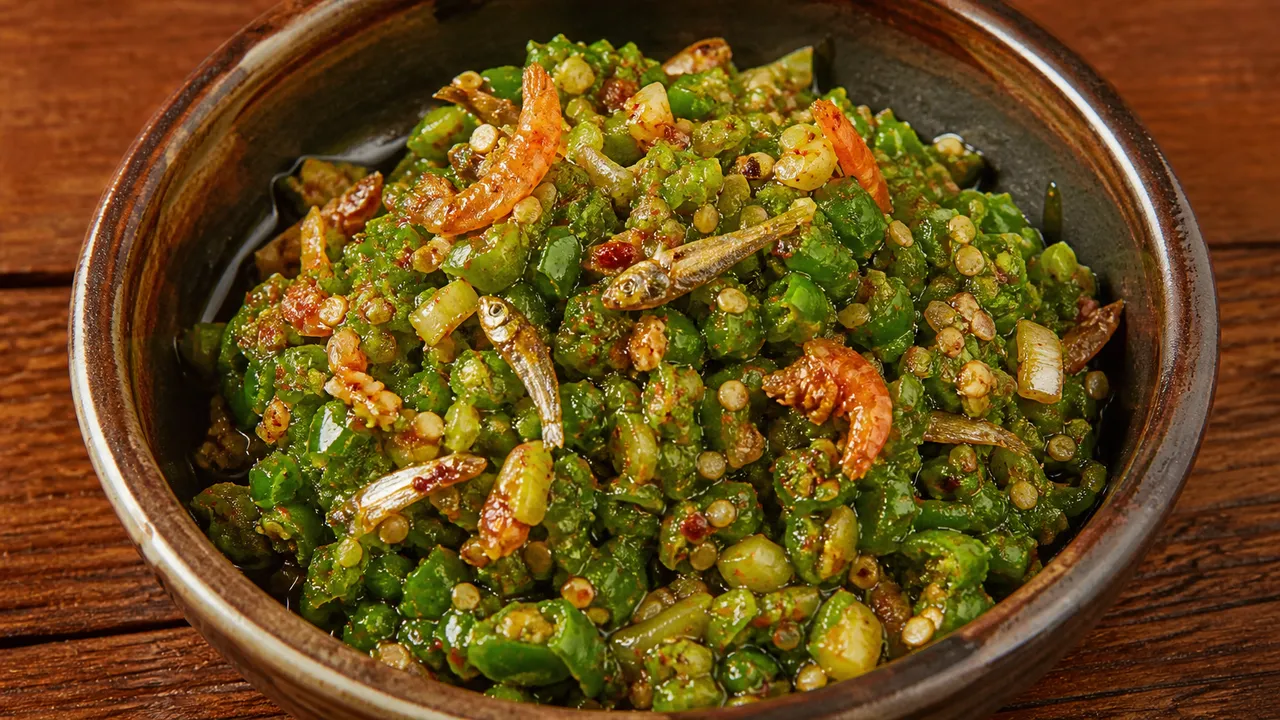
* 이미지는 AI가 생성한 참고 이미지로, 실제 조리 결과물과 다를 수 있습니다.
This is a piquant and spicy 'rice thief' Cheongyang chili paste recipe made with 2.2 lbs of Cheongyang-gochu (청양고추), dried anchovies, and dried shrimp. It's great for various dishes like bibimbap (비빔밥), egg rice, gimbap (김밥), jumeokbap (주먹밥), and makguksu (막국수).
📋 2 recipes — Select to view
This is a recipe for Cheongyang Chili Paste (Cheongyang Gochu Dajimi (청양고추다짐이)), a spicy and pungent 'rice thief' side dish made with 2.2 lb of Cheongyang chilies, large dried anchovies, and dried shrimp.
📝 Editor's Notes
Using 2.2 lb of Cheongyang chilies, this spicy and pungent Cheongyang Chili Paste, which takes only 15 minutes to make, is an indispensable 'rice thief' side dish on the Korean dining table.
The deep umami flavor of dried anchovies and dried shrimp harmonizes with the spiciness of Cheongyang chilies, creating a magical dish that can revive a lost appetite with just one spoonful.
Especially in chilly autumn or cold winter, serving it over warm rice will make you feel a warmth spread throughout your body.
We highly recommend this filial side dish that guarantees a hearty and delicious meal even in a busy daily life.
🛒 Ingredient Tips
When choosing Cheongyang chilies, look for ones with fresh, vibrant green stems that are firm and not dry.
They should be free of blemishes and have a glossy appearance, indicating freshness.
For large dried anchovies, select those with less fishy odor and a silvery sheen.
When removing the heads and guts, the flesh should be firm and not crumble easily.
For dried shrimp, choose those with a vivid color, minimal breakage, and a strong, characteristic savory aroma.
Although not seasonal, good quality Cheongyang chilies and dried seafood can be easily found year-to-year, so try making delicious chili paste with fresh ingredients.
🔄 Substitution Guide
If the spiciness of Cheongyang chilies is too much, try mixing in half kkari-gochu (꽈리고추) or ahsaki-gochu (아삭이고추) chilies.
This will reduce the heat while still allowing you to enjoy a crisp texture and the unique aroma of chilies.
For those with anchovy or dried shrimp allergies, or who dislike seafood flavors, finely minced shiitake or king oyster mushrooms can be used instead.
The umami from the mushrooms can somewhat substitute the flavor of anchovies and dried shrimp.
If mirin is unavailable, soju (소주) or cheongju (청주) can be used as a substitute.
While regular brewed soy sauce can be used instead of Korean traditional soy sauce (Ganjang (간장)), the latter provides a deeper umami and higher salt content, which is better for bringing out the recipe's intended flavor.
🥘 Ingredients
👨🍳 Cooking Points
The most important point in this recipe is to 'chop the Cheongyang chilies with a knife.' If blended, they can develop a 'grassy' smell and a mushy texture, compromising the flavor.
Although it may be more bothersome, finely chopping them by hand preserves their crisp texture and fresh taste.
The second point is to grind the anchovies and dried shrimp in a food processor 'until particles are still visible' to enjoy a savory texture.
Be careful not to grind them too finely, as this will eliminate the chewiness.
Finally, when simmering with the seasoning, reduce it over 'high heat until most of the liquid has evaporated,' for about 5 minutes.
This allows the seasoning to fully penetrate the ingredients and improves shelf life.
Remembering these three points will help you make delicious Cheongyang Chili Paste without fail.
👨🍳 Directions
Wearing gloves, remove the stems from the Cheongyang chilies. Submerge them in water with a splash of vinegar for about 10 minutes to sterilize.
Remove the heads and guts from the large dried anchovies. Microwave them for 3 minutes to remove any fishy smell. Alternatively, you can use small dried anchovies (jiryeolchi (지리멸치)) suitable for stir-frying.
Finely mince the white part of 1 green onion stalk and 10 cloves of garlic. (It's best to use mostly the white part of the green onion, as too much green can release excessive moisture.)
Rinse the sterilized Cheongyang chilies thoroughly and pat them dry. Finely chop them with a knife, ensuring they are not too large. (Using a knife to chop is better for flavor and storage, as a blender can produce an undesirable 'grassy' smell.)
Place the microwaved anchovies and dried shrimp in a food processor (or chopper) and pulse until they are finely ground but still have some texture.
Heat 3 tbsp of cooking oil in a large pan. Sauté the minced green onion and garlic until fragrant and lightly golden.
Add the ground anchovies and dried shrimp to the sautéed green onion and garlic and stir-fry for a moment. Then, add all of the chopped Cheongyang chilies and stir-fry until all ingredients are well combined.
Add 1 cup of water, 3 tbsp of Korean traditional soy sauce (Ganjang (간장)), 5 tbsp of anchovy fish sauce, 5 tbsp of mirin (or soju (소주)/cheongju (청주)), and 0.5 tbsp of sugar. Bring to a boil over high heat and simmer for about 5 minutes, or until most of the liquid has evaporated.
Finally, drizzle with 1 tbsp of perilla oil to finish.
💡 Tips
Chopping Cheongyang chilies with a knife, rather than mincing them, helps reduce the 'grassy' smell and preserves their texture.
Microwaving anchovies for 3 minutes enhances their umami flavor and removes any fishy odor.
Making a generous batch at once is great, as it can be used in various dishes like bibimbap (비빔밥), egg rice, gimbap (김밥), jumeokbap (주먹밥), and makguksu (막국수).
When chopping Cheongyang chilies, be sure to wear gloves to prevent the spicy oils from irritating your skin.
Do not grind the anchovies and dried shrimp too finely; ensure they have some visible texture to maintain a pleasant, savory mouthfeel.
📦 Storage & Reuse
The finished Cheongyang Chili Paste can be stored in an airtight container in the refrigerator for about 1-2 weeks.
For longer storage, it is best to portion it out and freeze it.
When frozen, it can be stored for about a month.
Before serving, thaw it in the refrigerator or gently warm it in the microwave.
Be careful not to overheat it, as this can make the texture mushy.
Leftover paste is also delicious when added to fried rice for a spicy kick or used as a seasoning on pan-fried tofu.
Enjoy exploring various ways to use it!
🥢 Who This Is For
This Cheongyang Chili Paste is highly recommended for those who love spicy food or when you have no appetite.
Just a spoonful mixed with freshly cooked warm rice is enough to make a complete meal, no other side dishes needed.
Enjoy it as 'egg rice' with a fried egg, or add it inside gimbap (김밥) or jumeokbap (주먹밥) for a unique flavor.
It's especially delicious when used as a spicy seasoning for makguksu (막국수).
It's also very useful for a quick and easy breakfast on busy mornings or for preparing a hearty meal while camping.
🔥 Nutrition Info
One serving of Cheongyang Chili Paste (approximately 50g) is estimated to be around 70 kcal.
It is expected to contain about 5g of protein, 4g of fat, and 4g of carbohydrates.
Cheongyang chilies, the main ingredient, are rich in Vitamin C, which helps boost immunity, and capsaicin, which aids in boosting metabolism and relieving stress.
Anchovies and dried shrimp are abundant in calcium and protein, beneficial for bone health, and provide essential amino acids.
Additionally, perilla oil is rich in omega-3 fatty acids, which can positively impact cardiovascular health.
Consuming it in moderation will make it a great spicy side dish for a healthy diet.
💬 Frequently Asked Questions
- Q. What ingredients do I need for Spicy Cheongyang Chili Paste: The Addictive 'Rice Thief' Recipe?
- Main ingredients include Cheongyang-gochu (청양고추), Dried anchovies for broth (국물멸치), Dried shrimp (건새우), Green onion, Garlic. For Cheongyang-gochu (청양고추), choose ones with fresh stems, vibrant color, and firm texture. Since you're using a generous amount (2.2 lbs), freshness is crucial. For dried anchovies, select clean ones with a silvery sheen and minimal fishy odor. Removing their heads and guts, then microwaving for 3 minutes, effectively eliminates fishiness and maximizes umami. For dried shrimp (건새우), choose ones that are not too small, with a reddish color and a glossy sheen for a richer savory flavor. For green onions, use mainly the white parts to minimize moisture and achieve a cleaner taste.
- Q. What are the key tips for making Spicy Cheongyang Chili Paste: The Addictive 'Rice Thief' Recipe?
- The most crucial cooking point is how you chop the Cheongyang-gochu (청양고추). Using a blender can result in a 'grassy' smell and a mushy texture. While a bit tedious, finely chopping them by hand with a knife is much better for flavor and storage. The second point is to grind the anchovies and dried shrimp not too finely, but enough to leave some visible particles; this preserves their savory texture. Lastly, when simmering the sauce, it's important to reduce it over high heat for about 5 minutes until most of the liquid is gone. This ensures the paste is thick and delicious, not watery. Stir frequently to prevent burning and manage the heat well.
- Q. How should I store leftover Spicy Cheongyang Chili Paste: The Addictive 'Rice Thief' Recipe?
- Store the finished Cheongyang chili paste (청양고추다짐이) in a sterilized airtight container in the refrigerator for about 2 weeks. If you wish to store it longer, it's recommended to divide it into single-serving portions and freeze it. Frozen, it can last for about 1-2 months. When ready to use, thaw it in the refrigerator beforehand or gently warm it in the microwave. Besides using it as a filling for bibimbap (비빔밥) or jumeokbap (주먹밥), leftover paste is also delicious as a ssamjang (쌈장) substitute with ssam vegetables, or as a seasoning for braised tofu. Enjoy this versatile condiment in many ways!
- Q. How many calories are in Spicy Cheongyang Chili Paste: The Addictive 'Rice Thief' Recipe?
- This Cheongyang chili paste (청양고추다짐이) is estimated to be around 50-70 kcal per serving. Primarily made of Cheongyang-gochu (청양고추), anchovies, and dried shrimp, it is relatively high in protein and low in fat and carbohydrates. While exact gram counts vary by ingredient quantity, it contains abundant high-quality protein and calcium from the anchovies and dried shrimp. The capsaicin in Cheongyang-gochu (청양고추) boosts metabolism, and it's also rich in Vitamin C, offering health benefits. Garlic and green onions contain immunity-boosting compounds, making this a healthy side dish. However, sodium content can be somewhat high, so moderate consumption is important.
- Q. Can I substitute ingredients in Spicy Cheongyang Chili Paste: The Addictive 'Rice Thief' Recipe?
- If the spiciness of Cheongyang-gochu (청양고추) is too much, you can mix it with regular green peppers (풋고추) or cucumber peppers (오이고추), or even use only green peppers. This reduces the heat while still providing a fresh pepper aroma. Instead of dried anchovies for broth (국물멸치), you can use stir-fry anchovies (볶음용 멸치/jiri-myeolchi), which are more convenient as they don't require separate preparation. If you don't have dried shrimp (건새우), you can omit them or increase the amount of anchovies slightly to compensate for the umami. Mirin (미림) can be substituted with soju or cheongju; the alcohol will evaporate during cooking, so there's no need to worry.
💬 Comments
No comments yet. Be the first to comment!