
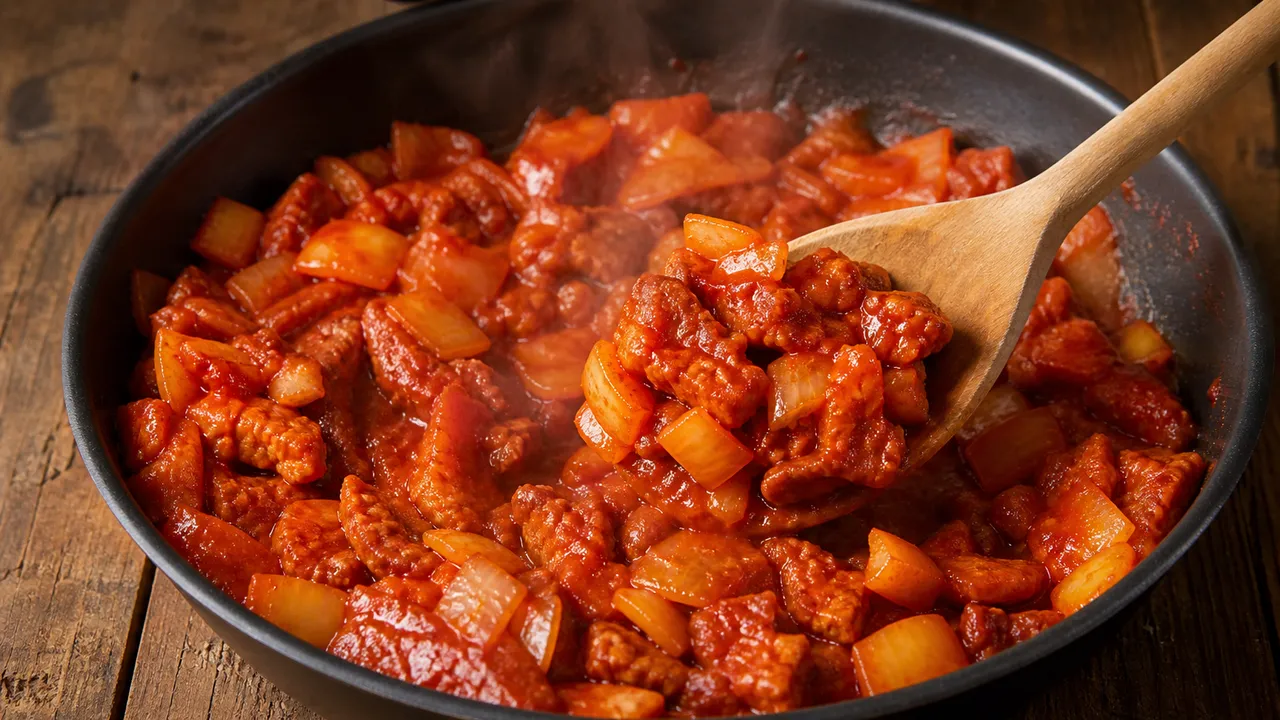
Irresistible All-Purpose Onion Gochujang (고추장) Sauce Recipe
* 이미지는 AI가 생성한 참고 이미지로, 실제 조리 결과물과 다를 수 있습니다.
This is an all-purpose seasoning paste recipe made with onions and gochujang (고추장), bringing out natural sweetness and umami without added sugar. It's perfect for mixing with rice or serving alongside tofu and fresh lettuce wraps.
📝 Editor's Notes
This versatile all-purpose sauce, made with just onions and gochujang (고추장), is ready in just 10 minutes.
It's an irresistible "rice thief" that boasts deep sweetness and umami without any added sugar.
Its perfectly sweet and spicy flavor is excellent when mixed with freshly cooked hot rice, or served alongside plain tofu or crisp lettuce wraps, making for a satisfying meal even without other side dishes.
It's especially delicious when made from spring to autumn, when seasonal onions are abundant.
🛒 Ingredient Tips
Onions, the star ingredient of this recipe, are crucial for determining the sweetness.
Choose onions that are firm, heavy, have a shiny, intact skin, and don't easily peel off their dry outer layers, as these indicate freshness and high sugar content.
For gochujang (고추장), you can use a product that suits your family's taste, but it's best to choose one that is moderately spicy and savory rather than overly spicy or sweet.
For seasoned soy sauce, store-bought varieties are fine, but using homemade seasoned soy sauce can yield an even deeper flavor.
🔄 Substitution Guide
If you use doenjang (된장) instead of gochujang (고추장), you can create a savory and mild sauce.
However, doenjang (된장) can be saltier than gochujang (고추장), so it's best to adjust the amount of seasoned soy sauce or add a little more water.
If you don't have minced garlic or prefer not to use it, you can omit it or add a small amount of minced ginger for a different flavor.
If seasoned soy sauce isn't available, you can use regular soy sauce mixed with a little plum extract or oligosaccharide, but note that the unique umami of seasoned soy sauce might be less prominent.
Substituting perilla oil for sesame oil will yield an even nuttier and more aromatic flavor.
🥘 Ingredients
👨🍳 Cooking Points
The most crucial cooking point for this sauce is the process of stir-frying the onions.
It's essential to preheat the pan, add cooking oil, and quickly stir-fry the onions over high heat for about 3 minutes.
This method ensures that the onions' sweetness and umami are maximized, resulting in a clean flavor without greasiness.
The second point is when simmering the sauce.
Once all ingredients are added and it begins to boil, reduce the heat to medium and continuously stir with a spatula to prevent it from sticking to the bottom.
Simmer for about 7 minutes until it reaches a consistency where the sauce slowly comes back together after being parted with a spatula.
Lastly, add sesame oil after turning off the heat to preserve its rich, nutty aroma.
Remember these three tips, and you'll be able to make a delicious sauce without fail.
👨🍳 Directions
Peel and wash 2 onions. Dice them into 0.5 cm (approximately 1/4 inch) pieces.
Preheat a wok or pan. Add 1 tbsp cooking oil, then add all the diced onions and stir-fry over high heat for about 3 minutes.
To the stir-fried onions, add 500g gochujang (고추장), 2 tbsp minced garlic, 2 tbsp seasoned soy sauce, and 200ml water. Mix the ingredients thoroughly.
Once the sauce starts to boil, reduce the heat to medium. Continue stirring with a spatula to prevent sticking to the bottom, and simmer for about 7 minutes until the sauce thickens to the desired consistency.
Turn off the heat, then add 2 tbsp sesame oil and mix gently.
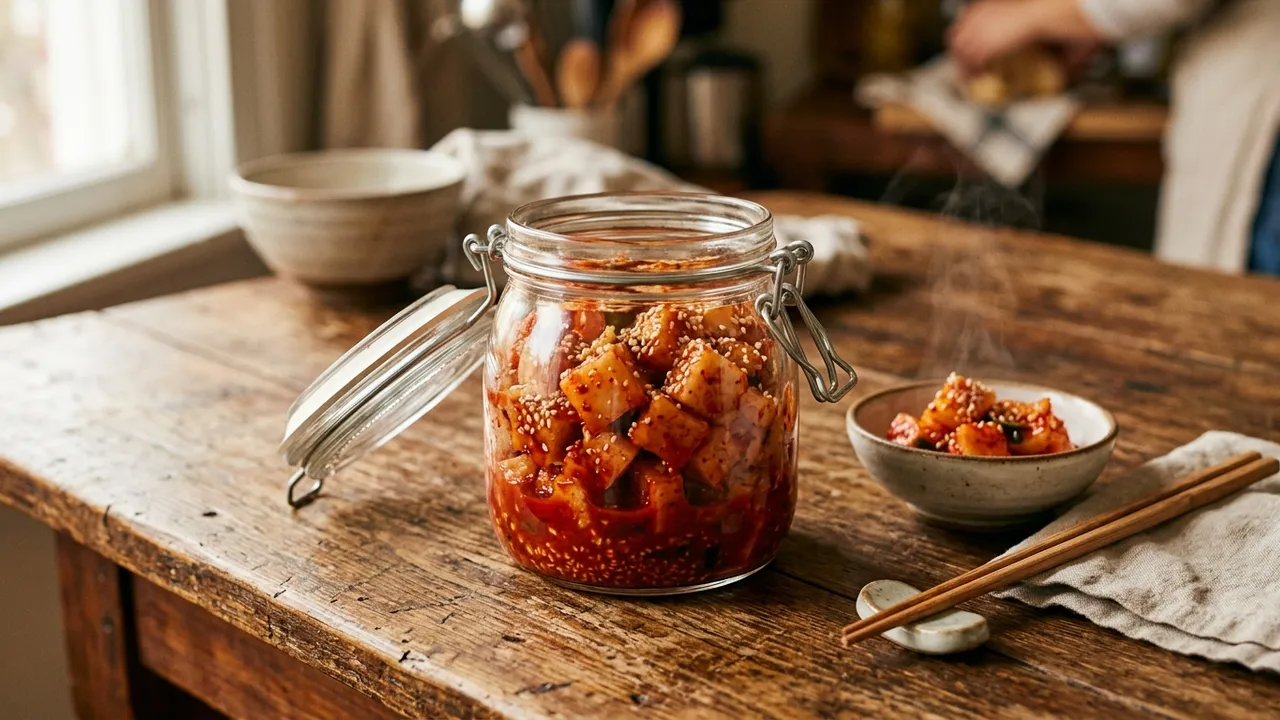
Transfer the finished onion gochujang (고추장) sauce into a clean glass jar and refrigerate.
💡 Tips
If your eyes sting while cutting onions, place them in the refrigerator for 10-20 minutes before cooking, or use a sharp knife to reduce the spread of irritating compounds.
It's crucial to stir-fry the onions over high heat in a preheated pan to fully bring out their sweetness and umami, ensuring the sauce is not greasy.
Once the sauce begins to boil, reduce to medium heat and continue stirring to prevent it from sticking to the bottom, adjusting the consistency. (A good consistency is when the sauce slowly comes back together after being parted with a spatula.)
Add sesame oil after turning off the heat to preserve its rich nutty aroma. If cooking for one or if the quantity is too much, you can halve the recipe using 250g gochujang (고추장) and 1 onion, adjusting other ingredients accordingly.
📦 Storage & Reuse
Always cool the finished onion gochujang (고추장) sauce completely before transferring it to a clean glass jar or airtight container and refrigerating.
It can be enjoyed fresh for about 2 weeks when refrigerated.
If you wish to store it longer, it's a good idea to portion it into single servings and freeze it.
It can be stored in the freezer for up to 1 month.
To thaw, simply move it to the refrigerator overnight or gently warm it in the microwave.
Leftover sauce can also be deliciously used in fried rice or as a seasoning for stews.
🥢 Who This Is For
This onion gochujang (고추장) sauce is especially recommended for busy professionals or those living alone.
When there are no side dishes available, simply mixing it with rice makes for a hearty and delicious meal.
It also makes an excellent addition to outdoor activities like camping when paired with fresh ssam (쌈) vegetables.
Enjoy it as bibimbap (비빔밥) with a fried egg on top, or serve it with boiled tofu or steamed cabbage wraps for a healthy and tasty meal.
🔥 Nutrition Info
Based on the entire recipe yield, this onion gochujang (고추장) sauce is estimated to contain approximately 1,500 kcal.
Since gochujang (고추장) and onions are the main ingredients, it has a high carbohydrate content and provides ample energy from the natural sweetness of onions without added sugar.
Gochujang (고추장) contains capsaicin, which boosts metabolism, while onions are rich in Vitamin C and dietary fiber, aiding in immune system strengthening and digestion.
Sesame oil is abundant in unsaturated fatty acids, contributing to healthy fat intake.
Since this amount can be consumed over several meals, please be mindful of your portion size per serving.
💬 Frequently Asked Questions
- Q. What ingredients do I need for Irresistible All-Purpose Onion Gochujang (고추장) Sauce Recipe?
- Main ingredients include Gochujang (고추장), Onions, Cooking oil, Minced garlic, Seasoned soy sauce. Onions, the star ingredient of this recipe, are crucial for determining the sweetness. Choose onions that are firm, heavy, have a shiny, intact skin, and don't easily peel off their dry outer layers, as these indicate freshness and high sugar content. For gochujang (고추장), you can use a product that suits your family's taste, but it's best to choose one that is moderately spicy and savory rather than overly spicy or sweet. For seasoned soy sauce, store-bought varieties are fine, but using homemade seasoned soy sauce can yield an even deeper flavor.
- Q. What are the key tips for making Irresistible All-Purpose Onion Gochujang (고추장) Sauce Recipe?
- The most crucial cooking point for this sauce is the process of stir-frying the onions. It's essential to preheat the pan, add cooking oil, and quickly stir-fry the onions over high heat for about 3 minutes. This method ensures that the onions' sweetness and umami are maximized, resulting in a clean flavor without greasiness. The second point is when simmering the sauce. Once all ingredients are added and it begins to boil, reduce the heat to medium and continuously stir with a spatula to prevent it from sticking to the bottom. Simmer for about 7 minutes until it reaches a consistency where the sauce slowly comes back together after being parted with a spatula. Lastly, add sesame oil after turning off the heat to preserve its rich, nutty aroma. Remember these three tips, and you'll be able to make a delicious sauce without fail.
- Q. How should I store leftover Irresistible All-Purpose Onion Gochujang (고추장) Sauce Recipe?
- Always cool the finished onion gochujang (고추장) sauce completely before transferring it to a clean glass jar or airtight container and refrigerating. It can be enjoyed fresh for about 2 weeks when refrigerated. If you wish to store it longer, it's a good idea to portion it into single servings and freeze it. It can be stored in the freezer for up to 1 month. To thaw, simply move it to the refrigerator overnight or gently warm it in the microwave. Leftover sauce can also be deliciously used in fried rice or as a seasoning for stews.
- Q. How many calories are in Irresistible All-Purpose Onion Gochujang (고추장) Sauce Recipe?
- Based on the entire recipe yield, this onion gochujang (고추장) sauce is estimated to contain approximately 1,500 kcal. Since gochujang (고추장) and onions are the main ingredients, it has a high carbohydrate content and provides ample energy from the natural sweetness of onions without added sugar. Gochujang (고추장) contains capsaicin, which boosts metabolism, while onions are rich in Vitamin C and dietary fiber, aiding in immune system strengthening and digestion. Sesame oil is abundant in unsaturated fatty acids, contributing to healthy fat intake. Since this amount can be consumed over several meals, please be mindful of your portion size per serving.
- Q. Can I substitute ingredients in Irresistible All-Purpose Onion Gochujang (고추장) Sauce Recipe?
- If you use doenjang (된장) instead of gochujang (고추장), you can create a savory and mild sauce. However, doenjang (된장) can be saltier than gochujang (고추장), so it's best to adjust the amount of seasoned soy sauce or add a little more water. If you don't have minced garlic or prefer not to use it, you can omit it or add a small amount of minced ginger for a different flavor. If seasoned soy sauce isn't available, you can use regular soy sauce mixed with a little plum extract or oligosaccharide, but note that the unique umami of seasoned soy sauce might be less prominent. Substituting perilla oil for sesame oil will yield an even nuttier and more aromatic flavor.
💬 Comments
No comments yet. Be the first to comment!