
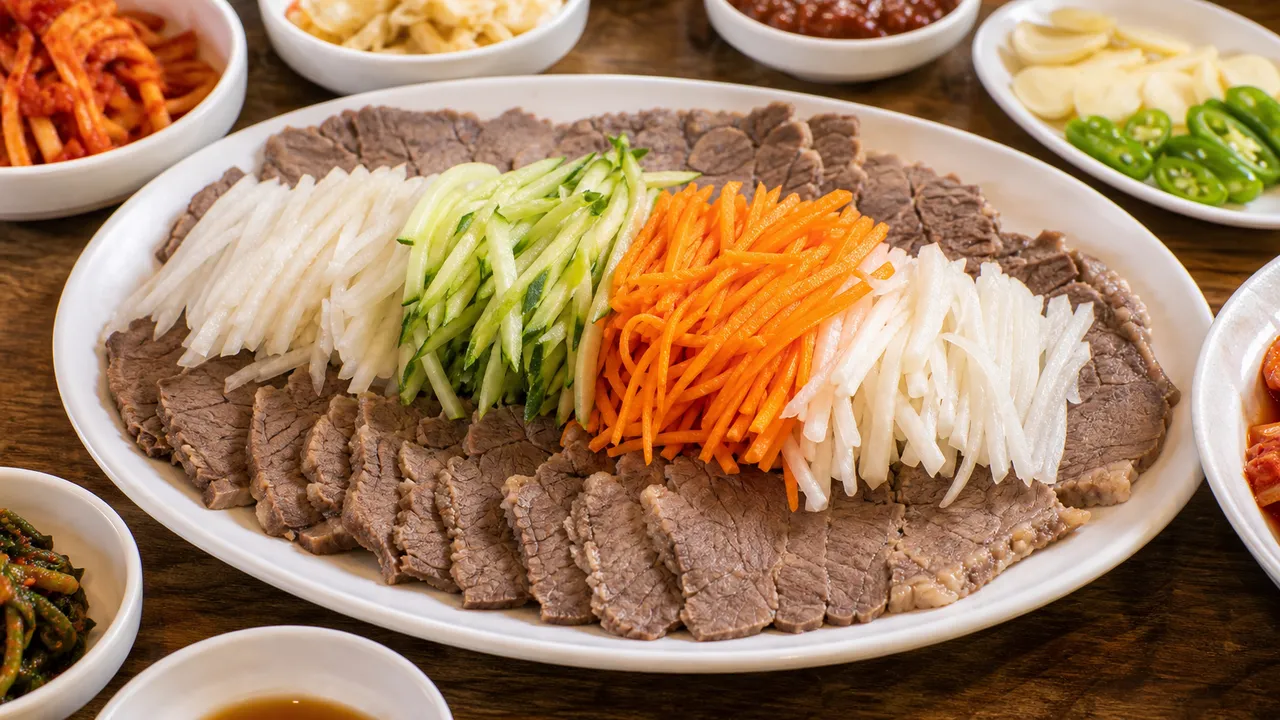
Nourishing Summer Dish: Sliced Beef Shank with Fruit Salad f
* 이미지는 AI가 생성한 참고 이미지로, 실제 조리 결과물과 다를 수 있습니다.
This recipe for sliced beef shank with fruit salad (gwailchae sataepyeonyuk) offers a harmonious blend of tender, chewy beef shank and refreshing sweet and sour julienned fruits. It's a perfect, heartfelt summer health-boosting meal to present to your parents-in-law.
📝 Editor's Notes
This Fruit and Beef Shank Slices (gwailchae sataepyeonyuk) is a health-boosting dish of medium difficulty, requiring about 2 hours of cooking time.
It features an exquisite harmony of chewy beef shank (arongsatae) and refreshing sweet and sour fruit salad.
Its cool and clean taste makes it perfect for summer dinner parties or family gatherings.
It's especially a wonderful dish that will earn you compliments when served to your parents-in-law.
The deep flavor of the beef shank combined with the freshness of the fruits makes it an excellent choice for a meal or even as a sophisticated appetizer for drinks.
🛒 Ingredient Tips
Beef shank (arongsatae) is a specific cut from the hind leg of a cow, known for its chewy texture due to embedded tendons.
Fresh arongsatae should have a vivid red color, a moderate distribution of fat, and feel firm.
Using Korean Hanwoo beef shank will enhance the rich flavor.
For apples and Korean pears (bae), using seasonal fruits will yield the best taste.
Choose firm, fragrant ones without blemishes.
For dried persimmon (gotgam), select those that are soft, not too hard, and have a uniform color.
🔄 Substitution Guide
While you can use brisket (chadolbagi) or beef flank (yangji) instead of beef shank (arongsatae) to make sliced beef, you might lose the unique chewiness that arongsatae offers.
Brisket will result in a softer and fattier taste, while beef flank will be milder.
For the fruit salad, if apples or Korean pears are unavailable, you can julienne cucumbers or radishes instead.
However, as cucumbers and radishes lack the sweetness and tartness of fruits, you'll need to adjust the amount of sugar or vinegar in the dressing.
For dried persimmon (gotgam), you can use raisins or dried cranberries for a similar sweetness, but you might not achieve the unique chewy texture of gotgam.
🥘 Ingredients
👨🍳 Cooking Points
The key to this recipe is boiling the beef shank (arongsatae) until it's perfectly chewy and properly draining the moisture from the fruit salad.
First, add the beef shank to boiling water to prevent any gamey odor and maintain its chewiness.
After boiling for 40 minutes, immediately wrap the hot beef tightly with plastic wrap and chill it in the refrigerator.
This process allows the collagen to set, creating the characteristic chewy texture of sliced beef (pyeonyuk).
Second, it's crucial to drain the julienned apple and Korean pear for about 10 minutes.
This prevents the fruit from becoming soggy when mixed with the dressing, ensuring a crisp texture.
Finally, for a tender mouthfeel, slice the beef as thinly as possible; make sure your knife is well-sharpened before slicing.
👨🍳 Directions
Pat dry the beef shank (arongsatae) with a paper towel to remove any blood.
Tie the beef shank tightly with cooking twine to help it maintain its shape while boiling.
In a pot, add enough water to submerge the beef shank, then add a splash of cheongju (청주).
Once the water boils, add bay leaves, whole peppercorns, whole garlic cloves, green onion, and ginger to remove any gamey smell from the meat.
Once the water comes to a rolling boil, add the beef shank and boil for 40 minutes.
Remove the cooked beef from the pot, and while it's still hot, wrap it tightly with plastic wrap. Chill it in the refrigerator.
Julienne the apple and Korean pear (bae) with their skins on.
Drain the excess moisture from the julienned apple and Korean pear for about 10 minutes.
Julienne the dried persimmon (gotgam), chestnuts, and jujubes (daechu). Place them in a bowl with the drained apple and Korean pear, then add pine nuts (jat).
In a separate bowl, combine soy sauce (jinganjang), 1 tbsp black pepper, 1 tbsp salt, 1 tbsp sugar, 1 tbsp Korean mustard (yeongyeoja), 1 tbsp vinegar, and condensed milk. Mix well to create the fruit salad dressing.
Pour the prepared dressing over the julienned fruits and mix thoroughly.
Slice the chilled beef shank (arongsatae) as thinly as possible. Arrange the slices decoratively on a plate, then place the fruit salad in the center to complete the dish.
💡 Tips
When boiling the beef shank, make sure to add it to boiling water to prevent any gamey smell and to ensure a chewy texture.
After boiling, immediately wrap the hot beef shank with plastic wrap and chill it in the refrigerator. This allows the collagen to set, resulting in deliciously chewy sliced beef.
For the best flavor and a tender mouthfeel, slice the beef as thinly as possible.
Since dried persimmon (gotgam) adds sweetness to the fruit salad, you can adjust the amount of sugar in the dressing to suit your taste.
The digestive enzymes in Korean pear (bae) and apple aid digestion, making this dish, combined with protein-rich beef shank, an excellent health-boosting meal for summer.
📦 Storage & Reuse
Store the finished Fruit and Beef Shank Slices in an airtight container in the refrigerator for 2-3 days to keep it fresh.
It's best to store the sliced beef and fruit salad separately and combine them just before serving to maintain the fruit's crisp texture.
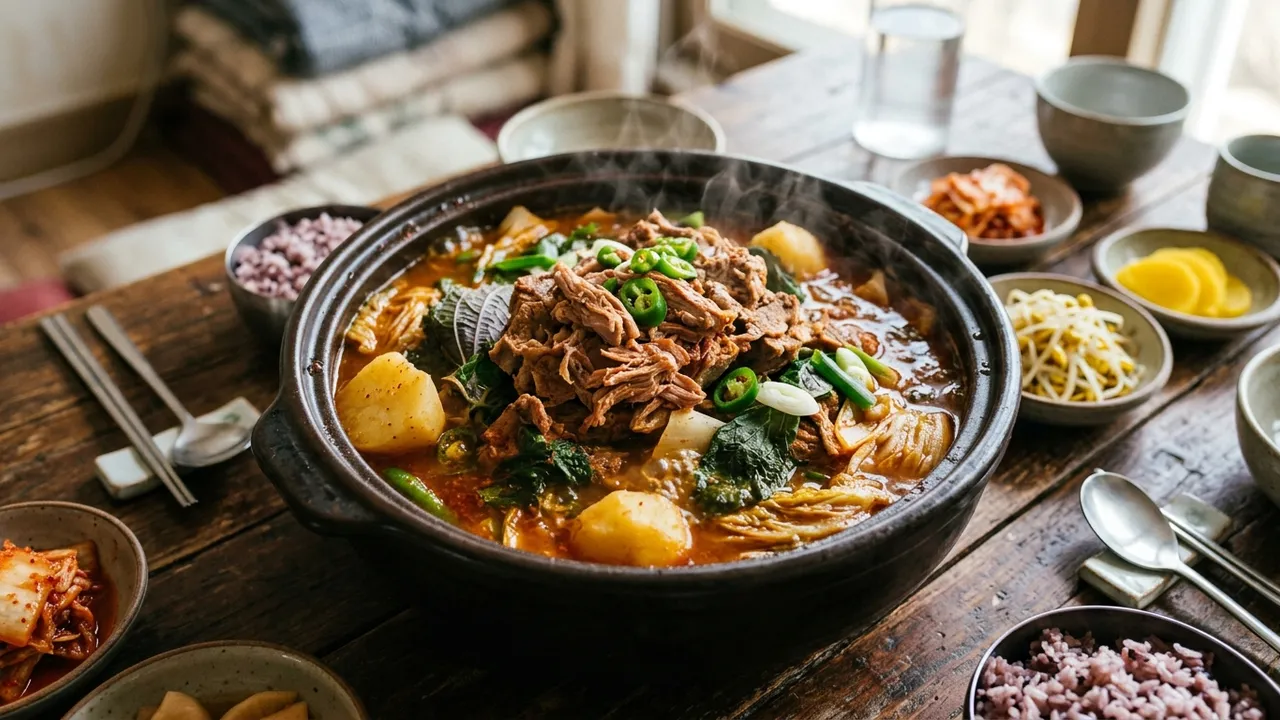
Leftover sliced beef can be thinly sliced and added to yukgaejang (육개장) or stews, or used as a delicious salad topping.
If you have leftover fruit salad, you can use it as a salad dressing or add it to sandwiches for a fresh touch.
🥢 Who This Is For
This Fruit and Beef Shank Slices (gwailchae sataepyeonyuk) is highly recommended for those who need an energy boost in summer or for elderly individuals who have difficulty digesting.
Its sweet and sour taste will also appeal to children.
It makes an excellent main dish for entertaining guests or for family events.
It pairs wonderfully with makgeolli (막걸리) or a chilled white wine.
Complement it with mild buckwheat pancakes (memiljeon) or simple tofu dishes for a complete and superb meal.
🔥 Nutrition Info
This Fruit and Beef Shank Slices (gwailchae sataepyeonyuk) is estimated to be approximately 350-450 kcal per serving.
It is expected to contain about 30-40g of protein, 15-25g of fat, and 20-30g of carbohydrates.
Beef shank (arongsatae) is rich in high-quality protein and iron, helping to prevent anemia and restore vitality.
Apples and Korean pears (bae) are abundant in digestive enzymes, aiding protein digestion, and providing Vitamin C and dietary fiber.
Dried persimmon (gotgam) is rich in Vitamin A and potassium, while pine nuts (jat) contain unsaturated fatty acids and Vitamin E, making this a healthy and nourishing dish that contributes to nutritional balance.
💬 Frequently Asked Questions
- Q. What ingredients do I need for Nourishing Summer Dish: Sliced Beef Shank with Fruit Salad for Son-in-Law Sungmin?
- Main ingredients include Beef Shank (Arongsatae), Water, Cheongju (청주), Bay Leaf, Whole Peppercorns. Beef shank (arongsatae) is a specific cut from the hind leg of a cow, known for its chewy texture due to embedded tendons. Fresh arongsatae should have a vivid red color, a moderate distribution of fat, and feel firm. Using Korean Hanwoo beef shank will enhance the rich flavor. For apples and Korean pears (bae), using seasonal fruits will yield the best taste. Choose firm, fragrant ones without blemishes. For dried persimmon (gotgam), select those that are soft, not too hard, and have a uniform color.
- Q. What are the key tips for making Nourishing Summer Dish: Sliced Beef Shank with Fruit Salad for Son-in-Law Sungmin?
- The key to this recipe is boiling the beef shank (arongsatae) until it's perfectly chewy and properly draining the moisture from the fruit salad. First, add the beef shank to boiling water to prevent any gamey odor and maintain its chewiness. After boiling for 40 minutes, immediately wrap the hot beef tightly with plastic wrap and chill it in the refrigerator. This process allows the collagen to set, creating the characteristic chewy texture of sliced beef (pyeonyuk). Second, it's crucial to drain the julienned apple and Korean pear for about 10 minutes. This prevents the fruit from becoming soggy when mixed with the dressing, ensuring a crisp texture. Finally, for a tender mouthfeel, slice the beef as thinly as possible; make sure your knife is well-sharpened before slicing.
- Q. How should I store leftover Nourishing Summer Dish: Sliced Beef Shank with Fruit Salad for Son-in-Law Sungmin?
- Store the finished Fruit and Beef Shank Slices in an airtight container in the refrigerator for 2-3 days to keep it fresh. It's best to store the sliced beef and fruit salad separately and combine them just before serving to maintain the fruit's crisp texture. Leftover sliced beef can be thinly sliced and added to yukgaejang (육개장) or stews, or used as a delicious salad topping. If you have leftover fruit salad, you can use it as a salad dressing or add it to sandwiches for a fresh touch.
- Q. How many calories are in Nourishing Summer Dish: Sliced Beef Shank with Fruit Salad for Son-in-Law Sungmin?
- This Fruit and Beef Shank Slices (gwailchae sataepyeonyuk) is estimated to be approximately 350-450 kcal per serving. It is expected to contain about 30-40g of protein, 15-25g of fat, and 20-30g of carbohydrates. Beef shank (arongsatae) is rich in high-quality protein and iron, helping to prevent anemia and restore vitality. Apples and Korean pears (bae) are abundant in digestive enzymes, aiding protein digestion, and providing Vitamin C and dietary fiber. Dried persimmon (gotgam) is rich in Vitamin A and potassium, while pine nuts (jat) contain unsaturated fatty acids and Vitamin E, making this a healthy and nourishing dish that contributes to nutritional balance.
- Q. Can I substitute ingredients in Nourishing Summer Dish: Sliced Beef Shank with Fruit Salad for Son-in-Law Sungmin?
- While you can use brisket (chadolbagi) or beef flank (yangji) instead of beef shank (arongsatae) to make sliced beef, you might lose the unique chewiness that arongsatae offers. Brisket will result in a softer and fattier taste, while beef flank will be milder. For the fruit salad, if apples or Korean pears are unavailable, you can julienne cucumbers or radishes instead. However, as cucumbers and radishes lack the sweetness and tartness of fruits, you'll need to adjust the amount of sugar or vinegar in the dressing. For dried persimmon (gotgam), you can use raisins or dried cranberries for a similar sweetness, but you might not achieve the unique chewy texture of gotgam.
💬 Comments
No comments yet. Be the first to comment!