
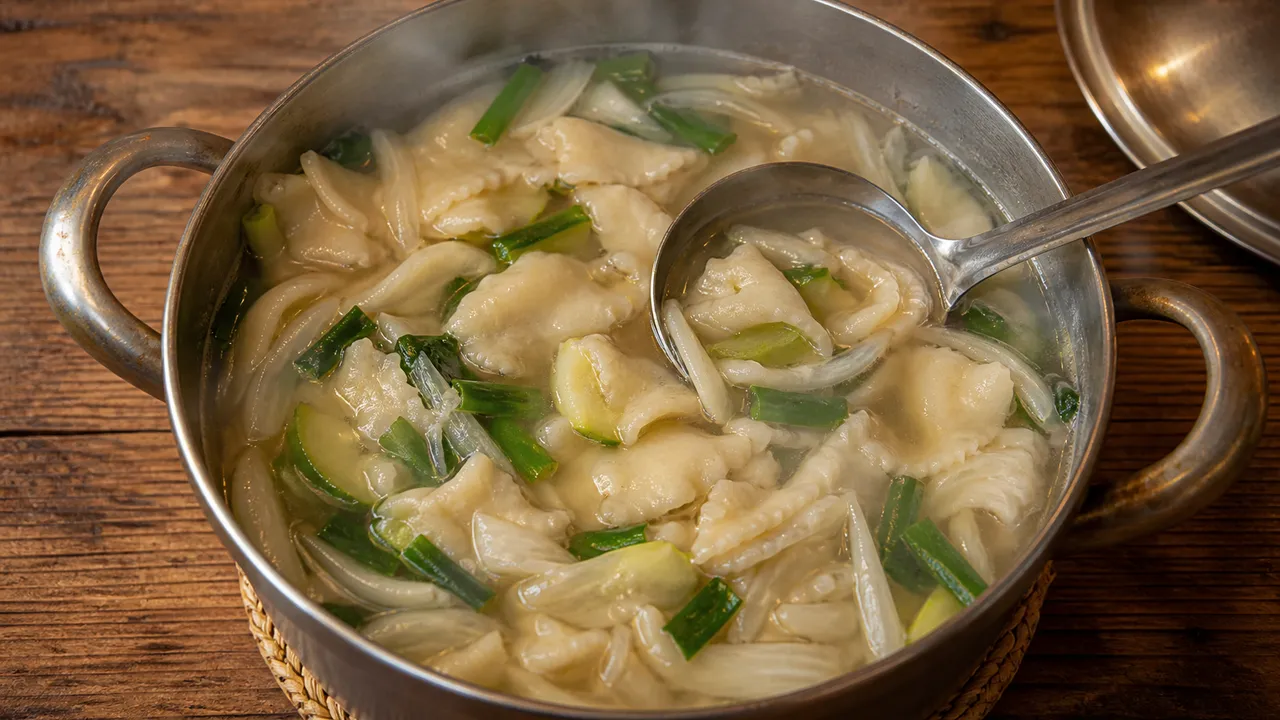
Fail-Proof Chewy Potato Sujebi (수제비) Recipe
* 이미지는 AI가 생성한 참고 이미지로, 실제 조리 결과물과 다를 수 있습니다.
This special sujebi (수제비) dish, featuring chewy dough and a savory broth, is perfect for a rainy day. It can be prepared in 1 hour and 10 minutes, including at least 1 hour of dough resting time.
📝 Editor's Notes
This potato sujebi (수제비), featuring chewy dough and a delicious savory broth, is a special treat that can be enjoyed warm in just 1 hour and 10 minutes on a rainy or chilly day.
Its characteristics include the chewiness of the refrigerated dough and a deeper umami flavor achieved by kneading with Dashida (다시다) water.
It's a nutritious one-bowl meal, packed with seasonal vegetables like potatoes, Korean zucchini (aehobak), and onions.
It's an excellent dish for the whole family to gather around and enjoy a warm, comforting time.
Anyone can easily make it without complicated steps, guaranteeing success even for beginner cooks.
🛒 Ingredient Tips
Choose potatoes with thin, smooth skins, free from blemishes or sprouts.
Sprouted potatoes contain a toxic substance called solanine, so it's best to remove sprouts or avoid them entirely.
Seasonal potatoes, available between June and October, are the most delicious and boast a fluffy texture.
Fresh Korean zucchini (aehobak) should have a glossy surface and a fresh stem.
Medium-sized ones are better than overly large or small ones, as they have higher sugar content and better flavor.
Select onions with firm, shiny skins that are not soft.
Store them in a cool, well-ventilated place for longer shelf life.
🔄 Substitution Guide
Using whole wheat flour instead of all-purpose flour can increase fiber intake and create a more nutty flavor.
However, the dough's chewiness might be less compared to using regular flour.
Replacing potatoes with kabocha squash or sweet potatoes can add a sweet taste and rich nutrients.
Kabocha squash, in particular, is great because it's rich in vitamin A.
If you don't have fish sauce (aekjeot), you can substitute with guk-ganjang (국간장, Korean soup soy sauce) for seasoning, but the unique deep and refreshing umami of fish sauce might be somewhat diminished.
Dashida (다시다) is key for umami, but if unavailable, you can season with salt and use kelp broth for a more natural umami flavor.
🥘 Ingredients
👨🍳 Cooking Points
The key to this sujebi (수제비) is dough resting.
After gradually adding Dashida (다시다) water to flour and kneading, it must be placed in a plastic bag and rested in the refrigerator for at least 1 hour to achieve a chewy and soft texture.
If the refrigeration time is too short, the dough may break apart and have a coarse texture, so be sure to follow the recommended time.
The second point is to cook the potatoes first.
Since potatoes take longer to cook than other vegetables, it's important to add them to boiling water first and cook for about 3 minutes before tearing in the sujebi (수제비) dough.
This ensures all ingredients cook evenly and harmonize in flavor.
Finally, when tearing the sujebi (수제비) dough, tear it thinly, not too thick, so it cooks quickly and is soft to eat.
👨🍳 Directions
Put 3 cups of all-purpose flour into a bowl. Gradually add water mixed with 1 tsp of Dashida (다시다) seasoning powder, and knead the dough. Adjust the consistency of the dough so it's neither too sticky nor too hard.
Form the prepared dough into a ball, place it in a plastic bag, and refrigerate for at least 1 hour to rest.
Slice the potato into bite-sized pieces (in the video, 1 potato per serving). Slice the onion and Korean zucchini (aehobak) into appropriate amounts (in the video, 1/4 of each per serving). Chop the green onion and set aside.
Pour an appropriate amount of water (in the video, 3 paper cups per serving) into a pot and bring to a boil.
Once the water boils, add the sliced potatoes first and cook for about 3 minutes.
Once the potatoes are cooked, tear the rested dough into thin, bite-sized pieces and add to the pot.
Add the zucchini and onion, and boil for another 2 minutes.
Add 1 tbsp of minced garlic and 1 tbsp of fish sauce (aekjeot), and bring to a boil once more.
Finally, add some chopped green onion and boil for about 30 seconds to finish.
💡 Tips
The more you handle the flour, the softer it becomes. To achieve a chewy texture, the dough must be rested in the refrigerator for at least 1 hour.
Kneading the dough with Dashida (다시다) water provides a better umami flavor than with salt water. Any leftover Dashida water can be used in the broth.
Potatoes take the longest to cook, so add them first before tearing in the sujebi (수제비) dough.
Adjust seasoning with fish sauce (aekjeot) to taste, and adding a variety of vegetables will deepen the broth's flavor.
📦 Storage & Reuse
Finished sujebi (수제비) is best eaten immediately, but if there are leftovers, it's best to refrigerate and consume within 2 days.
Store in an airtight container in the refrigerator.
When reheating, add a little more broth to a pot and gently warm over medium-low heat to enjoy a taste similar to the original.
Leftover dough, tightly wrapped in a plastic bag and refrigerated, can maintain its chewiness for 2-3 days.
Freezing is also an option, but note that the texture might slightly degrade after thawing and cooking.
Leftover vegetables can be used in other soups or stews.
🥢 Who This Is For
This chewy potato sujebi (수제비) is perfect for rainy or chilly days when you crave a warm soup.
It's great as a family meal or to generously enjoy at gatherings with friends.
Especially when served with spicy kimchi (김치), the mild taste of sujebi (수제비) and the refreshing taste of kimchi (김치) create a fantastic harmony.
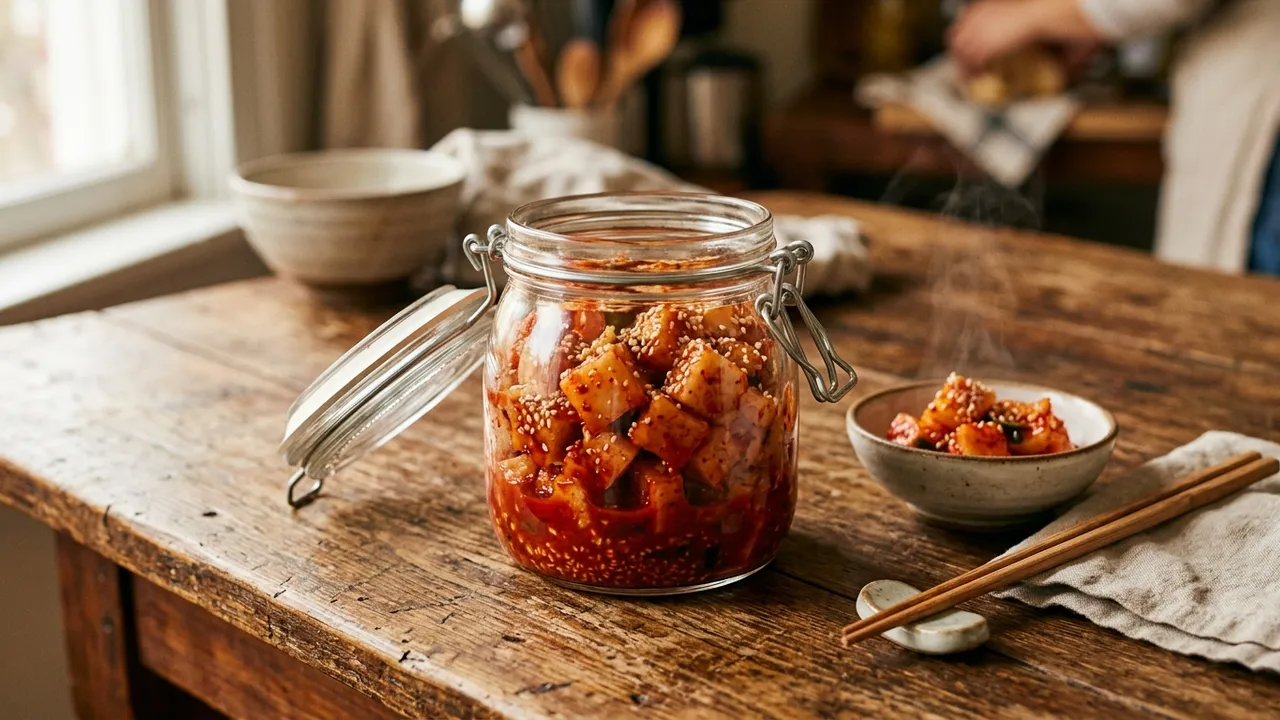
Chilled kkakdugi (깍두기, diced radish kimchi) or crunchy oisobagi (오이소박이, stuffed cucumber kimchi) also pair well.
Making it by tearing the dough with children can also create fun memories.
🔥 Nutrition Info
One serving of this potato sujebi (수제비) is estimated to be approximately 400-500 kcal.
Carbohydrates are primarily obtained from flour, with approximately 70-80g of carbohydrates.
Protein is estimated at about 15-20g, and fat at about 5-10g.
Potatoes are rich in vitamin C and potassium, aiding in immune system strengthening and sodium excretion.
Korean zucchini (aehobak) is rich in beta-carotene and vitamin A, beneficial for eye health and skin beauty, while onions contain quercetin, which has antioxidant properties.
With various vegetables, it provides ample dietary fiber, making it a well-balanced meal.
💬 Frequently Asked Questions
- Q. What ingredients do I need for Fail-Proof Chewy Potato Sujebi (수제비) Recipe?
- Main ingredients include All-purpose flour, Potato, Onion, Korean zucchini (aehobak), Dashida (다시다) seasoning powder. Choose potatoes with thin, smooth skins, free from blemishes or sprouts. Sprouted potatoes contain a toxic substance called solanine, so it's best to remove sprouts or avoid them entirely. Seasonal potatoes, available between June and October, are the most delicious and boast a fluffy texture. Fresh Korean zucchini (aehobak) should have a glossy surface and a fresh stem. Medium-sized ones are better than overly large or small ones, as they have higher sugar content and better flavor. Select onions with firm, shiny skins that are not soft. Store them in a cool, well-ventilated place for longer shelf life.
- Q. What are the key tips for making Fail-Proof Chewy Potato Sujebi (수제비) Recipe?
- The key to this sujebi (수제비) is dough resting. After gradually adding Dashida (다시다) water to flour and kneading, it must be placed in a plastic bag and rested in the refrigerator for at least 1 hour to achieve a chewy and soft texture. If the refrigeration time is too short, the dough may break apart and have a coarse texture, so be sure to follow the recommended time. The second point is to cook the potatoes first. Since potatoes take longer to cook than other vegetables, it's important to add them to boiling water first and cook for about 3 minutes before tearing in the sujebi (수제비) dough. This ensures all ingredients cook evenly and harmonize in flavor. Finally, when tearing the sujebi (수제비) dough, tear it thinly, not too thick, so it cooks quickly and is soft to eat.
- Q. How should I store leftover Fail-Proof Chewy Potato Sujebi (수제비) Recipe?
- Finished sujebi (수제비) is best eaten immediately, but if there are leftovers, it's best to refrigerate and consume within 2 days. Store in an airtight container in the refrigerator. When reheating, add a little more broth to a pot and gently warm over medium-low heat to enjoy a taste similar to the original. Leftover dough, tightly wrapped in a plastic bag and refrigerated, can maintain its chewiness for 2-3 days. Freezing is also an option, but note that the texture might slightly degrade after thawing and cooking. Leftover vegetables can be used in other soups or stews.
- Q. How many calories are in Fail-Proof Chewy Potato Sujebi (수제비) Recipe?
- One serving of this potato sujebi (수제비) is estimated to be approximately 400-500 kcal. Carbohydrates are primarily obtained from flour, with approximately 70-80g of carbohydrates. Protein is estimated at about 15-20g, and fat at about 5-10g. Potatoes are rich in vitamin C and potassium, aiding in immune system strengthening and sodium excretion. Korean zucchini (aehobak) is rich in beta-carotene and vitamin A, beneficial for eye health and skin beauty, while onions contain quercetin, which has antioxidant properties. With various vegetables, it provides ample dietary fiber, making it a well-balanced meal.
- Q. Can I substitute ingredients in Fail-Proof Chewy Potato Sujebi (수제비) Recipe?
- Using whole wheat flour instead of all-purpose flour can increase fiber intake and create a more nutty flavor. However, the dough's chewiness might be less compared to using regular flour. Replacing potatoes with kabocha squash or sweet potatoes can add a sweet taste and rich nutrients. Kabocha squash, in particular, is great because it's rich in vitamin A. If you don't have fish sauce (aekjeot), you can substitute with guk-ganjang (국간장, Korean soup soy sauce) for seasoning, but the unique deep and refreshing umami of fish sauce might be somewhat diminished. Dashida (다시다) is key for umami, but if unavailable, you can season with salt and use kelp broth for a more natural umami flavor.

💬 Comments
No comments yet. Be the first to comment!