
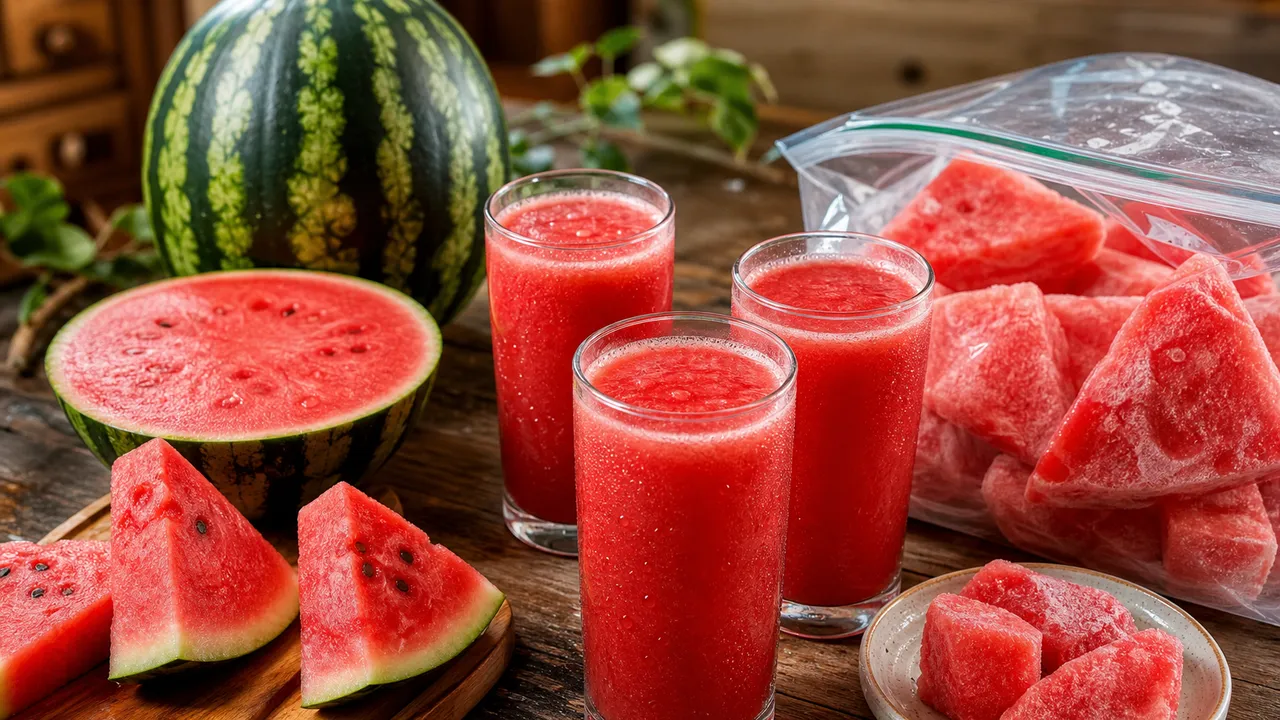
A Complete Guide to Watermelon Juice: Selecting, Preparing,
* 이미지는 AI가 생성한 참고 이미지로, 실제 조리 결과물과 다를 수 있습니다.
This guide covers everything you need to know for a refreshing summer watermelon juice, from selecting a ripe 6 kg watermelon to quick and easy preparation and storage tips.
📝 Editor's Notes
Watermelon juice is the ultimate summer thirst-quencher.
With just one 6 kg watermelon, you can enjoy a fresh drink with minimal preparation time.
This guide covers everything from selecting the right watermelon to preparation and storage, making it easy for even beginner cooks to follow.
Experience the cool, sweet, natural taste of watermelon, making it a perfect healthy and refreshing snack for hot summer days.
🛒 Ingredient Tips
Choosing a delicious watermelon is crucial for the success of your watermelon juice.
First, for the same size, pick one that feels heavy.
It likely has more water and is sweeter and fresher.
Second, tap the watermelon to check for a clear, resonant, bouncing sound.
A dull thud might indicate it's overripe or hollow.
Third, a slightly dry stem is preferable, and distinct stripes with a small, indented blossom end (belly button) suggest higher sweetness.
Finally, be sure to check the yellow spot on the bottom of the watermelon; a deeper yellow color is a sign that it received ample sunlight, indicating higher sugar content.
🔄 Substitution Guide
If you want to make juice using fruits other than watermelon, you can substitute melon or Korean melon (참외).
Melon has a similar texture and sweetness to watermelon but is characterized by a stronger aroma and smoother taste.
Korean melon (참외) offers a crispy texture and refreshing sweetness, but its seeds are harder and more numerous than watermelon seeds, making the seed removal process more tedious during preparation.
Like watermelon, these fruits are high in water content, making them excellent for quenching thirst in summer.
However, they offer a slightly different flavor profile than watermelon's unique crispness.
Choose according to allergies or personal preference.
🥘 Ingredients
👨🍳 Cooking Points
Safe and efficient watermelon preparation is key.
First, the most important point is to stabilize the watermelon on the cutting board before slicing.
After cutting off the top and bottom to create flat surfaces, place one of these flat sides down on the board to prevent the watermelon from rolling, ensuring safety for the next steps.
Second, be careful not to cut too deeply when peeling the rind.
Avoid cutting too much into the white part to prevent wasting the precious fruit flesh; focus on cleanly removing only the green rind.
Third, while watermelon seeds can be used as is, it's a good idea to remove them before blending if you desire a smoother juice.
Cutting the watermelon into cubes is convenient for later juicing and for freezing.
👨🍳 Directions
Place the watermelon on a cutting board, and use a knife to cut off the top and bottom (stem end) to create flat surfaces.
Place one of the cut, flat surfaces down on the board to stabilize the watermelon. Then, place the watermelon horizontally and cut it in half.
Place the cut side of the watermelon face down on the cutting board. Using a knife, carefully slice downwards to remove the green rind all around.
Cut the peeled watermelon into appropriately sized pieces (cube-shaped in the video). (The watermelon seeds are not removed and can be used as is.)
💡 Tips
When choosing a delicious watermelon, select one that feels heavier for its size. It should also produce a clear, hollow, bouncing sound when tapped.
A slightly dry stem is preferable. Look for distinct stripes and a small, indented 'belly button' (blossom end) as these indicate higher sweetness.
The deeper yellow the spot on the bottom of the watermelon, the higher its sugar content.
If consuming within two days, store the prepared watermelon in the refrigerator. For longer storage, freeze it in individual serving portions in freezer bags.
The watermelon rind can be used to make a seasoned salad (무침 style) or dressed with sesame oil and a sweet-and-sour seasoning to be used as an ingredient for bibimbap (비빔밥).
📦 Storage & Reuse
Store the prepared watermelon in an airtight container in the refrigerator for 2-3 days to keep it fresh.
For longer storage, it's best to freeze it in individual serving portions in freezer bags.
Frozen watermelon can maintain its freshness for about two weeks and is convenient for making juice later without needing ice.
Don't throw away the leftover watermelon rind!
The white part can be used to make a spicy and sour seasoned side dish (무침 style) or incorporated into bibimbap (비빔밥) with sesame oil for a unique flavor.
🥢 Who This Is For
This watermelon juice is a perfect snack or dessert for the whole family to enjoy on hot summer days.
Its sweet taste, especially loved by children, makes it an excellent healthy summer beverage.
Pair a refreshing glass of watermelon juice with a light and fresh fruit salad to complete a bountiful summer meal.
🔥 Nutrition Info
Assuming one 6 kg watermelon yields approximately 10 servings, one serving of watermelon juice is estimated to contain about 100-120 kcal.
It includes about 1-2g of protein, almost no fat, and about 25-30g of carbohydrates.
Watermelon is highly effective for quenching thirst and replenishing body fluids in summer due to its high water content (over 90%).
It is also rich in Vitamin C, Vitamin A, and lycopene, a powerful antioxidant, which can help boost immunity and skin health.
It also contains plenty of potassium, which aids in expelling sodium from the body.
💬 Frequently Asked Questions
- Q. What ingredients do I need for A Complete Guide to Watermelon Juice: Selecting, Preparing, and Storing a Ripe Watermelon?
- Main ingredients include Watermelon. Choosing a delicious watermelon is crucial for the success of your watermelon juice. First, for the same size, pick one that feels heavy. It likely has more water and is sweeter and fresher. Second, tap the watermelon to check for a clear, resonant, bouncing sound. A dull thud might indicate it's overripe or hollow. Third, a slightly dry stem is preferable, and distinct stripes with a small, indented blossom end (belly button) suggest higher sweetness. Finally, be sure to check the yellow spot on the bottom of the watermelon; a deeper yellow color is a sign that it received ample sunlight, indicating higher sugar content.
- Q. What are the key tips for making A Complete Guide to Watermelon Juice: Selecting, Preparing, and Storing a Ripe Watermelon?
- Safe and efficient watermelon preparation is key. First, the most important point is to stabilize the watermelon on the cutting board before slicing. After cutting off the top and bottom to create flat surfaces, place one of these flat sides down on the board to prevent the watermelon from rolling, ensuring safety for the next steps. Second, be careful not to cut too deeply when peeling the rind. Avoid cutting too much into the white part to prevent wasting the precious fruit flesh; focus on cleanly removing only the green rind. Third, while watermelon seeds can be used as is, it's a good idea to remove them before blending if you desire a smoother juice. Cutting the watermelon into cubes is convenient for later juicing and for freezing.
- Q. How should I store leftover A Complete Guide to Watermelon Juice: Selecting, Preparing, and Storing a Ripe Watermelon?
- Store the prepared watermelon in an airtight container in the refrigerator for 2-3 days to keep it fresh. For longer storage, it's best to freeze it in individual serving portions in freezer bags. Frozen watermelon can maintain its freshness for about two weeks and is convenient for making juice later without needing ice. Don't throw away the leftover watermelon rind! The white part can be used to make a spicy and sour seasoned side dish (무침 style) or incorporated into bibimbap (비빔밥) with sesame oil for a unique flavor.
- Q. How many calories are in A Complete Guide to Watermelon Juice: Selecting, Preparing, and Storing a Ripe Watermelon?
- Assuming one 6 kg watermelon yields approximately 10 servings, one serving of watermelon juice is estimated to contain about 100-120 kcal. It includes about 1-2g of protein, almost no fat, and about 25-30g of carbohydrates. Watermelon is highly effective for quenching thirst and replenishing body fluids in summer due to its high water content (over 90%). It is also rich in Vitamin C, Vitamin A, and lycopene, a powerful antioxidant, which can help boost immunity and skin health. It also contains plenty of potassium, which aids in expelling sodium from the body.
- Q. Can I substitute ingredients in A Complete Guide to Watermelon Juice: Selecting, Preparing, and Storing a Ripe Watermelon?
- If you want to make juice using fruits other than watermelon, you can substitute melon or Korean melon (참외). Melon has a similar texture and sweetness to watermelon but is characterized by a stronger aroma and smoother taste. Korean melon (참외) offers a crispy texture and refreshing sweetness, but its seeds are harder and more numerous than watermelon seeds, making the seed removal process more tedious during preparation. Like watermelon, these fruits are high in water content, making them excellent for quenching thirst in summer. However, they offer a slightly different flavor profile than watermelon's unique crispness. Choose according to allergies or personal preference.
💬 Comments
No comments yet. Be the first to comment!