
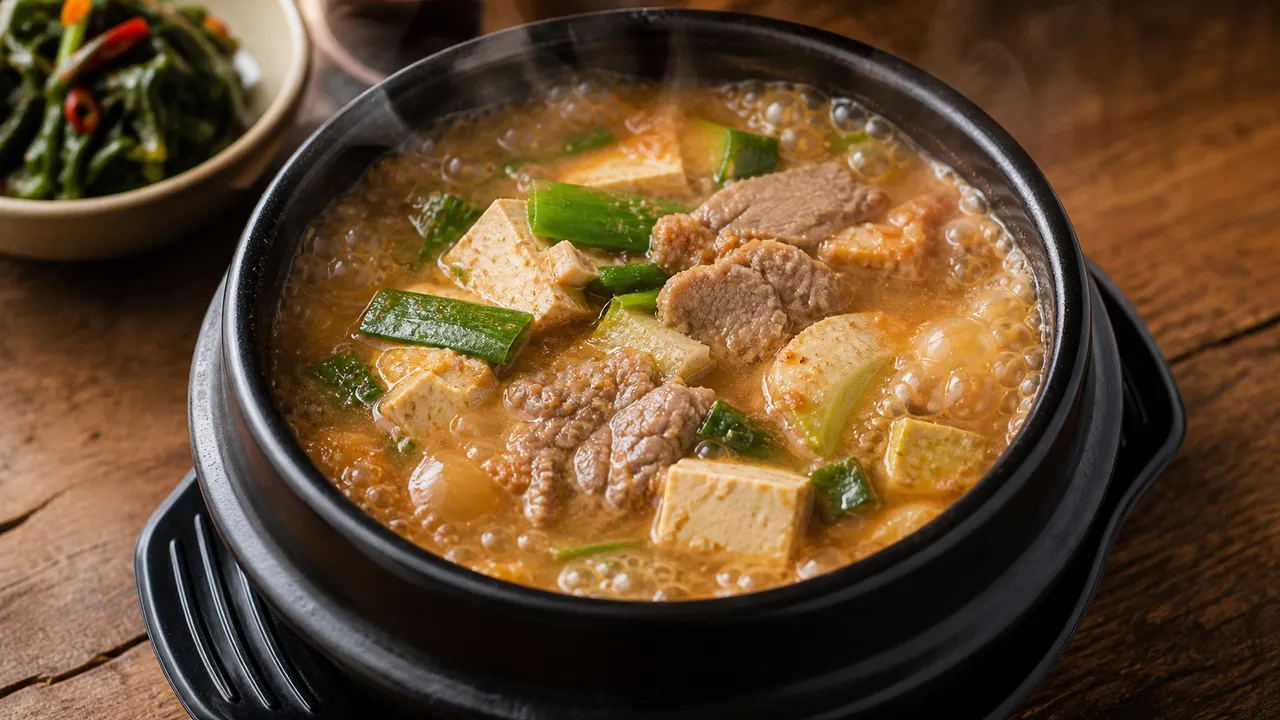
Recreating Ttoshuni's Restaurant-Style Doenjang Jjigae at Ho
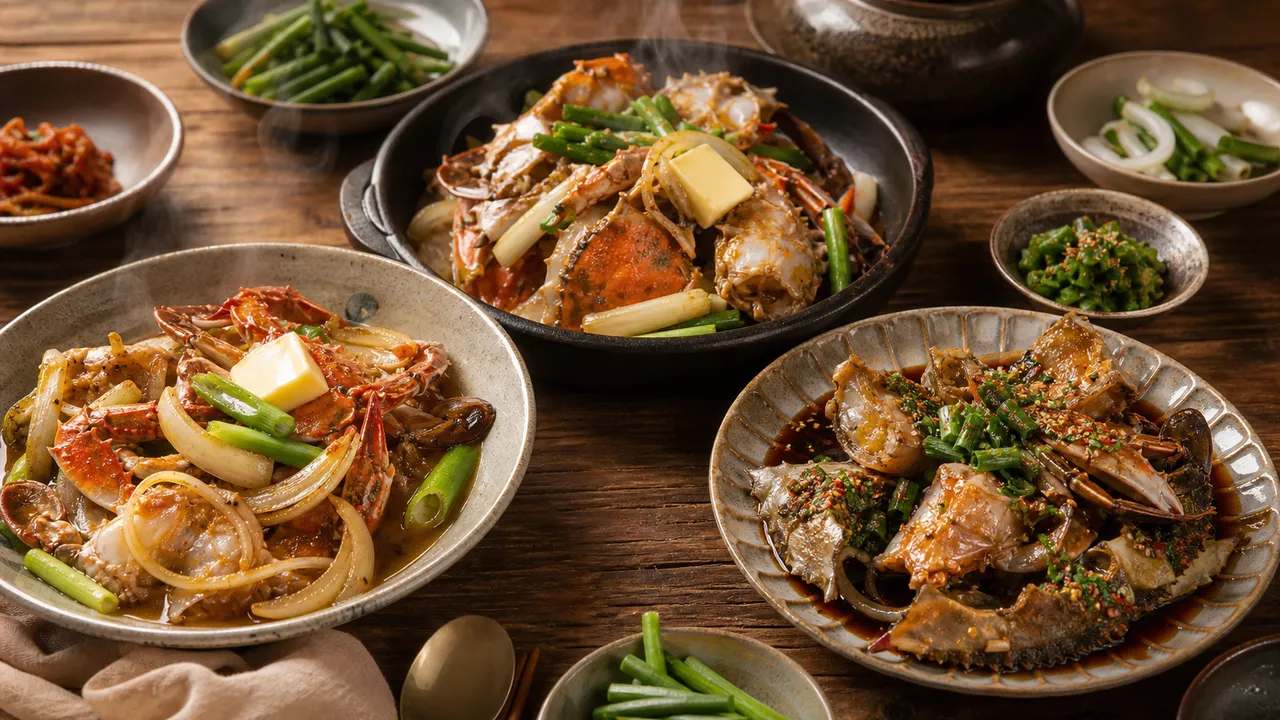
* 이미지는 AI가 생성한 참고 이미지로, 실제 조리 결과물과 다를 수 있습니다.
This is the secret recipe for Ttoshuni's doenjang jjigae (된장찌개), characterized by its deep, savory, and umami flavor from hanger steak and cheonggukjang (청국장). You can easily make a single serving at home.
📝 Editor's Notes
This doenjang jjigae (된장찌개), with its deep and savory flavor from hanger steak and cheonggukjang (청국장), can be made in just 15 minutes, allowing you to easily recreate that restaurant-quality umami taste at home.
The rich beefy aroma of the hanger steak combined with the profound flavor of cheonggukjang (청국장) makes for a hearty meal, offering a magical comfort that soothes you from within when eaten with warm rice.
It's a superb dish perfect for cold weather, when you're feeling low on energy, or even for special guests.
🛒 Ingredient Tips
The key ingredients for this doenjang jjigae (된장찌개) are hanger steak, good traditional doenjang (된장), and cheonggukjang (청국장).
For hanger steak, choose one that is fresh and has a moderate amount of marbling.
If it's too lean, it can be dry, so it's best to have a cut that's mostly lean but with a little fat.
Traditional doenjang (된장) offers a much deeper and richer flavor than commercial doenjang (된장), so it's recommended to use good quality traditional doenjang (된장) if possible.
For cheonggukjang (청국장), choose one that isn't too salty and still has visible soybean grains to enhance its flavor.
Select Korean chives that are vibrant green and not wilted, and use firm, rustic tofu so it doesn't easily break apart in the stew, adding to the enjoyment of eating.
🔄 Substitution Guide
Instead of hanger steak, you can use beef brisket or thinly sliced beef short plate (woosamgyeop, 우삼겹) to add a richer, more unctuous flavor from the fat.
Woosamgyeop (우삼겹) in particular is softer than hanger steak, which children might prefer.
If you prefer not to use meat or are vegetarian, adding plenty of shiitake or king oyster mushrooms will provide a deep, umami flavor without meat.
If you don't have anchovy seasoning powder or prefer not to use it, you can make a rich broth by simmering dried kelp (dashima, 다시마) and dried anchovies, which will offer a cleaner, more natural umami taste.
🥘 Ingredients
👨🍳 Cooking Points
There are three key cooking points for this recipe.
First, it's crucial to cut the hanger steak into 1.5 cm (about 0.6 inch) cubes and simmer it thoroughly to extract its juices.
The meat should be simmered until it's almost falling apart for a deep flavor.
Second, make sure to prepare the seasoning paste first, place it on top of the ingredients, and then pour in the water.
This ensures the seasoning is evenly distributed throughout the ingredients, resulting in a richer taste.
Third, adhering to the simmering times is key.
Boil vigorously for 10 minutes over high heat, then simmer for an additional 5 minutes over medium heat to sufficiently render the meat's fat and bring out the cheonggukjang (청국장) flavor.
If your home stove has weak heat, extend the medium heat simmering time by about 5 minutes.
Finally, add the Korean chives at the very end and cook them only briefly to preserve their fresh aroma.
👨🍳 Directions
Cut the hanger steak into 1.5 cm (about 0.6 inch) cubes.
Cut 1/4 block of tofu into 2.5 cm (about 1 inch) cubes. (Using firm, rustic tofu is recommended.)
Slice 1/2 of a large green onion into 0.5 cm (about 0.2 inch) thick rounds.
Cut 80g of Korean chives into bite-sized pieces. (This is about half of a typical 150g bundle.)
Make the seasoning paste. In a bowl, combine 1 tbsp traditional doenjang (된장), 1 tbsp cheonggukjang (청국장), 0.5 tbsp minced garlic, 0.5 tbsp anchovy seasoning powder, 1.5 tbsp gochugaru (고춧가루), 0.5 tbsp anchovy fish sauce, 0.5 tbsp mirim, and 0.5 tbsp perilla oil. Mix well.
Add the diced hanger steak, tofu, and green onion to a dolsot (돌솥) or earthenware pot (size #3, about 740ml capacity).
Place the prepared seasoning paste on top of the ingredients, then fill the pot with water to about 90% capacity (approximately 350ml-400ml).
Bring to a boil over high heat, stirring occasionally to prevent it from overflowing, and boil vigorously for 10 minutes.
Reduce heat to medium and simmer for another 5 minutes to allow the fat from the meat to render and the cheonggukjang flavor to deepen. (If your stove's heat is weak, extend the simmering time.)
Once the broth has reduced sufficiently, add the sliced Korean chives and boil for just one more moment. Then it's ready to serve.
💡 Tips
Ttoshuni's doenjang jjigae (된장찌개) uses cheonggukjang (청국장) instead of ssamjang (쌈장) and perilla oil instead of sesame oil to enhance its flavor and aroma.
It's important to simmer the meat and vegetables until they are very tender, almost falling apart, to extract their deep, inherent flavors.
If the hanger steak lacks sufficient fat, you can add beef brisket or thinly sliced beef short plate (woosamgyeop, 우삼겹) for a richer, more unctuous taste. Using anchovy seasoning powder is key to replicating Ttoshuni's unique flavor.
Be careful, using too finely ground gochugaru (고춧가루) can make the stew too thick.
📦 Storage & Reuse
The finished doenjang jjigae (된장찌개) can be stored in an airtight container in the refrigerator for 3-4 days.
Stews often taste even better the next day as the flavors deepen, so reheating it will make it more delicious.
While freezing is possible, the tofu's texture can become crumbly after thawing, so refrigeration is generally recommended.
When reheating, simmer gently over medium-low heat.
If the broth has reduced too much, add a little water and adjust the seasoning.
Leftover Korean chives can be blanched and seasoned with chogochujang (초고추장 - chili vinegar dipping sauce) or added to rolled omelets.
🥢 Who This Is For
This stew makes a wonderful meal with just a bowl of warm rice and kimchi.
It's especially recommended as a hearty lunch or dinner option.
It also makes a great accompaniment to drinks and is an excellent dish to serve to family or guests on special occasions.
Good side dishes to pair with it include simple grilled fish, steamed egg (gyeranjjim, 계란찜), or various seasoned vegetable side dishes (namul, 나물).
If you enjoy a spicier kick, you might consider adding a bit of Cheongyang chili pepper (청양고추).
🔥 Nutrition Info
One serving of Ttoshuni's doenjang jjigae (된장찌개) is estimated to be approximately 350-450 kcal.
You can expect about 30-40g of protein from the hanger steak, tofu, and cheonggukjang (청국장); about 20-30g of fat from the hanger steak and perilla oil; and about 15-20g of carbohydrates from cheonggukjang (청국장) and mirim.
Hanger steak is particularly rich in iron and zinc, which can help prevent anemia, while cheonggukjang (청국장) is abundant in probiotics and dietary fiber, making it excellent for gut health.
Tofu and Korean chives contribute plant-based protein, vitamins, and minerals, helping to balance the nutritional profile.
💬 Frequently Asked Questions
- Q. What ingredients do I need for Recreating Ttoshuni's Restaurant-Style Doenjang Jjigae at Home: The Golden Ratio Recipe?
- Main ingredients include Hanger steak, Korean chives, Tofu, Large green onion, Traditional doenjang (된장). The key ingredients for this doenjang jjigae (된장찌개) are hanger steak, good traditional doenjang (된장), and cheonggukjang (청국장). For hanger steak, choose one that is fresh and has a moderate amount of marbling. If it's too lean, it can be dry, so it's best to have a cut that's mostly lean but with a little fat. Traditional doenjang (된장) offers a much deeper and richer flavor than commercial doenjang (된장), so it's recommended to use good quality traditional doenjang (된장) if possible. For cheonggukjang (청국장), choose one that isn't too salty and still has visible soybean grains to enhance its flavor. Select Korean chives that are vibrant green and not wilted, and use firm, rustic tofu so it doesn't easily break apart in the stew, adding to the enjoyment of eating.
- Q. What are the key tips for making Recreating Ttoshuni's Restaurant-Style Doenjang Jjigae at Home: The Golden Ratio Recipe?
- There are three key cooking points for this recipe. First, it's crucial to cut the hanger steak into 1.5 cm (about 0.6 inch) cubes and simmer it thoroughly to extract its juices. The meat should be simmered until it's almost falling apart for a deep flavor. Second, make sure to prepare the seasoning paste first, place it on top of the ingredients, and then pour in the water. This ensures the seasoning is evenly distributed throughout the ingredients, resulting in a richer taste. Third, adhering to the simmering times is key. Boil vigorously for 10 minutes over high heat, then simmer for an additional 5 minutes over medium heat to sufficiently render the meat's fat and bring out the cheonggukjang (청국장) flavor. If your home stove has weak heat, extend the medium heat simmering time by about 5 minutes. Finally, add the Korean chives at the very end and cook them only briefly to preserve their fresh aroma.
- Q. How should I store leftover Recreating Ttoshuni's Restaurant-Style Doenjang Jjigae at Home: The Golden Ratio Recipe?
- The finished doenjang jjigae (된장찌개) can be stored in an airtight container in the refrigerator for 3-4 days. Stews often taste even better the next day as the flavors deepen, so reheating it will make it more delicious. While freezing is possible, the tofu's texture can become crumbly after thawing, so refrigeration is generally recommended. When reheating, simmer gently over medium-low heat. If the broth has reduced too much, add a little water and adjust the seasoning. Leftover Korean chives can be blanched and seasoned with chogochujang (초고추장 - chili vinegar dipping sauce) or added to rolled omelets.
- Q. How many calories are in Recreating Ttoshuni's Restaurant-Style Doenjang Jjigae at Home: The Golden Ratio Recipe?
- One serving of Ttoshuni's doenjang jjigae (된장찌개) is estimated to be approximately 350-450 kcal. You can expect about 30-40g of protein from the hanger steak, tofu, and cheonggukjang (청국장); about 20-30g of fat from the hanger steak and perilla oil; and about 15-20g of carbohydrates from cheonggukjang (청국장) and mirim. Hanger steak is particularly rich in iron and zinc, which can help prevent anemia, while cheonggukjang (청국장) is abundant in probiotics and dietary fiber, making it excellent for gut health. Tofu and Korean chives contribute plant-based protein, vitamins, and minerals, helping to balance the nutritional profile.
- Q. Can I substitute ingredients in Recreating Ttoshuni's Restaurant-Style Doenjang Jjigae at Home: The Golden Ratio Recipe?
- Instead of hanger steak, you can use beef brisket or thinly sliced beef short plate (woosamgyeop, 우삼겹) to add a richer, more unctuous flavor from the fat. Woosamgyeop (우삼겹) in particular is softer than hanger steak, which children might prefer. If you prefer not to use meat or are vegetarian, adding plenty of shiitake or king oyster mushrooms will provide a deep, umami flavor without meat. If you don't have anchovy seasoning powder or prefer not to use it, you can make a rich broth by simmering dried kelp (dashima, 다시마) and dried anchovies, which will offer a cleaner, more natural umami taste.
💬 Comments
No comments yet. Be the first to comment!