
7 Summer Banchan (Side Dish) Recipes | Easy Home-Style Side
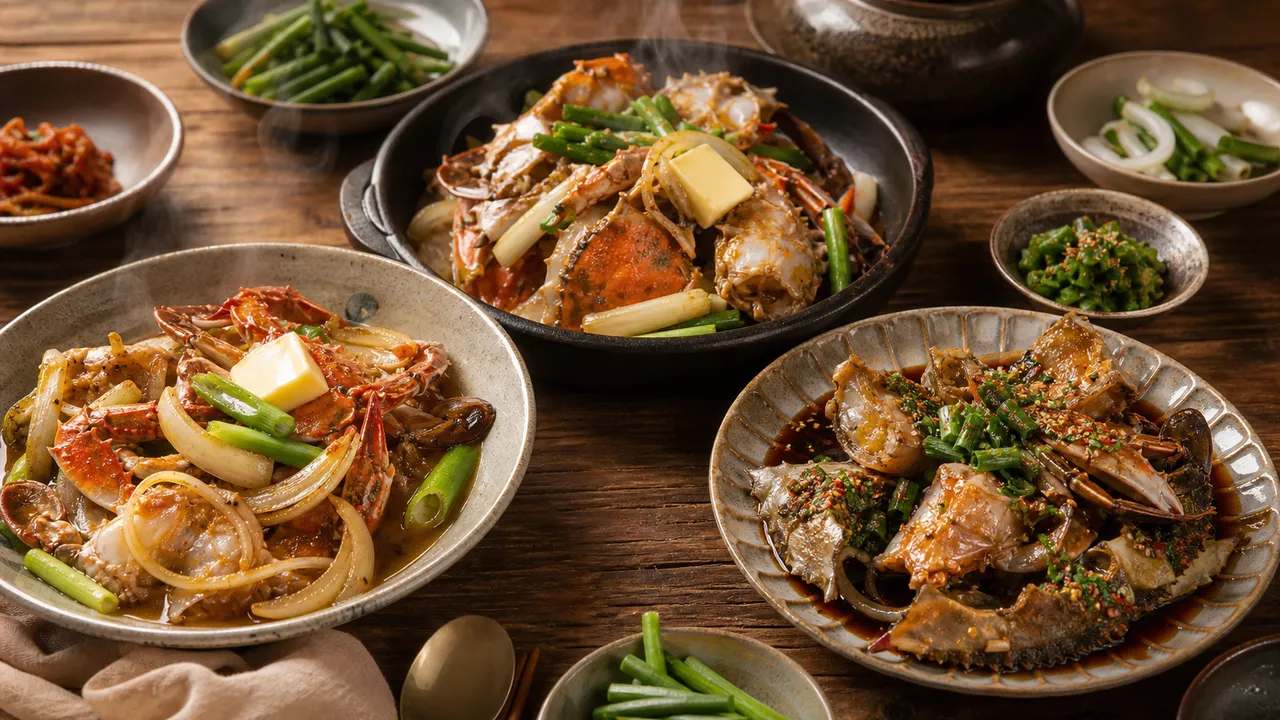
* 이미지는 AI가 생성한 참고 이미지로, 실제 조리 결과물과 다를 수 있습니다.
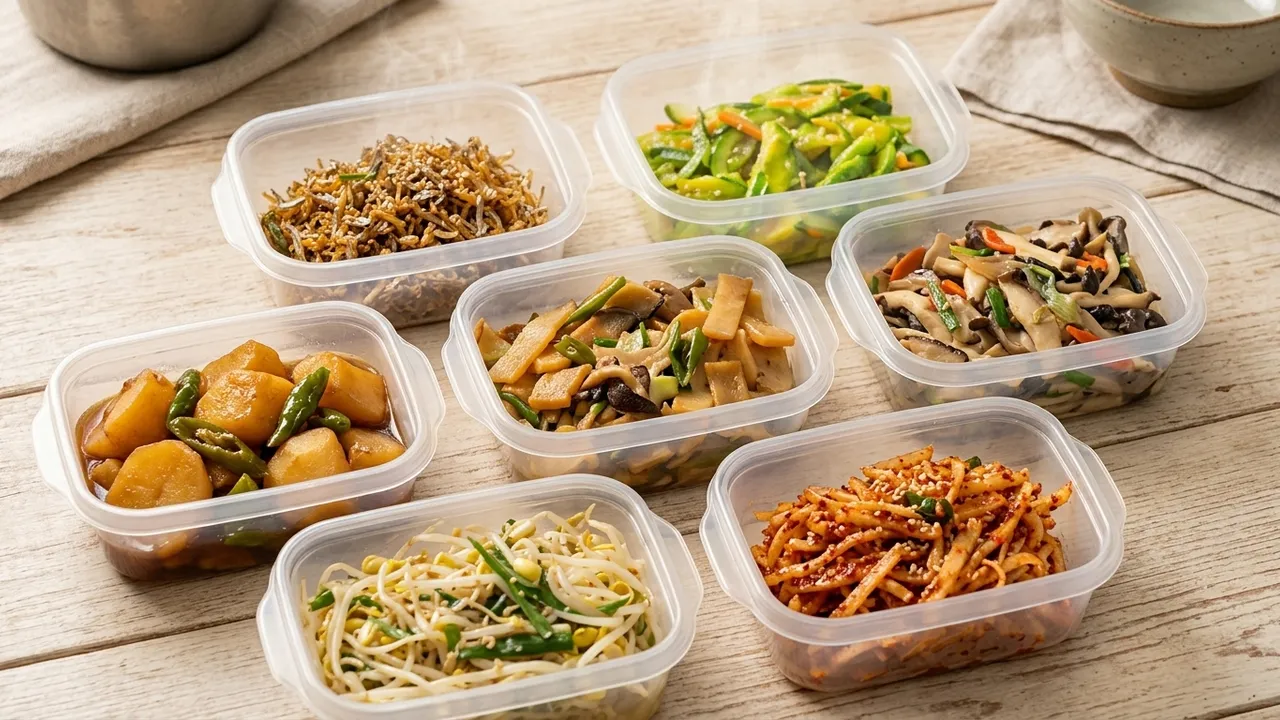
For those summer days when your appetite dwindles, these 7 banchan (side dish) recipes will stock your fridge with delicious options: Onion Jangajji (Pickled Onions), Oiji Muchim (Spicy Pickled Cucumber Salad), Kkwari Gochu Jjim Muchim (Steamed and Seasoned Shishito Peppers), Saeujeot Hobak Bokkeum (Stir-fried Zucchini with Salted Shrimp), Gochujang Myeolchi Bokkeum (Spicy Stir-fried Anchovies), Yangnyeom Kkaennip (Seasoned Perilla Leaves), and Hobak Saeu Jeon (Zucchini and Shrimp Pancakes).
📋 7 recipes — Select to view
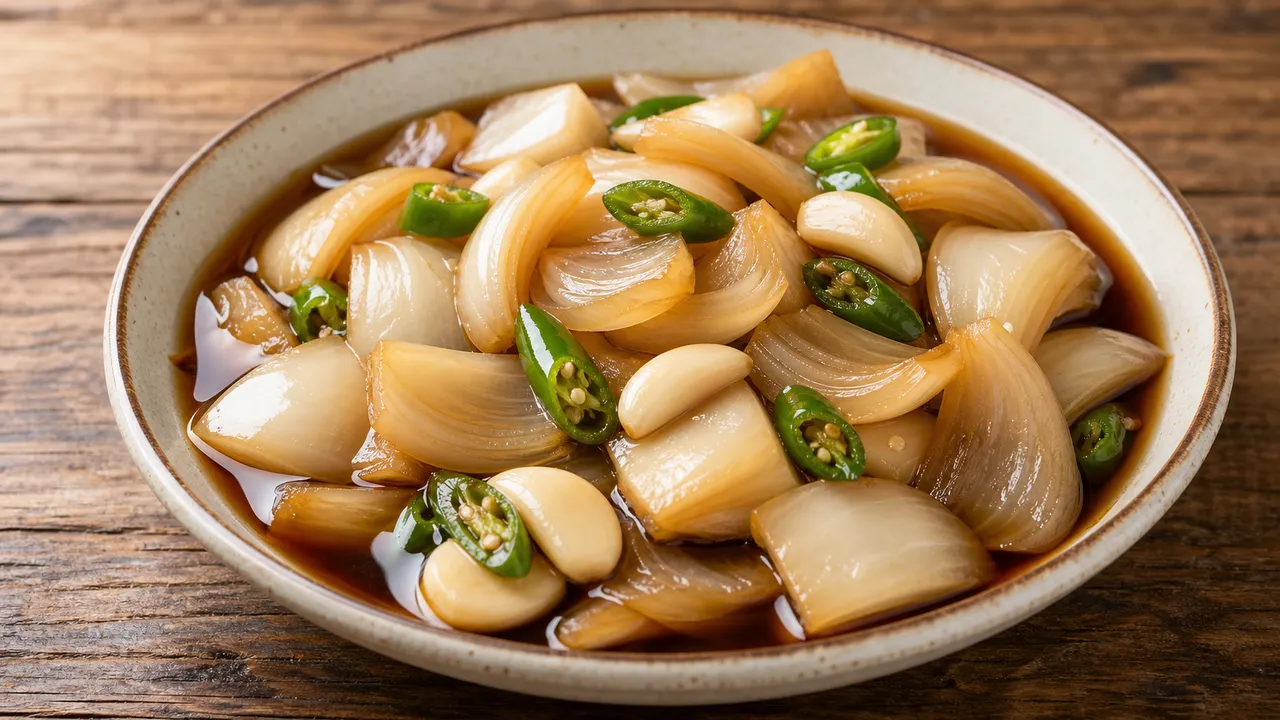
This is a recipe for refreshing sweet and sour onion jangajji (양파 장아찌), perfect for boosting your appetite in the summer. Fresh new garlic (haet-maneul 햇마늘) is added to enhance the flavor.
📝 Editor's Notes
This sweet and sour onion jangajji (양파 장아찌), full of the freshness of new onions and new garlic (haet-maneul 햇마늘), is a quick side dish that can be made in just 32 minutes.
With a soy sauce (jin-ganjang 진간장) base enhanced by shiitake mushrooms and dried kelp (dashima 다시마) for umami, it's perfect for boosting your appetite during the summer, a real 'rice thief' (bap-doduk 밥도둑).
Its refreshingly clean, non-spicy taste makes it an excellent accompaniment to meat dishes or greasy foods, and its crisp texture is irresistibly appealing.
🛒 Ingredient Tips
To enjoy the crisp texture for a long time, choose firm onions that are not soft and have well-dried skins.
They should be glossy and feel heavy.
For fresh new garlic (haet-maneul 햇마늘), select firm cloves that are not too large and have clean skins.
Using whole garlic cloves reduces the pungency and deepens the flavor.
If you dislike overly spicy Cheongyang chili peppers (cheongyang gochu 청양고추), you can substitute them with regular chili peppers or kkwari-gochu (꽈리고추, Korean shishito peppers).
Using fresh ingredients significantly enhances the taste of the jangajji (장아찌).
🔄 Substitution Guide
You can use cucumbers or radishes instead of onions.
Pickled cucumbers offer excellent crunchiness, while pickled radishes provide a refreshing and clean taste.
If Cheongyang chili peppers (cheongyang gochu 청양고추) are too spicy, you can substitute them with kkwari-gochu (꽈리고추, Korean shishito peppers) or red chili peppers to add color and a milder spiciness.
If fresh new garlic (haet-maneul 햇마늘) is unavailable, you can use regular whole garlic, but note that the unique pungency will be less, and the sweet flavor might be weaker.
If you don't have shiitake mushrooms and dried kelp (dashima 다시마), you can use anchovy broth or just boil with dried kelp to still achieve umami.
However, please remember that the depth of flavor might differ slightly from the original recipe.
🥘 Ingredients
👨🍳 Cooking Points
The most crucial cooking point for this recipe is to pour the soy sauce broth over the onions only after it has completely cooled down.
Pouring hot broth directly will soften the onions, so always use fully cooled broth to maintain their crisp texture.
Second, when boiling the soy sauce broth, add shiitake mushrooms and dried kelp (dashima 다시마) and simmer for 5-10 minutes to thoroughly extract the umami flavor.
Be careful not to boil it for too long, as it can develop a bitter taste.
Finally, it's important to adjust the sugar and vinegar to your personal taste.
The amounts in the recipe are just a basic guideline, so taste and adjust the sweet and sour balance as you prefer.
👨🍳 Directions
Slice 1 large onion and 2 medium onions into bite-sized pieces. Slice the Cheongyang chili peppers (cheongyang gochu 청양고추) thinly. Prepare the whole garlic cloves.
In a pot, combine 200 ml of soy sauce (jin-ganjang 진간장) and 300 ml of water. Add 2 shiitake mushrooms and 1 piece of dried kelp (dashima 다시마), and boil for 5-10 minutes to extract umami flavor.
Remove the shiitake mushrooms and dried kelp (dashima 다시마) from the boiled soy sauce broth. Turn off the heat and add 4 tbsp of sugar, 2 tbsp of plum extract (maesil-aek 매실액), 3 tbsp of Korean rice wine (cheongju 청주), and 4 tbsp of vinegar. Mix well and let it cool. (Adjust sugar and vinegar to your preference.)
Pour the cooled soy sauce broth over the sliced onions, Cheongyang chili peppers (cheongyang gochu 청양고추), and whole garlic in an airtight container. Seal and refrigerate.
💡 Tips
Taste the onion jangajji (양파 장아찌) and adjust the sugar and vinegar according to your preference.
📦 Storage & Reuse
Once prepared, the onion jangajji (양파 장아찌) can be stored in an airtight container in the refrigerator for about 2 weeks.
Over time, the onions may release more water, increasing the amount of soy sauce broth.
If you plan to store it for longer, you can portion it out and freeze it, though the crispiness of the onions might diminish after thawing.
Don't discard the leftover soy sauce broth; you can reuse it to pickle other vegetables or use it as a flavorful seasoning in stir-fries or braised dishes.
It tastes even better when served chilled, right before eating.
🥢 Who This Is For
This onion jangajji (양파 장아찌) is the best side dish to regain your lost appetite during summer.
It pairs exceptionally well with rich, fatty meat dishes like samgyeopsal (삼겹살, grilled pork belly) or galbi-jjim (갈비찜, braised short ribs), and also greasy foods like jeon (전, Korean savory pancakes), adding a refreshing element.
It's also delicious when added to kimbap (김밥, Korean rice rolls) or bibimbap (비빔밥, mixed rice with vegetables).
If you like spicy food, add more Cheongyang chili peppers (cheongyang gochu 청양고추); if serving to children, omit them.
🔥 Nutrition Info
Based on an estimated serving size of 100g, this onion jangajji (양파 장아찌) is expected to contain approximately 80-100 kcal.
It typically has about 15-20g of carbohydrates, with very little protein and fat.
Onions are rich in quercetin, an antioxidant that supports blood vessel health, while allicin in garlic helps boost immunity.
Vinegar is beneficial for fatigue recovery, and plum extract (maesil-aek 매실액) aids digestion.
It's important to consume in moderation due to its sugar and sodium content.
This is a healthy side dish that also provides dietary fiber.
💬 Frequently Asked Questions
- Q. What ingredients do I need for 7 Summer Banchan (Side Dish) Recipes | Easy Home-Style Side Dishes to Boost Your Appetite?
- Main ingredients include Onions, Cheongyang chili peppers (청양고추), Fresh garlic (햇마늘), Soy sauce, Water. For Onion Jangajji (양파 장아찌), choose firm onions with glossy skins. Fresh garlic (햇마늘) should have plump cloves without blemishes. Cheongyang chili peppers (청양고추) should be vivid in color and not wilted, to ensure their fresh, spicy kick. For Oiji Muchim (오이지 무침), it's crucial to select Oiji that isn't overly salty and retains a crisp texture; feel them directly or ask the vendor about their freshness. Kkwari gochu (꽈리고추, shishito peppers) should be plump, vibrant green, and not too large. For Saeujeot Hobak Bokkeum (새우젓 호박볶음), select Korean zucchini (애호박) with smooth, glossy skin and no blemishes for a sweet and tender taste.
- Q. What are the key tips for making 7 Summer Banchan (Side Dish) Recipes | Easy Home-Style Side Dishes to Boost Your Appetite?
- The success of these recipes hinges on proper seasoning and texture. For Onion Jangajji (양파 장아찌), the soy sauce broth should be boiled, then thoroughly cooled before adding vinegar and sugar and pouring over the onions to maintain their crisp texture. For Oiji Muchim (오이지 무침), squeezing out as much water as possible is crucial for a crisp texture; use a salad spinner or squeeze firmly by hand. For Kkwari Gochu Jjim Muchim (꽈리고추찜 무침), steam the Buchimgaru (부침가루)-coated peppers for only 5-6 minutes to achieve a chewy texture; over-steaming will make them mushy. For Saeujeot Hobak Bokkeum (새우젓 호박볶음), stir-fry the Korean zucchini (애호박) quickly over high heat to keep a slightly firm texture, preventing it from becoming too soft. Remember these tips, and you'll successfully make delicious banchan!
- Q. How should I store leftover 7 Summer Banchan (Side Dish) Recipes | Easy Home-Style Side Dishes to Boost Your Appetite?
- Onion Jangajji (양파 장아찌) can be stored in an airtight container in the refrigerator for about 2 weeks. Oiji Muchim (오이지 무침) and Kkwari Gochu Jjim Muchim (꽈리고추찜 무침) are best eaten immediately, but can be stored in an airtight container in the refrigerator for 3-4 days. Saeujeot Hobak Bokkeum (새우젓 호박볶음), Gochujang Myeolchi Bokkeum (고추장 멸치볶음), and Yangnyeom Kkaennip (양념 깻잎) can be kept in the refrigerator for about a week. Hobak Saeu Jeon (호박새우전) can be reheated in a frying pan after refrigeration. Don't discard leftover Onion Jangajji marinade; use it for cold noodle broth or to make other pickled vegetables. Leftover Gochujang Myeolchi Bokkeum is also excellent as a Gimbap (김밥) filling.
- Q. How many calories are in 7 Summer Banchan (Side Dish) Recipes | Easy Home-Style Side Dishes to Boost Your Appetite?
- Since these are 7 different banchan, their individual nutritional values vary. However, overall, they are low-calorie side dishes, generally ranging from approximately 150-250 kcal. They are estimated to contain about 5-10g of protein, 5-15g of fat, and 15-25g of carbohydrates. Composed mainly of vegetables like onions, chili peppers, and perilla leaves, they are rich in vitamins A and C, as well as dietary fiber. The Gochujang Myeolchi Bokkeum (고추장 멸치볶음) is particularly good for calcium intake, and Saeujeot (새우젓) replenishes minerals. Unsaturated fatty acids, beneficial for cardiovascular health, can also be obtained from perilla oil and olive oil, helping to create a healthy diet.
- Q. Can I substitute ingredients in 7 Summer Banchan (Side Dish) Recipes | Easy Home-Style Side Dishes to Boost Your Appetite?
- If Cheongyang chili peppers (청양고추) in the Onion Jangajji (양파 장아찌) are too spicy for your taste, you can substitute them with Kkwari gochu (꽈리고추, shishito peppers) or Aehobak gochu (아삭이고추, crispy chili peppers). This will reduce the spiciness while still providing a crisp texture. For Saeujeot Hobak Bokkeum (새우젓 호박볶음), if you don't have Saeujeot (새우젓), you can use a little soup soy sauce instead, though it may lack the unique umami and refreshing taste of Saeujeot. In Gochujang Myeolchi Bokkeum (고추장 멸치볶음), using small dried anchovies instead of large ones can result in a softer texture, but with less chewiness. Try these substitutions if you have allergies or difficulty finding specific ingredients. The taste might change slightly, but you'll still be able to enjoy a delicious meal.
💬 Comments
No comments yet. Be the first to comment!