
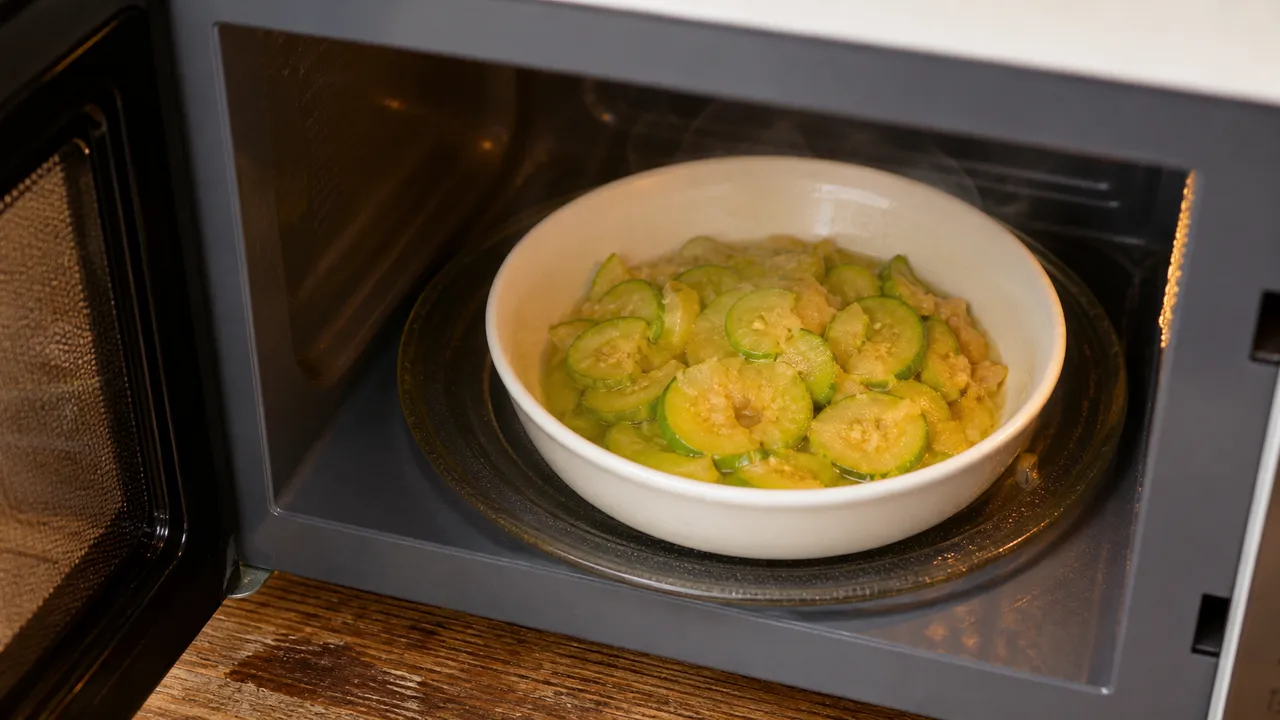
Fail-Proof 3-Minute Microwave Korean Zucchini Salad (Aehobak
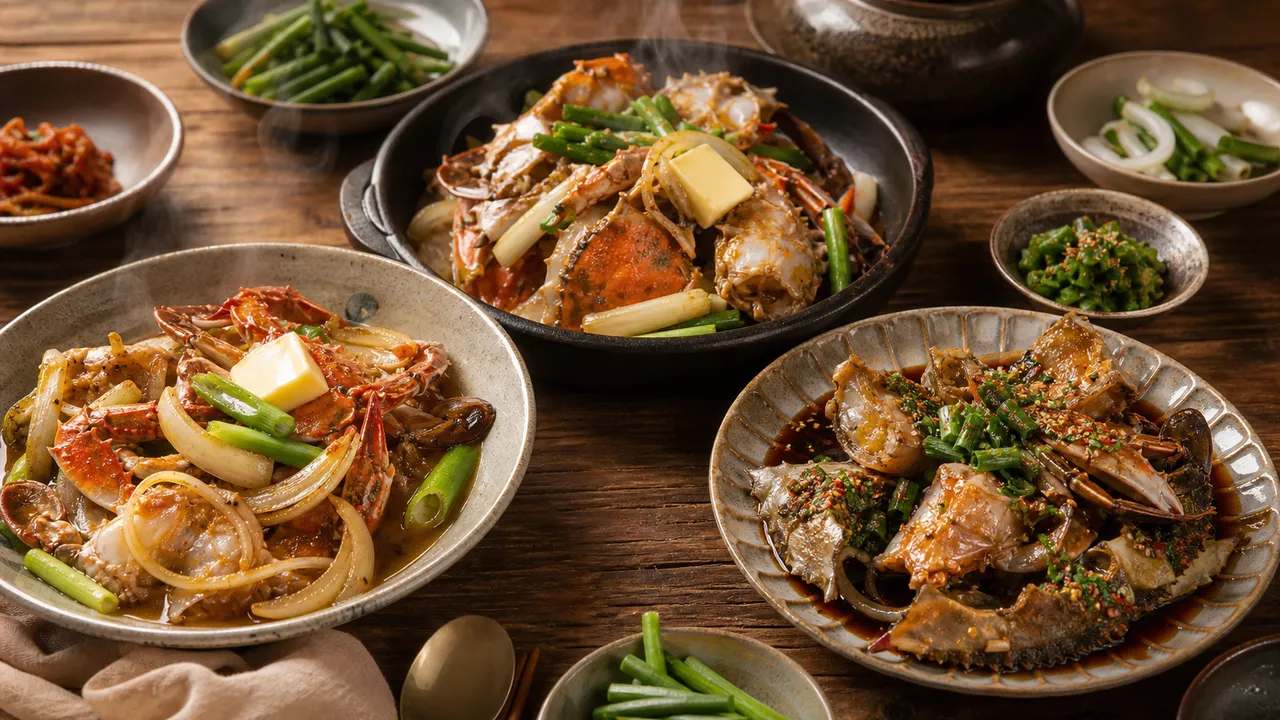
* 이미지는 AI가 생성한 참고 이미지로, 실제 조리 결과물과 다를 수 있습니다.
Crisp and chewy Korean Zucchini Salad (Aehobak-muchim) ready in just 3 minutes in the microwave, without any oil! Make this 'rice thief' side dish for your whole family with a golden ratio seasoning of saeujeot (새우젓) and perilla oil.
📝 Editor's Notes
This is a super simple Korean Zucchini Salad (Aehobak-muchim) that can be whipped up in just 3 minutes with a single Korean zucchini.
Cooked in the microwave without oil, it retains a crisp yet chewy texture.
The golden ratio seasoning of saeujeot (새우젓) and perilla oil creates a deep, savory umami flavor.
It's a beloved side dish for all ages, perfect for providing a healthy and delicious meal even on busy days.
It's especially appealing as it can be cooked without heat during hot summer days.
🛒 Ingredient Tips
For Korean zucchini (aehobak), look for ones with no blemishes, a shiny surface, and a heavy feel, as these are fresh and good quality.
Rather than overly large or plump ones, those of a moderate size and straight shape are better for salads as they have fewer seeds and firmer flesh.
The season is typically summer to autumn, but nowadays, good quality Korean zucchini can be found year-round.
For saeujeot (새우젓), only the brine is used, and it's important to choose one that isn't too salty.
Commercial saeujeot varies in saltiness, so taste and adjust accordingly.
Prepare fresh perilla oil that has been recently pressed; its nutty aroma is key to the flavor of this dish.
🔄 Substitution Guide
You can use zucchini instead of Korean zucchini (aehobak).
Zucchini is generally firmer and contains less moisture than Korean zucchini, so you might want to slice it slightly thinner than 0.5cm or extend the microwave cooking time by about 30 seconds to achieve a tender texture.
The taste will be quite similar to aehobak.
If saeujeot (새우젓) is unavailable or if you have a seafood allergy, you can substitute it with 0.5 tbsp of guk-ganjang (국간장, Korean soup soy sauce) and a pinch of salt.
In this case, if the umami flavor feels a bit lacking, adding a very small amount of tuna sauce or fish sauce is an option.
While you can use sesame oil instead of perilla oil, perilla oil's unique nutty and deep aroma is a key charm of this dish, so it is recommended if possible.
Sesame oil has a stronger scent, which might slightly alter the balance of flavors.
🥘 Ingredients
👨🍳 Cooking Points
The most crucial cooking point for this recipe is to slice the Korean zucchini (aehobak) about 0.5 centimeters (approx. 0.2 inches) thick.
If sliced too thinly, it can become mushy and lose its texture after microwaving.
Slicing it thickly ensures a crisp and chewy texture when bitten.
Next, it's essential not to completely seal the container or bag during microwave cooking, but to leave a small gap.
This allows the zucchini's own moisture to act like steam, cooking it moist and tender.
Finally, you must mix the seasoning with the residual heat of the hot zucchini straight from the microwave.
This prevents the seasoning's aroma from dissipating and allows it to subtly penetrate the zucchini, creating a deep umami flavor.
While this is a microwave dish that doesn't require heat control, remembering these three points will help you make delicious Aehobak-muchim (Korean Zucchini Salad) without fail.
👨🍳 Directions
Clean one Korean zucchini (aehobak) under running water using a soft sponge.
Lightly shake off excess water, neatly cut off both ends with a knife, then slice the zucchini in half lengthwise.
Slice the halved zucchini into thick pieces, about 0.5 centimeters (approx. 0.2 inches) thick, and carefully place them into a deep microwave-safe container or a disposable plastic bag.
If using a container, cover it with its lid or a silicone cover, leaving a small gap for steam to escape. If using a plastic bag, loosely tie the opening and poke one or two holes in the top with chopsticks or a toothpick to prevent gas buildup.
Place it in the microwave as is and cook for exactly 3 minutes at 700W or 1000W (standard home microwave power). If you prefer a softer, more thoroughly cooked texture, extend the cooking time by an additional 30 seconds.
Once microwaving is complete, carefully open the microwave door and remove the cooked zucchini, being cautious of the hot steam to prevent burns.
While the zucchini is still hot, add 1 tbsp of saeujeot (새우젓) brine, 0.5 tbsp of minced garlic, 1 tbsp of perilla oil, and finally, sprinkle 1 tbsp of toasted sesame seeds, lightly crushing them between your fingertips to release their aroma.
Once all the seasonings are added, gently mix them with a spoon or chopsticks, as if handling a baby, until combined. This will complete your exquisite and clean Aehobak-muchim (Korean Zucchini Salad).
💡 Tips
Slicing the Korean zucchini (aehobak) about 0.5 centimeters (approx. 0.2 inches) thick is crucial to perfectly capture its rich juiciness and chewy texture when bitten.
When microwaving, by not completely sealing the container or bag and leaving a small gap, the zucchini's own moisture cannot escape and instead expands internally, creating a steam oven effect. This allows the zucchini to cook very tenderly and moistly.
Mixing the seasoning with the residual heat of the hot zucchini straight from the microwave prevents the seasoning's aroma from dissipating due to heat. Instead, it subtly penetrates into the zucchini, creating a deep umami flavor.
The finished Aehobak-muchim (Korean Zucchini Salad) can be enjoyed chilled from the refrigerator, or it tastes excellent when served warm right after mixing, placed over rice.
📦 Storage & Reuse
The finished Aehobak-muchim (Korean Zucchini Salad) can be stored in an airtight container in the refrigerator for 2-3 days.
As time passes, the zucchini may release water and become soft, so it's best to consume it as soon as possible.
Freezing is not recommended, as the zucchini's texture can be damaged during thawing, becoming mushy and altering the taste.
If you have leftover Korean zucchini, you can finely chop it and use it in rolled omelets, fried rice, or add it to doenjang-jjigae (된장찌개, fermented soybean paste stew).
Korean zucchini is a versatile vegetable, so enjoy it without waste.
🥢 Who This Is For
This Aehobak-muchim (Korean Zucchini Salad) is especially recommended for busy working mothers and cooking beginners.
It's incredibly time-saving, allowing you to complete a wonderful side dish in just 3 minutes.
It's delicious served over warm rice, or as a side to other stir-fries or steamed dishes.
Serving it with light grilled fish or meat dishes will make for an even richer meal.
Children also enjoy its mild flavor, making it perfect as a family side dish.
🔥 Nutrition Info
This Aehobak-muchim (Korean Zucchini Salad) is estimated to be approximately 50-70 kcal per serving.
Since it uses one Korean zucchini and a small amount of seasoning, the calorie count is very low.
Protein is estimated at about 1-2g, fat at about 5-7g due to 1 tbsp of perilla oil, and carbohydrates at about 5-8g from the zucchini's natural sugars.
Korean zucchini is particularly rich in vitamins A and C, and potassium, which help alleviate fatigue and boost immunity.
It's also high in fiber, good for gut health, and as it's cooked in the microwave without oil, it's an even healthier side dish.
Sodium is present in a small amount due to saeujeot (새우젓), so it's important to adjust it to avoid excessive saltiness for health.
💬 Frequently Asked Questions
- Q. What ingredients do I need for Fail-Proof 3-Minute Microwave Korean Zucchini Salad (Aehobak-muchim)?
- Main ingredients include Korean zucchini (aehobak), Saeujeot (새우젓) brine, Minced garlic, Perilla oil, Toasted sesame seeds. For Korean zucchini (aehobak), look for ones with no blemishes, a shiny surface, and a heavy feel, as these are fresh and good quality. Rather than overly large or plump ones, those of a moderate size and straight shape are better for salads as they have fewer seeds and firmer flesh. The season is typically summer to autumn, but nowadays, good quality Korean zucchini can be found year-round. For saeujeot (새우젓), only the brine is used, and it's important to choose one that isn't too salty. Commercial saeujeot varies in saltiness, so taste and adjust accordingly. Prepare fresh perilla oil that has been recently pressed; its nutty aroma is key to the flavor of this dish.
- Q. What are the key tips for making Fail-Proof 3-Minute Microwave Korean Zucchini Salad (Aehobak-muchim)?
- The most crucial cooking point for this recipe is to slice the Korean zucchini (aehobak) about 0.5 centimeters (approx. 0.2 inches) thick. If sliced too thinly, it can become mushy and lose its texture after microwaving. Slicing it thickly ensures a crisp and chewy texture when bitten. Next, it's essential not to completely seal the container or bag during microwave cooking, but to leave a small gap. This allows the zucchini's own moisture to act like steam, cooking it moist and tender. Finally, you must mix the seasoning with the residual heat of the hot zucchini straight from the microwave. This prevents the seasoning's aroma from dissipating and allows it to subtly penetrate the zucchini, creating a deep umami flavor. While this is a microwave dish that doesn't require heat control, remembering these three points will help you make delicious Aehobak-muchim (Korean Zucchini Salad) without fail.
- Q. How should I store leftover Fail-Proof 3-Minute Microwave Korean Zucchini Salad (Aehobak-muchim)?
- The finished Aehobak-muchim (Korean Zucchini Salad) can be stored in an airtight container in the refrigerator for 2-3 days. As time passes, the zucchini may release water and become soft, so it's best to consume it as soon as possible. Freezing is not recommended, as the zucchini's texture can be damaged during thawing, becoming mushy and altering the taste. If you have leftover Korean zucchini, you can finely chop it and use it in rolled omelets, fried rice, or add it to doenjang-jjigae (된장찌개, fermented soybean paste stew). Korean zucchini is a versatile vegetable, so enjoy it without waste.
- Q. How many calories are in Fail-Proof 3-Minute Microwave Korean Zucchini Salad (Aehobak-muchim)?
- This Aehobak-muchim (Korean Zucchini Salad) is estimated to be approximately 50-70 kcal per serving. Since it uses one Korean zucchini and a small amount of seasoning, the calorie count is very low. Protein is estimated at about 1-2g, fat at about 5-7g due to 1 tbsp of perilla oil, and carbohydrates at about 5-8g from the zucchini's natural sugars. Korean zucchini is particularly rich in vitamins A and C, and potassium, which help alleviate fatigue and boost immunity. It's also high in fiber, good for gut health, and as it's cooked in the microwave without oil, it's an even healthier side dish. Sodium is present in a small amount due to saeujeot (새우젓), so it's important to adjust it to avoid excessive saltiness for health.
- Q. Can I substitute ingredients in Fail-Proof 3-Minute Microwave Korean Zucchini Salad (Aehobak-muchim)?
- You can use zucchini instead of Korean zucchini (aehobak). Zucchini is generally firmer and contains less moisture than Korean zucchini, so you might want to slice it slightly thinner than 0.5cm or extend the microwave cooking time by about 30 seconds to achieve a tender texture. The taste will be quite similar to aehobak. If saeujeot (새우젓) is unavailable or if you have a seafood allergy, you can substitute it with 0.5 tbsp of guk-ganjang (국간장, Korean soup soy sauce) and a pinch of salt. In this case, if the umami flavor feels a bit lacking, adding a very small amount of tuna sauce or fish sauce is an option. While you can use sesame oil instead of perilla oil, perilla oil's unique nutty and deep aroma is a key charm of this dish, so it is recommended if possible. Sesame oil has a stronger scent, which might slightly alter the balance of flavors.
💬 Comments
No comments yet. Be the first to comment!