
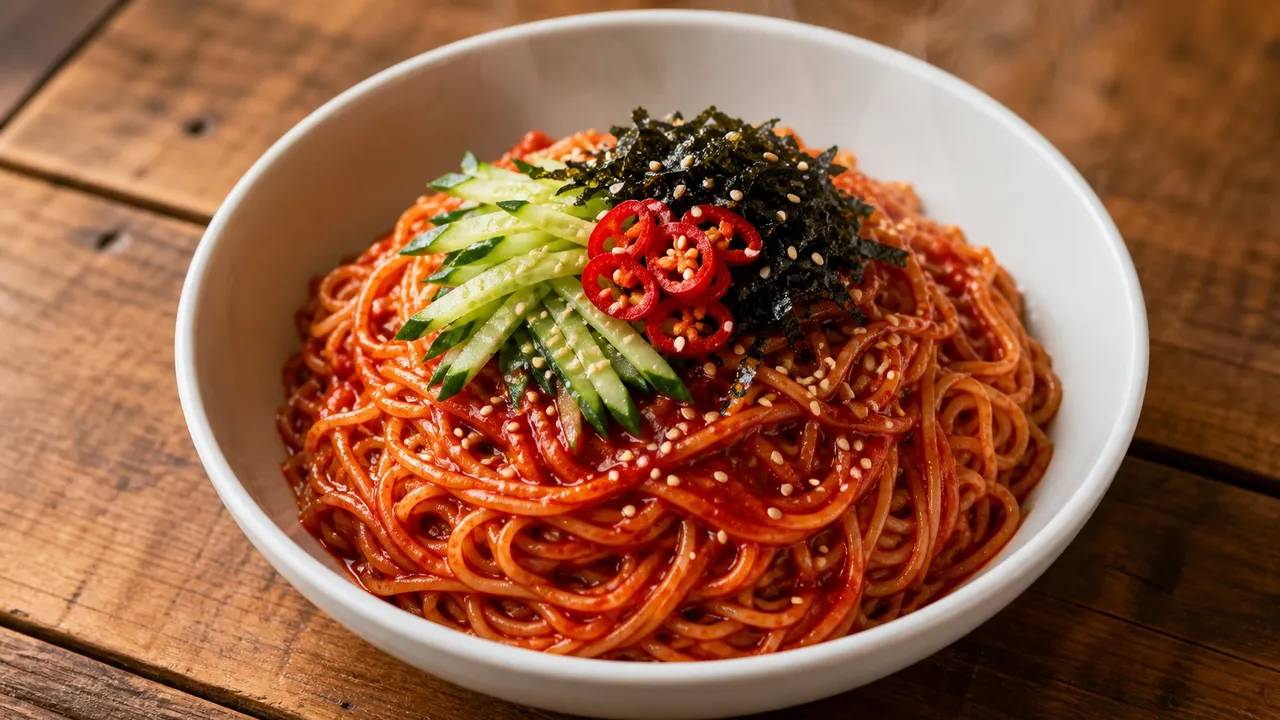
Super Easy Chicken Breast Gochujang Bibim Guksu (Spicy Mixed
* 이미지는 AI가 생성한 참고 이미지로, 실제 조리 결과물과 다를 수 있습니다.
This Gochujang Bibim Guksu (고추장 비빔국수) is a sweet and sour summer delicacy, generously topped with chicken breast and cucumber. Anyone can easily make it with simple vegetable preparation using a mandoline slicer and a special tip to prevent the noodles from getting soggy.
📝 Editor's Notes
Chicken Breast Gochujang Bibim Guksu (고추장 비빔국수) is a super simple noodle dish that can be completed in just 20 minutes, packed with chicken breast and fresh vegetables.
The harmony of sweet and sour gochujang sauce, crisp vegetables, and chewy noodles is exquisite.
It's especially great as a special treat when you lack appetite during hot summer days, and it's perfect as a light meal or late-night snack.
Thanks to the tip for preventing soggy noodles and easy vegetable preparation using a mandoline slicer, even beginner cooks can make it deliciously without fail.
🛒 Ingredient Tips
For the medium-thick noodles, a key ingredient in this recipe, choose 'baton thickness' – not too thin or too thick – to ensure the sauce adheres well and you get a chewy texture.
For chicken breast, choose fresh, firm meat.
If using frozen chicken breast, thaw it completely and drain excess moisture for better taste.
Fresh cucumbers should have smooth, firm skin and a deep green color.
For onions, choose those with glossy, firm skins and un-dried root ends.
Using seasonal cucumbers and onions will result in an even crispier and fresher taste.
🔄 Substitution Guide
Instead of chicken breast, you can use chicken tenderloins or boiled eggs.
Chicken tenderloins offer a softer texture than chicken breast, while boiled eggs add a savory flavor and protein.
If you don't have cucumber, you can use lettuce, perilla leaves (깻잎), or shredded cabbage to maintain a crisp texture.
However, the unique cool and refreshing taste of cucumber might be slightly reduced.
You can also use thin wheat noodles (소면, somyeon) or chewy noodles (쫄면, jjolmyeon) instead of medium-thick noodles, but remember to adjust the cooking time according to the noodle thickness.
Thin wheat noodles absorb the sauce well but can get soggy easily.
🥘 Ingredients
👨🍳 Cooking Points
The most crucial cooking points are how to boil the noodles and how to marinate the vegetables.
First, boiling noodles in a frying pan allows for convenient cooking without worrying about water boiling over.
Add the noodles gradually, rotating them to prevent sticking, and stir well occasionally.
Overcooking will make the noodles soggy and unappetizing, so boil them slightly less than the time indicated on the package, then rinse in cold water for a chewier texture.
Second, thinly slicing the cucumber and onion with a mandoline slicer and marinating them for about 20 minutes is the secret to achieving a crisp texture.
Don't discard the liquid from the marinated vegetables; use it in the sauce to enhance the umami flavor.
Finally, remember the tip to add ingredients to the sauce in the order of powder, liquid, then solid to reduce dishwashing.
👨🍳 Directions
Add water to a frying pan and cook the medium-thick noodles. Add them gradually, rotating to prevent sticking, and stir occasionally.
Thinly slice the cucumber and onion using a mandoline slicer.
In a bowl, combine the sliced cucumber and onion with 4 tbsp vinegar, 4 pinches seasoned salt, and 2 tbsp sugar. Mix well and let them marinate for about 20 minutes to achieve a crisp texture. After marinating, squeeze out excess water from the vegetables. Do not discard the liquid, as it can be used in the sauce.
In a bowl, add 2 tbsp gochugaru (고춧가루), 4 tbsp sugar, 2 tbsp sesame seeds, 4 tbsp sesame oil, 6 tbsp soy sauce, 4 tbsp vinegar, 0.5 tbsp minced garlic, 1 tbsp ketchup, and 1 tbsp gochujang (고추장) in order. Mix well to create the sauce. Finally, add 10 grinds of black pepper.
Place the cooked noodles in a bowl. Top with the marinated cucumber and onion, shredded chicken breast, shredded roasted seaweed, chili pepper, and sesame seeds as garnish.
Spread the prepared sauce nicely at the bottom of the noodles. Add 4 tbsp of the reserved liquid from the marinated vegetables and mix everything well.
💡 Tips
Boiling noodles in a frying pan prevents water from boiling over, eliminating the need to add cold water.
When making the sauce, adding ingredients in the order of powder → liquid → solid allows you to use only one spoon, reducing dishwashing.
The amount of sugar can be adjusted to personal preference (e.g., 5 tbsp if you prefer sweeter, 3 tbsp if you prefer less sweet).
Marinating the cucumber and onion for about 20 minutes ensures a satisfying crunchy texture. The squeezed-out liquid from the marinated vegetables is excellent for enhancing the sauce.
📦 Storage & Reuse
While freshly made bibim guksu is best, if you have leftovers, it's best to store the noodles, sauce, and toppings separately in the refrigerator.
Lightly rinse the noodles with water, drain them well, and store them in a plastic bag.
Store the sauce in an airtight container in the refrigerator for up to 2-3 days.
When reheating, briefly blanch the noodles in hot water, then rinse them with cold water to restore their chewiness.
Mix with the sauce and toppings before serving.
Leftover chicken breast can be used as a salad topping or in sandwiches.
🥢 Who This Is For
This Chicken Breast Gochujang Bibim Guksu (고추장 비빔국수) is highly recommended for those looking for a refreshing and clean meal on a hot summer day.
It's also an excellent choice for those on a diet or who prefer healthy eating.
It pairs wonderfully as a light brunch or a weekend lunch menu.
Serving it with a chilled soup (냉국, naengguk) or a clear bean sprout soup (콩나물국, kongnamul guk) can make the meal even richer.
If you enjoy spicy food, feel free to add a bit more Cheongyang chili pepper (청양고추).
🔥 Nutrition Info
One serving of this Chicken Breast Gochujang Bibim Guksu (고추장 비빔국수) is estimated to be approximately 450-550 kcal.
It provides about 25-30g of protein, 15-20g of fat, and 60-70g of carbohydrates.
Chicken breast is a low-fat, high-protein food that aids in muscle maintenance and weight management.
Cucumbers and onions are rich in water and dietary fiber, beneficial for gut health, and also contain Vitamin C and potassium.
The gochugaru (고춧가루) in the gochujang sauce contains capsaicin, which promotes metabolism, and sesame oil is rich in unsaturated fatty acids, making it healthy.
Overall, this dish offers a balanced intake of nutrients.
💬 Frequently Asked Questions
- Q. What ingredients do I need for Super Easy Chicken Breast Gochujang Bibim Guksu (Spicy Mixed Noodles) with Noodle Cooking Tips?
- Main ingredients include Medium-thick wheat noodles, Gochujang (고추장), Sugar, Sesame seeds, Sesame oil. For the medium-thick noodles, a key ingredient in this recipe, choose 'baton thickness' – not too thin or too thick – to ensure the sauce adheres well and you get a chewy texture. For chicken breast, choose fresh, firm meat. If using frozen chicken breast, thaw it completely and drain excess moisture for better taste. Fresh cucumbers should have smooth, firm skin and a deep green color. For onions, choose those with glossy, firm skins and un-dried root ends. Using seasonal cucumbers and onions will result in an even crispier and fresher taste.
- Q. What are the key tips for making Super Easy Chicken Breast Gochujang Bibim Guksu (Spicy Mixed Noodles) with Noodle Cooking Tips?
- The most crucial cooking points are how to boil the noodles and how to marinate the vegetables. First, boiling noodles in a frying pan allows for convenient cooking without worrying about water boiling over. Add the noodles gradually, rotating them to prevent sticking, and stir well occasionally. Overcooking will make the noodles soggy and unappetizing, so boil them slightly less than the time indicated on the package, then rinse in cold water for a chewier texture. Second, thinly slicing the cucumber and onion with a mandoline slicer and marinating them for about 20 minutes is the secret to achieving a crisp texture. Don't discard the liquid from the marinated vegetables; use it in the sauce to enhance the umami flavor. Finally, remember the tip to add ingredients to the sauce in the order of powder, liquid, then solid to reduce dishwashing.
- Q. How should I store leftover Super Easy Chicken Breast Gochujang Bibim Guksu (Spicy Mixed Noodles) with Noodle Cooking Tips?
- While freshly made bibim guksu is best, if you have leftovers, it's best to store the noodles, sauce, and toppings separately in the refrigerator. Lightly rinse the noodles with water, drain them well, and store them in a plastic bag. Store the sauce in an airtight container in the refrigerator for up to 2-3 days. When reheating, briefly blanch the noodles in hot water, then rinse them with cold water to restore their chewiness. Mix with the sauce and toppings before serving. Leftover chicken breast can be used as a salad topping or in sandwiches.
- Q. How many calories are in Super Easy Chicken Breast Gochujang Bibim Guksu (Spicy Mixed Noodles) with Noodle Cooking Tips?
- One serving of this Chicken Breast Gochujang Bibim Guksu (고추장 비빔국수) is estimated to be approximately 450-550 kcal. It provides about 25-30g of protein, 15-20g of fat, and 60-70g of carbohydrates. Chicken breast is a low-fat, high-protein food that aids in muscle maintenance and weight management. Cucumbers and onions are rich in water and dietary fiber, beneficial for gut health, and also contain Vitamin C and potassium. The gochugaru (고춧가루) in the gochujang sauce contains capsaicin, which promotes metabolism, and sesame oil is rich in unsaturated fatty acids, making it healthy. Overall, this dish offers a balanced intake of nutrients.
- Q. Can I substitute ingredients in Super Easy Chicken Breast Gochujang Bibim Guksu (Spicy Mixed Noodles) with Noodle Cooking Tips?
- Instead of chicken breast, you can use chicken tenderloins or boiled eggs. Chicken tenderloins offer a softer texture than chicken breast, while boiled eggs add a savory flavor and protein. If you don't have cucumber, you can use lettuce, perilla leaves (깻잎), or shredded cabbage to maintain a crisp texture. However, the unique cool and refreshing taste of cucumber might be slightly reduced. You can also use thin wheat noodles (소면, somyeon) or chewy noodles (쫄면, jjolmyeon) instead of medium-thick noodles, but remember to adjust the cooking time according to the noodle thickness. Thin wheat noodles absorb the sauce well but can get soggy easily.
💬 Comments
No comments yet. Be the first to comment!