
Green and Savory Midori Kongguksu (콩국수): A Unique Summer Del
* 이미지는 AI가 생성한 참고 이미지로, 실제 조리 결과물과 다를 수 있습니다.
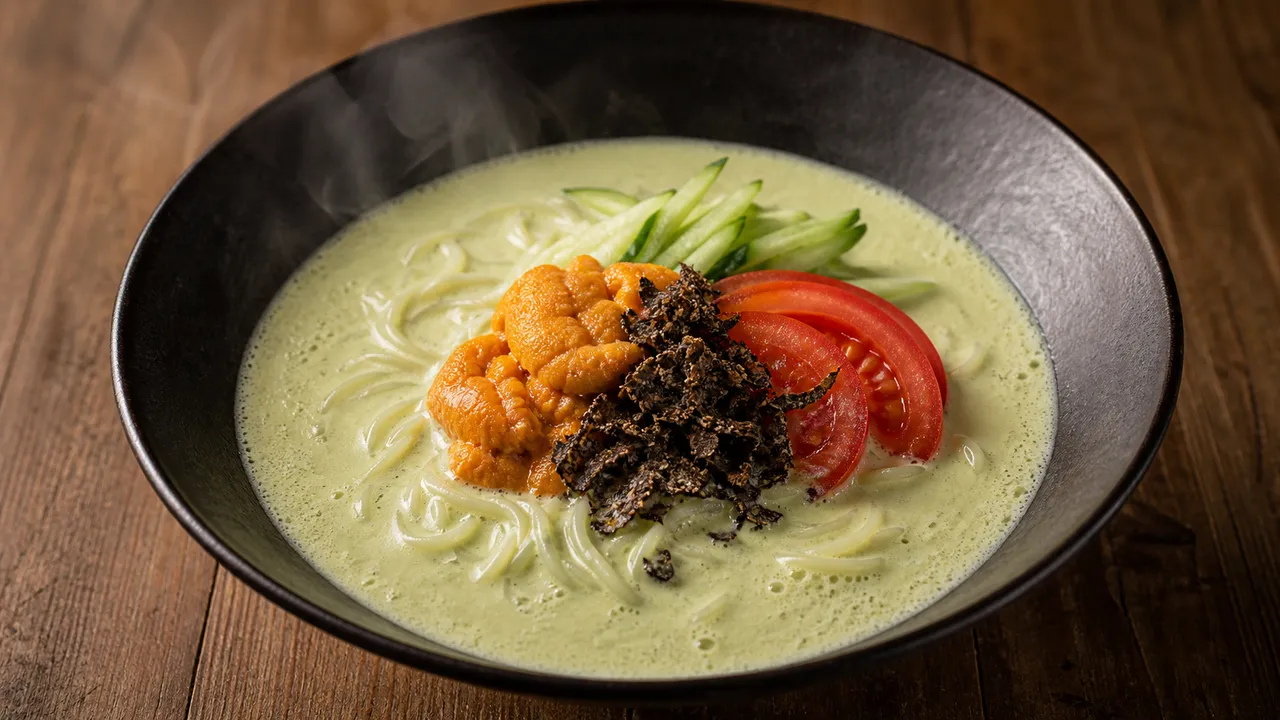
A unique summer noodle dish featuring a savory and creamy green kongguksu (콩국수) made with edamame, enhanced with umami-rich soba tsuyu and Saikyo Miso (사이쿄미소) for a deeper flavor.
📝 Editor's Notes
This Midori Kongguksu (콩국수), made with a unique combination of edamame (풋콩), soba tsuyu, and Saikyo Miso (사이쿄미소), takes approximately 30 minutes to prepare and is of medium difficulty.
The green kongguksu (콩국수) broth, characterized by its savory and deep umami flavor, is made even smoother with the addition of creamy heavy cream.
It's a refreshing and distinctive summer delicacy that invigorates the appetite and is perfect for special occasions or entertaining guests.
Highly recommended for those looking for a new flavor experience beyond traditional kongguksu (콩국수).
🛒 Ingredient Tips
The key ingredients for this recipe are edamame (풋콩) and Saikyo Miso (사이쿄미소) (white miso).
Using shelled frozen edamame (풋콩) is much more convenient.
You can use them directly after thawing, or if using fresh edamame (풋콩), blanch them briefly in boiling water and then peel to create a smoother kongguksu (콩국수) broth.
Saikyo Miso (사이쿄미소) is a type of Japanese miso that is lower in salt, sweeter, and lighter in color than regular doenjang (된장).
Its unique mild umami flavor pairs wonderfully with kongguksu (콩국수), so it's best to use Saikyo Miso (사이쿄미소) if possible.
For the soba tsuyu, choose a store-bought product that is rich in umami and not overly sweet.
🔄 Substitution Guide
For the main ingredients, you can use black soybeans (seoritae) or white soybeans (baektae) instead of edamame (풋콩) to achieve a taste closer to traditional kongguksu (콩국수).
However, the broth color will be white or black instead of green.
If Saikyo Miso (사이쿄미소) is unavailable, use a small amount of regular Korean doenjang (된장) or another Japanese miso, though it may lack Saikyo Miso's characteristic mildness and sweetness.
As a substitute for soba tsuyu, you can season katsuobushi (가쓰오부시) broth with soy sauce and sugar.
Abalone, uni (우니), and truffle are expensive, so they can be omitted or replaced with ingredients like chicken breast, shrimp, or shiitake mushrooms for a light and healthy alternative.
Please note that substitutions may alter the flavor and aroma.
🥘 Ingredients
👨🍳 Cooking Points
There are three key cooking points that determine the deliciousness of Midori Kongguksu (콩국수).
First, when making the kongguksu (콩국수) base, blend all ingredients until extremely smooth in a blender.
A creamy, lump-free texture is essential.
Second, gently heat the blended kongguksu (콩국수) in a pan just until it reaches a simmer, ensuring the ingredients are well combined.
Then, immediately cool it rapidly in an ice bath.
This process refines the broth and deepens its flavor.
Third, after cooking the kalguksu (칼국수) noodles in boiling water for 7 minutes, it's crucial to rinse them thoroughly in cold water to remove excess starch and enhance their chewiness.
Chewy noodles pair perfectly with the cold kongguksu (콩국수) broth.
👨🍳 Directions
Make the kongguksu (콩국수) base: Place 10.6 oz (300g) shelled edamame (풋콩), 1.1 oz (30g) Saikyo Miso (사이쿄미소) (white miso), 2 fl oz (60ml) heavy cream, and 15.2 fl oz (450ml) soba tsuyu in a blender and blend until very smooth.
Pour the blended kongguksu (콩국수) mixture into a pan and gently heat until just before boiling. Immediately place the pan in an ice bath to cool rapidly.
Cook 10.6 oz (300g) Ottogi Old-Fashioned Kalguksu Noodles (칼국수) (based on 3.5 oz / 100g per serving) in boiling water for 7 minutes.
Rinse the cooked noodles thoroughly in cold water to enhance their chewiness and drain well. Arrange the noodles in a coiled mound in a serving bowl.
Score the bottom of the tomato with a shallow 'X', blanch it in boiling water, then transfer to an ice bath to peel. Cut into bite-sized pieces. Thinly slice the prepared Hisui Nasu (히스이나스) (eggplant dish) from the refrigerator and the gently steamed abalone.
Generously pour the chilled Midori kongguksu (콩국수) broth over the noodles in the bowl.
Arrange the sliced tomato, Hisui Nasu (히스이나스), and abalone on top. Grate a generous amount of Hokkaido Uni (우니) (sea urchin roe) and truffle over the dish.
💡 Tips
Noodle selection based on broth consistency: Thick and rich kongguksu (콩국수) broth pairs well with thicker noodles, while clear and lighter broth goes well with thinner noodles.
Shelling edamame (풋콩): Using pre-shelled frozen edamame (풋콩) can save you time and effort.
Heating and cooling the kongguksu (콩국수) broth: Heating then cooling the broth allows the ingredients to meld together better, refining the flavor.
When you're tired of traditional Korean kongguksu (콩국수), try this unique summer delicacy that combines savory richness with umami.
📦 Storage & Reuse
The finished Midori kongguksu (콩국수) broth can be stored in an airtight container in the refrigerator for 2-3 days.
It's best to cook the noodles just before serving and rinse them in cold water, rather than cooking them in advance.
Store any leftover toppings like tomato, Hisui Nasu (히스이나스), and abalone separately in the refrigerator and add them just before eating for maximum freshness.
If you have any leftover kongguksu (콩국수) broth, you can warm it up and enjoy it as a soup, or add rice to make konggukbap (콩국밥) for another delicious meal.
🥢 Who This Is For
This Midori Kongguksu (콩국수) will offer a unique summer delight to those familiar with traditional Korean kongguksu (콩국수).
It's especially recommended for those who enjoy a combination of savory richness and umami.
It's a perfect refreshing dish to enjoy when you've lost your appetite due to the heat, and it's sure to impress guests when served for special occasions.
For side dishes, a light vegetable salad or Japanese tempura would complement it well, creating a more lavish meal.
🔥 Nutrition Info
One serving of this Midori Kongguksu (콩국수) (based on 3.5 oz / 100g noodles), including the premium ingredients, is estimated to contain approximately 600-700 kcal.
It is expected to provide around 30-40g of protein, 30-40g of fat, and 60-70g of carbohydrates.
Edamame (풋콩) is rich in plant-based protein and dietary fiber, and Saikyo Miso (사이쿄미소), as a fermented food, can contribute to gut health.
Abalone and uni (우니) are excellent sources of high-quality protein and minerals, while even a small amount of truffle provides unique flavor and antioxidant compounds.
However, please be mindful of portion sizes, as expensive ingredients like heavy cream, uni (우니), and truffle can increase the fat content.
💬 Frequently Asked Questions
- Q. What ingredients do I need for Green and Savory Midori Kongguksu (콩국수): A Unique Summer Delicacy Recipe?
- Main ingredients include Edamame (풋콩) (shelled), Saikyo Miso (사이쿄미소) (White Miso (백된장)), Heavy cream, Soba Tsuyu, Ottogi Old-Fashioned Kalguksu Noodles (칼국수). The key ingredients for this recipe are edamame (풋콩) and Saikyo Miso (사이쿄미소) (white miso). Using shelled frozen edamame (풋콩) is much more convenient. You can use them directly after thawing, or if using fresh edamame (풋콩), blanch them briefly in boiling water and then peel to create a smoother kongguksu (콩국수) broth. Saikyo Miso (사이쿄미소) is a type of Japanese miso that is lower in salt, sweeter, and lighter in color than regular doenjang (된장). Its unique mild umami flavor pairs wonderfully with kongguksu (콩국수), so it's best to use Saikyo Miso (사이쿄미소) if possible. For the soba tsuyu, choose a store-bought product that is rich in umami and not overly sweet.
- Q. What are the key tips for making Green and Savory Midori Kongguksu (콩국수): A Unique Summer Delicacy Recipe?
- There are three key cooking points that determine the deliciousness of Midori Kongguksu (콩국수). First, when making the kongguksu (콩국수) base, blend all ingredients until extremely smooth in a blender. A creamy, lump-free texture is essential. Second, gently heat the blended kongguksu (콩국수) in a pan just until it reaches a simmer, ensuring the ingredients are well combined. Then, immediately cool it rapidly in an ice bath. This process refines the broth and deepens its flavor. Third, after cooking the kalguksu (칼국수) noodles in boiling water for 7 minutes, it's crucial to rinse them thoroughly in cold water to remove excess starch and enhance their chewiness. Chewy noodles pair perfectly with the cold kongguksu (콩국수) broth.
- Q. How should I store leftover Green and Savory Midori Kongguksu (콩국수): A Unique Summer Delicacy Recipe?
- The finished Midori kongguksu (콩국수) broth can be stored in an airtight container in the refrigerator for 2-3 days. It's best to cook the noodles just before serving and rinse them in cold water, rather than cooking them in advance. Store any leftover toppings like tomato, Hisui Nasu (히스이나스), and abalone separately in the refrigerator and add them just before eating for maximum freshness. If you have any leftover kongguksu (콩국수) broth, you can warm it up and enjoy it as a soup, or add rice to make konggukbap (콩국밥) for another delicious meal.
- Q. How many calories are in Green and Savory Midori Kongguksu (콩국수): A Unique Summer Delicacy Recipe?
- One serving of this Midori Kongguksu (콩국수) (based on 3.5 oz / 100g noodles), including the premium ingredients, is estimated to contain approximately 600-700 kcal. It is expected to provide around 30-40g of protein, 30-40g of fat, and 60-70g of carbohydrates. Edamame (풋콩) is rich in plant-based protein and dietary fiber, and Saikyo Miso (사이쿄미소), as a fermented food, can contribute to gut health. Abalone and uni (우니) are excellent sources of high-quality protein and minerals, while even a small amount of truffle provides unique flavor and antioxidant compounds. However, please be mindful of portion sizes, as expensive ingredients like heavy cream, uni (우니), and truffle can increase the fat content.
- Q. Can I substitute ingredients in Green and Savory Midori Kongguksu (콩국수): A Unique Summer Delicacy Recipe?
- For the main ingredients, you can use black soybeans (seoritae) or white soybeans (baektae) instead of edamame (풋콩) to achieve a taste closer to traditional kongguksu (콩국수). However, the broth color will be white or black instead of green. If Saikyo Miso (사이쿄미소) is unavailable, use a small amount of regular Korean doenjang (된장) or another Japanese miso, though it may lack Saikyo Miso's characteristic mildness and sweetness. As a substitute for soba tsuyu, you can season katsuobushi (가쓰오부시) broth with soy sauce and sugar. Abalone, uni (우니), and truffle are expensive, so they can be omitted or replaced with ingredients like chicken breast, shrimp, or shiitake mushrooms for a light and healthy alternative. Please note that substitutions may alter the flavor and aroma.
💬 Comments
No comments yet. Be the first to comment!