
Chef Jung Ho-young's Super Simple Summer Delicacy: Cold Boil
* 이미지는 AI가 생성한 참고 이미지로, 실제 조리 결과물과 다를 수 있습니다.
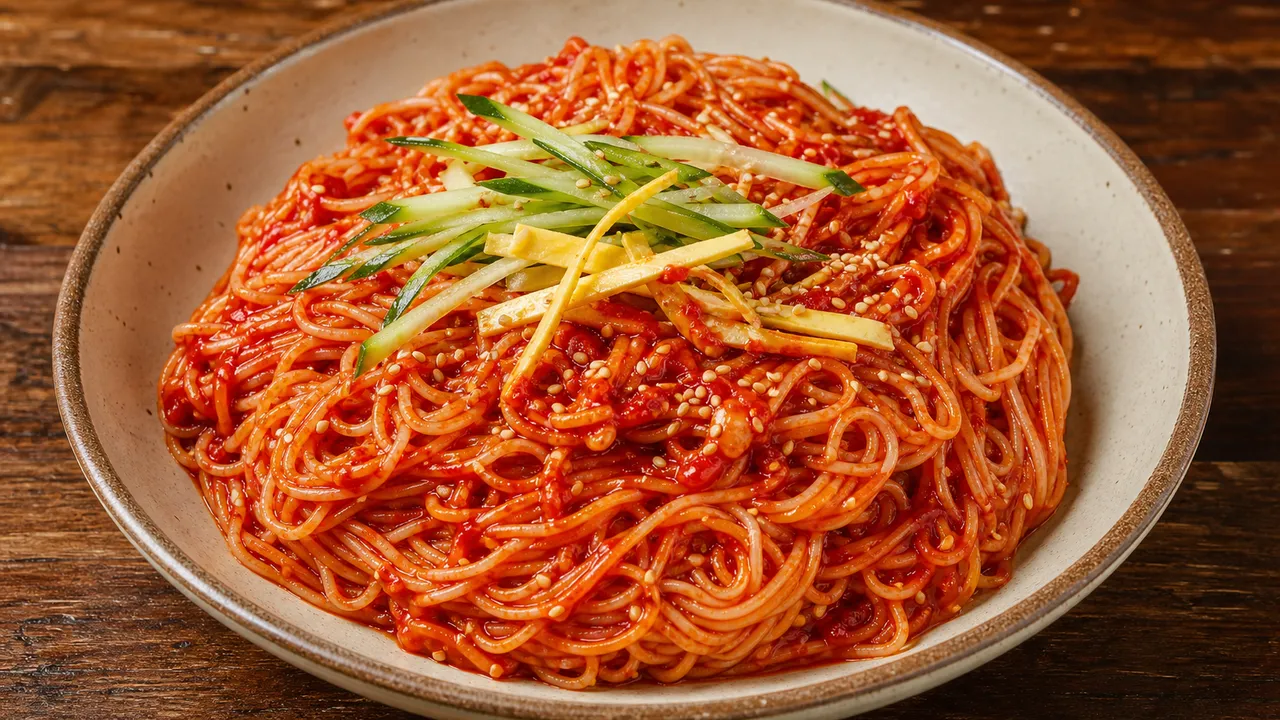
This is a refreshing summer feast featuring a delightful combination of cold boiled pork (naeng-jeyuk) and sweet and sour spicy mixed noodles (bibim guksu), prepared following Chef Jung Ho-young's recipe.
📋 2 recipes — Select to view
This is a sweet and spicy Bibim Guksu (비빔국수) made following Chef Jung Ho-young's recipe.
📝 Editor's Notes
This sweet and spicy Bibim Guksu (비빔국수) is a super simple recipe that can be completed in just 15 minutes with somyeon (소면) noodles and fresh vegetables.
It's characterized by a deep umami flavor, achieved by adding soda and kimchi juice to the golden ratio of gochujang (고추장), sugar, and vinegar.
It's a perfect dish for the whole family to enjoy on a hot summer day when your appetite is low, or when you're craving a light and refreshing meal.
Chef Jung Ho-young's recipe is particularly appealing because it highlights the natural flavors of the ingredients while maintaining a balanced taste, making it easy for anyone to follow.
🛒 Ingredient Tips
The key ingredients that determine the taste of Bibim Guksu (비빔국수) are gochujang (고추장), somyeon (소면) noodles, and fresh vegetables.
For gochujang (고추장), it's best to choose a traditional one that isn't overly spicy but has a deep umami flavor.
For somyeon (소면) noodles, select those made from all-purpose flour for a chewy texture, and it's important to follow the cooking time indicated on the package.
Choose fresh, vibrant-colored cucumbers and mixed greens.
Cucumbers should be firm with a glossy skin, and mixed greens should be crisp and green, not wilted, to ensure the best crunchy and fresh texture.
🔄 Substitution Guide
Instead of somyeon (소면) noodles, you can use jjolmyeon (쫄면) or instant ramen noodles in this recipe.
Jjolmyeon (쫄면) offers a chewier and more elastic texture, while instant ramen noodles provide a heartier meal.
Be sure to follow the cooking instructions on the noodle packaging as cooking times may vary.
If you don't have boiled eggs, grilled chicken breast or pan-fried tofu can be a good substitute, adding protein and a different flavor.
If mixed greens or cucumber are unavailable, feel free to use other vegetables you have in your refrigerator, such as lettuce, perilla leaves, or shredded cabbage.
While the taste and texture might vary slightly, they will still add a refreshing crunch.
🥘 Ingredients
👨🍳 Cooking Points
There are two crucial cooking points for this Bibim Guksu (비빔국수) recipe.
First, the ratio of soda and kimchi juice when making the sauce.
Soda adds sweetness and a refreshing quality, while kimchi juice provides deep umami and balances the spicy and sour flavors.
It's best to adjust the amount to your taste, controlling the consistency.
Second, after boiling the somyeon (소면) noodles, rinse them thoroughly in cold water to remove excess starch and drain them completely.
This ensures the noodles remain chewy, don't become soggy, and absorb the sauce well.
Remember that insufficient draining can dilute the sauce.
👨🍳 Directions
In a large bowl, combine 1 tbsp gochujang (고추장), 1 tbsp minced garlic, a drizzle of sesame oil, 0.5 cup gochugaru (고춧가루), 0.5 cup sugar, a pinch of black pepper, 0.25 cup soy sauce, 0.25 cup vinegar, kimchi juice (as needed), soda (as needed), and a pinch of sesame seeds. Mix well to create the Bibim sauce.
Boil the somyeon (소면) noodles in boiling water. Once cooked, drain them in a colander, rinse thoroughly with cold water, and drain completely.
Add the cooked somyeon (소면) noodles to the Bibim sauce and mix well. Transfer to a serving bowl, top with mixed greens, julienned cucumber, and half a boiled egg. Sprinkle with sesame seeds to finish.
💡 Tips
The Bibim sauce can settle at the bottom of the bowl, making the dish spicier as you eat. Make sure to mix the noodles and sauce thoroughly before eating.
📦 Storage & Reuse
The Bibim sauce can be stored in an airtight container in the refrigerator for 3-4 days.
After boiling the somyeon (소면) noodles and draining them completely, divide them into single-serving portions, put them in plastic bags, and refrigerate.
If eating the next day, briefly blanch the noodles or rinse them again with cold water to restore their chewiness before mixing with the sauce.
Bibim Guksu (비빔국수) is best enjoyed immediately, but if you have leftovers, it's best to store the sauce and noodles separately to prevent the noodles from becoming soggy.
Use any leftover mixed greens in salads, and try adding the cucumber to a seasoned salad or cold soup.
🥢 Who This Is For
This Bibim Guksu (비빔국수) is a delightful specialty perfect for enjoying on a hot summer day.
Its spicy and sour flavor stimulates the appetite, making it an excellent nutritious meal for summer.
It's especially good as a lunch or light dinner, and it will surely be popular if taken to camping trips or picnics.
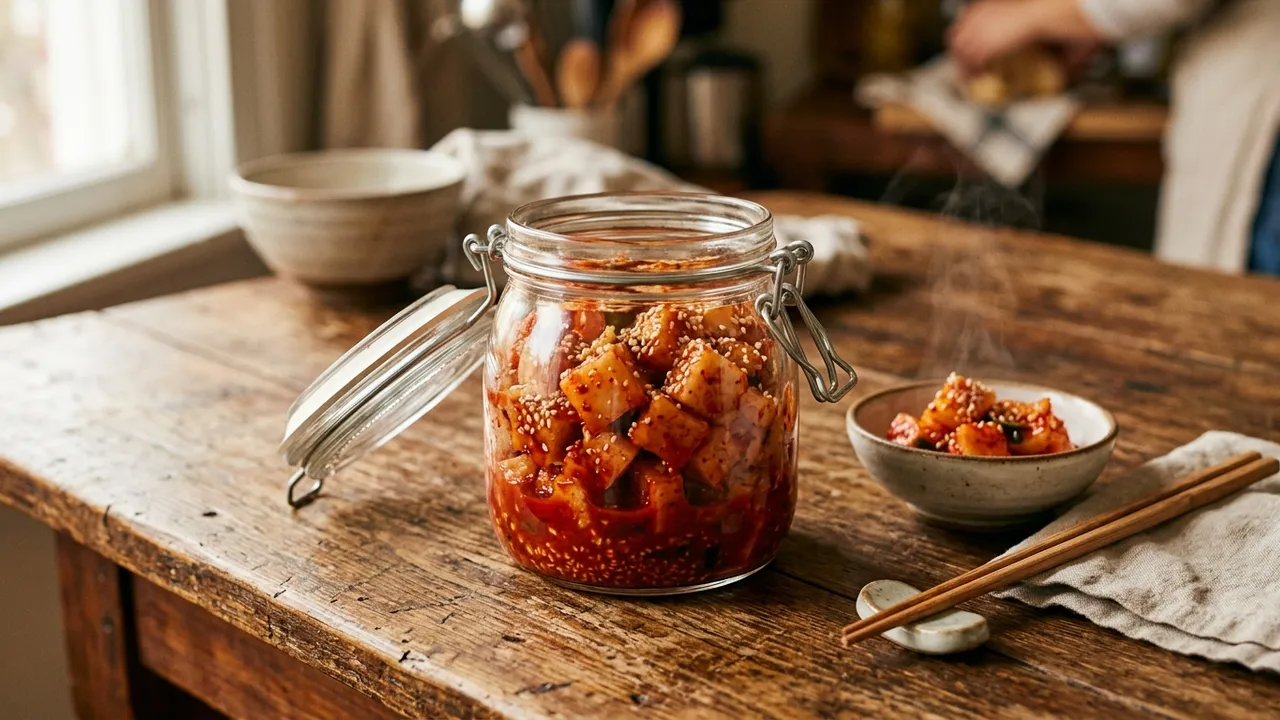
We recommend pairing it with chilled kongguksu (콩국수 - soy milk noodle soup) or a mild steamed egg custard (gyeranjjim), along with crunchy kkakdugi (깍두기 - diced radish kimchi) or danmuji (단무지 - pickled radish).
These will help neutralize the spiciness and complete a balanced meal.
🔥 Nutrition Info
Based on this Bibim Guksu (비빔국수) recipe for 4 servings, an estimated single serving would be approximately 450-550 kcal.
Carbohydrates would be around 80-100g due to the noodles and sugar, protein about 10-15g from the boiled eggs, and fat approximately 8-12g from sesame oil and egg yolks.
Mixed greens and julienned cucumber provide vitamins A and C, along with dietary fiber, while kimchi juice aids in probiotic intake.
However, the sodium content may be somewhat high, so individuals with high blood pressure should adjust the amounts of soy sauce and kimchi juice accordingly.
💬 Frequently Asked Questions
- Q. What ingredients do I need for Chef Jung Ho-young's Super Simple Summer Delicacy: Cold Boiled Pork (Naeng-Jeyuk) Bibim Guksu (비빔국수) Recipe (with Canadian Family Reactions)?
- Main ingredients include Gochujang (고추장), Minced garlic, Sesame oil, Gochugaru (고춧가루), Sugar. For naeng-jeyuk, pork neck or pork belly is best. Pork neck offers a good balance of lean meat and fat, providing a tender texture without being dry, while pork belly, with its higher fat content, yields a richer and juicier taste. Fresh pork should be reddish-pink, glossy, firm, and odorless. When buying at the supermarket, it's best to choose whole chunks. Refrigerated meat is superior to frozen for preserving its inherent flavor and aroma. If purchasing from a butcher, ask for large, uniformly thick chunks for easier cooking. For the bibim guksu, crisp and firm cucumbers are ideal, and baby greens should be fresh and vibrant in color. The kimchi (김치) juice is crucial for the bibim sauce's flavor, so use juice from well-fermented kimchi to achieve a deeper taste.
- Q. What are the key tips for making Chef Jung Ho-young's Super Simple Summer Delicacy: Cold Boiled Pork (Naeng-Jeyuk) Bibim Guksu (비빔국수) Recipe (with Canadian Family Reactions)?
- Making naeng-jeyuk is the most important part of this recipe. The secret to cooking the pork tender and juicy is to boil it in water for 10 minutes, then turn off the heat, cover, and let it rest for 1 hour. Be sure to strictly follow this resting time. Secondly, it's essential to chill the boiled pork thoroughly. Wrap it tightly in plastic wrap and refrigerate it for at least overnight until completely cold. This helps the pork firm up, making it easier to slice thinly and achieving the signature chewy texture of naeng-jeyuk. Lastly, for the bibim sauce, mix all ingredients thoroughly so that the flavors meld well. Don't forget to mix the noodles and sauce well before eating, as the sauce can settle at the bottom of the bowl.
- Q. How should I store leftover Chef Jung Ho-young's Super Simple Summer Delicacy: Cold Boiled Pork (Naeng-Jeyuk) Bibim Guksu (비빔국수) Recipe (with Canadian Family Reactions)?
- The prepared naeng-jeyuk can be wrapped tightly in plastic wrap and stored in an airtight container in the refrigerator for 3-4 days. The bibim sauce can be made in advance and stored in the refrigerator for about a week. It's best to boil the somyeon (소면) just before serving and mix it with the sauce, as the noodles can become soggy if stored pre-mixed. Leftover naeng-jeyuk can be thinly sliced and added to salads or stir-fried with other vegetables. If there's leftover sauce, it's also delicious mixed with rice.
- Q. How many calories are in Chef Jung Ho-young's Super Simple Summer Delicacy: Cold Boiled Pork (Naeng-Jeyuk) Bibim Guksu (비빔국수) Recipe (with Canadian Family Reactions)?
- Based on one serving, this Cold Boiled Pork (Naeng-Jeyuk) Bibim Guksu is estimated to be approximately 700-800 kcal. It is estimated to contain about 30-40g of protein, 40-50g of fat, and 70-80g of carbohydrates. Due to the use of pork neck or pork belly, it is relatively high in protein and fat. Somyeon (소면) is the primary source of carbohydrates, while baby greens and julienned cucumber provide vitamins and dietary fiber. The capsaicin in gochujang (고추장) and gochugaru (고춧가루) found in the bibim sauce helps boost metabolism.
- Q. Can I substitute ingredients in Chef Jung Ho-young's Super Simple Summer Delicacy: Cold Boiled Pork (Naeng-Jeyuk) Bibim Guksu (비빔국수) Recipe (with Canadian Family Reactions)?
- Instead of pork neck or pork belly, you can use boiled chicken breast or beef brisket for the naeng-jeyuk. Chicken breast is lower in fat, making it a milder, lower-calorie option, but it may lack the characteristic savory flavor of pork. Beef brisket offers a deeper, richer flavor than pork but can be more expensive. If you don't have lemon-lime soda, you can increase the amount of sugar slightly and use sparkling water instead. As an alternative to kimchi (김치) juice, you can adjust the sweet and sour taste by adding a little more gochujang (고추장) and vinegar, along with some plum extract (maesil-cheong, 매실청).
💬 Comments
No comments yet. Be the first to comment!