
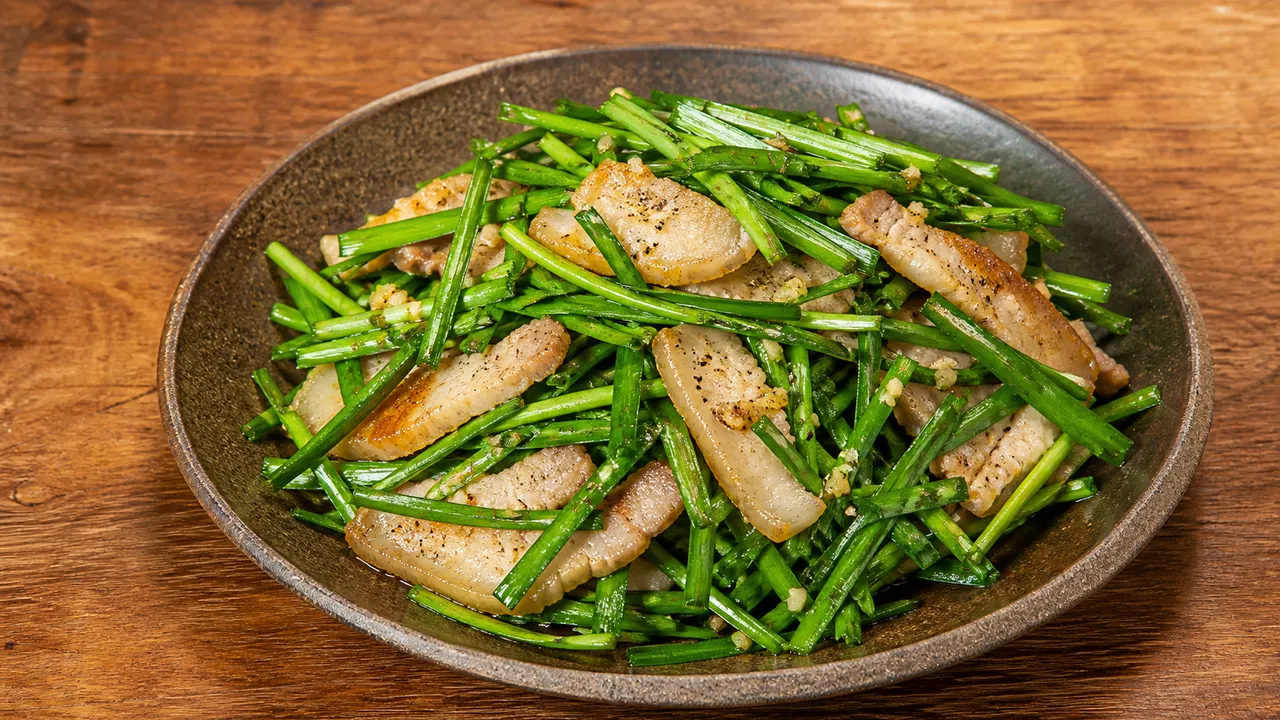
Foolproof 10-Minute Tender Microwave Pork Belly (Suyuk)
* 이미지는 AI가 생성한 참고 이미지로, 실제 조리 결과물과 다를 수 있습니다.
This is a super simple recipe to make tender pork belly slices (suyuk (수육)) by microwaving thick pork belly for just 10 minutes. Enjoy its clean and savory taste served with aged kimchi (mukeunji (묵은지)) and fresh chive salad (buchu geotjeori (부추 겉절이)).
📋 2 recipes — Select to view
This is a super easy recipe to enjoy tender suyuk (수육)—thick pork belly cooked in the microwave in just 10 minutes—served simply with mukeunji (묵은지) (aged kimchi) and chive geotjeori (겉절이) (fresh chive salad).
📝 Editor's Notes
This is a super easy recipe that allows you to enjoy tender suyuk (수육) and crisp chive geotjeori (겉절이) simultaneously in just 10 minutes.
This microwave-cooked suyuk is exceptionally moist and flavorful, offering a clean, savory taste.
The freshness of mukeunji (묵은지) (aged kimchi) and chive geotjeori (겉절이) perfectly complements the pork, preventing any greasiness.
It's a lifesaver for busy days when you want a healthy and delicious meal quickly.
It's perfect for a solo meal or as a main dish for guests.
🛒 Ingredient Tips
When choosing pork belly for suyuk (수육), it's important to select a piece with an even distribution of lean meat and fat, ideally around a 3:7 or 4:6 ratio.
Too much lean meat can make it dry, while too much fat can be greasy.
A thickness of about 0.8-1.2 inches (2-3 cm) helps to retain juices during microwave cooking, ensuring the pork stays moist.
For green onions, using a mix of both the green leafy parts and the white stalk parts will provide a better aroma.
Choose whole garlic cloves that are large, firm, and have clean skins.
Fresh garlic plays a significant role in removing any gamey odors from the suyuk (수육).
🔄 Substitution Guide
You can use pork neck (moksal (목살)) or pork shoulder (apdarissal (앞다리살)) instead of pork belly.
Pork neck has less fat than pork belly, making it a good choice for those who prefer a leaner taste, while pork shoulder is more economical.
However, pork neck and shoulder can be drier than pork belly, so consider slightly reducing the cooking time or adding a little water to maintain moisture.
Soju (소주) or cheongju (청주) can be used in place of mirin.
If you don't have green onions or whole garlic, a small amount of onion or ginger can help remove any gamey odors.
If aged kimchi (mukeunji (묵은지)) is unavailable, freshly made kimchi (김치) or a sweet and sour marinated green onion kimchi (pa kimchi (파김치)) also pairs well.
🥘 Ingredients
👨🍳 Cooking Points
The most important cooking points for this recipe are "microwave usage" and "resting." First, making incisions in the pork belly and drizzling it with mirin is key to removing gamey odors.
The cuts also help the pork cook evenly and absorb the seasonings better.
Second, adjusting the cooking time based on your microwave's wattage is crucial.
Using 10 minutes as a baseline, flip the pork once halfway through to ensure it cooks much more evenly.
Third, do not remove the pork immediately after cooking; cover the dish and let it rest for 5 minutes.
This process allows the juices to spread throughout the meat, resulting in even more tender and moist suyuk (수육).
👨🍳 Directions
Choose pork belly that is reasonably thick with an even distribution of lean meat and fat. Avoid thinly sliced bacon or very thinly shaved pork belly (daepae samgyeopsal (대패 삼겹살)).
Lightly pat the surface of the pork belly dry with paper towels to remove any blood, and make shallow incisions in the thicker parts. (These cuts help the pork cook evenly all the way through and allow any gamey odors to escape.)
Place the pork belly in a microwave-safe glass dish. Sprinkle lightly with salt, black pepper, and minced garlic, then drizzle with mirin (or rice wine/cheongju (청주)). (The alcohol in the mirin evaporates during heating, carrying away any pork odors and excess fattiness.)
Add a few pieces of green onion and whole garlic cloves on top of the pork belly.
Cover the microwave-safe glass dish with its lid. If using microwave-safe plastic wrap, cover loosely so the wrap doesn't touch the meat directly, and poke a few holes for steam to escape. Never put metal or gold-rimmed dishes in the microwave.
Cooking time varies depending on your microwave's wattage and the thickness of the meat. Use 10 minutes as a guideline, but halfway through, remove the dish and flip the pork to ensure it cooks more evenly on both sides.
After cooking, cut into the thickest part of the pork with a knife to check for any pinkness. For greater certainty, if you have a food thermometer, ensure the internal temperature of the thickest part reaches 145°F (63°C). If there's any pinkness, microwave for another 1-2 minutes and check again.
Once fully cooked, gently wipe away any accumulated fat at the bottom of the dish with paper towels to reduce greasiness.
Cover the dish and let it rest for 5 minutes. This allows the residual heat to finish cooking the inside and helps the juices redistribute evenly throughout the meat.
💡 Tips
When making suyuk (수육), prolonged cooking can cause flavors and moisture to leach out, resulting in dry meat. Utilize the microwave for quick cooking to preserve the juices and keep it tender.
When microwaving, cover the microwave-safe glass dish with a lid to steam the pork, keeping it moist inside and out. If using plastic wrap, ensure it's microwave-safe, cover loosely so it doesn't touch the meat, and poke holes for steam to escape. Never use metal dishes.
Cooking times vary based on microwave wattage and meat thickness; 10 minutes is just a guideline. Adjust it to your specific microwave and the pork you're using. Also, remember to flip the pork halfway through to ensure even cooking.
Never skip checking for doneness, as undercooked pork can cause stomach upset. For added assurance, ensure the internal temperature of the thickest part reaches 145°F (63°C).
After cooking, wipe away any fat accumulated at the bottom of the dish with paper towels. Then, cover and let the pork rest for 5 minutes. This resting period allows the juices to redistribute evenly, making the suyuk (수육) more tender and savory. This resting step is the final difference between restaurant-quality suyuk and homemade suyuk.
Store leftover suyuk (수육) in an airtight container in the refrigerator. Reheat gently in the microwave the next day, and it will be as tender as when freshly made. It's delicious wrapped in lettuce as ssam (쌈), or chopped and mixed with kimchi (김치) and rice.
📦 Storage & Reuse
Cooked suyuk (수육) can be stored in an airtight container in the refrigerator for 2-3 days.
When ready to eat, reheat in the microwave for 1-2 minutes or steam lightly until warm.
Leftover suyuk (수육) can also be chopped and added to kimchi fried rice or Budae Jjigae (부대찌개) for a delicious twist.
Chive geotjeori (겉절이) is best enjoyed fresh, but if there are leftovers, store them in an airtight container in the refrigerator and consume by the next day.
Keeping it longer may cause the chives to wilt and release water, altering the taste.
🥢 Who This Is For
This super easy suyuk (수육) and chive geotjeori (겉절이) recipe is highly recommended for unexpected guests or a busy weekend dinner.
Even novice cooks can prepare a fantastic meal without failure.
The combination with aged kimchi (mukeunji (묵은지)) is a fantastic harmony of flavors.
It's also excellent as an accompaniment to makgeolli (막걸리) (Korean rice wine) or soju (소주), or served over warm rice as a suyuk-don (boiled pork rice bowl).
It's also a delightful treat when eaten with freshly made kimchi (김치) during Gimjang (김장) season.
🔥 Nutrition Info
The estimated calorie count per serving for this recipe is approximately 450-550 kcal.
Pork belly typically contains about 20-25g of protein and 35-45g of fat, with very little carbohydrates.
It is rich in B vitamins, which can help with fatigue recovery, and also contains iron, beneficial for preventing anemia.
Aged kimchi (mukeunji (묵은지)) is rich in probiotics, promoting gut health, while chives are abundant in vitamins A, C, and potassium, aiding in immune system strengthening and blood circulation.
Overall, this can be a well-balanced and healthy meal.
💬 Frequently Asked Questions
- Q. What ingredients do I need for Foolproof 10-Minute Tender Microwave Pork Belly (Suyuk)?
- Main ingredients include Pork belly, Salt, Black pepper, Minced garlic, Mirin (맛술) or Rice wine (청주). For this recipe, it's crucial to select pork belly with an even distribution of lean meat and fat layers. If the cut is too thin or excessively fatty, it may become tough or lose too much fat during microwave cooking. Choose fresh green onions with vibrant green parts down to the root, and firm, clean-skinned whole garlic cloves. Mirin (맛술) or rice wine (청주) is essential for removing the distinct gamey odor of pork, so be sure to have it on hand.
- Q. What are the key tips for making Foolproof 10-Minute Tender Microwave Pork Belly (Suyuk)?
- The most important points in this recipe are two-fold. First, make slits in the pork belly and drizzle mirin (맛술) over it! This process helps the seasoning penetrate the meat and effectively removes any gamey odors. Second, cover the dish with a lid or use plastic wrap to seal it during microwave cooking. This traps hot steam, steaming the meat to keep it moist and tender, preventing it from drying out. Don't forget to flip it once halfway through. Cooking times may vary depending on your microwave's wattage, so use 10 minutes as a guideline and adjust accordingly. And be sure to follow the 5-minute resting period after cooking—it's the secret to evenly distributed juices and tender meat.
- Q. How should I store leftover Foolproof 10-Minute Tender Microwave Pork Belly (Suyuk)?
- Store any leftover pork belly (suyuk (수육)) in an airtight container in the refrigerator for 2-3 days for optimal freshness. To reheat, microwave for 1-2 minutes or gently steam to maintain its moisture. Freezing is possible, but the texture may become slightly drier upon thawing, so it's best to consume it quickly. Leftover suyuk (수육) can be added to kimchi jjigae (김치찌개) or chopped and used as an ingredient for kimchi fried rice—both are delicious.
- Q. How many calories are in Foolproof 10-Minute Tender Microwave Pork Belly (Suyuk)?
- This microwave suyuk (수육) recipe is estimated to contain approximately 450-550 kcal per serving. Pork belly typically provides about 20-25g of protein and 40-50g of fat. While carbohydrates are minimal from the pork itself, small amounts can be obtained from the aged kimchi (mukeunji (묵은지)) or chive salad (buchu geotjeori (부추 겉절이)) served alongside. Pork is rich in Vitamin B1, which helps with fatigue recovery, and also contains iron, beneficial for preventing anemia. Garlic and green onions provide nutrients that support immune enhancement and antioxidant activity, making this a healthy meal.
- Q. Can I substitute ingredients in Foolproof 10-Minute Tender Microwave Pork Belly (Suyuk)?
- You can use pork neck or pork front leg (shoulder) instead of pork belly. Pork neck has less fat than pork belly, making it suitable for those who prefer a leaner taste, while pork front leg is more economical. However, pork neck and front leg can be drier than pork belly, so consider slightly reducing the cooking time or increasing the amount of mirin (맛술) to maintain moisture. If mirin (맛술) is unavailable, soju (소주) or rice wine (청주) can be substituted, and garlic powder can be used instead of minced garlic. Regular napa cabbage kimchi can also be served instead of aged kimchi (mukeunji (묵은지)).
💬 Comments
No comments yet. Be the first to comment!