
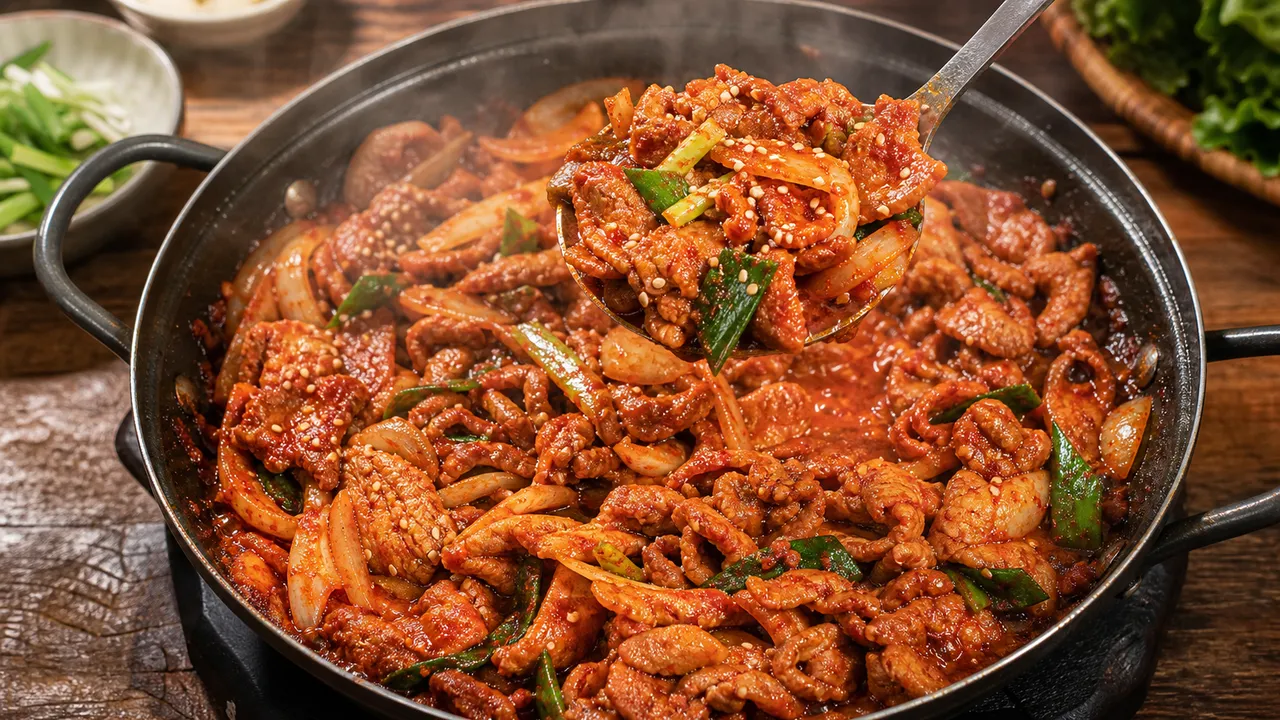
Baek Jong-won's Tenderizing Secret! Foolproof Spicy Buldak J
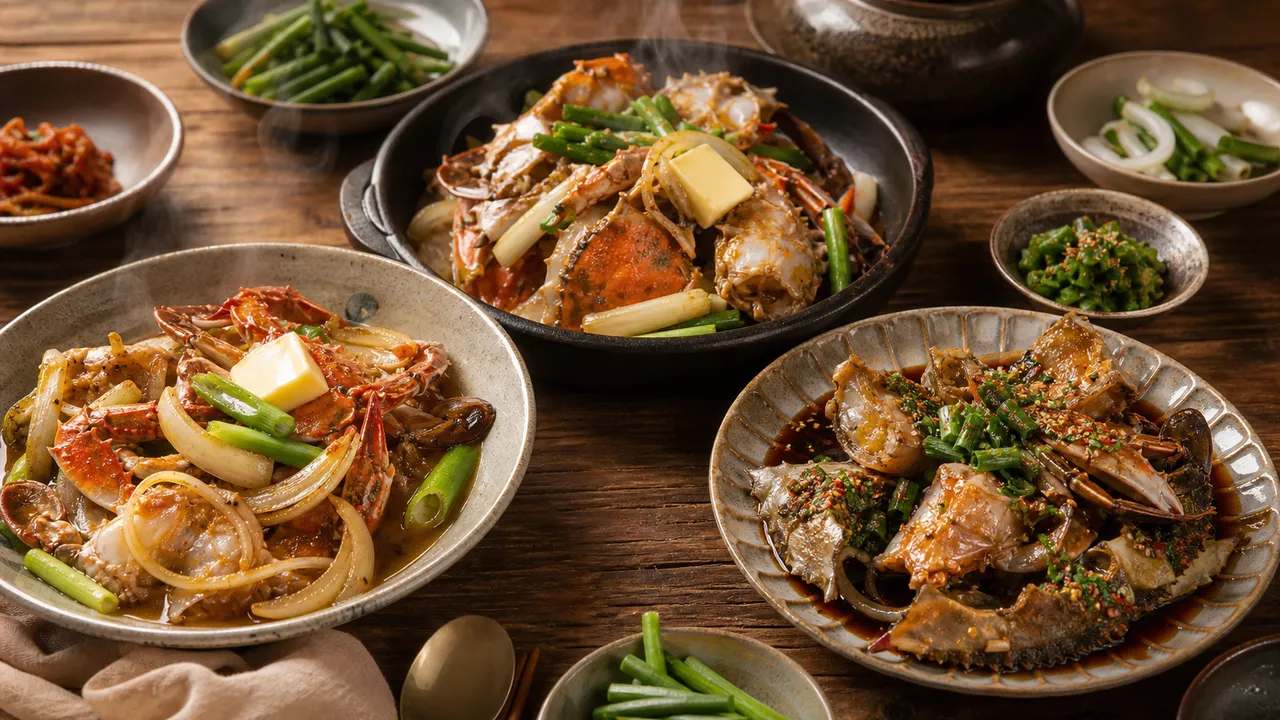
* 이미지는 AI가 생성한 참고 이미지로, 실제 조리 결과물과 다를 수 있습니다.
This Jeyuk-bokkeum (제육볶음) is marinated with oligosaccharide and soy sauce for a tender texture, then enhanced with a spicy umami flavor from gochujang (고추장) seasoning and Buldak (불닭) sauce. It's deliciously stir-fried without additional liquid, relying on the moisture released from the onions. A key characteristic is adding perilla leaves (깻잎) at the very end to maximize their fresh aroma.
📝 Editor's Notes
This spicy Buldak (불닭) Jeyuk-bokkeum (제육볶음), featuring tender pork thanks to Baek Jong-won's tenderizing secret, is a medium-difficulty dish that can be prepared in just 45 minutes, serving 4-6 people.
The pork, marinated with oligosaccharide and soy sauce, gains a spicy umami depth from gochujang (고추장) and Buldak (불닭) sauce, making it an irresistible 'rice thief' (밥도둑).
It's stir-fried moistly without additional broth, relying on the natural moisture from the onions, creating a rich flavor.
The aroma of perilla leaves (깻잎) added at the end stimulates the appetite.
This spicy dish is great for stress relief and perfect for the whole family to enjoy.
🛒 Ingredient Tips
For Jeyuk-bokkeum (제육볶음), it's best to use pork shoulder or butt.
These cuts have a good balance of fat and lean meat, offering a tender texture and rich juiciness.
When choosing pork, select fresh cuts that have a vibrant reddish-pink color and a glossy appearance.
Fresh onions should be firm and have tightly adhering skins; the moisture released from the onions is crucial for the dish's flavor, so choosing good quality onions is important.
For perilla leaves (깻잎), select those with a strong aroma, fresh leaves, and no wilting around the edges.
🔄 Substitution Guide
You can use pork belly instead of pork shoulder or butt.
Pork belly has a higher fat content, which can result in a richer and more tender taste, but keep in mind that it will increase the calorie count.
If you don't have oligosaccharide, you can substitute sugar, but be extra careful with heat control as sugar burns more easily.
Instead of green plum extract, you can add a bit more corn syrup or sugar, but the unique aroma and umami sweetness from the green plum extract might be slightly diminished.
If Buldak Sauce (불닭 소스) is too spicy for you or unavailable, adjust the spiciness by increasing the amount of red pepper powder or adding chopped Cheongyang chili peppers (청양고추).
Note that the depth of flavor might vary slightly.
🥘 Ingredients
👨🍳 Cooking Points
The most crucial point of this recipe is the meat tenderization process.
To prevent the pork from becoming tough, avoid adding gochujang (고추장) first.
Instead, marinate the pork with oligosaccharide and soy sauce for 30 minutes in the refrigerator to make it tender.
Using oligosaccharide instead of sugar is also beneficial as it prevents the meat from burning.
The second key is aging the seasoning sauce.
Preparing the sauce a day in advance and refrigerating it allows the ingredients to meld together, resulting in a much deeper flavor.
Lastly, add Buldak Sauce (불닭 소스) and perilla leaves (깻잎) at the very end of cooking.
The secret is to add Buldak Sauce (불닭 소스) to preserve its spicy aroma and toss in perilla leaves (깻잎) only briefly to add their fragrance without them losing color or wilting.
👨🍳 Directions
Place about 2.6 lbs (1.2 kg) of prepared pork in a stainless steel bowl.
Adding gochujang (고추장) first can dry out the meat, so first add 3 tbsp of oligosaccharide and 3 tbsp of soy sauce. Mix well and let it marinate in the refrigerator for about 30 minutes to tenderize the meat.
Prepare a separate seasoning sauce. In a small bowl, combine 1 tbsp of gochujang (고추장), 1 tbsp of red pepper powder, 1 tbsp of green plum extract, a scant 1 tbsp of oyster sauce, and 2.5 g of MSG (Miwon 미원). Mix well. (The sauce tastes even better if made a day in advance and refrigerated.)
Slice 2 onions and 1 bunch of perilla leaves (깻잎) into sizes similar to the pork.
Preheat a frying pan (or pot), add a moderate amount of avocado oil, and then stir-fry the marinated pork first.
Once the pork has changed color, add the sliced onions and stir-fry them together. Continue to stir-fry until the onions begin to release their moisture.
Once the onions release water, add the prepared seasoning sauce and mix well. The moisture from the onions is sufficient; there's no need to add extra water.
Add 2 tbsp of Buldak Sauce (불닭 소스). If added too early, the spicy aroma will dissipate, so add it towards the end to bring out its fragrance.
Once the onions are translucent, add the perilla leaves (깻잎) and toss briefly, then immediately turn off the heat. Perilla leaves change color and wilt quickly if cooked for too long, so cook them only briefly to infuse their aroma.
Serve the finished Jeyuk-bokkeum (제육볶음) on a plate and sprinkle with a pinch of sesame seeds.
💡 Tips
Before adding the gochujang (고추장) seasoning, marinate the pork with soy sauce and oligosaccharide first to help tenderize the meat and prevent it from becoming dry.
Using oligosaccharide instead of sugar helps prevent the meat from burning quickly.
Preparing the seasoning sauce a day in advance and refrigerating it allows the flavors to deepen considerably.
Add Buldak Sauce (불닭 소스) at the very end to preserve its spicy aroma, and briefly toss in the perilla leaves (깻잎) at the final stage of cooking to add fragrance without letting them wilt.
📦 Storage & Reuse
Leftover Jeyuk-bokkeum (제육볶음) can be stored in an airtight container in the refrigerator for 2-3 days.
For longer storage, we recommend portioning it into individual servings and freezing.
It can be stored frozen for about a month; simply thaw and reheat in a frying pan.
When reheating, use medium-low heat and warm gently, being careful not to overcook, as this can make the pork tough.
You can also repurpose leftover Jeyuk-bokkeum by stir-frying it with rice, shredded dried seaweed, and sesame oil to make Jeyuk-bokkeum-bap (제육볶음밥), or use it as a filling for sandwiches or gimbap (김밥).
🥢 Who This Is For
Spicy Jeyuk-bokkeum (제육볶음) is a perfect dish to energize you on a low-spirited day.
Enjoy it piled high over warm rice as Jeyuk-deopbap (제육덮밥) or wrapped in a lettuce leaf for an even more delicious experience.
Pairing it with a refreshing bean sprout soup or seaweed soup can balance out the spiciness, creating a well-rounded meal.
It also makes an excellent appetizer to enjoy with a glass of makgeolli (막걸리) and will surely earn you compliments when served as a main dish at gatherings with friends or family.
🔥 Nutrition Info
This spicy Buldak (불닭) Jeyuk-bokkeum (제육볶음) is estimated to be approximately 500-650 calories per serving (based on 4-6 servings).
It is expected to contain about 40-50g of protein, 30-40g of fat, and 25-35g of carbohydrates.
Pork is rich in high-quality protein and B vitamins, aiding in fatigue recovery, and its high iron content is good for preventing anemia.
Onions are abundant in vitamin C and dietary fiber, while perilla leaves (깻잎) are rich in antioxidants like beta-carotene and rosmarinic acid, offering numerous health benefits.
The spicy flavor can also help in stress relief.
💬 Frequently Asked Questions
- Q. What ingredients do I need for Baek Jong-won's Tenderizing Secret! Foolproof Spicy Buldak Jeyuk-bokkeum (제육볶음) Golden Recipe?
- Main ingredients include Pork (shoulder or butt), Oligosaccharide, Soy Sauce, Gochujang (고추장), Red Pepper Powder. For Jeyuk-bokkeum (제육볶음), it's best to use pork shoulder or butt. These cuts have a good balance of fat and lean meat, offering a tender texture and rich juiciness. When choosing pork, select fresh cuts that have a vibrant reddish-pink color and a glossy appearance. Fresh onions should be firm and have tightly adhering skins; the moisture released from the onions is crucial for the dish's flavor, so choosing good quality onions is important. For perilla leaves (깻잎), select those with a strong aroma, fresh leaves, and no wilting around the edges.
- Q. What are the key tips for making Baek Jong-won's Tenderizing Secret! Foolproof Spicy Buldak Jeyuk-bokkeum (제육볶음) Golden Recipe?
- The most crucial point of this recipe is the meat tenderization process. To prevent the pork from becoming tough, avoid adding gochujang (고추장) first. Instead, marinate the pork with oligosaccharide and soy sauce for 30 minutes in the refrigerator to make it tender. Using oligosaccharide instead of sugar is also beneficial as it prevents the meat from burning. The second key is aging the seasoning sauce. Preparing the sauce a day in advance and refrigerating it allows the ingredients to meld together, resulting in a much deeper flavor. Lastly, add Buldak Sauce (불닭 소스) and perilla leaves (깻잎) at the very end of cooking. The secret is to add Buldak Sauce (불닭 소스) to preserve its spicy aroma and toss in perilla leaves (깻잎) only briefly to add their fragrance without them losing color or wilting.
- Q. How should I store leftover Baek Jong-won's Tenderizing Secret! Foolproof Spicy Buldak Jeyuk-bokkeum (제육볶음) Golden Recipe?
- Leftover Jeyuk-bokkeum (제육볶음) can be stored in an airtight container in the refrigerator for 2-3 days. For longer storage, we recommend portioning it into individual servings and freezing. It can be stored frozen for about a month; simply thaw and reheat in a frying pan. When reheating, use medium-low heat and warm gently, being careful not to overcook, as this can make the pork tough. You can also repurpose leftover Jeyuk-bokkeum by stir-frying it with rice, shredded dried seaweed, and sesame oil to make Jeyuk-bokkeum-bap (제육볶음밥), or use it as a filling for sandwiches or gimbap (김밥).
- Q. How many calories are in Baek Jong-won's Tenderizing Secret! Foolproof Spicy Buldak Jeyuk-bokkeum (제육볶음) Golden Recipe?
- This spicy Buldak (불닭) Jeyuk-bokkeum (제육볶음) is estimated to be approximately 500-650 calories per serving (based on 4-6 servings). It is expected to contain about 40-50g of protein, 30-40g of fat, and 25-35g of carbohydrates. Pork is rich in high-quality protein and B vitamins, aiding in fatigue recovery, and its high iron content is good for preventing anemia. Onions are abundant in vitamin C and dietary fiber, while perilla leaves (깻잎) are rich in antioxidants like beta-carotene and rosmarinic acid, offering numerous health benefits. The spicy flavor can also help in stress relief.
- Q. Can I substitute ingredients in Baek Jong-won's Tenderizing Secret! Foolproof Spicy Buldak Jeyuk-bokkeum (제육볶음) Golden Recipe?
- You can use pork belly instead of pork shoulder or butt. Pork belly has a higher fat content, which can result in a richer and more tender taste, but keep in mind that it will increase the calorie count. If you don't have oligosaccharide, you can substitute sugar, but be extra careful with heat control as sugar burns more easily. Instead of green plum extract, you can add a bit more corn syrup or sugar, but the unique aroma and umami sweetness from the green plum extract might be slightly diminished. If Buldak Sauce (불닭 소스) is too spicy for you or unavailable, adjust the spiciness by increasing the amount of red pepper powder or adding chopped Cheongyang chili peppers (청양고추). Note that the depth of flavor might vary slightly.
💬 Comments
No comments yet. Be the first to comment!