
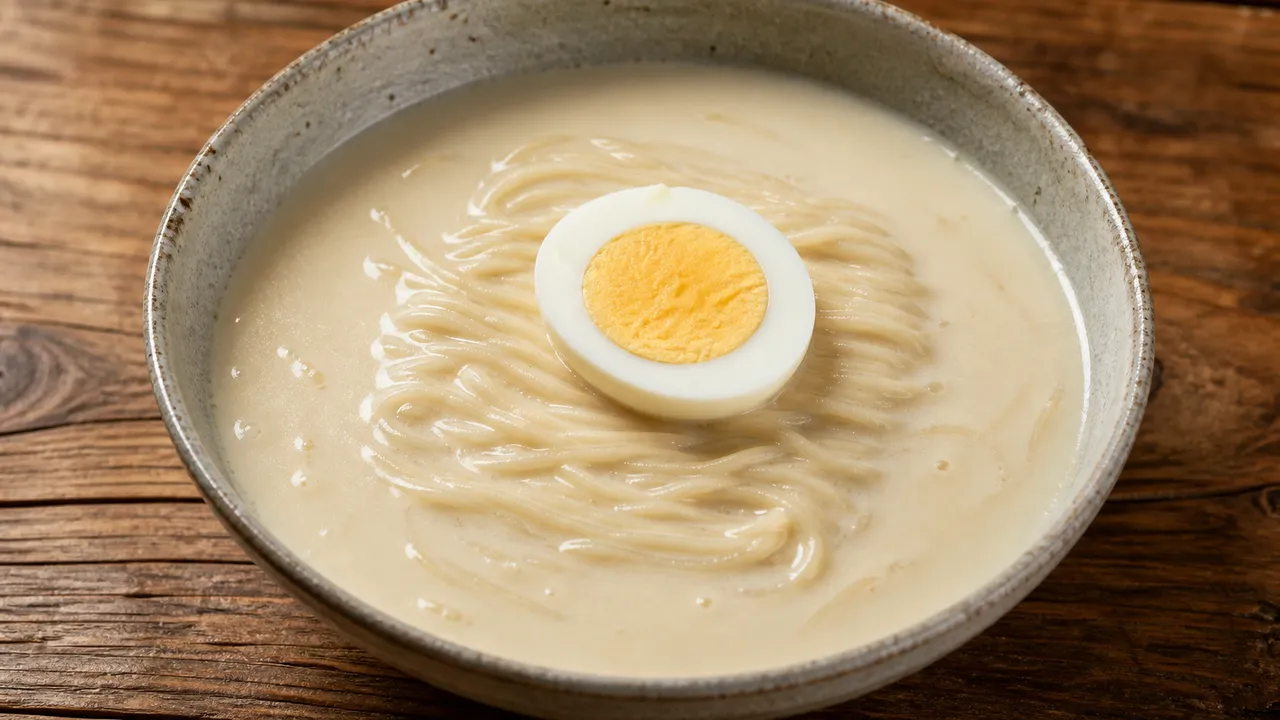
Grandma Son Ye-soon's Truly Rich and Savory Kongguksu (Soy M
* 이미지는 AI가 생성한 참고 이미지로, 실제 조리 결과물과 다를 수 있습니다.
We unveil two secret recipes: the original kongguksu broth made by directly boiling and grinding hulled white soybeans, and a super simple broth that can be completed in just 20 minutes using injeolmi (인절미) soybean powder.
📋 2 recipes — Select to view
We reveal two secrets: how to make authentic kongguksu (콩국수) broth by cooking and grinding peeled white soybeans (백태콩) yourself, and a super simple broth that can be made in just 20 minutes using injeolmi (인절미) soybean powder.
📝 Editor's Notes
Here's an original, old-fashioned kongguksu (콩국수) recipe that can be completed in just 30 minutes, using only peeled white soybeans (백태콩) and sōmen (소면) noodles.
Excluding the soybean soaking time, it's surprisingly simple to make.
The savory and rich soy milk broth combined with refreshing noodles makes for a delightful dish that helps you forget the summer heat.
It's a great choice when you're looking for a hearty yet light meal.
Especially when served with vegetables, it provides a perfectly balanced and nutritious meal for the whole family.
🛒 Ingredient Tips
The key ingredient for this kongguksu (콩국수) is white soybeans (백태콩).
While both domestic Seoritae (서리태, black soybeans) or Baektae (백태, white soybeans) are good, using peeled white soybeans can save you the hassle of peeling them after soaking or cooking, thus shortening the preparation time.
When choosing soybeans, look for plump, glossy ones without any signs of insect damage.
For noodles, regular sōmen (소면) noodles, often called traditional sōmen, are ideal; a medium thickness that isn't too thin or too thick pairs well with the soy milk broth.
For cucumbers, choose fresh, firm, and brightly colored ones to add a crisp texture.
🔄 Substitution Guide
If white soybeans (백태콩) are unavailable or if you have an allergy, you can make the soy milk broth using tofu.
Briefly blanching tofu in boiling water can reduce its raw taste, and then blending it with water can easily create a soy milk broth substitute.
However, tofu-based broth tends to have a slightly lighter and cleaner flavor than one made with white soybeans.
Instead of sōmen (소면) noodles, you can use jjolmyeon (쫄면, chewy noodles) or jungmyeon (중면, medium-thick noodles), but note that the noodle thickness and texture will differ, so choose according to your personal preference.
If pine nuts are unavailable, you can use other nuts like peanuts or sunflower seeds as a garnish to add a savory flavor.
🥘 Ingredients
👨🍳 Cooking Points
The most crucial cooking point is the soybean cooking time.
Cooking soybeans for too long can result in a meju (메주)-like smell, while undercooking can lead to a raw, beany odor.
It's important to cook them for about 5 minutes until they have a slightly firm, crunchy texture. Just remember this.
Another tip is not to discard the soybean cooking water but to blend it along with the soybeans.
This water concentrates the nutrients and savoriness of the soybeans, enhancing the rich flavor of the broth.
Finally, when blending the soy milk broth, add the cooked soybeans and cooled soybean cooking water gradually to the blender and blend in 30-second intervals multiple times to achieve a smooth consistency.
👨🍳 Directions
Soak 2 cups of peeled white soybeans (백태콩) for 5 hours, then rinse thoroughly several times.
Bring water to a boil, add the soybeans, and cook for about 5 minutes. Cooking too long can result in a meju (메주)-like smell, while undercooking can lead to a raw, beany odor. Cook until the soybeans have a slightly firm, crunchy texture.
Drain the cooked soybeans, but do not discard the cooking water; let it cool.
In a blender, add the cooked soybeans and cooled soybean cooking water gradually (a total of 8 cups), blending in 30-second intervals multiple times.
Add 1 tbsp of coarse sea salt to the blended soy milk broth and blend again for about 30 seconds to season.
Pour the blended soy milk broth through a fine mesh sieve or cheesecloth to strain out the pulp (비지, biji).
Cook your desired amount of traditional sōmen (소면) noodles in boiling water. After cooking, rinse them in cold water about 3 times and drain well.
Place the cooked sōmen (소면) noodles in a bowl, pour the original soy milk broth over them, and finish by garnishing with boiled egg, julienned cucumber, pine nuts, and ice.
💡 Tips
When cooking soybeans, avoid overcooking as it can result in a meju (메주)-like smell, and undercooking can cause a beany odor. It's best to cook them for about 5 minutes until they have a slightly firm, crunchy texture.
Do not discard the soybean cooking water; blending it with the soybeans will enhance the rich flavor.
Adjust and add salt to taste, as desired.
Kongguksu (콩국수) is best enjoyed cold, so add plenty of ice to serve it chilled and refreshing.
📦 Storage & Reuse
Once prepared, the soy milk broth can be stored in an airtight container in the refrigerator for 2-3 days, retaining its freshness.
It's best to consume it as soon as possible, as prolonged storage may cause the broth to separate or spoil.
Cooked sōmen (소면) noodles, after being thoroughly drained, can be individually wrapped and refrigerated for consumption the next day.
Leftover soy milk broth is also delicious as a dip for bread, mixed with rice, or warmed up like soymilk for a savory and hearty drink.
While you can freeze it to use later for kongguksu (콩국수), please note that the taste and consistency might change slightly upon thawing.
🥢 Who This Is For
This kongguksu (콩국수) is highly recommended when you want a cool and satisfying meal on a hot summer day.
It's especially great as a special treat when the heat makes you lose your appetite.
It's also a nutritious snack for children and excellent for boosting energy in the elderly.
For side dishes, the crisp texture of geotjeori (겉절이, fresh kimchi) or refreshing yeolmu kimchi (열무김치, young radish kimchi) will pair wonderfully with the savory kongguksu.
Serving it alongside bibim guksu (비빔국수, spicy mixed noodles) with gochujang (고추장) sauce will create a harmonious sweet, salty, and spicy balance, making for an even richer dining table.
🔥 Nutrition Info
One serving of this kongguksu (콩국수) can be estimated to contain approximately 450-550 calories, depending on the ingredient amounts.
Protein is estimated at about 25-35g, fat at 15-20g, and carbohydrates at 50-60g.
Soybeans are rich in plant-based protein, aiding in muscle maintenance and growth, and are also high in dietary fiber, beneficial for gut health.
They also contain various minerals such as B vitamins, calcium, and iron, making this a highly nutritious meal.
The cucumber garnish adds hydration and vitamins, and pine nuts are rich in unsaturated fatty acids, which are good for health.
💬 Frequently Asked Questions
- Q. What ingredients do I need for Grandma Son Ye-soon's Truly Rich and Savory Kongguksu (Soy Milk Noodle Soup): Original & Super Simple Recipes?
- Main ingredients include Somen (thin wheat noodles), Hulled White Soybeans, Soybean cooking water, Coarse sea salt (for original kongguksu broth), Boiled egg. The core ingredient for this kongguksu (soy milk noodle soup) is white soybeans (baektae kong (백태콩)). Using hulled white soybeans helps reduce the raw bean odor and creates a smoother soy milk broth. When choosing soybeans, select those that are uniform in size, glossy, and free of insect damage. For somen (thin wheat noodles), a chewy, traditional-style noodle that doesn't get soggy easily is best. Choose fresh and crisp cucumbers, and prepare fresh, clean pine nuts (jat (잣)) as they enhance the savory flavor. Fresh ingredients will greatly elevate the taste of your kongguksu.
- Q. What are the key tips for making Grandma Son Ye-soon's Truly Rich and Savory Kongguksu (Soy Milk Noodle Soup): Original & Super Simple Recipes?
- The most crucial points when making kongguksu (soy milk noodle soup) are the soybean cooking time and how finely the soy milk is ground. First, after soaking, boil the soybeans for only about 5 minutes. Overcooking can lead to a meju (메주) smell, while undercooking can result in a raw bean odor. The perfect consistency is when they are slightly firm to the bite. Second, absolutely do not rinse the cooked soybeans in cold water, and do not discard the soybean cooking water; let it cool and blend it together with the soybeans for a richer flavor. Third, in a blender, add the soybeans and cooled soybean cooking water, blending for 30 seconds at a time, repeating several times. Blending in short bursts rather than one long go will result in a finer and smoother soy milk broth. Finally, straining the broth through a fine mesh or cheesecloth will give you an even smoother texture.
- Q. How should I store leftover Grandma Son Ye-soon's Truly Rich and Savory Kongguksu (Soy Milk Noodle Soup): Original & Super Simple Recipes?
- The finished kongguksu (soy milk noodle soup) broth can be stored in an airtight container in the refrigerator for 2-3 days. The soy milk may settle over time, so it's best to shake or stir it well before serving. Drain and refrigerate any leftover somen (noodles) separately; adding them to the broth just before eating will prevent them from getting soggy. If you have a lot of leftover broth, you can freeze it, but the texture may change slightly upon thawing, so it's recommended to consume it as soon as possible. Don't discard leftover okara (비지); it's excellent for making okara stew (bijijjigae (비지찌개)) or okara pancakes (bijijeon (비지전))!
- Q. How many calories are in Grandma Son Ye-soon's Truly Rich and Savory Kongguksu (Soy Milk Noodle Soup): Original & Super Simple Recipes?
- Grandma Son Ye-soon's Kongguksu (Soy Milk Noodle Soup) is estimated to be approximately 450-550 kcal per serving. As white soybeans are the main ingredient, it is very high in protein, providing about 25-30g per serving. Carbohydrates, from the somen (noodles) and sugars in the soybeans, are estimated at about 60-70g, and fat at about 15-20g. Soybeans are not only rich in plant-based protein but also packed with dietary fiber, which aids gut health, and abundant in antioxidants like isoflavones. It's a perfectly nutritious dish, offering various minerals such as B vitamins, iron, and calcium. A single bowl is a hearty and healthy restorative meal for the summer.
- Q. Can I substitute ingredients in Grandma Son Ye-soon's Truly Rich and Savory Kongguksu (Soy Milk Noodle Soup): Original & Super Simple Recipes?
- If white soybeans are unavailable or you have an allergy, you can substitute them with Seoritae (서리태 - black soybeans) or other black beans. However, if black beans are blended with their skins, the color will be dark and the flavor might be slightly richer. Using hulled black beans can provide a similar texture to white soybeans. If boiling and grinding soybeans yourself is cumbersome, the super simple recipe using injeolmi (인절미) soybean powder or store-bought soy milk broth products can be a good alternative. While soybean powder allows for much quicker preparation of the broth, note that it may offer less rich flavor than freshly ground soy milk. Rice noodles or buckwheat noodles can also be enjoyed as an alternative to somen.
💬 Comments
No comments yet. Be the first to comment!