
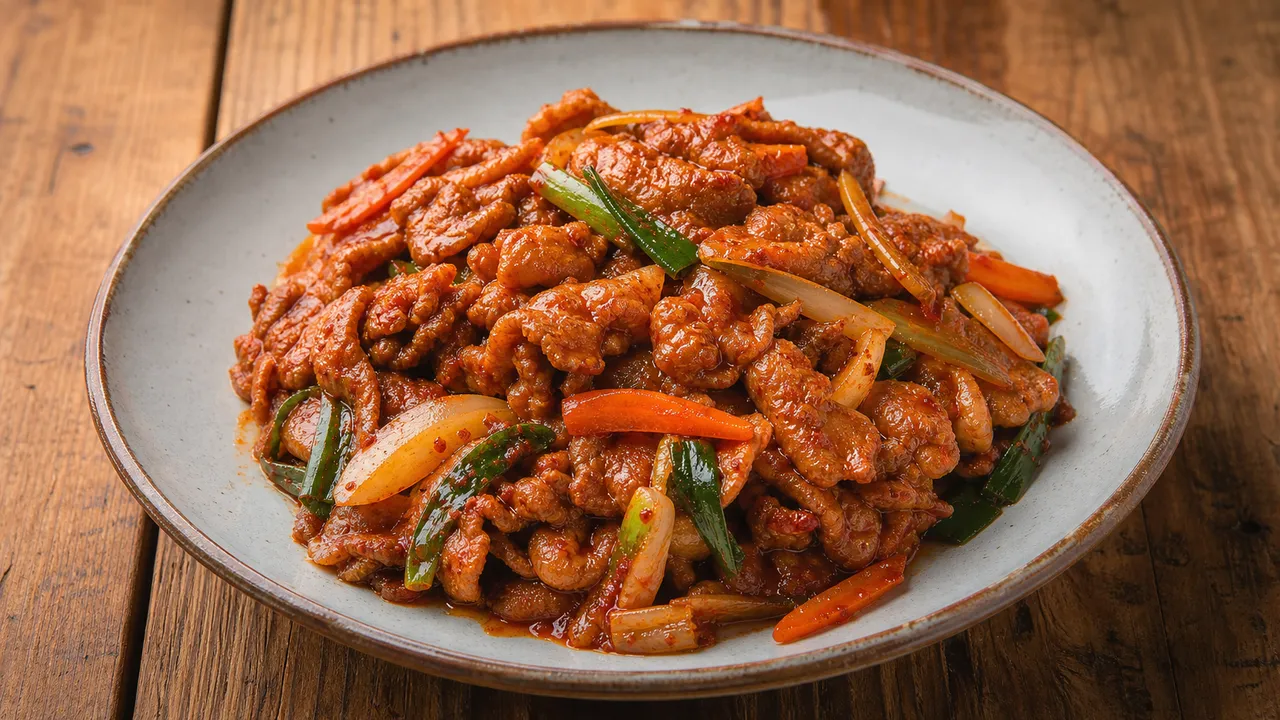
Spicy Pork Stir-fry (Jeyuk Bokkeum) Recipe
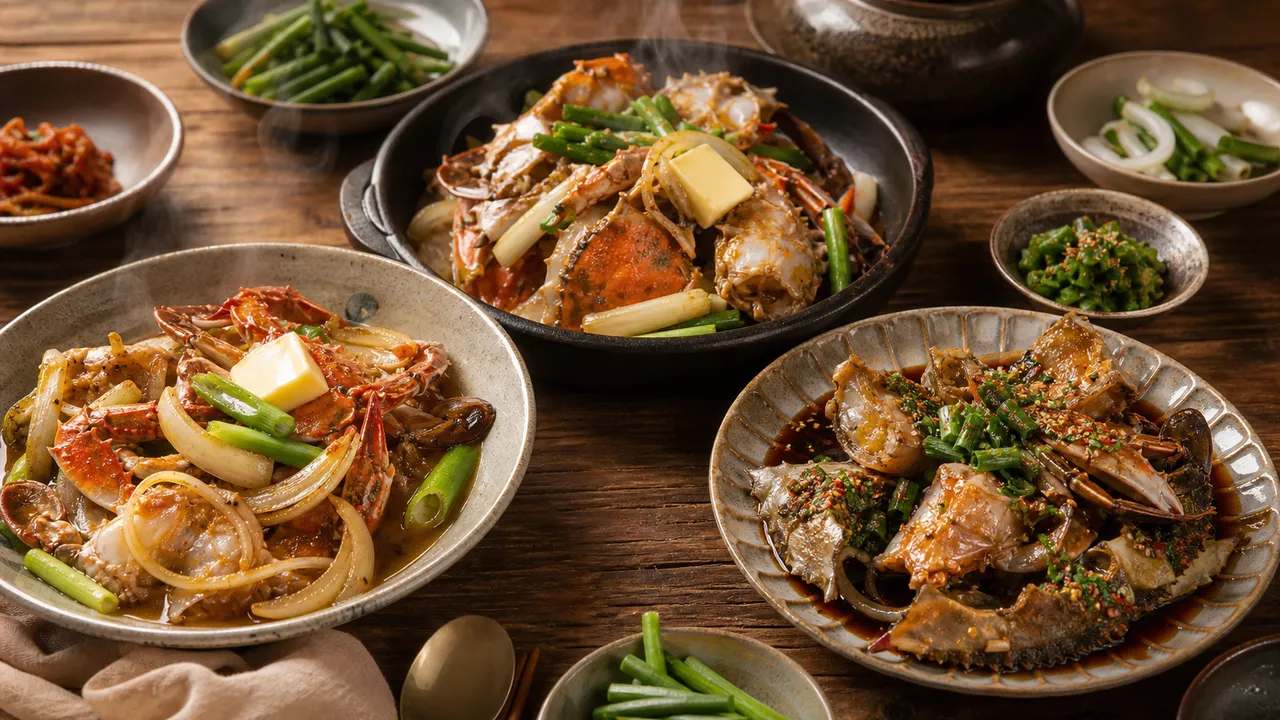
* 이미지는 AI가 생성한 참고 이미지로, 실제 조리 결과물과 다를 수 있습니다.
This recipe allows you to enjoy Jeyuk Bokkeum (Spicy Pork Stir-fry), a beloved Korean dish that is often paired with Doenjang Jjigae (Soybean Paste Stew) for a classic combo meal.
📋 2 recipes — Select to view
This is a recipe for Jeyuk-bokkeum, a spicy and sweet stir-fried pork dish that is considered a soul food for Koreans.
📝 Editor's Notes
The Jeyuk-bokkeum (제육볶음) we're introducing today is an indispensable soul food on Korean dining tables.
The combination of spicy and sweet sauce with tender pork creates a taste that will elicit exclamations of delight with every bite.
A distinctive feature of this recipe is the addition of pear juice and maesil-cheong (매실청) to enhance umami and tenderness.
While it may seem complex, the cooking process is surprisingly simple, making it easy for even novice cooks to try.
It's a beloved dish all year round, perfect as a topping for warm rice, or enjoyed generously with ssam (쌈) vegetables.
It's also an excellent choice for family meals or entertaining guests.
🛒 Ingredient Tips
The key ingredient that determines the taste of Jeyuk-bokkeum (제육볶음) is pork shoulder (front leg).
Pork shoulder boasts a tender yet chewy texture due to its balanced lean meat and fat.
When choosing fresh pork shoulder, look for lean meat that is vibrant red, and fat that is white and firm.
Fresh meat should have a glossy surface and no off-smell.
Onions and green onions are important vegetables that add sweetness and aroma.
For onions, choose those with firm, shiny, and heavy skins; for green onions, select those with straight stems and a generous white portion.
Utilizing seasonal vegetables will help you make even fresher and tastier Jeyuk-bokkeum.
🔄 Substitution Guide
You can use pork neck (moksal) or pork belly (samgyeopsal) instead of pork shoulder (front leg).
Pork neck has less fat than shoulder, so it's recommended if you prefer a leaner taste, while pork belly is fattier, offering a richer and tenderer flavor.
However, if using pork belly, it might become too oily, so you might want to drain some of the fat or dab it with a paper towel during cooking.
If you don't have pear juice, it can be substituted with grated pear, apple juice, or onion juice.
Fruit juice tenderizes the meat and adds natural sweetness, so it's highly recommended to include it.
Tuna sauce (참치액) is a key ingredient for umami; if you don't have it, you can substitute it with anchovy sauce or Korean soup soy sauce, but the unique deep umami of tuna sauce might be slightly less prominent.
🥘 Ingredients
👨🍳 Cooking Points
The first key point of this Jeyuk-bokkeum (제육볶음) recipe is sauce marination.
Marinating the seasoned pork for at least 30 minutes allows the seasoning to penetrate deeply into the meat, resulting in a much richer flavor.
If time permits, marinating in the refrigerator for 1-2 hours is recommended.
The second point is to stir-fry quickly over high heat.
After heating cooking oil in a hot pan and adding the seasoned pork, stir-fry over high heat to prevent the pork juices from escaping and to keep the meat from drying out.
You should add the vegetables and continue to stir-fry when the pork is 50-60% cooked to preserve the crisp texture of the vegetables.
Lastly, adding sesame oil just before turning off the heat and mixing it with the residual heat allows the savory aroma to spread throughout, enhancing the overall flavor.
This is the secret to its deliciousness.
👨🍳 Directions
Mix 2 tbsp soy sauce, 2 tbsp tuna sauce (참치액), 3 tbsp mirin, 2 tbsp maesil-cheong (매실청), 3 tbsp corn syrup, 1 tbsp sugar, 1 tbsp gochujang (고추장), a pinch of black pepper, 3 tbsp gochugaru (고춧가루), 3 tbsp pear juice, and 2 tbsp minced garlic to make the sauce.
Add 600g of pork shoulder (front leg) to the sauce and mix well.
Marinate the seasoned pork for about 30 minutes.
Cut 1 medium onion, 1/2 medium carrot, and 1 stalk green onion into bite-sized pieces.
Heat 1 tbsp cooking oil in a hot pan, then add the marinated pork and stir-fry over high heat.
Once the pork is 50-60% cooked, add the prepared vegetables and continue to stir-fry.
When the vegetables are slightly softened, turn off the heat, add 1 tbsp sesame oil, and mix well to evenly distribute the sesame oil aroma.
Serve in a dish and finally, sprinkle with sesame seeds.
💡 Tips
Feel free to use any cut of pork you prefer, such as pork neck (moksal) or pork belly (samgyeopsal).
Marinating the pork for more than 30 minutes allows the seasoning to be more evenly absorbed, resulting in a richer flavor.
Too much gochujang (고추장) can make the dish heavy, so about 1 tbsp is appropriate. Adjust the amount of gochugaru (고춧가루) to your preference for spiciness.
Adding pear juice makes the pork tender.
Stir-frying quickly over high heat is crucial to maintain texture and flavor, preventing the pork from drying out and ensuring the sauce adheres well.
Turn off the heat when the vegetables are still slightly crisp; they will continue to cook perfectly with the residual heat, making them even more delicious.
For an even more delicious experience, stir-fry rice with the leftover sauce, adding some crumbled seaweed, toasted sesame seeds, a drizzle of sesame oil, and a bit more gochujang (고추장).
📦 Storage & Reuse
Finished Jeyuk-bokkeum (제육볶음) can be stored fresh for about 2-3 days in an airtight container in the refrigerator.
If you don't plan to eat it right away, portioning and freezing is also a good method.
When frozen, it can be stored for up to about 2 weeks; simply thaw and reheat in the microwave or a pan.
When reheating, warm it slowly over medium-low heat to prevent the meat from drying out and to maintain its tenderness.
If you have leftover Jeyuk-bokkeum (제육볶음) sauce, stir-frying it with rice, crumbled seaweed, and sesame oil transforms it into delicious fried rice, so be sure to try it.
Leftover vegetables can also be used in other stir-fries or stews.
🥢 Who This Is For
This spicy and sweet Jeyuk-bokkeum (제육볶음) is a great dish for the whole family to enjoy.
It's especially highly recommended for those who love spicy food or want to relieve stress.
It's great as a hearty meal and pairs perfectly with makgeolli (막걸리) or soju (소주) as a drinking snack.
You can enjoy an even more diverse range of flavors by wrapping it with ssam (쌈) vegetables, and pairing it with refreshing bean sprout soup, doenjang-jjigae (된장찌개), or steamed eggs completes a perfect Korean meal.
Try it with baek-kimchi (백김치) or dongchimi (동치미) to balance the spicy flavor.
🔥 Nutrition Info
Based on 2-3 servings, you can expect approximately 550-650 calories per serving.
With 600g of pork shoulder (front leg), it's rich in protein (approx.
40-50g) and provides energy with about 30-40g of fat.
Carbohydrates, derived from seasoning ingredients (sugar, corn syrup, pear juice, etc.) and vegetables, are estimated to be around 30-40g.
Pork is rich in B vitamins, aiding in fatigue recovery, and its high iron content helps prevent anemia.
Vegetables like onion, green onion, and carrot supplement dietary fiber, vitamins, and minerals, balancing the nutrition.
However, the sodium content might be relatively high, so try eating it with ssam (쌈) vegetables or increasing your vegetable intake.
💬 Frequently Asked Questions
- Q. What ingredients do I need for Spicy Pork Stir-fry (Jeyuk Bokkeum)?
- Main ingredients include Pork shoulder, Large green onion, Onion, Carrot, Soy sauce. Using pork shoulder (앞다리살) provides a good balance of lean meat and fat, offering both tender and chewy textures. Fresh pork shoulder should have a bright pink color, and its fat should be white and firm. While pork neck or pork belly can also be used, pork shoulder is particularly well-suited for Jeyuk Bokkeum as it absorbs the seasoning well and has an appealing texture. Choose onions that are firm, shiny, and feel heavy for their size, as these are fresh. They add sweetness and a refreshing flavor to the Jeyuk Bokkeum. Select large green onions with vibrant green leaves and firm white stalks. Their aromatic fragrance will enhance the overall flavor of the Jeyuk Bokkeum.
- Q. What are the key tips for making Spicy Pork Stir-fry (Jeyuk Bokkeum)?
- There are two crucial points for this Jeyuk Bokkeum recipe. First, marinate the pork in the sauce for at least 30 minutes. This allows the seasoning to deeply penetrate the meat, creating a much richer flavor. If you have enough time, marinate it for an hour or more. Second, stir-frying quickly over high heat is key. Heat cooking oil in a hot pan, add the marinated pork, and quickly stir-fry over high heat until the pork is about 50-60% cooked. This seals in the juices and prevents the meat from becoming tough. Vegetables should be added after the pork is partially cooked to maintain their crisp texture. Once the vegetables have slightly softened, immediately turn off the heat and let them finish cooking with residual heat to prevent them from becoming watery and to preserve their taste. Just remember these tips, and you'll be able to make delicious Jeyuk Bokkeum without fail.
- Q. How should I store leftover Spicy Pork Stir-fry (Jeyuk Bokkeum)?
- Store the finished Jeyuk Bokkeum in an airtight container in the refrigerator for 2-3 days. For longer storage, it's recommended to portion it out and freeze it. It can be kept frozen for up to about a month. To reheat frozen Jeyuk Bokkeum, microwave it or stir-fry it in a pan over low heat, adding a splash of water or broth to maintain its moisture. Leftover Jeyuk Bokkeum can be turned into a delicious fried rice by stir-frying it with rice, crushed nori (김가루), and sesame oil, or enjoyed as a unique sandwich or taco filling with leafy greens. You can also use any leftover sauce to mix with rice or in other meat dishes.
- Q. How many calories are in Spicy Pork Stir-fry (Jeyuk Bokkeum)?
- Based on 2-3 servings, the estimated calories per serving for this recipe are approximately 600-700 kcal. Protein is estimated at 40-50g, fat at 30-40g, and carbohydrates at 40-50g. Pork shoulder is a high-quality source of protein and rich in Vitamin B1, which helps with fatigue recovery. Capsaicin in gochugaru (고춧가루) and gochujang (고추장) promotes metabolism, while onions and carrots provide vitamins and dietary fiber. However, the sauce contains sugars such as sugar, corn syrup, and pear juice, so it's advisable to be mindful of sugar intake when consuming in excess. Enjoying plenty of vegetables alongside the dish will help ensure a balanced nutritional intake.
- Q. Can I substitute ingredients in Spicy Pork Stir-fry (Jeyuk Bokkeum)?
- Instead of pork shoulder, you can use pork neck or pork belly. Pork neck is slightly more tender and has a moderate amount of fat, making it suitable for those who prefer a leaner taste, while pork belly, with its higher fat content, offers a richer and softer texture. However, pork belly can release a lot of oil, so it's a good idea to blot off excess oil with a paper towel while stir-frying. If you don't have pear juice, apple juice or kiwi juice can be used to tenderize the meat. If mirin is unavailable, you can substitute it with cheongju (청주, Korean rice wine) or soju (소주), but make sure to cook off the alcohol completely to avoid any bitterness. If you don't have tuna sauce, you can use anchovy fish sauce as a substitute, but tuna sauce typically provides a cleaner and deeper umami flavor.
💬 Comments
No comments yet. Be the first to comment!