
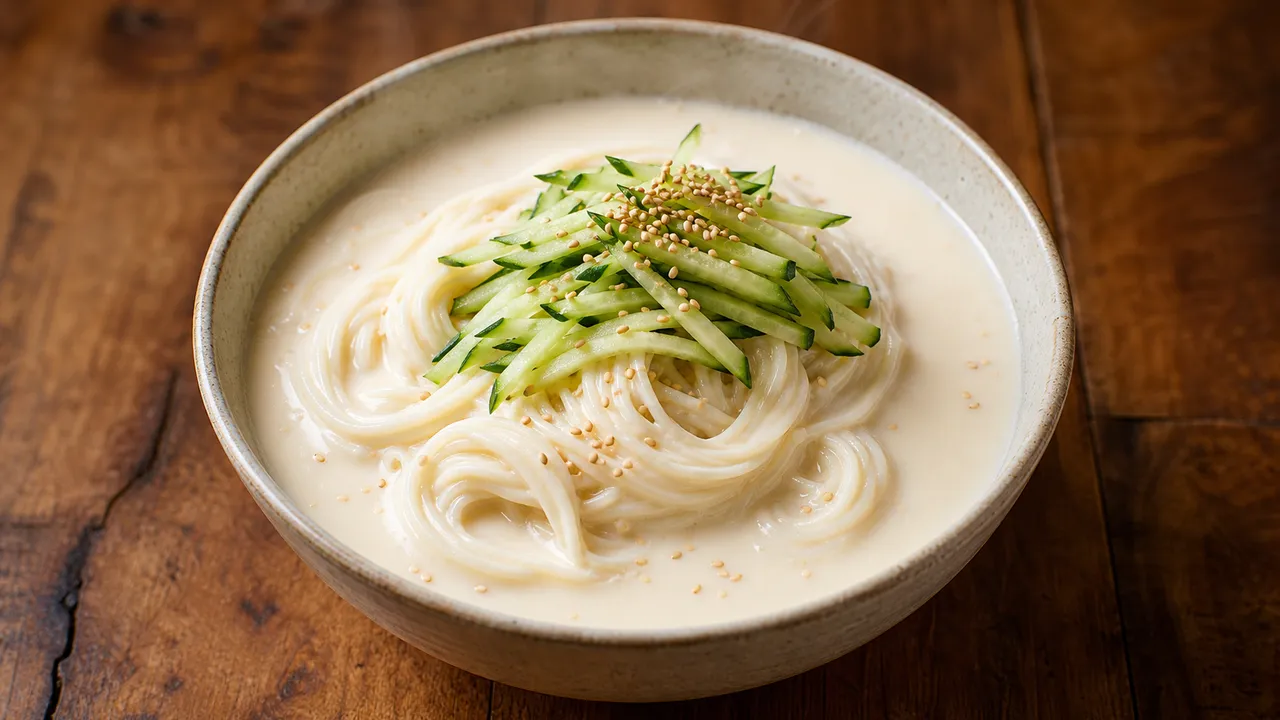
Microwave Kongguksu (콩국수) Super Simple 5-Minute Recipe
* 이미지는 AI가 생성한 참고 이미지로, 실제 조리 결과물과 다를 수 있습니다.
A super simple Kongguksu (콩국수) made in just 5 minutes using a microwave. Even ordinary black soybeans can be enjoyed with a rich and savory taste, just like at a restaurant.
📝 Editor's Notes
The Microwave Kongguksu (콩국수) Super Simple 5-Minute Recipe is designed for quickly and easily enjoying cool and savory Kongguksu on a hot summer day.
It significantly shortens cooking time by replacing the cumbersome traditional method of boiling soybeans with a microwave.
Even ordinary black beans can deliver a rich and savory flavor, just like those served at restaurants, with the added depth of roasted sesame seeds and creamy soy milk.
It's an excellent choice when you want a healthy and delicious meal even with a busy schedule.
🛒 Ingredient Tips
The key ingredient for this recipe is Seoritae (서리태) black soybeans.
Using canned Seoritae (서리태) can further reduce cooking time, but if unavailable, prepare frozen Seoritae (서리태).
While frozen Seoritae (서리태) requires thawing, it offers a fresher bean flavor.
Good Seoritae (서리태) is characterized by glossy skins and uniform beans.
Roasted sesame seeds play a role in enhancing the savory flavor of the soybean milk, so choose fresh and aromatic ones.
Unsweetened soy milk helps adjust the consistency and adds creaminess to the soybean milk; make sure to use unsweetened to preserve the natural taste of the soybeans.
🔄 Substitution Guide
You can use regular Baektae (백태) (soybeans, also known as Mejukong/메주콩) instead of Seoritae (서리태).
Baektae is lighter in color and has a milder flavor than Seoritae, but it's still savory, so choose according to your preference.
If you don't have roasted sesame seeds, you can grind a small amount of other nuts like peanuts or cashews to add a nutty flavor.
However, the taste and aroma may vary depending on the type of nuts, so it's best to add them gradually and adjust.
Using regular milk or almond breeze instead of unsweetened soy milk can adjust the consistency of the soybean milk, but it may not be as rich and savory as with soy milk.
Please be mindful of allergies when choosing substitute ingredients.
🥘 Ingredients
👨🍳 Cooking Points
There are two main cooking points for this recipe.
First, when microwaving the soybeans, don't forget to poke holes in the plastic wrap and, if using a high-wattage microwave, stir them once halfway through.
This ensures the soybeans cook evenly and prevents them from bursting.
Second, it's crucial to let the cooked soybeans cool for about 10 minutes before blending.
Blending hot soybeans immediately can risk damaging your blender and may result in a less smooth soybean milk.
Finally, blend the soybean milk thoroughly for at least 2 minutes and strain it through a fine sieve or cheesecloth to achieve a smooth and creamy texture.
Just remember these tips, and you'll be able to make delicious Kongguksu (콩국수) without fail.
👨🍳 Directions
Prepare 7 oz (200g) of canned or frozen Seoritae (서리태) black soybeans. If using canned, drain thoroughly. If using frozen, soak in cold water for about 5 minutes to slightly thaw. Place the drained soybeans in a microwave-safe bowl and add 5 fl oz (150ml) of water. Cover with plastic wrap and poke 5 holes with chopsticks.
Microwave the soybeans for 8 minutes. If your microwave has high wattage, take them out halfway, stir, then microwave for another 4 minutes. Do not immediately transfer the hot cooked soybeans to a blender; let them cool naturally for about 10 minutes.
Add the cooled soybeans to a blender along with 12 fl oz (350ml) of cold water (or ice water) and blend thoroughly for at least 2 minutes. Strain the blended soybean mixture through a fine sieve or cheesecloth. Season the strained soybean milk with salt to taste, then add 1 tbsp of roasted sesame seeds and 3.4 fl oz (100ml) of unsweetened soy milk, and mix again.
Boil a handful of Somen (소면) or Jungmyeon (중면) noodles in boiling water for 3 minutes and 30 seconds. Rinse the cooked noodles thoroughly 2-3 times in cold water to remove all starch, squeeze out excess water, and place them in a bowl. Pour a generous amount of the chilled soybean milk over the noodles, top with a handful of julienned cucumber, and sprinkle with whole sesame seeds to serve.
💡 Tips
Blend the soybean milk for at least 2 minutes to achieve a smooth and creamy texture.
To reduce the characteristic bean smell and enhance the savory flavor, blend 1 tbsp of roasted sesame seeds along with the soybeans.
If the soybean milk is too thin, add 3.4 fl oz (100ml) of unsweetened soy milk to create a rich and creamy consistency without worrying about extra calories.
Completely removing the starch from the noodles prevents the soybean milk from becoming cloudy and helps maintain its savory flavor.
📦 Storage & Reuse
The finished soybean milk can be stored in an airtight container in the refrigerator for 2-3 days.
Keeping it chilled is crucial for maintaining its flavor.
Noodles can get soggy if cooked in advance, so it's best to boil them just before serving with the soybean milk.
Leftover soybean milk can be frozen in ice cube trays and added to smoothies, or used when making Kongguksu (콩국수) ramen.
You can also use the soybean milk to make Kongguksu (콩국수) Sujebi (수제비) (hand-pulled noodle soup) or Kongguksu (콩국수) risotto for a unique twist.
🥢 Who This Is For
This microwave Kongguksu (콩국수) is highly recommended for busy professionals and beginner cooks.
It's perfect for a refreshing treat in the hot summer and makes an excellent light meal.
For side dishes, we recommend cool Yeolmu Kimchi (열무김치) or crispy Geotjeori (겉절이) (fresh kimchi).
The savory taste of Kongguksu combined with the tangy kimchi will create an even richer flavor.
Simple rolled omelets or Korean pancakes also make good accompaniments.
🔥 Nutrition Info
This recipe is estimated to be approximately 450-500 kcal per serving.
Based on 7 oz (200g) of Seoritae (서리태) black soybeans, it's expected to contain about 30-35g of protein, 15-20g of fat, and 40-50g of carbohydrates.
Seoritae (서리태) is rich in plant-based protein, aiding in muscle maintenance, and high in dietary fiber, which is beneficial for gut health.
Additionally, black soybeans are abundant in anthocyanins, which support antioxidant activity, and contain various minerals like B vitamins, iron, and calcium, contributing to overall health improvement.
Unsweetened soy milk is used to add nutrition without excessive calorie burden.
💬 Frequently Asked Questions
- Q. What ingredients do I need for Microwave Kongguksu (콩국수) Super Simple 5-Minute Recipe?
- Main ingredients include Seoritae (서리태) black soybeans, canned or frozen, Water, Salt, Roasted sesame seeds, Unsweetened soy milk. The key ingredient for this recipe is Seoritae (서리태) black soybeans. Using canned Seoritae (서리태) can further reduce cooking time, but if unavailable, prepare frozen Seoritae (서리태). While frozen Seoritae (서리태) requires thawing, it offers a fresher bean flavor. Good Seoritae (서리태) is characterized by glossy skins and uniform beans. Roasted sesame seeds play a role in enhancing the savory flavor of the soybean milk, so choose fresh and aromatic ones. Unsweetened soy milk helps adjust the consistency and adds creaminess to the soybean milk; make sure to use unsweetened to preserve the natural taste of the soybeans.
- Q. What are the key tips for making Microwave Kongguksu (콩국수) Super Simple 5-Minute Recipe?
- There are two main cooking points for this recipe. First, when microwaving the soybeans, don't forget to poke holes in the plastic wrap and, if using a high-wattage microwave, stir them once halfway through. This ensures the soybeans cook evenly and prevents them from bursting. Second, it's crucial to let the cooked soybeans cool for about 10 minutes before blending. Blending hot soybeans immediately can risk damaging your blender and may result in a less smooth soybean milk. Finally, blend the soybean milk thoroughly for at least 2 minutes and strain it through a fine sieve or cheesecloth to achieve a smooth and creamy texture. Just remember these tips, and you'll be able to make delicious Kongguksu (콩국수) without fail.
- Q. How should I store leftover Microwave Kongguksu (콩국수) Super Simple 5-Minute Recipe?
- The finished soybean milk can be stored in an airtight container in the refrigerator for 2-3 days. Keeping it chilled is crucial for maintaining its flavor. Noodles can get soggy if cooked in advance, so it's best to boil them just before serving with the soybean milk. Leftover soybean milk can be frozen in ice cube trays and added to smoothies, or used when making Kongguksu (콩국수) ramen. You can also use the soybean milk to make Kongguksu (콩국수) Sujebi (수제비) (hand-pulled noodle soup) or Kongguksu (콩국수) risotto for a unique twist.
- Q. How many calories are in Microwave Kongguksu (콩국수) Super Simple 5-Minute Recipe?
- This recipe is estimated to be approximately 450-500 kcal per serving. Based on 7 oz (200g) of Seoritae (서리태) black soybeans, it's expected to contain about 30-35g of protein, 15-20g of fat, and 40-50g of carbohydrates. Seoritae (서리태) is rich in plant-based protein, aiding in muscle maintenance, and high in dietary fiber, which is beneficial for gut health. Additionally, black soybeans are abundant in anthocyanins, which support antioxidant activity, and contain various minerals like B vitamins, iron, and calcium, contributing to overall health improvement. Unsweetened soy milk is used to add nutrition without excessive calorie burden.
- Q. Can I substitute ingredients in Microwave Kongguksu (콩국수) Super Simple 5-Minute Recipe?
- You can use regular Baektae (백태) (soybeans, also known as Mejukong/메주콩) instead of Seoritae (서리태). Baektae is lighter in color and has a milder flavor than Seoritae, but it's still savory, so choose according to your preference. If you don't have roasted sesame seeds, you can grind a small amount of other nuts like peanuts or cashews to add a nutty flavor. However, the taste and aroma may vary depending on the type of nuts, so it's best to add them gradually and adjust. Using regular milk or almond breeze instead of unsweetened soy milk can adjust the consistency of the soybean milk, but it may not be as rich and savory as with soy milk. Please be mindful of allergies when choosing substitute ingredients.
💬 Comments
No comments yet. Be the first to comment!