
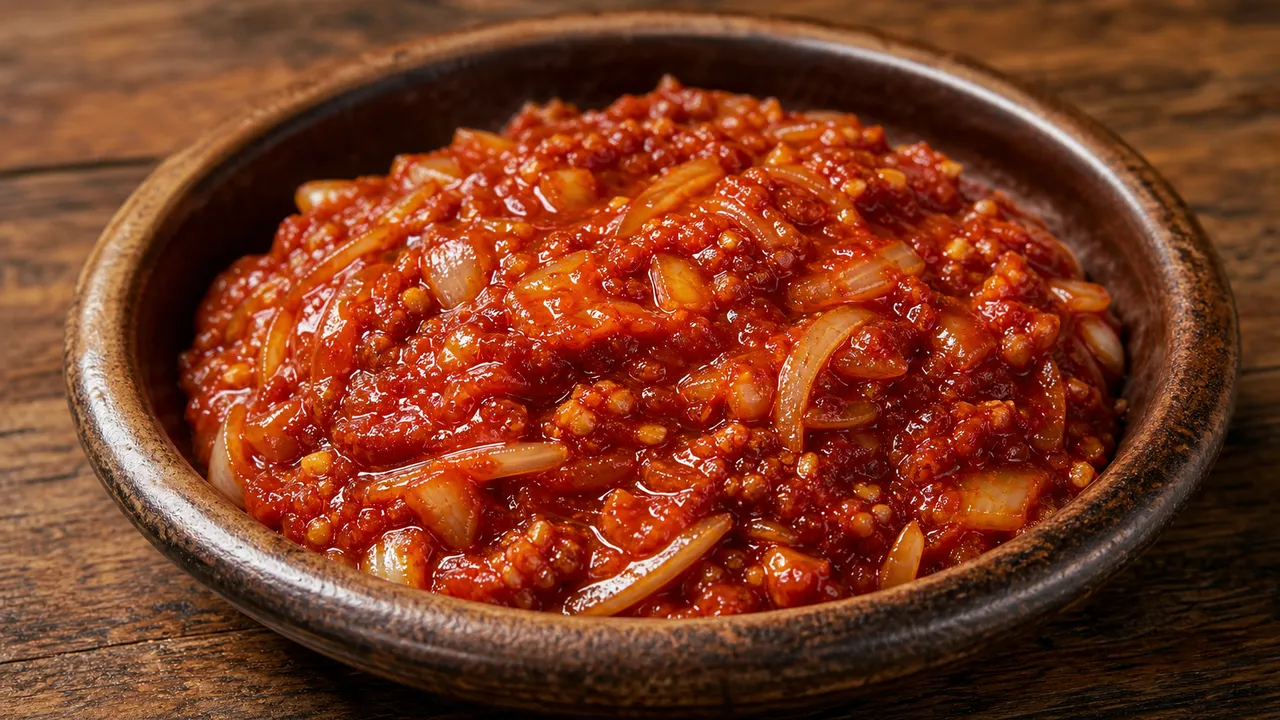
Recipe for Sugar-Free Deeply Sweet Onion Yak-gochujang (약고추장
* 이미지는 AI가 생성한 참고 이미지로, 실제 조리 결과물과 다를 수 있습니다.
This is a versatile onion yak-gochujang (약고추장) recipe that brings out the natural sweetness of onions to create a deep, rich flavor without added sugar. It also introduces three delicious ways to enjoy this sauce: as a bibimbap sauce, with seaweed wraps, and with tofu dishes.
📋 4 recipes — Select to view
This recipe introduces a versatile onion yak-gochujang (약고추장) sauce that brings out the natural sweetness of onions for a rich and deep flavor without added sugar, along with ways to enjoy it with rice, as a gim-ssam (김 쌈) wrap, or with tofu dishes.
📝 Editor's Notes
This Onion Yak-Gochujang (약고추장) Paste for Bibimbap is a versatile sauce that maximizes the natural sweetness of onions without added sugar, offering a healthy and profound flavor.
The savory umami of gochujang (고추장) combined with the sweet onions creates a magical taste that elevates any rice dish with just one spoonful.
It's not too salty and has a smooth flavor that even children will enjoy.
Beyond bibimbap, it makes an excellent side dish when wrapped in gim (김) or served with tofu.
It's easy to make with common ingredients, making it highly recommended for those who enjoy home cooking.
This versatile sauce will add vibrancy to your meals, enjoyable for the whole family.
🛒 Ingredient Tips
For this recipe's star ingredient, the onion, it's crucial to choose one with strong sweetness.
A good onion is firm and heavy when held, with crisp, dry, and shiny skin.
Avoid onions that are moist, have black spots, or have sprouted.
For gochujang (고추장), commercial brands are fine, but note that saltiness can vary between products.
If using a saltier gochujang, adjust the amount of water or add a bit more sesame oil at the end to balance the flavor.
Fresh sesame oil adds a rich, nutty aroma, so it's best to use one that hasn't been open for too long.
🔄 Substitution Guide
If you have an onion allergy or dislike the distinct flavor of onions, try using pumpkin or apple as substitutes.
For pumpkin, steam or boil and mash it, then add a similar amount as the onion to introduce a gentle sweetness.
For apple, grate it and add it with water for a refreshing, subtle sweetness.
However, be aware that these may not provide the same deep umami flavor as onions.
If gochujang (고추장) feels too spicy, use a milder gochujang or mix in 1-2 tbsp of doenjang (된장) to neutralize the saltiness and spiciness while adding a savory, earthy flavor.
Keep in mind that adding doenjang may slightly dull the color of the sauce.
🥘 Ingredients
👨🍳 Cooking Points
The key to this recipe lies in stir-frying the onions.
First, thoroughly heat a pan, add cooking oil, and once it slightly smokes, add the diced onions and quickly stir-fry over high heat for 3 minutes.
Stir-frying until the onions become translucent and lightly browned at the edges is crucial for maximizing their sweetness – this is the key point!
Second, when simmering the gochujang (고추장) sauce, do so over medium heat for 6-7 minutes, gently scraping the bottom with a wooden spatula to prevent burning and ensure even cooking.
The sauce should turn a darker color than at the start and thicken to a consistency where, if you draw a line with a spatula, it slowly merges back together.
Finally, it's important to turn off the heat and then mix in the sesame oil while residual heat remains.
Adding sesame oil at the very end preserves its fragrance and nutty flavor.
👨🍳 Directions
Dice 10.6 oz (about two medium-sized) onions into 0.5 cm (approx. 0.2 inch) cubes.
Heat a pan thoroughly, then add 1 tbsp of cooking oil. Once the oil begins to slightly smoke, add the diced onions and quickly stir-fry over high heat for 3 minutes, until the onions become translucent and their edges are lightly browned.
To the stir-fried onions, add 1 tbsp minced garlic, 10 tbsp gochujang (고추장), 1 tbsp soy sauce, and 100 ml (approximately 1/2 paper cup) water. Mix well and bring to a boil over high heat.
Once it starts boiling, immediately reduce the heat to medium. Simmer for 6 to 7 minutes, stirring gently and scraping the bottom with a wooden spatula to prevent sticking.
Turn off the heat when the sauce has darkened in color compared to the beginning and has thickened to a consistency where, if you draw a line through the center with a spatula, the sauce slowly comes back together.
After turning off the heat, while residual heat remains, drizzle in 2 tbsp sesame oil and mix lightly.
💡 Tips
To choose sweet onions, look for ones that are firm and heavy when held, with crisp, dry, and shiny skins. Avoid onions that are moist, have black spots, or have sprouted.
To minimize eye irritation, chill onions in the refrigerator for about 30 minutes before slicing. Also, leaving a small part of the root end intact while slicing can help reduce pungency.
Instead of immediately stir-frying, let sliced onions rest on the cutting board for about 5 minutes. This helps mellow their sharp pungency, resulting in a milder flavor.
This recipe is based on commercial gochujang (고추장). If using homemade gochujang, which can be saltier, reduce the amount of gochujang by 1-2 tbsp or add one more onion to naturally balance the seasoning.
Store the finished onion yak-gochujang (약고추장) in a clean, sterilized glass jar in the refrigerator for up to 3 weeks, or divide it into smaller containers and freeze for up to two months.
📦 Storage & Reuse
Store the prepared Onion Yak-Gochujang (약고추장) Paste for Bibimbap in an airtight container in the refrigerator for about 1 week.
If you wish to store it longer, it's recommended to divide it into single-serving portions and freeze it.
It can be kept in the freezer for 1-2 months.
When ready to use, thaw it in the refrigerator beforehand or gently warm it in the microwave.
Leftover sauce can also be used for fried rice or mixed noodles (bibim guksu, 비빔국수), or served as a ssamjang (쌈장) with leafy greens.
Its versatility is very high, so making a generous batch will be useful for various dishes.
🥢 Who This Is For
This Onion Yak-Gochujang (약고추장) will be an excellent meal solution for busy professionals or students living alone.
Simply mix it with warm rice for a satisfying and delicious meal without needing many other side dishes.
It's also great for packed lunches during camping or picnics, and can even serve as a simple housewarming dish.
Especially for children who can't handle spicy food well, adjusting the gochujang (고추장) amount makes it a wonderful rice accompaniment.
Serving it with seasoned seaweed flakes (gim-jaban, 김자반), a fried egg, or mashed tofu will complete an even richer meal.
🔥 Nutrition Info
This Onion Yak-Gochujang (약고추장) Paste for Bibimbap utilizes the natural sweetness of onions to create a flavorful and healthy meal without added sugar.
Estimating the nutritional information based on the entire recipe, a single serving (approximately 30g) is expected to be around 50-70 kcal.
Carbohydrates, primarily from onions and gochujang (고추장), are estimated at about 8-12g; protein from gochujang and garlic at about 1-2g; and fats from cooking oil and sesame oil at about 2-4g.
Onions are particularly rich in Vitamin C and dietary fiber, which can aid in boosting immunity and promoting gut health.
Gochujang also contains capsaicin, which can help stimulate metabolism.
This sauce is a great addition to a healthy and balanced diet.
💬 Frequently Asked Questions
- Q. What ingredients do I need for Recipe for Sugar-Free Deeply Sweet Onion Yak-gochujang (약고추장) with 3 Serving Suggestions?
- Main ingredients include Onion, Cooking oil, Minced garlic, Gochujang (고추장), Soy sauce. To make delicious onion yak-gochujang (약고추장), choosing good onions is very important. Select onions that feel firm and heavy in your hand, with crisp, glossy skins. It's best to avoid sprouted onions or those with black spots. The gochujang (고추장) quantities are based on commercial products, so if you use homemade gochujang, which may vary in saltiness, adjust the amount accordingly. Be sure to include soy sauce for added umami flavor.
- Q. What are the key tips for making Recipe for Sugar-Free Deeply Sweet Onion Yak-gochujang (약고추장) with 3 Serving Suggestions?
- The key to this recipe lies in how well you sauté the onions. The first point is to quickly stir-fry the onions over high heat in a sufficiently hot pan to fully bring out their sweetness. Sauté until the onions become translucent and slightly browned at the edges. The second point is the simmering process for the gochujang (고추장) sauce. Simmer over medium heat for about 6-7 minutes, gently scraping the bottom with a wooden spatula to prevent burning and develop a deep flavor. Finally, remember to turn off the heat and, while residual heat remains, drizzle in sesame oil to add a savory aroma.
- Q. How should I store leftover Recipe for Sugar-Free Deeply Sweet Onion Yak-gochujang (약고추장) with 3 Serving Suggestions?
- Store the finished onion yak-gochujang (약고추장) in an airtight container in the refrigerator for about 1 week to keep it fresh. For longer storage, we recommend dividing it into single-serving portions and freezing them. It can be stored for approximately 1-2 months in the freezer. To use, thaw it naturally in the refrigerator or gently warm it in the microwave. Leftover yak-gochujang (약고추장) can be used as a special seasoning for fried rice or stews, in addition to being a bibimbap sauce. It's also excellent as a filling for gimbap (김밥, Korean seaweed rolls).
- Q. How many calories are in Recipe for Sugar-Free Deeply Sweet Onion Yak-gochujang (약고추장) with 3 Serving Suggestions?
- This onion yak-gochujang (약고추장) is estimated to be about 150-200 kcal per serving. With its high water content from onions, it's low in calories while providing a sense of fullness. It's estimated to contain about 5g of protein, 10g of fat, and 15-20g of carbohydrates. Notably, onions are rich in quercetin, an antioxidant that can help boost immunity, and also provide dietary fiber, beneficial for gut health. The capsaicin in gochujang (고추장) may contribute to activating metabolism. It's a nutritionally excellent seasoning that allows you to enjoy healthy sweetness without sugar.
- Q. Can I substitute ingredients in Recipe for Sugar-Free Deeply Sweet Onion Yak-gochujang (약고추장) with 3 Serving Suggestions?
- If you don't have onions, you can substitute with other sweet vegetables. For example, finely minced carrots or zucchini can work. However, they may not offer the same deep sweetness as onions, so you might consider adding a very small amount of honey or oligo syrup. If you use doenjang (된장, fermented soybean paste) instead of gochujang (고추장), you can transform it into a savory yak-doenjang. In this case, adjust the amount of soy sauce to manage the saltiness. Using perilla oil instead of sesame oil can provide a different kind of nutty flavor, but be aware that its aroma can be stronger.
💬 Comments
No comments yet. Be the first to comment!