
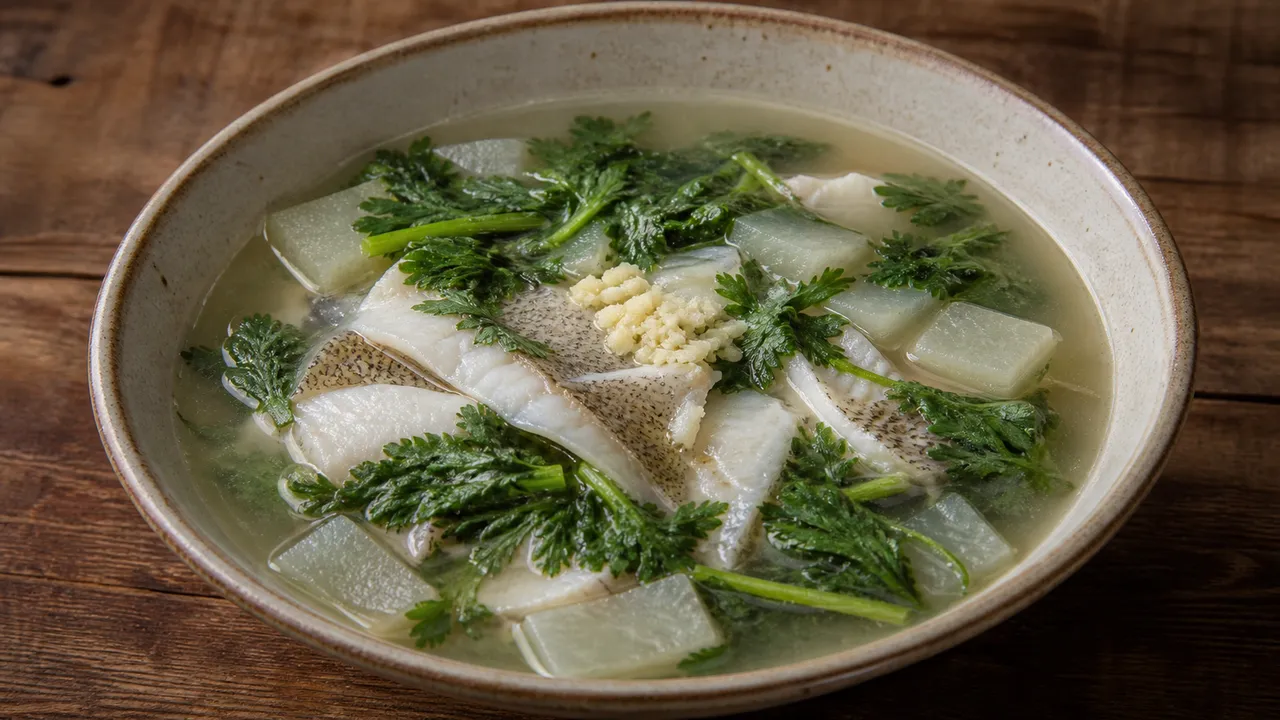
Chef Lee Jeong-hyeon's Spring Seasonal Korean Fine Dining
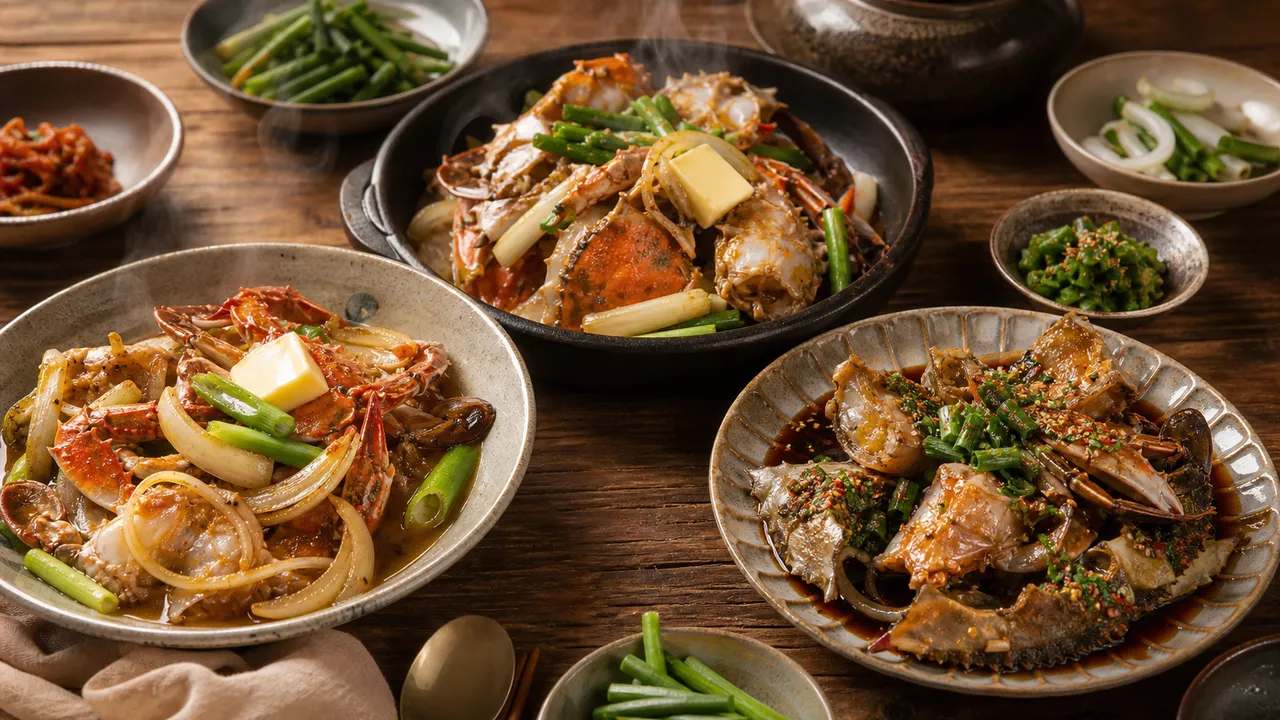
* 이미지는 AI가 생성한 참고 이미지로, 실제 조리 결과물과 다를 수 있습니다.
A special Korean course meal personally prepared by Chef Lee Jeong-hyeon for honored guests, featuring seasonal ingredients like flatfish (도다리) and mugwort (쑥).
📋 2 recipes — Select to view
This clear soup, made with seasonal flatfish (도다리) and aromatic mugwort (쑥) harvested in spring, offers a refreshing and deep flavor profile.
📝 Editor's Notes
Dotari Ssukguk is a clear and refreshing soup brimming with the essence of spring.
Seasonal flatfish (도다리) meets fragrant mugwort (쑥) to create an inherently deep flavor.
It's characterized by highlighting the natural taste of its ingredients without complex seasonings, and the clean, invigorating feel of the clear broth is exceptional.
The difficulty level is moderate; anyone can make a splendid dish with a little care in preparing fresh ingredients.
It's highly recommended, especially if you enjoy seafood or want to boost your appetite in springtime.
Served on a warm spring day, this dish will bring comfort to both body and mind.
🛒 Ingredient Tips
Choose flatfish (도다리) with firm flesh, clear eyes, and evenly arranged scales.
It's most flavorful and nutritious when in season during spring.
For mugwort (쑥), it's important to select one with tender, soft leaves and a strong aroma.
Avoid mugwort that is too tough, as it can be stringy.
Fresh mugwort should have greenish stems and un-wilted leaves.
For Korean radish (무), select one that is firm, smooth-skinned, and heavy.
Choosing a radish without blemishes on its skin and a bright white color will help create a refreshing broth.
🔄 Substitution Guide
If flatfish (도다리) is difficult to find or too expensive, you can substitute it with other white fish like flounder or cod.
Flounder offers a similar mild flavor to dotari but with a slightly softer flesh, while cod can provide a richer umami taste.
Instead of mugwort (쑥), you can also use other spring greens like shepherd's purse (naengi) or wild garlic (dallae).
Shepherd's purse offers a distinct aroma and crunchy texture different from mugwort, and wild garlic can add a pungent kick to the soup.
Please note that the flavor, aroma, and texture of the soup may change depending on the substitute ingredients used.
🥘 Ingredients
👨🍳 Cooking Points
The most crucial cooking points are preparing the flatfish and removing any fishy odor.
Remember, washing the flatfish in vinegar water is key to eliminating fishy smells and firming up the flesh.
Secondly, ensure you extract enough flavor from the broth.
Simmering anchovies, shiitake mushrooms, and kelp for 10 minutes will create a much more refreshing and deeply flavored broth.
Lastly, to maintain a clear soup, be sure to skim off any impurities that float to the surface while the soup is boiling.
By following these three steps, you can successfully make delicious Dotari Ssukguk.
👨🍳 Directions
Diagonally slice the Cheongyang chili pepper and red chili pepper. Thinly slice the green onion. Cut the Korean radish into thin, flat squares (nabak썰기). Prepare all ingredients.
Remove any tough stems and withered leaves from the mugwort. In a bowl, soak the mugwort in water with a splash of vinegar for 10 minutes. Afterwards, rinse the mugwort thoroughly and drain it in a colander.
Using a peeler or the back of a knife, scrape off the scales of the flatfish, moving from the tail towards the head. Cut off the head with a diagonal incision and remove the internal organs by hand. Trim the tail and fins.
Cut the flatfish into 3-4 pieces. Rinse them thoroughly in water with a splash of vinegar.
In a pot, add 1.5 L (approx. 6.3 cups) of water, 7 dried anchovies for broth, 2 dried shiitake mushrooms, and 1 sheet of dried kelp. Bring to a boil and simmer for 10 minutes.
Once the broth is fully flavored, strain out and discard the solids.
Add the nabak-cut Korean radish, 2 tbsp minced garlic, and the prepared flatfish to the broth. Bring to a boil and cook over high heat for 20 minutes.
After 20 minutes, season with salt to taste.
Add the diagonally sliced Cheongyang chili pepper and red chili pepper, and thinly sliced green onion. Bring to a boil once more.
Finally, add the prepared mugwort and cook for another minute. Your Dotari Ssukguk is now complete.
💡 Tips
To maintain a clear broth, skim off any impurities that rise to the surface during cooking.
Washing the flatfish in vinegar water helps remove any fishy odor, firm up the flesh for a chewier texture, and also has a sterilizing effect.
📦 Storage & Reuse
For best quality, store leftover Dotari Ssukguk in an airtight container in the refrigerator and consume within 2-3 days.
It's recommended to eat it as soon as possible, as the mugwort flavor can become stronger and the broth may become cloudy over time.
Freezing is not recommended, as thawing can make the fish flesh mushy and the mugwort texture soft.
When reheating, gently warm the soup over low heat.
Be careful not to overcook, as the fish may break apart and the mugwort could become overly soft.
Leftover mugwort can be blanched and seasoned as a side dish (namul) or added to doenjangguk (soybean paste soup).
🥢 Who This Is For
This Dotari Ssukguk is perfect for the whole family to enjoy during the changing seasons of spring when you need an energy boost or your appetite is low.
It is especially recommended for those who prefer clear and refreshing soups.
Mild vegetable side dishes (namul) or various types of kimchi pair well with this soup.
Enjoy it with freshly cooked warm rice for an even more satisfying and hearty meal.
🔥 Nutrition Info
This Dotari Ssukguk is estimated to contain approximately 300-350 kcal per serving.
Flatfish (도다리) is a high-protein, low-fat food, providing about 25-30g of protein and 5-10g of fat.
Carbohydrates, from the dietary fiber and small amounts of sugar in mugwort and radish, will be around 10-15g.
In particular, flatfish is rich in B vitamins and essential amino acids, while mugwort is abundant in vitamins A, C, calcium, iron, and other minerals, which help strengthen immunity and relieve fatigue.
Korean radish contains many enzymes that aid digestion, making this dish a nutritionally balanced and healthy meal.
💬 Frequently Asked Questions
- Q. What ingredients do I need for Chef Lee Jeong-hyeon's Spring Seasonal Korean Fine Dining?
- Main ingredients include Flatfish, Mugwort, Korean Radish, Minced Garlic, Salt. For flatfish (도다리), a size of about 700g (1.5 lbs) is ideal as it has a good amount of flesh for optimal flavor. Choose fish with clean scales, firm flesh, and clear, bright eyes. Flatfish caught in its prime spring season will be the most delicious. For mugwort (쑥), select tender leaves and stems that are not too tough. Fresh mugwort should have a strong aroma, vibrant green color, and show no signs of wilting. For the dried anchovies used in the broth, removing their guts and stir-frying them before use can enhance the umami flavor without any fishy taste. Dried shiitake mushrooms should not be too dark and should be intact. Dried kelp (다시마) of good quality is dark, moderately thick, and may have a white powdery coating.
- Q. What are the key tips for making Chef Lee Jeong-hyeon's Spring Seasonal Korean Fine Dining?
- The most crucial point of this recipe is the broth. The key is to simmer dried anchovies, shiitake mushrooms, and dried kelp (다시마) for 10 minutes to extract a deep flavor. While the broth is simmering, carefully skim off any impurities that rise to the surface to create a clear and clean broth. The second important point is the preparation of the flatfish. After scaling and thoroughly cleaning the internal organs, washing it in vinegar water is essential to remove fishy odors and firm up the flesh. Finally, add the mugwort at the very end and boil for just 1 minute to preserve its fragrant taste and tender texture. Remember that boiling it for too long will cause the mugwort's aroma to dissipate and its texture to become tough.
- Q. How should I store leftover Chef Lee Jeong-hyeon's Spring Seasonal Korean Fine Dining?
- The finished Dotari Ssukguk (도다리쑥국) is best stored in an airtight container in the refrigerator for 2-3 days. When reheating, transfer it to a pot and simmer gently over low heat. Reheating too quickly over high heat can cause the fish to break apart. Freezing is not recommended, as it can make the fish texture mushy and diminish the mugwort's fragrance significantly. Leftover broth can be used to make a rice porridge or as a base for other stews. Any remaining mugwort can be blanched and seasoned as a side dish, or used to make mugwort pancakes (쑥전) to enjoy another taste of spring.
- Q. How many calories are in Chef Lee Jeong-hyeon's Spring Seasonal Korean Fine Dining?
- Chef Lee Jeong-hyeon's Dotari Ssukguk (도다리쑥국) is estimated to be approximately 250-300 kcal per serving. Assuming 1 flatfish (700g) serves 4 people, it is expected to contain about 35-40g of protein, 8-10g of fat, and 10-15g of carbohydrates. Flatfish is a low-fat, high-protein food rich in essential amino acids, B vitamins, potassium, and phosphorus, which aids in fatigue recovery and immune system enhancement. Mugwort is abundant in vitamins A and C, calcium, and iron, beneficial for improving blood circulation and strengthening liver function, and its high dietary fiber content promotes gut health. Overall, it is a well-balanced and healthy nourishing dish.
- Q. Can I substitute ingredients in Chef Lee Jeong-hyeon's Spring Seasonal Korean Fine Dining?
- Instead of flatfish, you can use other white fish such as flounder or cod. Flounder offers a similar mild flavor to flatfish but might have a slightly softer texture, while cod can provide a cooler and deeper taste. If mugwort (쑥) is out of season or hard to find, you can substitute it with other spring greens like shepherd's purse (냉이), wild garlic (달래), or daylily shoots (원추리) to enjoy an aromatic broth. Each of these greens will infuse the broth with its unique scent and flavor, offering a different profile. However, please note that the distinct bittersweet and fragrant taste of mugwort may not be perfectly replicated. If dried anchovies or dried kelp (다시마) are unavailable for the broth, you can use commercial broth packets or other types of seafood broth.
💬 Comments
No comments yet. Be the first to comment!