
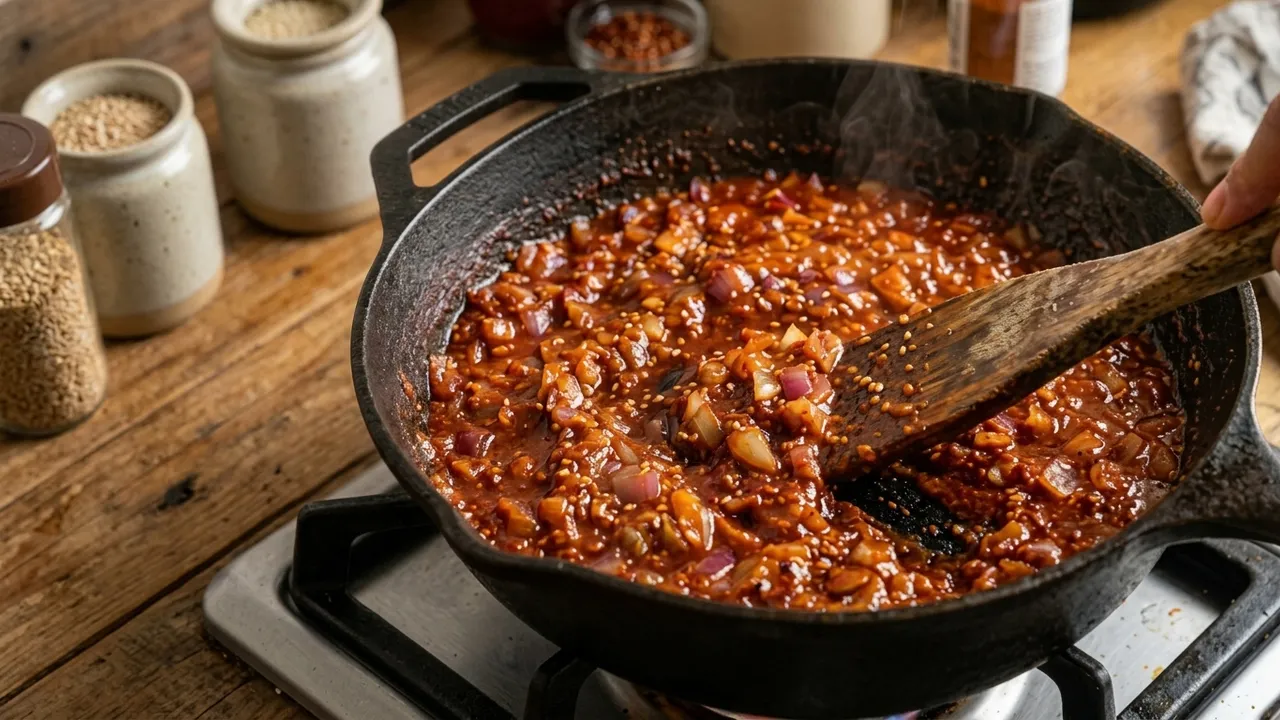
Family's Favorite Onion Yak-Gochujang (약고추장) Recipe
* 이미지는 AI가 생성한 참고 이미지로, 실제 조리 결과물과 다를 수 있습니다.
A magical all-purpose sauce made simply with onions and gochujang (고추장). It offers a deep, rich sweetness and crisp texture without added sugar, making it versatile for bibimbap, ssamjang (쌈장, dipping sauce for wraps), meat marinades, and more.
📝 Editor's Notes
This Family's Favorite Onion Yak-Gochujang (약고추장) is an all-purpose sauce made with the natural sweetness and crisp texture of onions, without any added sugar.
The deep flavor of gochujang (고추장) combined with the subtle sweetness of onions creates an unforgettable umami taste.
The process is not complicated, making it easy for even beginner cooks to follow.
It's excellent for various Korean dishes, including bibimbap, ssamjang (쌈장), and meat marinades.
Its mild yet appetizing flavor makes it a healthy yak-gochujang (약고추장) recipe that everyone, young and old, can enjoy.
🛒 Ingredient Tips
The star ingredient of this recipe is the onion, so choose ones that are firm and plump, with glossy, crackly skins and clean ends.
Avoid onions that are soft, moldy, or sprouting.
The recipe is calibrated for commercial gochujang (고추장); if you use homemade gochujang (고추장), it can be much saltier.
In that case, reduce the amount of gochujang (고추장) or add an extra onion to balance the flavors.
Good ingredients are the secret to delicious yak-gochujang (약고추장).
🔄 Substitution Guide
If you need to substitute gochujang (고추장), there are a few alternatives.
For those who dislike spicy food or are making it for children, you can use a mix of doenjang (된장) and soy sauce, or chunjang (춘장) to create a 'black bean sauce yak-gochujang.' If using doenjang (된장), its saltiness might be higher than gochujang (고추장), so adjust the amount and add a little more water or broth.
Also, if using guk-ganjang (국간장, Korean soup soy sauce) instead of regular soy sauce, reduce the amount by half as it's saltier.
While using perilla oil (들기름) instead of sesame oil can deepen the nutty flavor, its strong aroma might not appeal to everyone.
🥘 Ingredients
👨🍳 Cooking Points
There are two crucial points for making delicious Onion Yak-Gochujang (약고추장).
First, the onion sautéing process: heat the pan thoroughly and add the diced onions when the oil begins to shimmer, then stir-fry quickly over high heat for 3 minutes.
The onions must become translucent and slightly browned at the edges to maximize their sweet flavor.
Second, the reduction time: simmer over medium heat for about 6 minutes and 30 seconds.
It's important to turn off the heat when the sauce is slightly looser than your desired final consistency, as over-reducing can make it too stiff when cooled.
Use a wooden spatula to gently scrape the bottom and check the consistency.
👨🍳 Directions
Finely dice 2 onions into approximately 0.5 cm (1/4 inch) cubes. To reduce pungency, chill the onions in the refrigerator for about 30 minutes before chopping, and leave a small portion of the root end intact while dicing.
Heat a pan thoroughly, then add 1 tbsp of cooking oil. Once the oil starts to shimmer, add the diced onions and stir-fry quickly over high heat for 3 minutes. Continue to stir-fry until the onions become translucent and their edges begin to turn lightly brown.
After 3 minutes, add 1 tbsp of minced garlic, 10 tbsp of gochujang (고추장), 1 tbsp of soy sauce, and 100 ml of water. Mix well and bring to a boil over high heat.
Once it starts boiling, immediately reduce the heat to medium. Simmer for about 6 minutes and 30 seconds, gently scraping the bottom of the pan with a wooden spatula. Turn off the heat when the sauce darkens in color and thickens to a desired consistency. Be careful not to reduce it for too long, as it can become too stiff when cooled. It's best to turn off the heat when it's slightly looser than the final desired consistency.
After turning off the heat, while residual heat remains, drizzle with 2 tbsp of sesame oil and mix lightly. Your Onion Yak-Gochujang (약고추장) is complete.
💡 Tips
Good onions are firm and plump, with glossy, crackly skins and clean ends. Avoid those that are soft, moldy, or sprouting.
If stored in the refrigerator in a plastic bag, onions are prone to mold due to moisture. Instead, keep them in a mesh bag or wrapped in newspaper in a cool, well-ventilated place to keep them fresh for over a month.
This recipe is based on commercial gochujang (고추장). If using homemade gochujang (고추장), which can be much saltier, reduce the amount of gochujang (고추장) or add an extra onion to balance the seasoning.
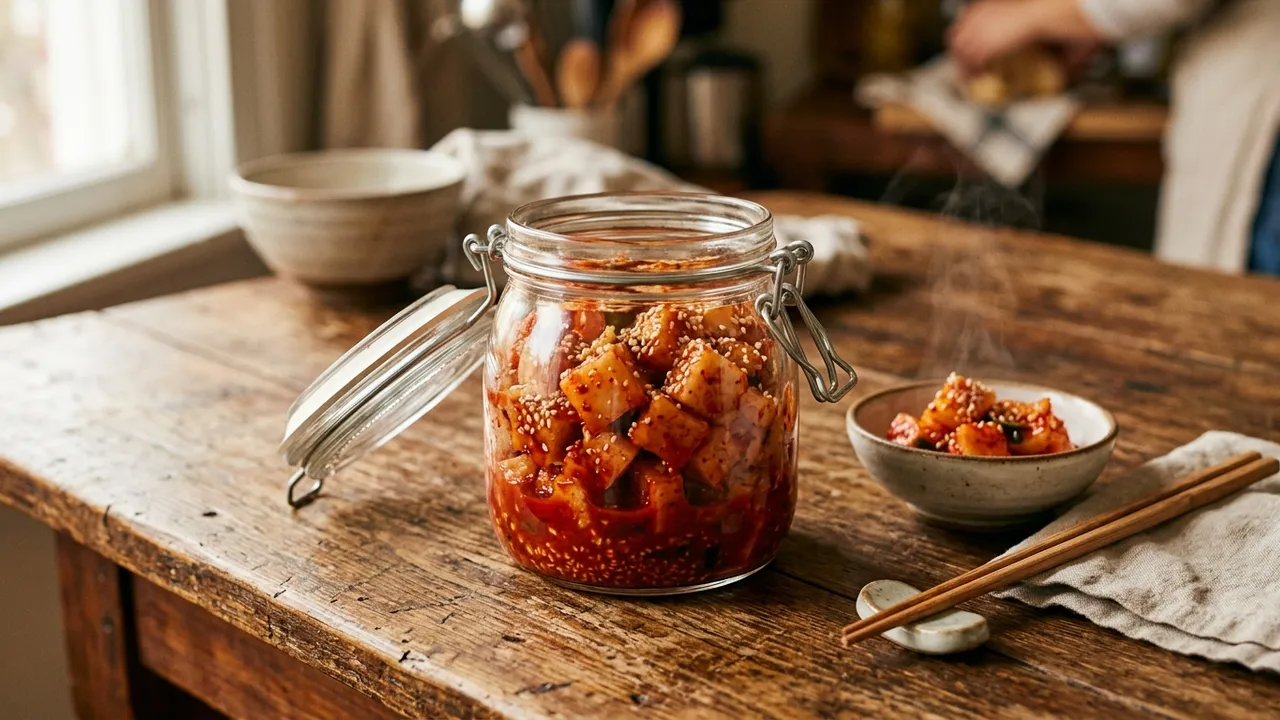
Store the finished Onion Yak-Gochujang (약고추장) in a clean, sterilized glass jar in the refrigerator for up to 3 weeks, or divide it into smaller containers and freeze for up to 2 months for optimal flavor.
📦 Storage & Reuse
Store the finished Onion Yak-Gochujang (약고추장) in a clean, airtight container in the refrigerator for about 2 weeks to keep it fresh.
For longer storage, we recommend portioning and freezing it.
It can be stored in the freezer for over a month, and after thawing, simply reheat it in the microwave or over low heat.
Leftover Onion Yak-Gochujang (약고추장) can be used as an ingredient for bibimbap, enjoyed as ssamjang (쌈장) with wrap vegetables, or mixed into meat marinades as an all-purpose sauce to enhance umami.
🥢 Who This Is For
We highly recommend this Onion Yak-Gochujang (약고추장) for anyone looking for a healthy and delicious meal in their busy daily life.
It's an addictive 'rice thief' that needs no other side dishes when mixed with warm rice.
It also enhances the flavor of meat when served with lettuce or perilla leaf wraps.
Prepare it in advance for camping or picnics – it's a wonderfully versatile sauce for the whole family.
🔥 Nutrition Info
One serving (approx.
100g) of this Onion Yak-Gochujang (약고추장) is estimated to be around 150-200 kcal, which may vary depending on the fat and carbohydrate content of the gochujang (고추장) and sesame oil.
It is expected to contain approximately 20-25g of carbohydrates, 3-5g of protein, and 5-8g of fat.
Onions are rich in vitamin C and dietary fiber, while gochujang (고추장) contains capsaicin, which can boost metabolism and stimulate appetite.
Allicin in garlic can also help strengthen immunity.
By using the natural sweetness of onions without added sugar, you can enjoy this healthy and nutritionally balanced sauce.
💬 Frequently Asked Questions
- Q. What ingredients do I need for Family's Favorite Onion Yak-Gochujang (약고추장)?
- Main ingredients include Onion, Cooking oil, Minced garlic, Gochujang (고추장), Soy sauce. The star ingredient of this recipe is the onion, so choose ones that are firm and plump, with glossy, crackly skins and clean ends. Avoid onions that are soft, moldy, or sprouting. The recipe is calibrated for commercial gochujang (고추장); if you use homemade gochujang (고추장), it can be much saltier. In that case, reduce the amount of gochujang (고추장) or add an extra onion to balance the flavors. Good ingredients are the secret to delicious yak-gochujang (약고추장).
- Q. What are the key tips for making Family's Favorite Onion Yak-Gochujang (약고추장)?
- There are two crucial points for making delicious Onion Yak-Gochujang (약고추장). First, the onion sautéing process: heat the pan thoroughly and add the diced onions when the oil begins to shimmer, then stir-fry quickly over high heat for 3 minutes. The onions must become translucent and slightly browned at the edges to maximize their sweet flavor. Second, the reduction time: simmer over medium heat for about 6 minutes and 30 seconds. It's important to turn off the heat when the sauce is slightly looser than your desired final consistency, as over-reducing can make it too stiff when cooled. Use a wooden spatula to gently scrape the bottom and check the consistency.
- Q. How should I store leftover Family's Favorite Onion Yak-Gochujang (약고추장)?
- Store the finished Onion Yak-Gochujang (약고추장) in a clean, airtight container in the refrigerator for about 2 weeks to keep it fresh. For longer storage, we recommend portioning and freezing it. It can be stored in the freezer for over a month, and after thawing, simply reheat it in the microwave or over low heat. Leftover Onion Yak-Gochujang (약고추장) can be used as an ingredient for bibimbap, enjoyed as ssamjang (쌈장) with wrap vegetables, or mixed into meat marinades as an all-purpose sauce to enhance umami.
- Q. How many calories are in Family's Favorite Onion Yak-Gochujang (약고추장)?
- One serving (approx. 100g) of this Onion Yak-Gochujang (약고추장) is estimated to be around 150-200 kcal, which may vary depending on the fat and carbohydrate content of the gochujang (고추장) and sesame oil. It is expected to contain approximately 20-25g of carbohydrates, 3-5g of protein, and 5-8g of fat. Onions are rich in vitamin C and dietary fiber, while gochujang (고추장) contains capsaicin, which can boost metabolism and stimulate appetite. Allicin in garlic can also help strengthen immunity. By using the natural sweetness of onions without added sugar, you can enjoy this healthy and nutritionally balanced sauce.
- Q. Can I substitute ingredients in Family's Favorite Onion Yak-Gochujang (약고추장)?
- If you need to substitute gochujang (고추장), there are a few alternatives. For those who dislike spicy food or are making it for children, you can use a mix of doenjang (된장) and soy sauce, or chunjang (춘장) to create a 'black bean sauce yak-gochujang.' If using doenjang (된장), its saltiness might be higher than gochujang (고추장), so adjust the amount and add a little more water or broth. Also, if using guk-ganjang (국간장, Korean soup soy sauce) instead of regular soy sauce, reduce the amount by half as it's saltier. While using perilla oil (들기름) instead of sesame oil can deepen the nutty flavor, its strong aroma might not appeal to everyone.
💬 Comments
No comments yet. Be the first to comment!