
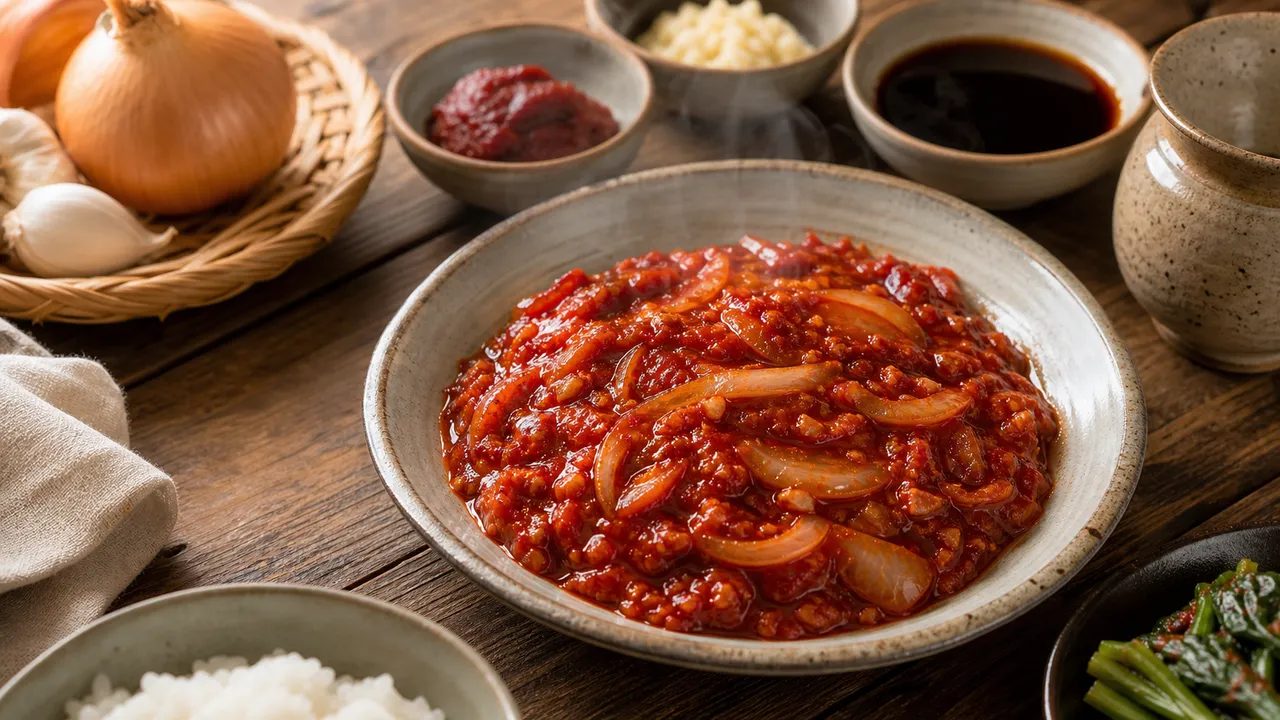
Sweet Onion Gochujang Paste Recipe
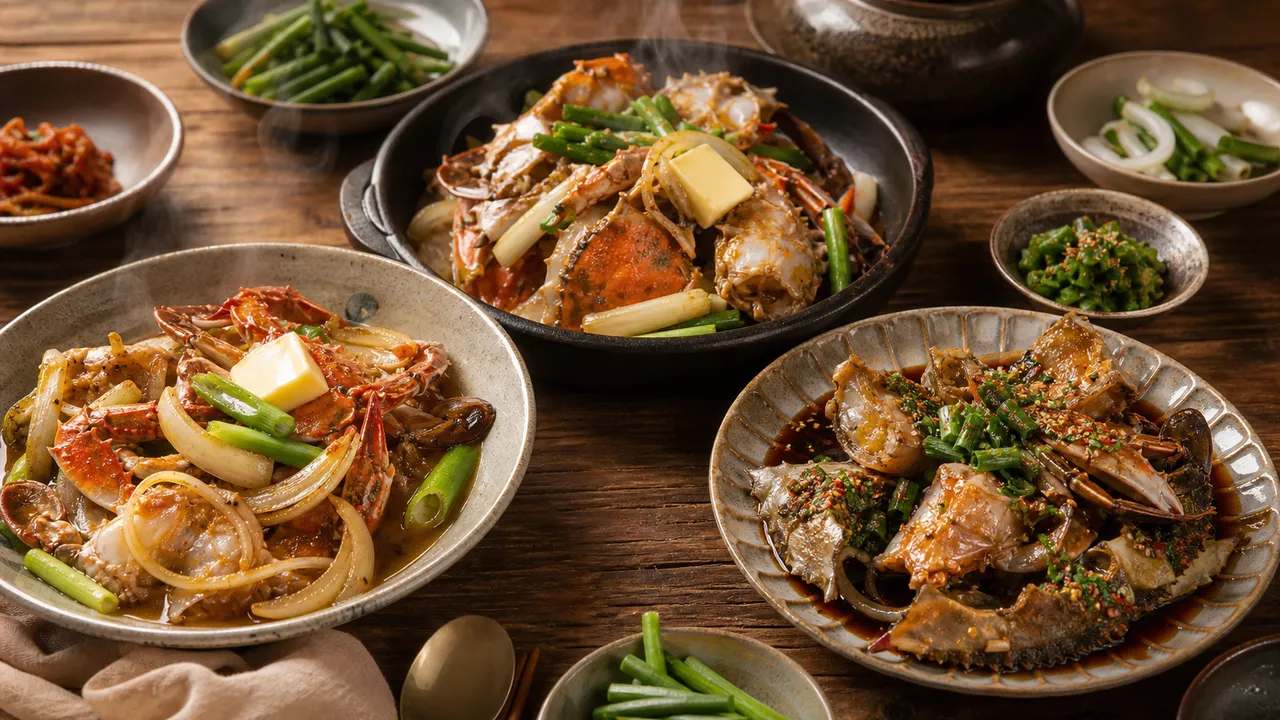
* 이미지는 AI가 생성한 참고 이미지로, 실제 조리 결과물과 다를 수 있습니다.
This versatile seasoning paste utilizes the deep, rich sweetness of onions without any added sugar or corn syrup, making it a family favorite that will have everyone reaching for a second bowl of rice.
📝 Editor's Notes
Today's recipe for Sweet Onion Gochujang Paste is a versatile seasoning that brings out the deep, rich sweetness of onions without any added sugar or corn syrup.
It's a quick and easy recipe, ready in under 10 minutes with no complicated steps, making it perfect for novice cooks.
The healthy sweetness appeals to the whole family, making it an excellent side dish for children.
While it's perfect for mixing with rice, it also pairs wonderfully with ssam (쌈) vegetables or grilled meats for a richer flavor experience.
It's an ideal dish for boosting appetite on hot summer days or whenever you crave a simple yet delicious meal.
🛒 Ingredient Tips
For this recipe, it's important to choose onions that are firm, have dry skins, and clean ends.
Fresh onions typically have clean, glossy skins.
Store them in a cool, well-ventilated place to prevent mold caused by humidity.
While the recipe is based on commercial gochujang (고추장), if you use homemade gochujang, its saltiness may differ, so reduce the amount or add extra onion to adjust the seasoning.
For canned tuna, using a variety with the oil drained will result in a cleaner taste.
🔄 Substitution Guide
If you have an onion allergy or dislike the distinct flavor of onions, you can finely dice and use the white part of green onions (scallions) instead.
While it offers less sweetness than onions, it will add its unique aroma and umami.
To reduce spiciness, you can mix doenjang (된장) and gochujang (고추장), or use ssamjang (쌈장) instead of just gochujang.
In this case, you'll need to adjust the amount of soy sauce, considering the saltiness of the doenjang or ssamjang.
If you don't have canned tuna, sautéing minced beef or pork and adding it to the paste also makes for an excellent gochujang seasoning.
The savory flavor and umami from the meat will create an even richer taste.
🥘 Ingredients
👨🍳 Cooking Points
There are three crucial points when making Sweet Onion Gochujang Paste.
First, finely dicing the onions into 0.5 cm (approx.
0.2 inch) pieces helps extract more sweetness and improves the texture.
If you're concerned about pungency, chill them in the refrigerator for about 30 minutes before cutting or leave a small part of the root end intact.
Second, the key is to quickly caramelize the onions over high heat for 3 minutes until they become translucent and their edges turn slightly brown.
This is the secret to achieving sweetness without sugar.
Third, when simmering the sauce, immediately reduce the heat to medium once it boils and stir continuously with a wooden spatula for about 6 minutes and 30 seconds.
If you reduce it for too long, it can harden when cooled, so it's best to turn off the heat when it still seems slightly runny.
👨🍳 Directions
Finely dice 2 onions into 0.5 cm (approx. 0.2 inch) cubes. (To reduce pungency, chill the onions in the refrigerator for about 30 minutes before cutting, or leave a small part of the root end intact while dicing.)
Heat a pan sufficiently, add 1 tbsp of cooking oil. Once the oil slightly shimmers, add the diced onions and quickly stir-fry over high heat for 3 minutes. (Stir-fry until the onions become translucent and their edges start to turn slightly brown.)
After 3 minutes, add 1 tbsp of minced garlic, 10 tbsp of gochujang (고추장), 1 tbsp of soy sauce, and 3.4 fl oz of water to the stir-fried onions. Mix well and bring to a boil over high heat. (This recipe is based on commercial gochujang. If using homemade gochujang, reduce the amount or add one more onion to adjust the seasoning. Do not add sugar, corn syrup, or oligo syrup.)
Once the sauce starts to boil, immediately reduce the heat to medium. Simmer slowly, gently scraping the bottom of the pan with a wooden spatula, until the sauce darkens in color and becomes thick enough that when you part it with the spatula, it slowly comes back together. (This takes about 6 minutes and 30 seconds. If you reduce it for too long, it will harden when cooled, so turn off the heat when it still seems slightly runny.)
Turn off the heat. With only residual heat remaining, drizzle in 2 tbsp of sesame oil and mix lightly. Your Sweet Onion Gochujang Paste is complete. (Do not add sesame oil while the pan is still on the heat, as its fragrance can dissipate and potentially harmful compounds may form.)
💡 Tips
Choose firm onions with dry skins and clean ends. Store them in a cool, well-ventilated place to prevent mold caused by humidity.
To maximize the natural sweetness of the onions, stir-fry them quickly over high heat instead of adding sugar or corn syrup.
When simmering the sauce, reduce the heat to medium once it boils to prevent bitterness, and stir continuously to keep it from sticking to the bottom of the pan.
Store in a clean, sterilized glass jar in the refrigerator for up to 3 weeks, or divide into smaller containers and freeze for up to two months. It's even more delicious when mixed with 1 can of drained tuna (oil removed) to make a tuna bibim-jang (비빔장).
📦 Storage & Reuse
Once prepared, store the Sweet Onion Gochujang Paste in a clean, sterilized glass jar in the refrigerator for about 3 weeks.
For longer storage, divide it into small airtight containers and freeze for up to two months.
To use, simply thaw it naturally in the refrigerator beforehand or gently warm it in the microwave.
Besides mixing with rice, leftover gochujang paste can be used as a substitute for ssamjang (쌈장), as a seasoning for namul (나물) salads, or in stir-fried dishes.
Mixing it with canned tuna to make tuna bibim-jang (비빔장) is another delicious way to enjoy it.
🥢 Who This Is For
This Sweet Onion Gochujang Paste is highly recommended for busy professionals, single-person households, and families with children.
It's great as a simple side dish for rice, and can be wrapped in gim (김 - seaweed), or mixed with tofu and a fried egg for a hearty meal.
Especially when served with grilled meats like samgyeopsal (삼겹살 - pork belly) or moksal (목살 - pork neck) and ssam (쌈) vegetables, it cuts through the richness of the meat and enhances the flavor, making it a delicious treat.
It also makes a wonderful topping for warm rice as part of a weekend brunch.
🔥 Nutrition Info
Thanks to its main ingredient, onion, Sweet Onion Gochujang Paste is packed with healthy nutrients.
Based on the entire recipe, one serving is estimated to contain approximately 150-200 calories.
Protein is estimated at about 5-8g, fat at 5-7g, and carbohydrates at 20-25g.
Onions are particularly rich in quercetin, an antioxidant that helps boost immunity and improve blood circulation.
The capsaicin in gochujang (고추장) promotes metabolism, and adding canned tuna increases omega-3 fatty acids and protein intake, leading to a more nutritionally balanced meal.
As sodium content can be somewhat high, moderate consumption is recommended.
💬 Frequently Asked Questions
- Q. What ingredients do I need for Sweet Onion Gochujang Paste?
- Main ingredients include Onion, Cooking oil, Minced garlic, Gochujang (고추장), Soy sauce. For this recipe, it's important to choose onions that are firm, have dry skins, and clean ends. Fresh onions typically have clean, glossy skins. Store them in a cool, well-ventilated place to prevent mold caused by humidity. While the recipe is based on commercial gochujang (고추장), if you use homemade gochujang, its saltiness may differ, so reduce the amount or add extra onion to adjust the seasoning. For canned tuna, using a variety with the oil drained will result in a cleaner taste.
- Q. What are the key tips for making Sweet Onion Gochujang Paste?
- There are three crucial points when making Sweet Onion Gochujang Paste. First, finely dicing the onions into 0.5 cm (approx. 0.2 inch) pieces helps extract more sweetness and improves the texture. If you're concerned about pungency, chill them in the refrigerator for about 30 minutes before cutting or leave a small part of the root end intact. Second, the key is to quickly caramelize the onions over high heat for 3 minutes until they become translucent and their edges turn slightly brown. This is the secret to achieving sweetness without sugar. Third, when simmering the sauce, immediately reduce the heat to medium once it boils and stir continuously with a wooden spatula for about 6 minutes and 30 seconds. If you reduce it for too long, it can harden when cooled, so it's best to turn off the heat when it still seems slightly runny.
- Q. How should I store leftover Sweet Onion Gochujang Paste?
- Once prepared, store the Sweet Onion Gochujang Paste in a clean, sterilized glass jar in the refrigerator for about 3 weeks. For longer storage, divide it into small airtight containers and freeze for up to two months. To use, simply thaw it naturally in the refrigerator beforehand or gently warm it in the microwave. Besides mixing with rice, leftover gochujang paste can be used as a substitute for ssamjang (쌈장), as a seasoning for namul (나물) salads, or in stir-fried dishes. Mixing it with canned tuna to make tuna bibim-jang (비빔장) is another delicious way to enjoy it.
- Q. How many calories are in Sweet Onion Gochujang Paste?
- Thanks to its main ingredient, onion, Sweet Onion Gochujang Paste is packed with healthy nutrients. Based on the entire recipe, one serving is estimated to contain approximately 150-200 calories. Protein is estimated at about 5-8g, fat at 5-7g, and carbohydrates at 20-25g. Onions are particularly rich in quercetin, an antioxidant that helps boost immunity and improve blood circulation. The capsaicin in gochujang (고추장) promotes metabolism, and adding canned tuna increases omega-3 fatty acids and protein intake, leading to a more nutritionally balanced meal. As sodium content can be somewhat high, moderate consumption is recommended.
- Q. Can I substitute ingredients in Sweet Onion Gochujang Paste?
- If you have an onion allergy or dislike the distinct flavor of onions, you can finely dice and use the white part of green onions (scallions) instead. While it offers less sweetness than onions, it will add its unique aroma and umami. To reduce spiciness, you can mix doenjang (된장) and gochujang (고추장), or use ssamjang (쌈장) instead of just gochujang. In this case, you'll need to adjust the amount of soy sauce, considering the saltiness of the doenjang or ssamjang. If you don't have canned tuna, sautéing minced beef or pork and adding it to the paste also makes for an excellent gochujang seasoning. The savory flavor and umami from the meat will create an even richer taste.
💬 Comments
No comments yet. Be the first to comment!