
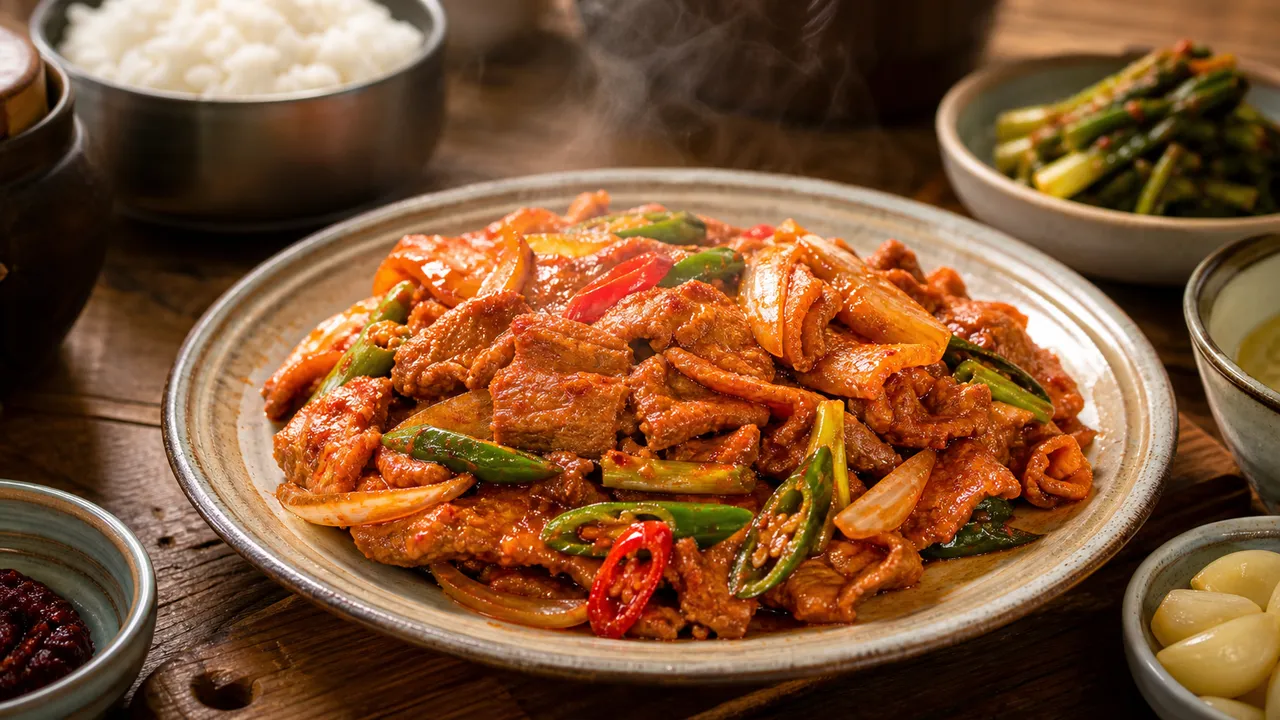
Spicy Pork Stir-fry (Jeyuk Bokkeum) - Gisa Sikdang Style
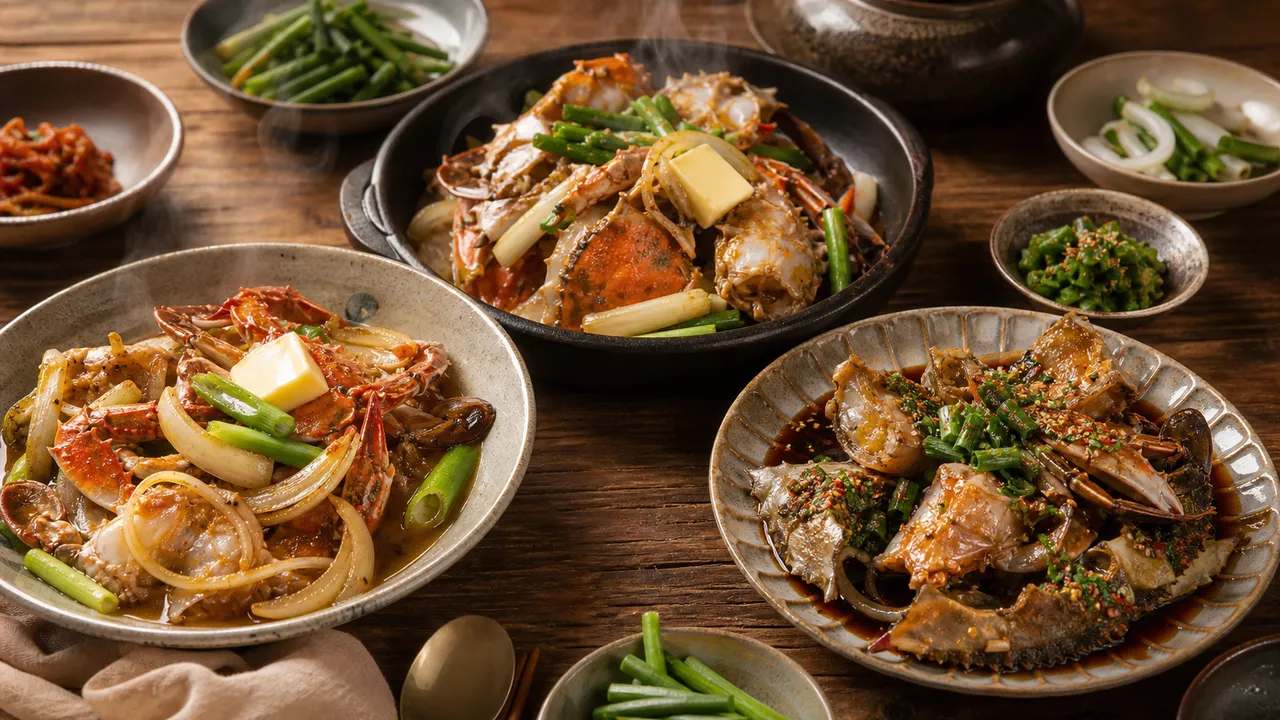
* 이미지는 AI가 생성한 참고 이미지로, 실제 조리 결과물과 다를 수 있습니다.
Experience truly delicious gochujang jeyuk bokkeum (spicy pork stir-fry), made with the secret techniques of a Gisa Sikdang (drivers' restaurant).
📝 Editor's Notes
Gisa Sikdang Jeyuk Bokkeum is a beloved dish by many.
This recipe helps you recreate the unique umami and deep flavor characteristic of gisa sikdang (drivers' restaurants) right at home.
The secret to elevating the pork's flavor lies in the method of pre-marinating the meat before mixing it with the main seasoning.
It boasts an excellent balance of spicy, sweet, and savory flavors, made even more special with a subtle hint of curry powder.
The difficulty level is intermediate; by following a few key points, you can complete a magnificent jeyuk bokkeum.
It's perfect as a hearty meal or a side dish for drinks, suitable for any season.
🛒 Ingredient Tips
Pork shoulder (boston butt) is the best cut for jeyuk bokkeum.
It has a good balance of lean meat and fat, ensuring a tender texture without being dry.
When choosing pork, look for a vibrant red color and white, firm fat layers.
For onions, select firm ones that are not too soft, with shiny skins, indicating freshness.
For large green onions, choose ones with an even mix of green leaves and white stalks, ensuring they are not wilted.
Fresh vegetables significantly enhance the flavor and aroma of the dish.
🔄 Substitution Guide
Instead of pork shoulder (boston butt), you can use pork neck (moksal) or pork belly (samgyeopsal).
Pork neck has less fat than pork shoulder, making it suitable if you prefer a leaner taste, while pork belly, being fattier, offers a softer and richer flavor.
However, the unique chewiness of pork shoulder might be slightly diminished.
If tuna essence is unavailable, it can be substituted with anchovy sauce (myeolchi aekjeot).
Anchovy sauce has a stronger and deeper umami flavor than tuna essence, so it's best to use a slightly reduced amount.
If you don't have curry powder, you can omit it, but you will miss the subtle aroma and umami it provides.
Alternatively, you can slightly increase the amount of gochugaru (고춧가루) to emphasize the spiciness.
🥘 Ingredients
👨🍳 Cooking Points
There are two crucial points for this jeyuk bokkeum.
First, always pre-marinate the pork.
Marinating it for 15 minutes with soy sauce, garlic, sugar, and black pepper tenderizes the meat and allows the seasoning to penetrate deeply, making it much more delicious.
This is one of the gisa sikdang's secrets.
Second, heat control is vital.
Stir-fry the marinated pork quickly over high heat until about two-thirds cooked to lock in the juices.
After adding the vegetables, maintain high heat and stir-fry rapidly to preserve their crisp texture.
The trick to preventing a muddy taste is to add the final sauce when the meat and vegetables are almost fully cooked, and then not stir-fry for too long.
👨🍳 Directions
Combine 600g pork shoulder (boston butt) with the first marinade ingredients: 2 tbsp soy sauce, 2 heaping tbsp minced garlic, 1 level tbsp sugar, and 3 dashes black pepper. Mix well and let it marinate for 15 minutes to allow the flavors to penetrate.
Cut 120g onion thickly to retain its texture, and slice 90g large green onion into large pieces. Diagonally slice 2 Cheongyang chili peppers (청양고추) and 1 red chili pepper.
In a bowl, combine 1 tbsp store-bought gochujang (고추장), 1 tbsp soy sauce, 1 tbsp tuna essence, 2 tbsp cooking rice wine (mirin), 2 tbsp oligosaccharide syrup, 2/3 tbsp curry powder, and 4 tbsp gochugaru (고춧가루). Mix well to create the final seasoning sauce.
Heat 1 tbsp cooking oil in a pan over high heat. Add the marinated pork and stir-fry, breaking it apart with chopsticks, until about two-thirds cooked.
Once the pork is mostly cooked through (losing its pinkness), add all the sliced onion, Cheongyang chili peppers (청양고추), red chili pepper, and large green onion. Continue to stir-fry until the remaining pork is cooked and the vegetables have slightly softened.
Once the onion is properly cooked, keep the heat on high, add the prepared final seasoning sauce, and mix well to incorporate. Since the meat and vegetables are already cooked, there's no need to stir-fry for too long; just ensure the sauce is well-distributed.
Turn off the heat, drizzle with 2/3 tbsp perilla oil, and sprinkle generously with toasted sesame seeds to finish.
💡 Tips
Do not mix the pork directly with the strong final seasoning. First, pre-season it to subtly enhance the flavor, tenderize the meat, and help it absorb the seasoning better.
Using sugar in the initial marinade helps create a delicious browned flavor on the surface of the meat when stir-frying. If you don't have pear juice or onion juice like professional restaurants, sugar can be a good substitute.
Adding too much gochujang (고추장) to the final seasoning can make the dish taste muddy, so use it in moderation.
Too much curry powder can mask the umami of jeyuk bokkeum and make it taste muddy. It's best to add only about 1/2 to 2/3 tbsp.
📦 Storage & Reuse
Store the finished jeyuk bokkeum in an airtight container in the refrigerator for 2-3 days to keep it fresh.
If you wish to store it longer, portioning and freezing it is a good option, allowing storage for up to about 2 weeks.
When reheating after thawing, you can use a frying pan over low heat or a microwave.
Adding a little water when reheating can prevent the sauce from burning and help maintain its moisture.
Leftover jeyuk bokkeum can be transformed into a delicious jeyuk bokkeum-bap (spicy pork fried rice) by stir-frying it with rice, crumbled seaweed, and sesame oil.
🥢 Who This Is For
This Gisa Sikdang Jeyuk Bokkeum is perfect for the whole family and an excellent dish for housewarming parties with friends.
It's especially recommended for those who love spicy food.
You can enjoy it as a rice bowl topping or wrap it in lettuce or perilla leaves for a richer ssam (wrap) experience.
Serving it with a refreshing bean sprout soup or seaweed soup will help neutralize the spiciness, creating a perfect meal.
It also pairs wonderfully with makgeolli (막걸리) or soju (소주).
🔥 Nutrition Info
This recipe, based on 600g of pork shoulder, yields approximately 3-4 servings.
Per serving, it is estimated to contain about 500-600 kcal.
It may provide approximately 30-40g of protein, 35-45g of fat, and 25-35g of carbohydrates.
Pork is rich in high-quality protein and Vitamin B1, aiding in fatigue recovery, and also contains iron, beneficial for preventing anemia.
Onions and large green onions provide vitamins and dietary fiber, while chili peppers supplement Vitamin C.
Tuna essence and curry powder enhance umami, but caution should be exercised regarding sodium intake.
💬 Frequently Asked Questions
- Q. What ingredients do I need for Spicy Pork Stir-fry (Jeyuk Bokkeum) - Gisa Sikdang Style?
- Main ingredients include Pork shoulder (boston butt cut, with a good balance of fat and tender texture), Large green onion, Onion, Cheongyang chili pepper (청양고추), Red chili pepper. Pork shoulder (boston butt) is the best cut for jeyuk bokkeum. It has a good balance of lean meat and fat, ensuring a tender texture without being dry. When choosing pork, look for a vibrant red color and white, firm fat layers. For onions, select firm ones that are not too soft, with shiny skins, indicating freshness. For large green onions, choose ones with an even mix of green leaves and white stalks, ensuring they are not wilted. Fresh vegetables significantly enhance the flavor and aroma of the dish.
- Q. What are the key tips for making Spicy Pork Stir-fry (Jeyuk Bokkeum) - Gisa Sikdang Style?
- There are two crucial points for this jeyuk bokkeum. First, always pre-marinate the pork. Marinating it for 15 minutes with soy sauce, garlic, sugar, and black pepper tenderizes the meat and allows the seasoning to penetrate deeply, making it much more delicious. This is one of the gisa sikdang's secrets. Second, heat control is vital. Stir-fry the marinated pork quickly over high heat until about two-thirds cooked to lock in the juices. After adding the vegetables, maintain high heat and stir-fry rapidly to preserve their crisp texture. The trick to preventing a muddy taste is to add the final sauce when the meat and vegetables are almost fully cooked, and then not stir-fry for too long.
- Q. How should I store leftover Spicy Pork Stir-fry (Jeyuk Bokkeum) - Gisa Sikdang Style?
- Store the finished jeyuk bokkeum in an airtight container in the refrigerator for 2-3 days to keep it fresh. If you wish to store it longer, portioning and freezing it is a good option, allowing storage for up to about 2 weeks. When reheating after thawing, you can use a frying pan over low heat or a microwave. Adding a little water when reheating can prevent the sauce from burning and help maintain its moisture. Leftover jeyuk bokkeum can be transformed into a delicious jeyuk bokkeum-bap (spicy pork fried rice) by stir-frying it with rice, crumbled seaweed, and sesame oil.
- Q. How many calories are in Spicy Pork Stir-fry (Jeyuk Bokkeum) - Gisa Sikdang Style?
- This recipe, based on 600g of pork shoulder, yields approximately 3-4 servings. Per serving, it is estimated to contain about 500-600 kcal. It may provide approximately 30-40g of protein, 35-45g of fat, and 25-35g of carbohydrates. Pork is rich in high-quality protein and Vitamin B1, aiding in fatigue recovery, and also contains iron, beneficial for preventing anemia. Onions and large green onions provide vitamins and dietary fiber, while chili peppers supplement Vitamin C. Tuna essence and curry powder enhance umami, but caution should be exercised regarding sodium intake.
- Q. Can I substitute ingredients in Spicy Pork Stir-fry (Jeyuk Bokkeum) - Gisa Sikdang Style?
- Instead of pork shoulder (boston butt), you can use pork neck (moksal) or pork belly (samgyeopsal). Pork neck has less fat than pork shoulder, making it suitable if you prefer a leaner taste, while pork belly, being fattier, offers a softer and richer flavor. However, the unique chewiness of pork shoulder might be slightly diminished. If tuna essence is unavailable, it can be substituted with anchovy sauce (myeolchi aekjeot). Anchovy sauce has a stronger and deeper umami flavor than tuna essence, so it's best to use a slightly reduced amount. If you don't have curry powder, you can omit it, but you will miss the subtle aroma and umami it provides. Alternatively, you can slightly increase the amount of gochugaru (고춧가루) to emphasize the spiciness.
💬 Comments
No comments yet. Be the first to comment!