
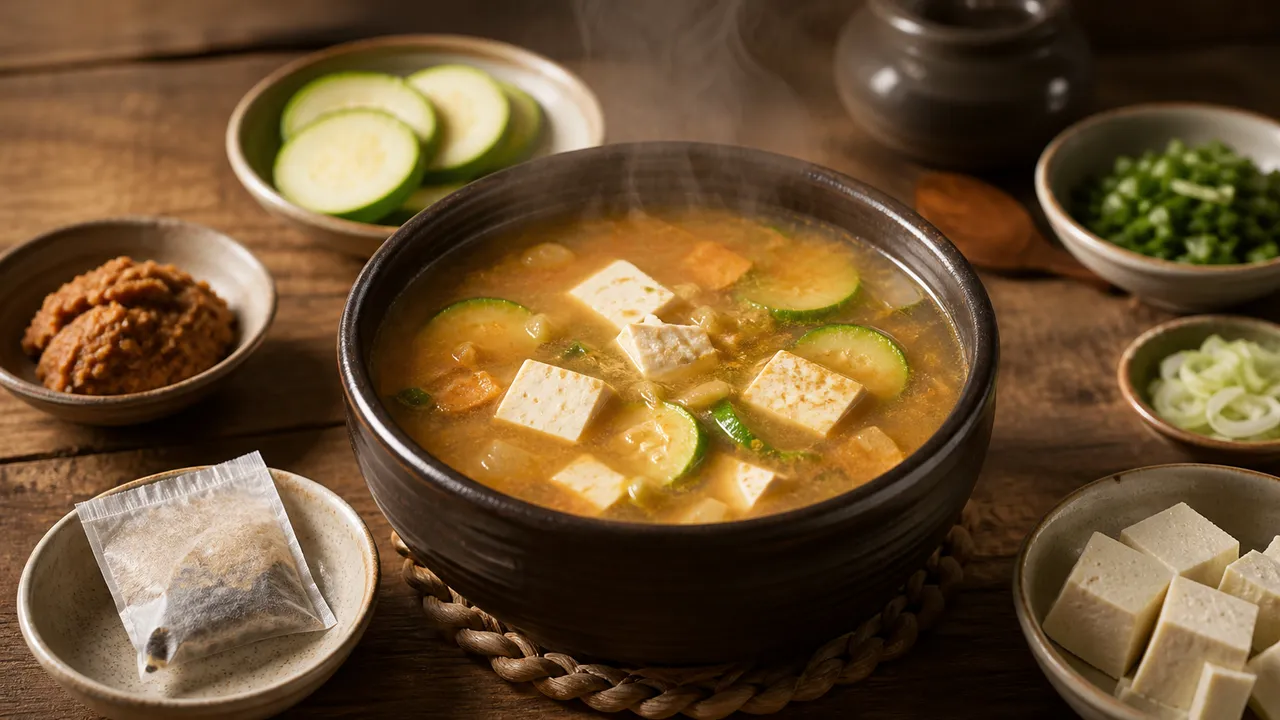
Mom's Doenjang-jjigae Recipe
* 이미지는 AI가 생성한 참고 이미지로, 실제 조리 결과물과 다를 수 있습니다.
A simple, healthy doenjang-jjigae recipe that tastes better than restaurant versions, with a comforting country-style flavor.
📝 Editor's Notes
This 'Mom's Doenjang-jjigae (된장찌개)' recipe focuses on bringing out the authentic, savory flavor of traditional country-style doenjang (된장).
Instead of complex seasonings, it highlights the deep richness of the doenjang itself, allowing you to taste the natural flavors of the ingredients.
The cooking process is simple and quick, making it easy for beginners to follow, and perfect for those who want to enjoy a warm, healthy homemade meal even on busy days.
It's ideal for a comforting and satisfying everyday meal rather than a special occasion, excellent for warming you up on a chilly day, or for stimulating your appetite when you're not feeling hungry.
If you want to savor the unique taste of doenjang (된장), be sure to try this recipe.
🛒 Ingredient Tips
Doenjang (된장) is the star of this recipe, so choosing a good one is crucial.
Using traditional homemade doenjang (된장) or a quality artisanal brand, rather than a mass-produced one, will yield a much deeper and more savory flavor.
The characteristic saltiness and umami of doenjang (된장) are important; choose one that isn't overly salty but has a rich, savory aroma.
For the zucchini (Aehobak), look for one that isn't too large, has a glossy skin, and is firm.
Selecting one with a fresh stem and no blemishes will ensure good sweetness.
For tofu, it's best to use soft silken tofu or stew-grade tofu made from domestic beans.
Softer tofu that blends well with the broth is better suited for doenjang-jjigae (된장찌개) than firmer, pan-frying tofu.
For Cheongyang chili peppers (청양고추), choose ones that are firm, brightly colored, and not wilted to get the proper spicy kick.
🔄 Substitution Guide
If zucchini (Aehobak) is unavailable, you can substitute it with regular zucchini or potatoes.
Regular zucchini offers a similar texture and sweetness to Aehobak, while potatoes will add a more starchy texture and savory flavor.
If you don't have tofu, you can use soft tofu (sundubu) or whisked eggs.
Soft tofu (sundubu) will give a silkier texture, and eggs will add a savory and smooth taste.
However, these will differ from the original tofu flavor.
If Cheongyang chili peppers (청양고추) are too spicy or hard to find, you can substitute them with green chili peppers (풋고추) or red chili peppers (홍고추) to add color and a mild spiciness.
Green chili peppers (풋고추) are less spicy than Cheongyang chili peppers but offer a crisp texture, and red chili peppers (홍고추) provide a slightly sweeter taste.
Please note that using alternative ingredients may result in a slightly different taste and texture from the original recipe.
🥘 Ingredients
👨🍳 Cooking Points
There are two crucial cooking points.
First, gently sautéing the doenjang (된장) over low heat for about 1 minute. This is the key!
It removes the raw taste of the doenjang (된장) and enhances its savory aroma, leading to a much deeper and cleaner broth.
Remember, sauté for only about 1 minute, as too long can result in bitterness.
Second, once all ingredients are added and the stew comes to a rolling boil, cook for exactly 10 more minutes.
Adhering to this timing ensures that the ingredients are cooked just right, maintaining a slight crunch, while allowing their flavors to fully infuse into the broth for the most delicious doenjang-jjigae (된장찌개).
Cooking for more than 10 minutes can make the vegetables too soft and reduce the broth too much, making it salty, so be sure to stick to the time.
If the broth reduces and becomes too salty while cooking, add a little more water to adjust the seasoning.
If it's too bland, add an additional half tablespoon of doenjang (된장).
👨🍳 Directions
Cut the zucchini (Aehobak) into large, bite-sized pieces, and cut the tofu into large cubes. Slice the Cheongyang chili peppers (청양고추) diagonally, and cut the green onion into large pieces. Prepare all ingredients.
Place a pot on the stove, add 1 tbsp of doenjang (된장), and gently sauté for about 1 minute over low heat.
Increase the heat. Pour 2 ½ cups of water, steeped with 1 broth packet, into the pot with the sautéed doenjang (된장) and bring to a boil.
Once the doenjang (된장) broth comes to a rolling boil, add the prepared zucchini (Aehobak), tofu, green onion, and Cheongyang chili peppers (청양고추) all at once.
Add 1 tsp of gochugaru (고춧가루). Once it starts boiling vigorously over high heat, cook for exactly 10 more minutes, then turn off the heat.
Once cooked, garnish with a sprinkle of finely chopped green onion to finish.
💡 Tips
To preserve the unique savory and deep flavor of doenjang (된장), do not add garlic to the stew.
Slightly sautéing the doenjang (된장) over low heat eliminates its raw taste and enhances its savory aroma, resulting in a deeper and cleaner broth. (Be careful not to sauté for too long, as it can become bitter; about 1 minute is sufficient.)
For the best-tasting doenjang-jjigae (된장찌개), boil for exactly 10 minutes after all ingredients have been added and the stew starts boiling.
If the broth reduces and becomes too salty while cooking, add a little more water to adjust the seasoning. If it's too bland, add an additional half tablespoon of doenjang (된장).
📦 Storage & Reuse
Store the finished doenjang-jjigae (된장찌개) in an airtight container in the refrigerator for up to 2-3 days for freshness.
While freezing is possible, the texture of the tofu may become somewhat dry and crumbly upon thawing, so it's best to consume it refrigerated and as soon as possible.
When reheating, transfer it to a pot and warm gently over low heat, or use a microwave.
Be careful not to reheat too quickly over high heat, as it can alter the flavor.
Leftover doenjang-jjigae (된장찌개) can be enjoyed the next morning mixed with rice, or you can transform the broth into a delicious doenjang (된장) ramen.
Any leftover zucchini (Aehobak) can be thinly sliced and added to pancakes or stir-fries.
🥢 Who This Is For
This doenjang-jjigae (된장찌개) is highly recommended for those who appreciate the authentic flavor of doenjang (된장) and miss the taste of their mom's homemade stew from a country home.
Its mild and comforting flavor makes it perfect for the whole family to enjoy.
It's especially delicious when mixed with warm rice.
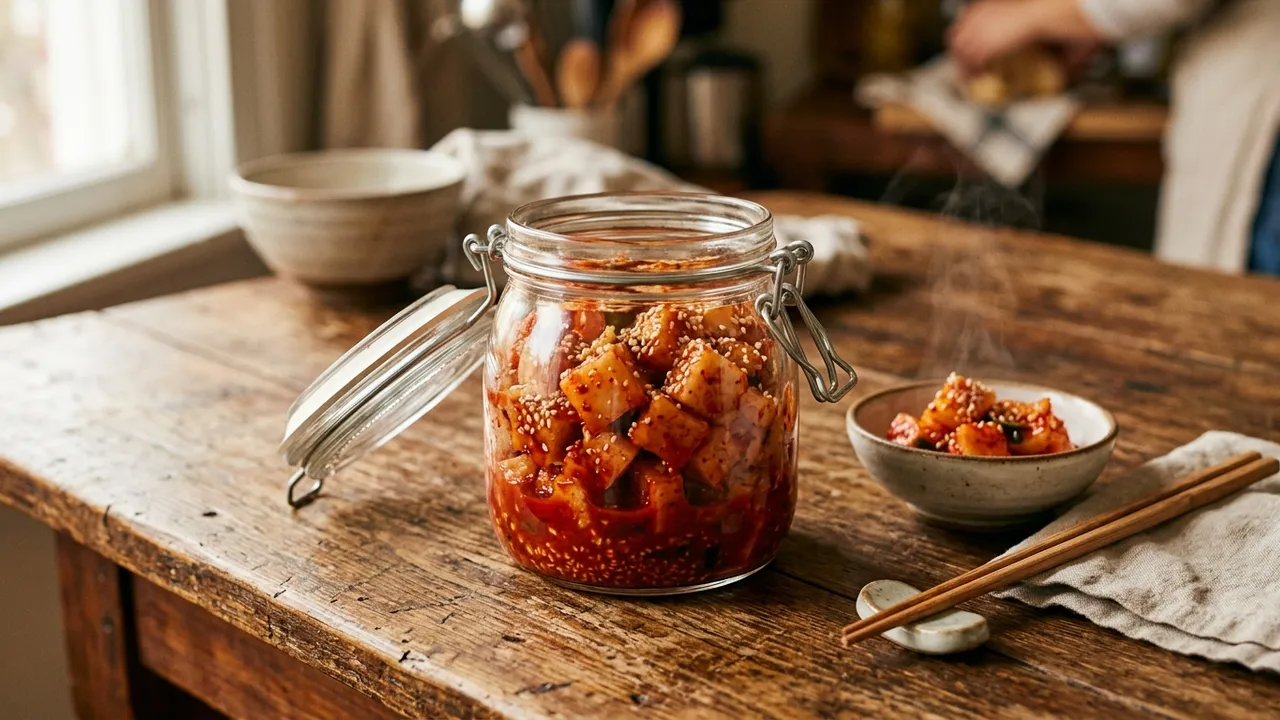
Excellent side dishes to pair with it include grilled fish like mackerel or hairtail, and crisp kimchi such as geotjeori (겉절이) or kkakdugi (깍두기).
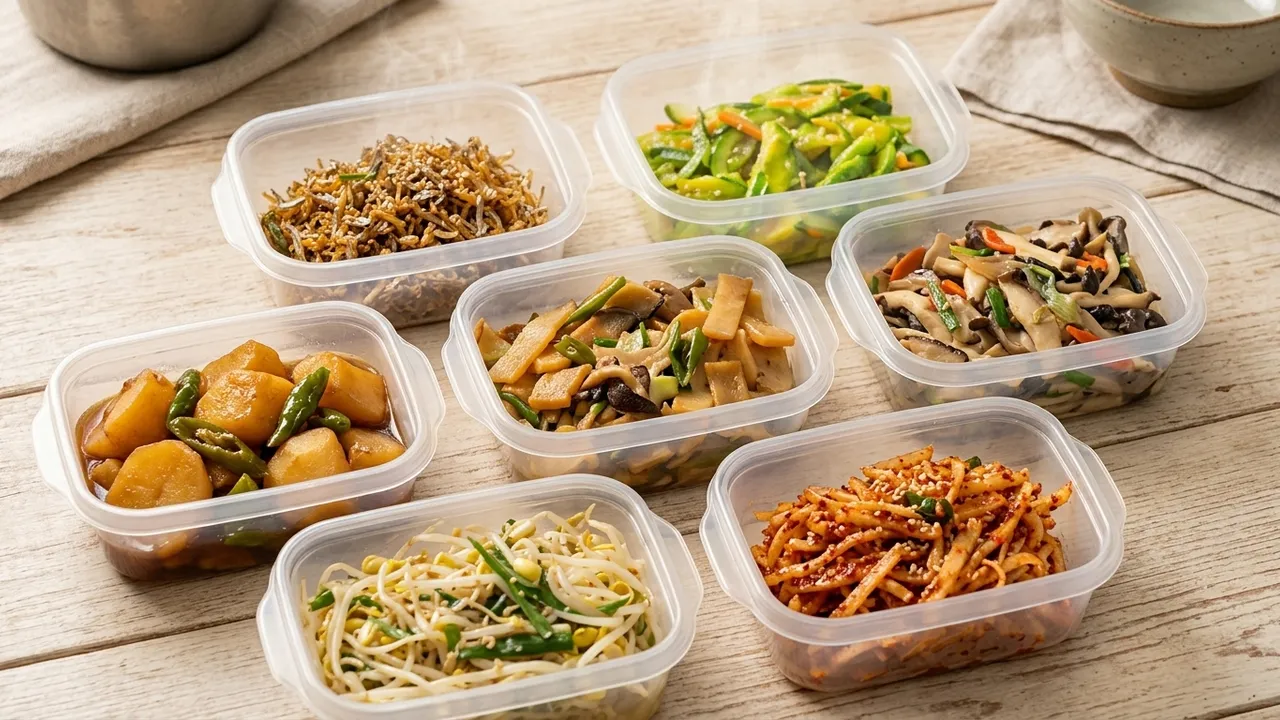
It creates an even more perfect Korean meal when accompanied by light Korean side dishes rather than heavy meat dishes.
🔥 Nutrition Info
Based on this recipe, the estimated nutritional information for one serving (assuming a recipe yield of 2 servings) is approximately 150-200 kcal in calories, with about 10-15g of protein, 5-8g of fat, and 15-20g of carbohydrates.
Doenjang (된장), as a fermented food, is rich in lactic acid bacteria, which can aid gut health, and made from soybeans, provides high-quality plant-based protein.
Zucchini (Aehobak) is rich in vitamins A, C, and potassium, beneficial for boosting immunity and expelling sodium.
Tofu is abundant in plant-based protein and calcium, contributing to bone health.
Cheongyang chili peppers (청양고추) contain capsaicin, which boosts metabolism, and are also rich in vitamin C.
Overall, this is a healthy meal providing balanced nutrients.
💬 Frequently Asked Questions
- Q. What ingredients do I need for Mom's Doenjang-jjigae Recipe?
- Main ingredients include doenjang (된장), water, broth packet, zucchini (Aehobak), tofu. Doenjang (된장) is the star of this recipe, so choosing a good one is crucial. Using traditional homemade doenjang (된장) or a quality artisanal brand, rather than a mass-produced one, will yield a much deeper and more savory flavor. The characteristic saltiness and umami of doenjang (된장) are important; choose one that isn't overly salty but has a rich, savory aroma. For the zucchini (Aehobak), look for one that isn't too large, has a glossy skin, and is firm. Selecting one with a fresh stem and no blemishes will ensure good sweetness. For tofu, it's best to use soft silken tofu or stew-grade tofu made from domestic beans. Softer tofu that blends well with the broth is better suited for doenjang-jjigae (된장찌개) than firmer, pan-frying tofu. For Cheongyang chili peppers (청양고추), choose ones that are firm, brightly colored, and not wilted to get the proper spicy kick.
- Q. What are the key tips for making Mom's Doenjang-jjigae Recipe?
- There are two crucial cooking points. First, gently sautéing the doenjang (된장) over low heat for about 1 minute. This is the key! It removes the raw taste of the doenjang (된장) and enhances its savory aroma, leading to a much deeper and cleaner broth. Remember, sauté for only about 1 minute, as too long can result in bitterness. Second, once all ingredients are added and the stew comes to a rolling boil, cook for exactly 10 more minutes. Adhering to this timing ensures that the ingredients are cooked just right, maintaining a slight crunch, while allowing their flavors to fully infuse into the broth for the most delicious doenjang-jjigae (된장찌개). Cooking for more than 10 minutes can make the vegetables too soft and reduce the broth too much, making it salty, so be sure to stick to the time. If the broth reduces and becomes too salty while cooking, add a little more water to adjust the seasoning. If it's too bland, add an additional half tablespoon of doenjang (된장).
- Q. How should I store leftover Mom's Doenjang-jjigae Recipe?
- Store the finished doenjang-jjigae (된장찌개) in an airtight container in the refrigerator for up to 2-3 days for freshness. While freezing is possible, the texture of the tofu may become somewhat dry and crumbly upon thawing, so it's best to consume it refrigerated and as soon as possible. When reheating, transfer it to a pot and warm gently over low heat, or use a microwave. Be careful not to reheat too quickly over high heat, as it can alter the flavor. Leftover doenjang-jjigae (된장찌개) can be enjoyed the next morning mixed with rice, or you can transform the broth into a delicious doenjang (된장) ramen. Any leftover zucchini (Aehobak) can be thinly sliced and added to pancakes or stir-fries.
- Q. How many calories are in Mom's Doenjang-jjigae Recipe?
- Based on this recipe, the estimated nutritional information for one serving (assuming a recipe yield of 2 servings) is approximately 150-200 kcal in calories, with about 10-15g of protein, 5-8g of fat, and 15-20g of carbohydrates. Doenjang (된장), as a fermented food, is rich in lactic acid bacteria, which can aid gut health, and made from soybeans, provides high-quality plant-based protein. Zucchini (Aehobak) is rich in vitamins A, C, and potassium, beneficial for boosting immunity and expelling sodium. Tofu is abundant in plant-based protein and calcium, contributing to bone health. Cheongyang chili peppers (청양고추) contain capsaicin, which boosts metabolism, and are also rich in vitamin C. Overall, this is a healthy meal providing balanced nutrients.
- Q. Can I substitute ingredients in Mom's Doenjang-jjigae Recipe?
- If zucchini (Aehobak) is unavailable, you can substitute it with regular zucchini or potatoes. Regular zucchini offers a similar texture and sweetness to Aehobak, while potatoes will add a more starchy texture and savory flavor. If you don't have tofu, you can use soft tofu (sundubu) or whisked eggs. Soft tofu (sundubu) will give a silkier texture, and eggs will add a savory and smooth taste. However, these will differ from the original tofu flavor. If Cheongyang chili peppers (청양고추) are too spicy or hard to find, you can substitute them with green chili peppers (풋고추) or red chili peppers (홍고추) to add color and a mild spiciness. Green chili peppers (풋고추) are less spicy than Cheongyang chili peppers but offer a crisp texture, and red chili peppers (홍고추) provide a slightly sweeter taste. Please note that using alternative ingredients may result in a slightly different taste and texture from the original recipe.
💬 Comments
No comments yet. Be the first to comment!