
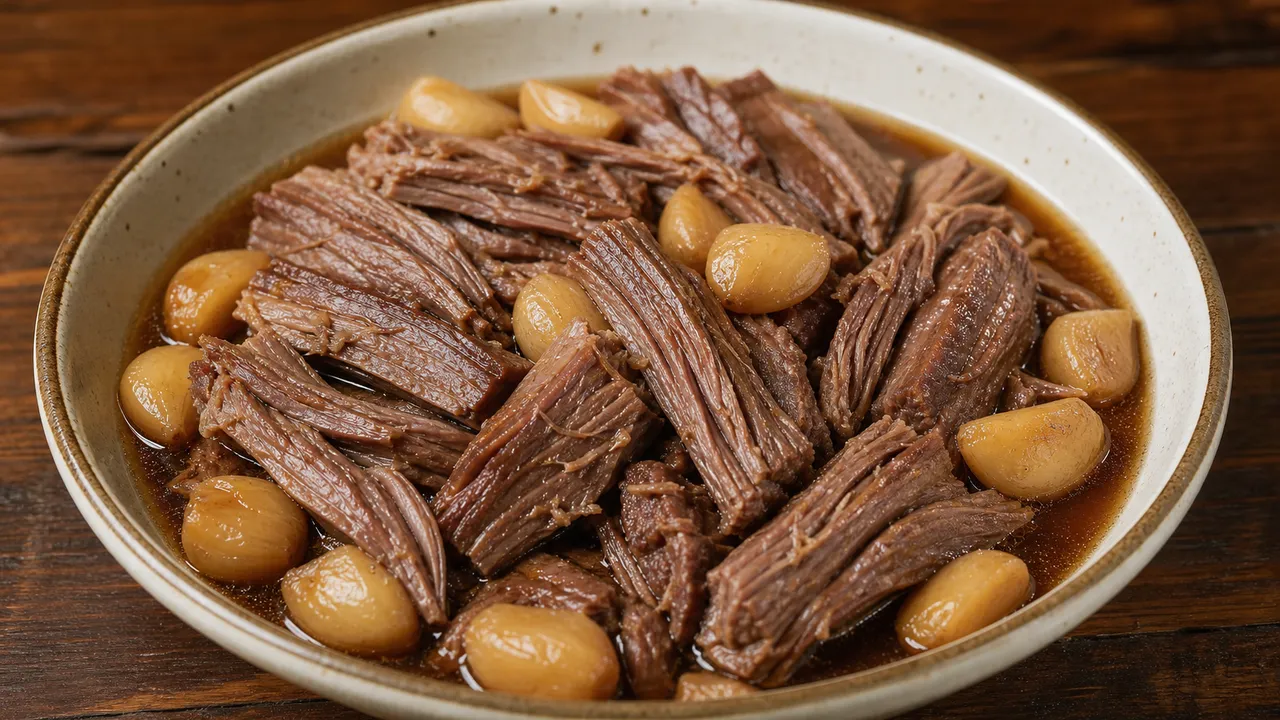
Korean Soy-Braised Beef (Jangjorim) for Freezer Meal Prep: S
* 이미지는 AI가 생성한 참고 이미지로, 실제 조리 결과물과 다를 수 있습니다.
This meal prep recipe allows you to easily enjoy Korean soy-braised beef (jangjorim - 장조림) made with eye of round and brisket, by preparing it in advance and storing it in the freezer.
📋 2 recipes — Select to view
A savory Jangjorim (장조림) meal prep made by braising beef eye of round and brisket in a soy sauce-based seasoning.
📝 Editor's Notes
This Beef Jangjorim (소고기 장조림), made with beef eye of round and brisket, is completed in just 2 hours and 10 minutes.
Its savory yet sweet seasoning makes it a true 'rice thief' (bap-doduk, 밥도둑) that pairs perfectly with rice.
Prepare a generous batch and store it in the refrigerator for a reliable side dish anytime.
It’s especially invigorating when served over warm rice during chilly seasons or when you need an energy boost.
Highly recommended as a nutritious Korean side dish for the whole family to enjoy.
🛒 Ingredient Tips
For Jangjorim (장조림), it's best to use both beef eye of round and brisket.
Beef eye of round is lean, offering a clean taste and good chewiness, while brisket has a good balance of fat and connective tissue, making it tender and enriching the broth flavor.
When choosing meat, select fresh cuts that are bright red and glossy.
For brisket, in particular, look for fine grain and not too much fat.
Using high-quality meat will significantly enhance the flavor of your Jangjorim.
🔄 Substitution Guide
If beef eye of round or brisket is difficult to find, or if you prefer a different texture, you can use beef shank (sataesal, 사태살) instead.
Beef shank has a fine grain and less fat, offering a clean and chewy texture.
However, beef shank may require a slightly longer cooking time than beef eye of round, so make sure to cook it until it's sufficiently tender.
For a less spicy but still clean flavor, you can use regular dried chili peppers instead of dried hot chili (geon-gochu, 건고추).
If you don't have oligosaccharide (oligodang, 올리고당), you can substitute it with corn syrup or rice syrup (jocheong, 조청).
Just be aware that there might be slight differences in sweetness and viscosity, so adjust the quantity accordingly.
🥘 Ingredients
👨🍳 Cooking Points
The first key to delicious Beef Jangjorim (소고기 장조림) is blood removal.
Soaking the beef in cold water for about 30 minutes to sufficiently remove the blood helps eliminate any gamey odor and results in a clean taste.
The second point is the beef cooking time: it's crucial to boil it over high heat for the first 30 minutes, then cover and simmer over medium heat for another 30 minutes to make the beef tender.
Finally, after adding the seasoning, cook again over medium heat for 30 minutes, and then, after shredding and returning the beef to the pot, simmer over high heat for about 10 minutes.
This allows the seasoning to deeply penetrate the meat, creating a rich flavor.
Stick to these timings, and you can't go wrong!
👨🍳 Directions
Soak 1.5 lb of beef eye of round and brisket in cold water for about 30 minutes to remove blood.
In 7.5 cups of water, add rice wine (cheongju, 청주), garlic, whole black peppercorns, large green onion (daepa, 대파), dried hot chili (geon-gochu, 건고추), and the de-blooded beef. Bring to a boil over high heat.
Once boiling, cover and simmer over medium heat for 30 minutes.
After 30 minutes, add 1.5 cups of soy sauce (yangjo ganjang, 양조간장), 4 tbsp of oligosaccharide (oligodang, 올리고당), 4 tbsp of mirin (미림), and 4 tbsp of sugar. Cook again over medium heat for another 30 minutes.
Remove the beef from the pot and shred it into small pieces. Remove the other solids from the broth, then return the shredded beef to the broth and boil over high heat for about 10 minutes.
💡 Tips
Once the Jangjorim (장조림) has cooled, divide it into containers for storage.
For convenience, there's no need for separate thawing; simply transfer it to the refrigerator the night before, and it will be ready to eat.
📦 Storage & Reuse
It's best to let the finished Jangjorim (장조림) cool down before dividing it into airtight containers and refrigerating.
It can be kept fresh for about 3-4 days in the refrigerator.
If you wish to store it longer, portion it out and freeze it.
Frozen Jangjorim can be stored for about 2 weeks; simply transfer it to the refrigerator the night before to thaw naturally for convenient eating.
To reheat, warm it slightly in the microwave or gently heat it in a pot over low heat to enjoy it as freshly made.
The leftover Jangjorim broth is also delicious mixed with rice, or you can add quail eggs or Kkari-gochu (꽈리고추, Korean shishito peppers) and braise them again for another tasty treat.
🥢 Who This Is For
This Beef Jangjorim (소고기 장조림) is a hearty and satisfying side dish perfect for the whole family.
It's especially great for kids' meals and a delightful treat for seniors with a diminished appetite.
It's best served over warm rice with shredded Jangjorim and a drizzle of the broth; adding a fried egg makes it even more fulfilling.
Pair it with a refreshing bean sprout soup (kongnamul-guk, 콩나물국) or seaweed soup (miyeok-guk, 미역국) for a more balanced meal.
🔥 Nutrition Info
This Beef Jangjorim (소고기 장조림) uses 1.5 lb (approx.
700g) of beef, so it can be estimated to serve about 4-6 people. Per serving (approx.
4-6 oz or 120-170g), the estimated calorie count is about 300-450 kcal, with approximately 30-40g of protein, 15-25g of fat, and 10-15g of carbohydrates.
Beef is rich in high-quality protein, iron, and vitamin B12, which helps prevent anemia and restore vitality.
Due to seasonings like soy sauce and oligosaccharide (oligodang, 올리고당), there may be a notable amount of sodium and sugars, so it's important to consume in moderation.
💬 Frequently Asked Questions
- Q. What ingredients do I need for Korean Soy-Braised Beef (Jangjorim) for Freezer Meal Prep: Super Simple Recipe?
- Main ingredients include Eye of Round and Brisket, Cold water, Water, cheongju (청주), Garlic. Eye of round and brisket are both suitable cuts for Korean soy-braised beef (jangjorim - 장조림) and boiled beef slices (suyuk - 수육). Eye of round is lean with plenty of muscle, making it easy to shred along the grain and offering a clean flavor when made into jangjorim. Brisket has a good amount of fat and connective tissue, which, when thoroughly braised, provides a tender yet chewy texture. Fresh meat should have a vibrant red color, a glossy sheen, and feel firm to the touch. When purchasing refrigerated meat, always check the production date and expiration date; vacuum-sealed products maintain freshness longer. While there's no specific season for these cuts, fresh meat may be easier to find around holidays due to higher demand.
- Q. What are the key tips for making Korean Soy-Braised Beef (Jangjorim) for Freezer Meal Prep: Super Simple Recipe?
- There are two crucial cooking points for this recipe. First, thorough blood removal is essential. Soaking the eye of round and brisket in cold water for about 30 minutes to sufficiently remove blood will ensure a clean-tasting and delicious jangjorim without any gamey odor. Changing the water once or twice in between will make it even more effective. Second, adhere strictly to the meat cooking times. The process of bringing the meat to a boil over high heat, then covering and cooking it over medium heat for 30 minutes, followed by adding the seasoning and cooking again over medium heat for another 30 minutes, is key to making the meat tender. Be sure to stick to the times, as cooking it for too long can make the meat tough. Finally, after removing and shredding the meat, returning it to the seasoned broth and boiling it over high heat for about 10 minutes is a secret to allow the seasoning to deeply infuse into the meat. This step also reduces the broth, enhancing its rich flavor.
- Q. How should I store leftover Korean Soy-Braised Beef (Jangjorim) for Freezer Meal Prep: Super Simple Recipe?
- Once the jangjorim (장조림) is complete, let it cool completely, then divide it into airtight containers and refrigerate for 3-4 days. For longer storage, it's best to portion it into single servings and freeze. It can be stored in the freezer for approximately 1-2 months. For thawing, there's no need for a separate defrosting process; simply transfer it to the refrigerator the night before, and it will be ready to eat the next morning, which is incredibly convenient. If you need to eat it quickly, warm it up in the microwave or gently heat it in a pot over low heat. Don't discard the leftover jangjorim broth; you can use it to mix with rice or as a base for stews to add a deeper umami flavor.
- Q. How many calories are in Korean Soy-Braised Beef (Jangjorim) for Freezer Meal Prep: Super Simple Recipe?
- This Korean soy-braised beef (jangjorim - 장조림) uses 700g of beef, so for a generous serving, one portion is estimated to be around 300-400 kcal. Protein content is approximately 30-40g, fat 15-25g, and carbohydrates 20-30g due to the sugar and oligosaccharide syrup in the seasoning. Beef is rich in high-quality protein, iron, zinc, and other essential minerals, which help prevent anemia and boost immunity. It also contains abundant B vitamins, contributing to energy production. However, since the seasoning includes soy sauce and sugar, the sodium content can be somewhat high, so it's advisable to prepare other side dishes with less salt when consuming this. Adjusting the amounts of oligosaccharide syrup and sugar is also a good way to reduce sugar intake.
- Q. Can I substitute ingredients in Korean Soy-Braised Beef (Jangjorim) for Freezer Meal Prep: Super Simple Recipe?
- If you wish to use other cuts instead of eye of round and brisket, beef shank (satae - 사태) or top round (udunsal - 우둔살) can be good substitutes. Beef shank, with its abundant tendons, becomes chewy and tender when thoroughly braised, while top round, like eye of round, is lean and suitable for making light jangjorim. However, beef shank may require a slightly longer cooking time than eye of round or brisket. If you don't have spicy dried chili peppers, you can use Cheongyang chili peppers (청양고추) or peperoncino, but the level of spiciness may vary. If cheongju (청주) is unavailable, you can add a little more soju or mirim (미림) to eliminate any gamey odor; in this case, most of the alcohol will evaporate during cooking, so there's no need to worry. While the soy-based seasoning won't change much, please remember that the texture of the meat or the spiciness might subtly differ when using substitute ingredients.
💬 Comments
No comments yet. Be the first to comment!