
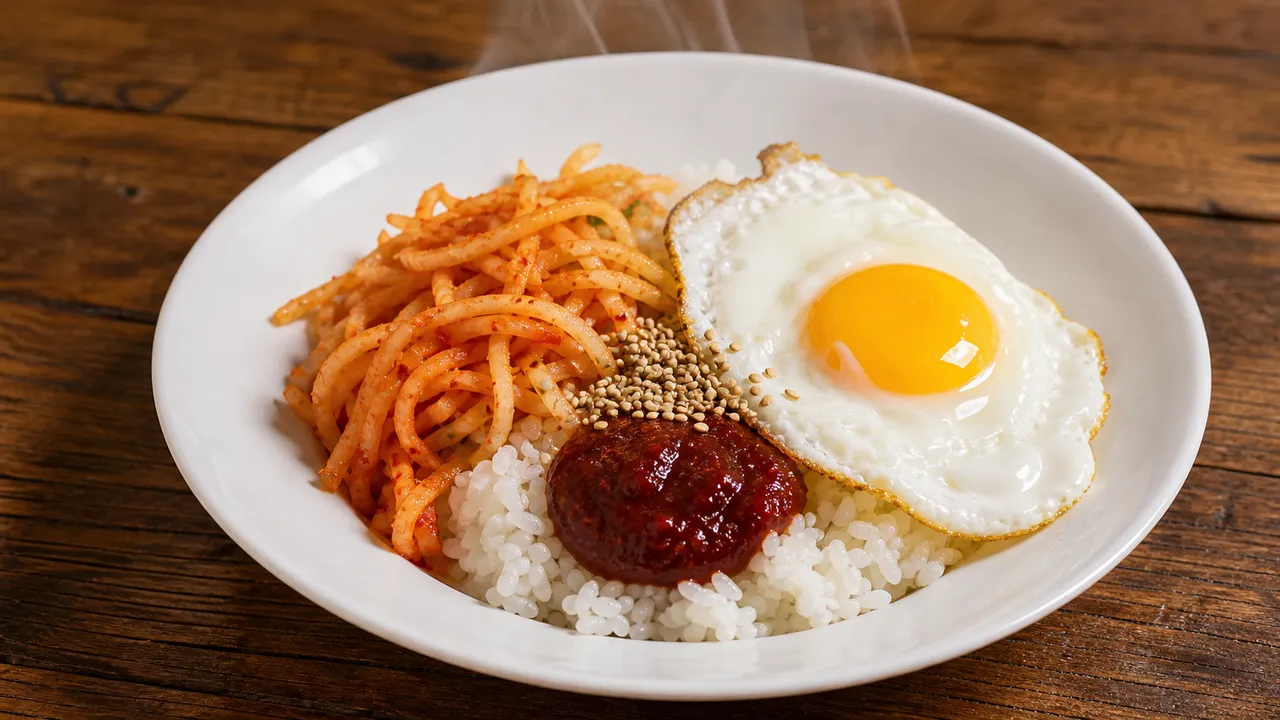
Super Easy Summer Radish Salad (Mu-saengchae) Bibimbap: A Qu
* 이미지는 AI가 생성한 참고 이미지로, 실제 조리 결과물과 다를 수 있습니다.
This is a super simple Mu-saengchae Bibimbap recipe, featuring crunchy and refreshing summer radish salad (mu-saengchae), gochujang (고추장), and a fried egg, all mixed with rice.
📝 Editor's Notes
This super easy mu-saengchae bibimbap comes together in just 15 minutes, combining crunchy and refreshing summer radish salad (mu-saengchae), fluffy rice, and a savory fried egg.
The sweet, sour, and spicy radish salad (mu-saengchae) mixed with a spoonful of gochujang (고추장) will surely bring back your appetite, even on hot summer days when you lack an appetite.
Anyone can easily make it with fresh radishes, allowing you to enjoy a healthy and delicious meal even on busy days.
🛒 Ingredient Tips
Look for radishes that are plump and firm towards the root, with shiny skin and few fine root hairs.
A heavy radish indicates high water content and freshness.
Summer radishes, in particular, tend to be less sweet and can have a stronger pungent taste than winter radishes, so it's best to cook them immediately after purchase or store them in the refrigerator.
Use fresh eggs for firm yolks and less fishiness.
Mixing both coarse and fine Korean chili powder (gochutgaru) creates a better balance of color and flavor.
🔄 Substitution Guide
If you don't have radish, you can julienne cucumbers or cabbage and season them like mu-saengchae to use in bibimbap.
Cucumbers will add a crisp texture, while cabbage will provide a sweeter taste.
However, the unique refreshing and slightly pungent flavor of radish might be diminished.
Instead of an egg, finely chopped tofu or chicken breast can be added to boost protein and offer a different flavor.
While you can use soy sauce-based seasoning or ssamjang (쌈장) instead of gochujang (고추장), keep in mind that it will result in a different flavor profile than the typical sweet and spicy taste of bibimbap.
If you don't have lemon syrup (cheong), green plum syrup (maesil-cheong), or ginger syrup (saenggang-cheong), sugar or oligosaccharide can be used to adjust the sweetness.
🥘 Ingredients
👨🍳 Cooking Points
First, it's crucial to julienne the radish thinly, not too thick.
This allows the seasoning to penetrate well and maintains a crisp texture.
You can easily make thin radish strips by thinly slicing with a peeler first, then julienning.
Second, adjusting the mu-saengchae seasoning by tasting it is key.
Summer radishes may be less sweet, so add sugar or green plum syrup (maesil-cheong) to your preference to supplement the sweetness.
It's important to adjust the seasoning with salt and fish sauce (aekjeot) little by little to suit your taste.
Third, cooking the fried egg sunny-side up (or over easy) so the yolk flows out is the secret to adding richness and creaminess to the bibimbap.
Heat cooking oil over medium-low heat, crack in the egg, and sprinkle with a pinch of salt.
👨🍳 Directions
Peel the radish thoroughly to remove any dirt.
Thinly slice the radish, then julienne it.
In a bowl, combine the julienned radish with salt, fish sauce (aekjeot), Korean chili powder (gochutgaru) (using both coarse and fine, or whatever you have), vinegar, and sugar. Mix well.
Optionally, add lemon syrup (cheong), green plum syrup (maesil-cheong), or ginger syrup (saenggang-cheong) and mix well.
Taste the radish salad (mu-saengchae) seasoning. If it lacks sweetness, add more sugar, or adjust the seasoning to your liking.
Heat a little cooking oil in a hot pan. Crack one egg into the pan, sprinkle with a pinch of salt, and fry it.
Place the cooked rice in a bowl. Top with the prepared radish salad (mu-saengchae), 1 tablespoon of gochujang (고추장), and the fried egg. Sprinkle toasted sesame seeds over it.
Mix all ingredients well with the rice and enjoy!
As you mix, if you find the radish salad (mu-saengchae) is not enough or you want more, add extra to your preference.
💡 Tips
You can use a mix of coarse and fine Korean chili powder (gochutgaru), or simply use whatever type you have at home.
You can add minced garlic to your liking to enhance the flavor of the radish salad (mu-saengchae).
Summer radishes can be less sweet, so it's important to taste and adjust the amount of sugar to suit your preference.
Adding various syrups (cheong) like lemon, green plum (maesil-cheong), or ginger (saenggang-cheong) can add unique flavors to the radish salad (mu-saengchae) (optional).
📦 Storage & Reuse
Prepared radish salad (mu-saengchae) can be stored in an airtight container in the refrigerator for 3-4 days.
However, as time passes, the radish may release water, so it's best to consume it as soon as possible.
If the bibimbap is already mixed, it's best to eat it immediately.
If there are leftovers, it's recommended to store them in the refrigerator and consume them by the next day.
To reheat, you can gently microwave it or warm it in a pan over low heat.
Leftover mu-saengchae can also be added to kimchi jjigae (김치찌개) or doenjang jjigae (된장찌개) for a refreshing flavor, or served as a side dish with stir-fried spicy pork (dwaeji-gogi-duru-chigi).
🥢 Who This Is For
This mu-saengchae bibimbap is highly recommended for anyone looking for a simple yet nutritious meal on a summer day when their appetite is low.
It's easy for even beginners or those living alone to make without failure, making it a stress-free dish to enjoy.
Pairing it with refreshing soybean sprout soup (kongnamul-guk) or seaweed soup (miyeok-guk) will make for an even more satisfying and balanced meal.
If you like spicy food, thinly sliced Cheongyang chili peppers (cheongyang-gochu) can be a delightful addition.
🔥 Nutrition Info
One serving of this mu-saengchae bibimbap is estimated to be approximately 400-500 kcal.
Carbohydrates will primarily come from the rice, providing about 60-70g.
Protein will be supplied by the egg and fish sauce (aekjeot), amounting to about 10-15g.
Fats, from cooking oil and egg yolk, will contribute around 10-15g.
Radishes are rich in Vitamin C and dietary fiber, aiding digestive health and boosting immunity.
Additionally, the diastase enzyme in radishes helps with digestion.
Gochujang (고추장), with its spicy flavor, contains capsaicin, which can also help boost metabolism.
💬 Frequently Asked Questions
- Q. What ingredients do I need for Super Easy Summer Radish Salad (Mu-saengchae) Bibimbap: A Quick and Crunchy Meal!?
- Main ingredients include Radish, Salt, Fish sauce (aekjeot), Korean chili powder (gochutgaru), Vinegar. Look for radishes that are plump and firm towards the root, with shiny skin and few fine root hairs. A heavy radish indicates high water content and freshness. Summer radishes, in particular, tend to be less sweet and can have a stronger pungent taste than winter radishes, so it's best to cook them immediately after purchase or store them in the refrigerator. Use fresh eggs for firm yolks and less fishiness. Mixing both coarse and fine Korean chili powder (gochutgaru) creates a better balance of color and flavor.
- Q. What are the key tips for making Super Easy Summer Radish Salad (Mu-saengchae) Bibimbap: A Quick and Crunchy Meal!?
- First, it's crucial to julienne the radish thinly, not too thick. This allows the seasoning to penetrate well and maintains a crisp texture. You can easily make thin radish strips by thinly slicing with a peeler first, then julienning. Second, adjusting the mu-saengchae seasoning by tasting it is key. Summer radishes may be less sweet, so add sugar or green plum syrup (maesil-cheong) to your preference to supplement the sweetness. It's important to adjust the seasoning with salt and fish sauce (aekjeot) little by little to suit your taste. Third, cooking the fried egg sunny-side up (or over easy) so the yolk flows out is the secret to adding richness and creaminess to the bibimbap. Heat cooking oil over medium-low heat, crack in the egg, and sprinkle with a pinch of salt.
- Q. How should I store leftover Super Easy Summer Radish Salad (Mu-saengchae) Bibimbap: A Quick and Crunchy Meal!?
- Prepared radish salad (mu-saengchae) can be stored in an airtight container in the refrigerator for 3-4 days. However, as time passes, the radish may release water, so it's best to consume it as soon as possible. If the bibimbap is already mixed, it's best to eat it immediately. If there are leftovers, it's recommended to store them in the refrigerator and consume them by the next day. To reheat, you can gently microwave it or warm it in a pan over low heat. Leftover mu-saengchae can also be added to kimchi jjigae (김치찌개) or doenjang jjigae (된장찌개) for a refreshing flavor, or served as a side dish with stir-fried spicy pork (dwaeji-gogi-duru-chigi).
- Q. How many calories are in Super Easy Summer Radish Salad (Mu-saengchae) Bibimbap: A Quick and Crunchy Meal!?
- One serving of this mu-saengchae bibimbap is estimated to be approximately 400-500 kcal. Carbohydrates will primarily come from the rice, providing about 60-70g. Protein will be supplied by the egg and fish sauce (aekjeot), amounting to about 10-15g. Fats, from cooking oil and egg yolk, will contribute around 10-15g. Radishes are rich in Vitamin C and dietary fiber, aiding digestive health and boosting immunity. Additionally, the diastase enzyme in radishes helps with digestion. Gochujang (고추장), with its spicy flavor, contains capsaicin, which can also help boost metabolism.
- Q. Can I substitute ingredients in Super Easy Summer Radish Salad (Mu-saengchae) Bibimbap: A Quick and Crunchy Meal!?
- If you don't have radish, you can julienne cucumbers or cabbage and season them like mu-saengchae to use in bibimbap. Cucumbers will add a crisp texture, while cabbage will provide a sweeter taste. However, the unique refreshing and slightly pungent flavor of radish might be diminished. Instead of an egg, finely chopped tofu or chicken breast can be added to boost protein and offer a different flavor. While you can use soy sauce-based seasoning or ssamjang (쌈장) instead of gochujang (고추장), keep in mind that it will result in a different flavor profile than the typical sweet and spicy taste of bibimbap. If you don't have lemon syrup (cheong), green plum syrup (maesil-cheong), or ginger syrup (saenggang-cheong), sugar or oligosaccharide can be used to adjust the sweetness.
💬 Comments
No comments yet. Be the first to comment!