
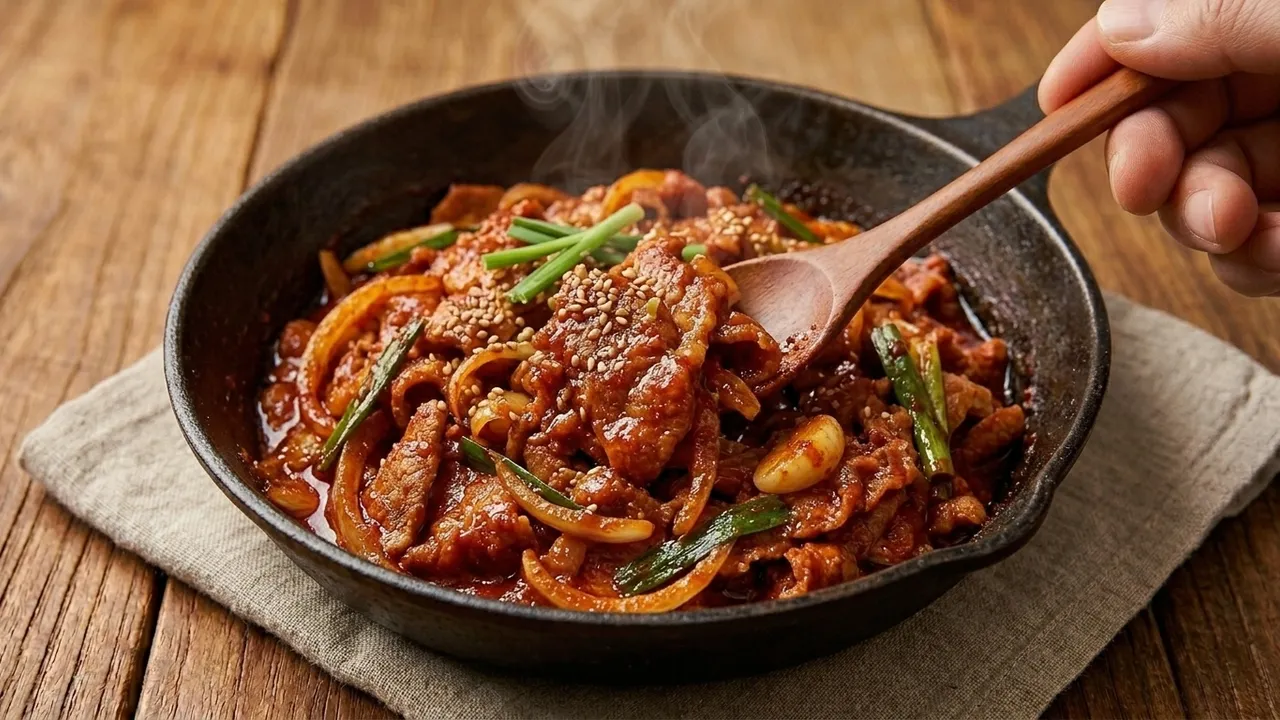
Eonam Seonsaeng's Easy Jeyuk-bokkeum (Spicy Pork Stir-fry)
* 이미지는 AI가 생성한 참고 이미지로, 실제 조리 결과물과 다를 수 있습니다.
An easy jeyuk-bokkeum (spicy pork stir-fry) recipe that recreates the taste of famous restaurants, simple enough for anyone, even those living alone, to make and enjoy.
📝 Editor's Notes
Eonam Seonsaeng's Easy Jeyuk-bokkeum (Spicy Pork Stir-fry) is a recipe designed to allow you to enjoy the deep flavors of famous restaurants at home without complex steps.
It features a sweet, sour, and intensely savory taste, with a base of sugar, soy sauce, and gochujang, enhanced by pear juice and vinegar.
The cooking method, especially stir-frying the meat first to achieve the Maillard reaction, delivers a deep, rich flavor that sets it apart from ordinary jeyuk-bokkeum.
With short cooking time and minimal dishwashing, it's an excellent choice for anyone seeking a hearty and delicious meal in a busy daily life, especially those dining alone.
It's a versatile dish that pairs wonderfully with rice or as a side dish for drinks, any time of the year.
🛒 Ingredient Tips
The key ingredients that determine the taste of this jeyuk-bokkeum (spicy pork stir-fry) are fresh pork shoulder and the harmony of the sauce.
For pork, choose pieces with a vibrant red color and a good balance of fat.
Removing blood is the most crucial step for eliminating gamey odors, so be sure to press firmly with paper towels.
The pear juice in the sauce tenderizes the meat and adds natural sweetness.
For bottled pear juice, choose a product that isn't overly sweet and has a high pear content for a cleaner taste.
Use a thick, not too watery, gochujang (고추장) for the sauce to cling well to the meat and develop a deeper flavor.
A good gochujang offers a deep fermented taste, so select a reliable brand.
🔄 Substitution Guide
If certain ingredients are hard to find or not preferred, try using substitutes.
Instead of pork shoulder (앞다리살), pork hind leg (뒷다리살) can be used for a leaner option with fewer calories.
Chicken thigh meat offers a tender texture, great for a dakgalbi (spicy stir-fried chicken) style jeyuk-bokkeum.
If you don't have pear juice, try using apple juice or the syrup from canned pineapple.
Fruit enzymes will tenderize the meat and add natural sweetness.
You can also add sugar or corn syrup and adjust consistency with water, but the tenderizing effect might not be as significant as with pear juice.
If replacing gochujang (고추장), increase the amount of gochugaru (고춧가루) and add a small amount of doenjang (된장) for a spicier jeyuk-bokkeum with a savory depth, though it may lack the unique richness and thick texture of gochujang.
🥘 Ingredients
👨🍳 Cooking Points
There are three key cooking points for this recipe.
First, thoroughly remove the blood from the pork!
Blood is the main culprit for gamey odors, so press firmly with paper towels to remove it.
Second, when making the sauce, add sugar, then soy sauce, then gochujang (고추장), and shake to mix.
This reduces dishwashing and helps the ingredients blend well.
Lastly, for the 'Maillard reaction,' when stir-frying the meat, place only the pork in a hot pan and let it sit for a moment without stirring.
This creates a browned crust on the meat's surface, developing a deep flavor.
If you stir from the beginning without this process, water may come out of the meat, resulting in a bland taste.
So, cook one side over high heat for 3-5 minutes before flipping.
👨🍳 Directions
Thoroughly pat dry 21 oz (600g) of pork shoulder or pork leg with a paper towel to remove all blood. (Blood is the main cause of gamey odor in meat.)
Cut the patted-dry pork into bite-sized pieces.
Prepare a sealed container (or a food storage container) to make the sauce. (This helps reduce dishwashing.)
First, add 2 tbsp of sugar to the prepared container.
Add 3 tbsp of soy sauce, pouring it fully over the sugar.
Add 3 heaping tbsp of gochujang (고추장), scooping it generously. (Do not level it off!)
Pour in an appropriate amount of pear juice to create the base of the sauce. (Pear juice provides moisture, tenderizes the meat, and adds fructose.)
Close the lid of the container and shake well to mix the sauce thoroughly.
Add 1 tbsp of minced garlic to the well-mixed sauce and mix thoroughly again.
Add the pre-cut pork to the sauce, spread it out evenly to prevent clumping, and mix well to marinate.
Add 2 tbsp of vinegar and mix again to ensure the meat and sauce are well combined.
Add 0.5 tbsp of sesame oil and mix lightly. (Be careful not to add too much.)
Slice the green onion diagonally and julienne the onion.
Gently place the sliced green onion and julienned onion on top of the marinated pork without mixing them in.
Sprinkle 1 pinch of salt over the vegetables to give them a slightly pickled effect. (This helps the vegetables stay crisp and prevents them from becoming soggy.)
Place only the pork into a hot pan and stir-fry. Do not stir the meat immediately; let it sit briefly to allow a browned crust to form. (This step is for the Maillard reaction.)
Once the surface of the pork is browned, stir to mix well and cook thoroughly.
When the pork is almost fully cooked, add the vegetables that were set aside.
Pour all the remaining sauce into the pan.
Cover the pan and cook over low heat for 3 minutes until the sauce is reduced and the dish is moist.
Finally, add the remaining 1 tbsp of minced garlic and mix well to enhance the flavor.
Finish by sprinkling a dash of black pepper.
💡 Tips
Removing blood from pork is essential to eliminate gamey odors and maintain a fresh taste.
When making the sauce, add ingredients in the order of sugar (powder) → soy sauce (liquid) → gochujang (고추장) (paste). This allows you to mix it cleanly with just one spoon.
Adding vinegar enhances the flavor with a pleasant acidity and acts as a natural preservative, extending the storage period.
By first placing only the pork in a hot pan and letting it sit without stirring, the bottom will sear, allowing the Maillard reaction to occur, which creates a deep, rich flavor.
📦 Storage & Reuse
Finished jeyuk-bokkeum can be stored in an airtight container in the refrigerator for 2-3 days.
To reheat, stir-fry it in a pan over low heat or microwave it.
It's a good idea to add a little water or broth when reheating to prevent the meat from drying out.
Leftover jeyuk-bokkeum is delicious served over rice as jeyuk-deopbap (spicy pork rice bowl) or used as an ingredient for fried rice.
If you have pre-marinated meat, it can be stored in the refrigerator for 1-2 days, or frozen for up to one month.
When freezing, portion it out.
Since vegetables change texture when frozen, it is recommended to freeze only the marinated meat and add vegetables just before cooking.
🥢 Who This Is For
This easy jeyuk-bokkeum (spicy pork stir-fry) is recommended for anyone looking for a hearty and delicious meal in a busy daily life.
It's especially easy for students living alone or beginner cooks to try and achieve successful results.
The spicy and sweet sauce combined with tender pork makes it a perfect side dish that the whole family will love.
Enjoy it generously over warm white rice as jeyuk-deopbap (spicy pork rice bowl), or with fresh ssam (wrap) vegetables like lettuce or perilla leaves for a richer meal.
Serving it with a refreshing kongnamul-guk (bean sprout soup) or gyeran-jjim (steamed egg) will complete a perfect Korean meal.
🔥 Nutrition Info
This jeyuk-bokkeum (spicy pork stir-fry), when calculated per serving (based on approximately 5.3 oz or 150g of pork), provides about 400-450 kcal.
The main ingredient, pork shoulder, contains approximately 30-35g of protein per serving, aiding in muscle maintenance and energy production.
You can expect about 20-25g of fat and 35-40g of carbohydrates from the sauce and vegetables.
Pork, in particular, is rich in iron and B vitamins (especially B1), effective in preventing anemia and reducing fatigue.
Onions and green onions add vitamin C and dietary fiber, helping to balance the nutrition.
However, as soy sauce and gochujang (고추장) are used, the sodium content may be somewhat high, so it is advisable to adjust the seasoning of other side dishes when eating with rice.
💬 Frequently Asked Questions
- Q. What ingredients do I need for Eonam Seonsaeng's Easy Jeyuk-bokkeum (Spicy Pork Stir-fry)?
- Main ingredients include Pork shoulder, Sugar, Soy sauce, Gochujang (고추장), Pear juice. The key ingredients that determine the taste of this jeyuk-bokkeum (spicy pork stir-fry) are fresh pork shoulder and the harmony of the sauce. For pork, choose pieces with a vibrant red color and a good balance of fat. Removing blood is the most crucial step for eliminating gamey odors, so be sure to press firmly with paper towels. The pear juice in the sauce tenderizes the meat and adds natural sweetness. For bottled pear juice, choose a product that isn't overly sweet and has a high pear content for a cleaner taste. Use a thick, not too watery, gochujang (고추장) for the sauce to cling well to the meat and develop a deeper flavor. A good gochujang offers a deep fermented taste, so select a reliable brand.
- Q. What are the key tips for making Eonam Seonsaeng's Easy Jeyuk-bokkeum (Spicy Pork Stir-fry)?
- There are three key cooking points for this recipe. First, thoroughly remove the blood from the pork! Blood is the main culprit for gamey odors, so press firmly with paper towels to remove it. Second, when making the sauce, add sugar, then soy sauce, then gochujang (고추장), and shake to mix. This reduces dishwashing and helps the ingredients blend well. Lastly, for the 'Maillard reaction,' when stir-frying the meat, place only the pork in a hot pan and let it sit for a moment without stirring. This creates a browned crust on the meat's surface, developing a deep flavor. If you stir from the beginning without this process, water may come out of the meat, resulting in a bland taste. So, cook one side over high heat for 3-5 minutes before flipping.
- Q. How should I store leftover Eonam Seonsaeng's Easy Jeyuk-bokkeum (Spicy Pork Stir-fry)?
- Finished jeyuk-bokkeum can be stored in an airtight container in the refrigerator for 2-3 days. To reheat, stir-fry it in a pan over low heat or microwave it. It's a good idea to add a little water or broth when reheating to prevent the meat from drying out. Leftover jeyuk-bokkeum is delicious served over rice as jeyuk-deopbap (spicy pork rice bowl) or used as an ingredient for fried rice. If you have pre-marinated meat, it can be stored in the refrigerator for 1-2 days, or frozen for up to one month. When freezing, portion it out. Since vegetables change texture when frozen, it is recommended to freeze only the marinated meat and add vegetables just before cooking.
- Q. How many calories are in Eonam Seonsaeng's Easy Jeyuk-bokkeum (Spicy Pork Stir-fry)?
- This jeyuk-bokkeum (spicy pork stir-fry), when calculated per serving (based on approximately 5.3 oz or 150g of pork), provides about 400-450 kcal. The main ingredient, pork shoulder, contains approximately 30-35g of protein per serving, aiding in muscle maintenance and energy production. You can expect about 20-25g of fat and 35-40g of carbohydrates from the sauce and vegetables. Pork, in particular, is rich in iron and B vitamins (especially B1), effective in preventing anemia and reducing fatigue. Onions and green onions add vitamin C and dietary fiber, helping to balance the nutrition. However, as soy sauce and gochujang (고추장) are used, the sodium content may be somewhat high, so it is advisable to adjust the seasoning of other side dishes when eating with rice.
- Q. Can I substitute ingredients in Eonam Seonsaeng's Easy Jeyuk-bokkeum (Spicy Pork Stir-fry)?
- If certain ingredients are hard to find or not preferred, try using substitutes. Instead of pork shoulder (앞다리살), pork hind leg (뒷다리살) can be used for a leaner option with fewer calories. Chicken thigh meat offers a tender texture, great for a dakgalbi (spicy stir-fried chicken) style jeyuk-bokkeum. If you don't have pear juice, try using apple juice or the syrup from canned pineapple. Fruit enzymes will tenderize the meat and add natural sweetness. You can also add sugar or corn syrup and adjust consistency with water, but the tenderizing effect might not be as significant as with pear juice. If replacing gochujang (고추장), increase the amount of gochugaru (고춧가루) and add a small amount of doenjang (된장) for a spicier jeyuk-bokkeum with a savory depth, though it may lack the unique richness and thick texture of gochujang.
💬 Comments
No comments yet. Be the first to comment!