
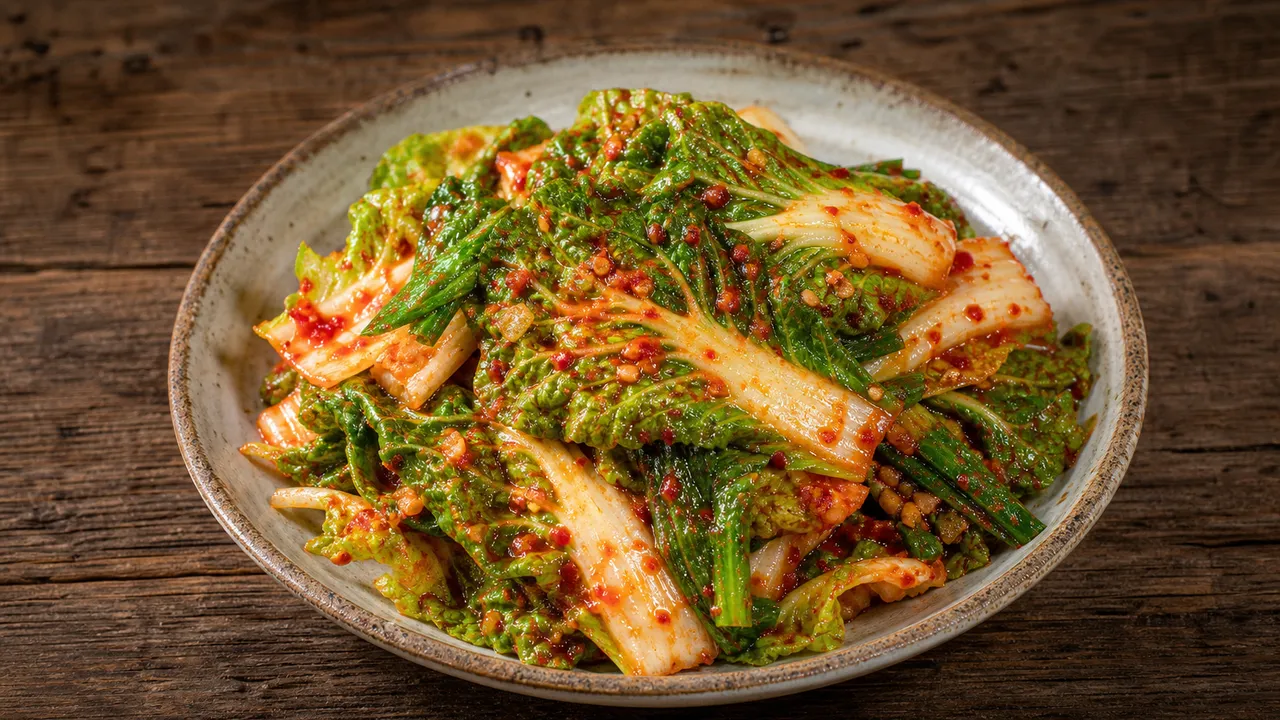
Spring Cabbage (Bomdong) Geotjeori and Bibimbap Recipe
* 이미지는 AI가 생성한 참고 이미지로, 실제 조리 결과물과 다를 수 있습니다.
This recipe features seasonal Spring Cabbage (Bomdong) Geotjeori, fresh-cooked rice, and a fried egg, combined into a delicious bibimbap, a specialty born from Chef Kim Dae-seok's 35 years of culinary expertise.
📋 2 recipes — Select to view
This is a seasonal Bomdong (봄동) Geotjeori (Fresh Kimchi) recipe, featuring Chef Kim Dae-seok's 35 years of culinary expertise.
📝 Editor's Notes
The Bomdong Bibimbap we're introducing today is a simple yet deeply flavorful one-bowl meal, featuring freshly cooked warm rice, seasonal bomdong (봄동) geotjeori, and a soft fried egg.
Its characteristic appeal lies in the refreshing crispness of fresh bomdong (봄동), fragrant sesame oil, and savory toasted sesame seeds, all coming together to whet your appetite.
The cooking process is very simple, making it easy for even beginner cooks to prepare and enjoy a delicious meal without special skills.
Especially using bomdong (봄동) which is at its best in spring, this dish allows you to fully enjoy the freshness of the season.
It's a healthy and satisfying option, perfect for busy daily life.
🛒 Ingredient Tips
When choosing bomdong (봄동), select cabbage with leaves that are neither too large nor too small, have a vibrant green color, and are firm and not wilted.
Slightly open leaves are often nuttier and more tender than tightly closed ones.
It's in season and best tasting from February to March, so purchasing during this period is recommended.
For eggs, checking freshness is important: look for clean shells with a slightly rough texture.
A fresh egg will sink to the bottom and lie on its side when placed in water.
Using high-quality domestic sesame oil will significantly enhance the flavor of your bibimbap.
Freshly pressed sesame oil would be even better.
🔄 Substitution Guide
If bomdong (봄동) is difficult to find, you can substitute it with young napa cabbage or eolgalibaechu (얼갈이배추, young napa cabbage).
However, the taste might be slightly more bitter or the texture softer compared to bomdong (봄동)'s unique sweet and crisp flavor.
Nevertheless, it will still be delicious.
Instead of a fried egg, you can use scrambled eggs or boiled eggs.
Scrambled eggs will offer a softer texture, while boiled eggs will add a plainer flavor.
Choose according to your preference.
If you don't have sesame oil, you can substitute it with perilla oil (들기름), but please note that perilla oil has a distinct, stronger aroma different from the nuttiness of sesame oil.
Understanding the characteristics of each ingredient allows you to enjoy a wider variety of flavors.
🥘 Ingredients
👨🍳 Cooking Points
There are two crucial cooking points for this Bomdong Bibimbap.
First, making a perfect fried egg.
Lightly oil a pan and crack an egg into it over medium-low heat.
Once the egg white is fully cooked and the edges start to crisp, turn off the heat and let the residual heat cook the yolk to your desired doneness.
The key is to cook the yolk runny and moist, as overcooked yolks can be dry.
Second, be sure to crush the toasted sesame seeds by hand before adding them.
Rubbing the sesame seeds between your palms releases their oils, intensifying their nutty aroma significantly.
This small step is a secret to greatly enhancing the bibimbap's flavor, so don't forget it.
👨🍳 Directions
Take 1 head (9.2 oz) of bomdong (봄동) cabbage, turn it upside down, cut it in half, then cut each half in half again, and trim off the root ends.
For overly thick bomdong (봄동) leaves, cut them in half lengthwise to prepare.
Submerge the prepared bomdong (봄동) in lukewarm water, gently shake off any dirt, and wash 3 times.
Thoroughly shake off excess water from the washed bomdong (봄동) and place it in a stainless steel bowl.
To the bowl with bomdong (봄동), add 3 lightly heaped tablespoons of gochugaru (고춧가루), 1 tablespoon of minced garlic, 1 tablespoon of kkanari-aekjeot (까나리액젓), 2 tablespoons of soy sauce, 1 tablespoon of maesil-cheong (매실청), and 1/2 tablespoon of corn syrup.
Gently mix the ingredients to ensure the seasoning is evenly distributed.
Sprinkle 1 tablespoon of toasted sesame seeds over the mixture and lightly toss. Your bomdong (봄동) geotjeori is now complete.
💡 Tips
When washing bomdong (봄동), using lukewarm water prevents your hands from getting cold and helps to easily remove dirt.
The yellowish-brown parts at the tips of the bomdong (봄동) leaves, which have received abundant sunlight, are sweeter and nuttier, making them even more delicious.
📦 Storage & Reuse
The finished Bomdong Bibimbap is best enjoyed immediately.
This is because, due to the nature of bibimbap, if all ingredients are mixed at once, the crispness of the bomdong (봄동) can diminish.
If you have leftover ingredients, it's recommended to store the geotjeori, rice, and fried egg separately in airtight containers in the refrigerator.
The geotjeori can be stored for 2-3 days, rice for 1-2 days, and the fried egg should be consumed within a day.
When reheating, warm the rice, then add the geotjeori and fried egg and mix them fresh to enjoy the same vibrant taste as the first time.
Leftover bomdong (봄동) geotjeori can also be a delicious addition to kimchi jjigae (김치찌개) the next day, or stir-fried with pork.
🥢 Who This Is For
This Bomdong Bibimbap is recommended for those looking for a light and healthy meal, especially when you've lost your appetite in spring.
It's excellent as a solo meal or a simple lunch.
It's also a dish that the whole family can enjoy without any fuss.
For side dishes, we recommend refreshing kongnamul-guk (콩나물국, soybean sprout soup) or miyeok-guk (미역국, seaweed soup).
Enjoying it with a warm soup will make for a more satisfying and harmonious meal.
It also pairs well with kimchi jjigae (김치찌개) or doenjang jjigae (된장찌개), so choose according to your preference.
🔥 Nutrition Info
One serving of this Bomdong Bibimbap is estimated to be around 400-500 kcal, depending on the amount of rice.
You can expect to get approximately 6g of protein from one egg, about 15-20g of fat from the egg and sesame oil, and about 70-90g of carbohydrates from the rice.
Bomdong (봄동) is rich in various vitamins and minerals such as vitamins A, C, calcium, and potassium, which help boost immunity and relieve fatigue.
Vitamin C, in particular, is beneficial for preventing spring fatigue, and its rich dietary fiber is good for gut health.
The unsaturated fatty acids in sesame oil can help improve cholesterol levels.
Overall, it can be considered a well-balanced and healthy meal.
💬 Frequently Asked Questions
- Q. What ingredients do I need for Spring Cabbage (Bomdong) Geotjeori and Bibimbap?
- Main ingredients include Bomdong (봄동), gochugaru (고춧가루), minced garlic, maesil-cheong (매실청), kkaenari-aekjeot (까나리액젓). For this recipe, selecting fresh Bomdong (봄동) is paramount. Choose heads that are not too large or thick, about palm-sized, with greenish outer leaves and slightly yellowish inner leaves. Bomdong with slightly yellowed tips is even better, as it indicates ample sunlight exposure, leading to a sweeter and nuttier flavor. Carefully check that the stem is firm and shiny, without any wilting or soft spots, to ensure you pick delicious Bomdong every time. Bomdong is typically in season from December to March, so enjoy the freshest and most nutritious Bomdong during this period.
- Q. What are the key tips for making Spring Cabbage (Bomdong) Geotjeori and Bibimbap?
- There are two important points for making delicious Bomdong (봄동) Geotjeori. First, use lukewarm water when washing the Bomdong. This not only keeps your hands from getting cold but also helps to gently remove dirt and dust, ensuring a thorough cleaning. Avoid scrubbing too hard; wash it by gently shaking. Second, the key when mixing the seasoning is to be 'gentle'! Bomdong (봄동) is tender, and if mixed too vigorously, it can develop a raw grassy smell, wilt, and lose its crisp texture. It's crucial to mix the seasoning evenly by lightly tossing or turning it over. Remember these two tips, and you'll achieve perfect geotjeori every time.
- Q. How should I store leftover Spring Cabbage (Bomdong) Geotjeori and Bibimbap?
- Bomdong (봄동) Geotjeori is best enjoyed immediately after preparation. However, if there are leftovers, store them in an airtight container in the refrigerator for 2-3 days. Please note that over time, the leaves may wilt, and the crispness might diminish. Geotjeori is typically served cold without reheating. Leftover geotjeori can be used in fried rice or added to kimchi jjigae (김치찌개) to enhance its sour flavor. Unused fresh Bomdong (봄동) can be wrapped in newspaper and stored in the refrigerator's vegetable drawer to keep it fresh longer.
- Q. How many calories are in Spring Cabbage (Bomdong) Geotjeori and Bibimbap?
- One serving of Chef Kim Dae-seok's Bomdong (봄동) Geotjeori Bibimbap is estimated to be around 450-550 kcal. This is based on approximately 300 kcal for one bowl of rice (about 200g), 80 kcal for one fried egg, and 70-120 kcal for the Bomdong (봄동) Geotjeori. You can expect to consume about 80-100g of carbohydrates, 10-15g of protein from the egg and Bomdong, and 5-7g of fat from the egg. Bomdong (봄동) is especially rich in Vitamin C and beta-carotene, which help boost immunity and provide antioxidant effects. It's also high in dietary fiber, benefiting gut health. The sodium content may be a bit high due to the fish sauce and soy sauce, so it's advisable to adjust consumption accordingly.
- Q. Can I substitute ingredients in Spring Cabbage (Bomdong) Geotjeori and Bibimbap?
- If Bomdong (봄동) is difficult to find, you can make geotjeori with napa cabbage or lettuce. For napa cabbage, it's best to lightly salt it before use. Lettuce can be mixed directly, but its texture might be softer than Bomdong (봄동). You can substitute kkaenari-aekjeot (까나리액젓) with myeolchi-aekjeot (멸치액젓) (anchovy fish sauce); there isn't a significant taste difference, but myeolchi-aekjeot might offer a richer umami flavor. If you don't have maesil-cheong (매실청), you can substitute it with sugar or oligo-dang (올리고당) (oligosaccharide syrup), though the unique aroma and subtle sweetness of maesil-cheong might be reduced. Using oligo-dang instead of mulyeot (물엿) will provide similar sweetness, but the glaze might be less prominent.
💬 Comments
No comments yet. Be the first to comment!