
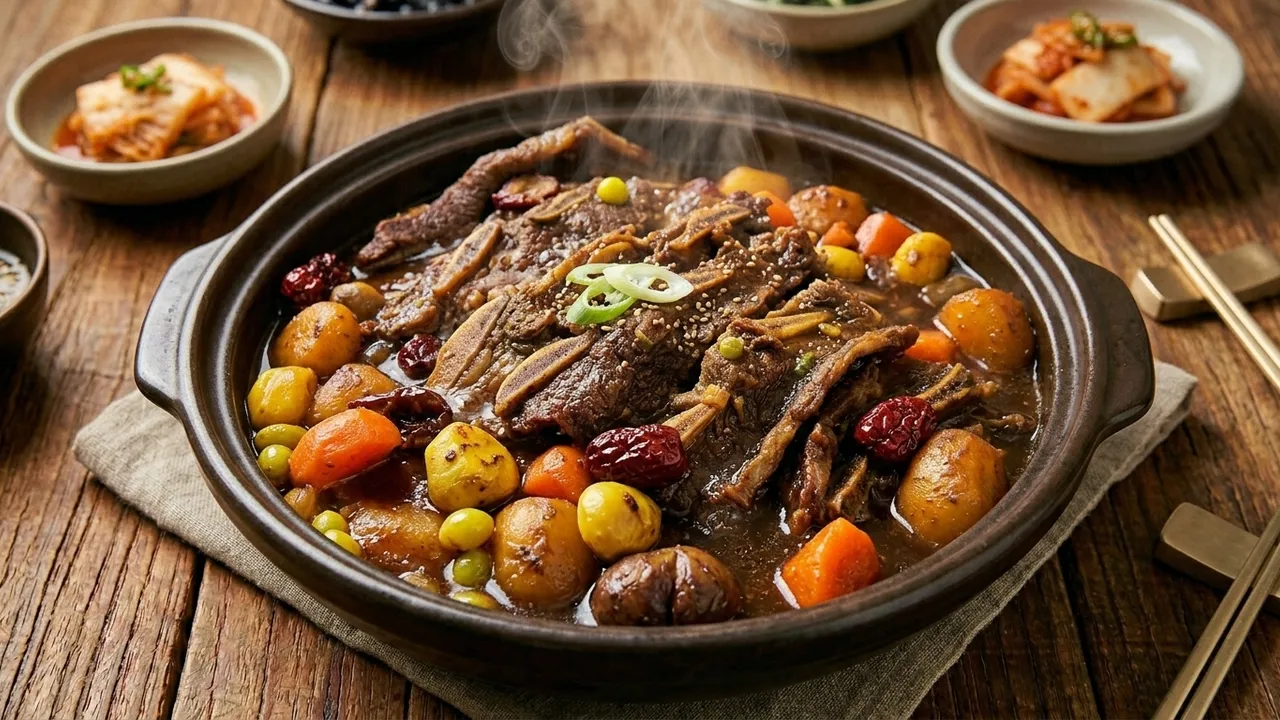
Highly Praised Large Batch LA Galbi-jjim Recipe
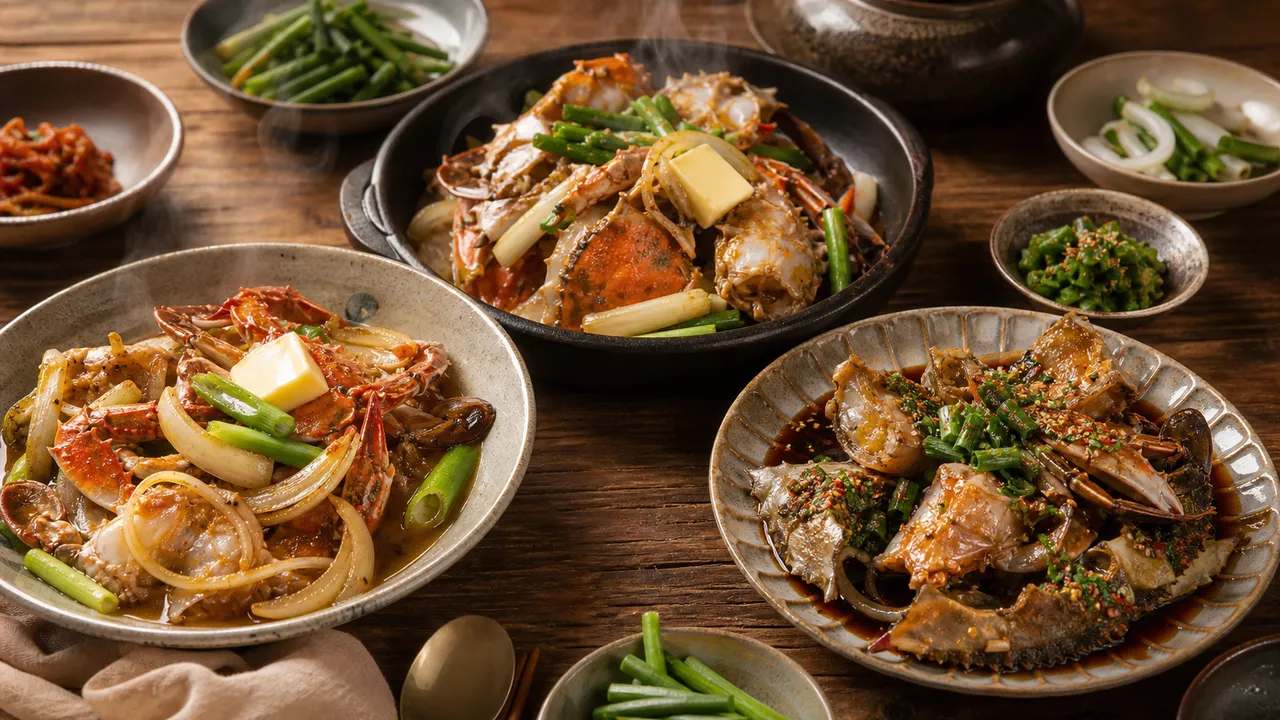
* 이미지는 AI가 생성한 참고 이미지로, 실제 조리 결과물과 다를 수 있습니다.
This is a large-batch LA galbi-jjim recipe that the whole family can generously enjoy, featuring tender meat that easily falls off the bone and is deeply infused with savory-sweet seasoning.
📝 Editor's Notes
This 'Highly Praised Large Batch LA Galbi-jjim' recipe is designed for generous servings, perfect for the whole family.
It boasts tender meat infused with a perfectly balanced sweet and savory seasoning.
The use of lemon-lime soda for blood removal and tenderization is a key step that elevates the meat's flavor and texture.
This impressive main dish is sure to earn compliments at special occasions like holidays, gatherings, or large family meals.
While the cooking process might be lengthy and involve multiple steps, the rich and deep flavor it delivers is well worth the effort.
🛒 Ingredient Tips
When choosing LA galbi (LA 갈비), look for fresh, glossy red meat with even marbling.
Check that there isn't too much blood pooled around the bone area.
Opt for cuts with a moderate thickness rather than very thin ones, as this ensures the meat remains tender and has a good bite after stewing.
For the Asian pear, select one that is large, heavy, and has smooth, unblemished skin for abundant juice and sweetness.
Fresh onions should be firm, have clean peels, and a glossy appearance.
Remember that fresh ingredients are the first step to a delicious galbi-jjim.
🔄 Substitution Guide
Instead of LA galbi (LA 갈비), you can use beef short ribs for stewing or pork ribs.
Beef short ribs may require longer cooking times, while pork ribs will have a different flavor profile, altering the taste of the seasoning.
Lemon-lime soda can be substituted with carbonated water with a little sugar, or kiwi/pineapple juice.
However, kiwi and pineapple have strong tenderizing effects, so you must control the soaking time to within 30 minutes to prevent the meat from becoming too mushy.
Store-bought concentrated pear and onion juices can be used as a substitute for fresh juices, but they might lack the depth of flavor of freshly squeezed juice.
If you blend the whole fruit, the broth may become thick, so for a clear broth, we recommend using only the extracted juice.
🥘 Ingredients
👨🍳 Cooking Points
The most crucial point in this recipe is the 'blood removal and tenderization using lemon-lime soda.' Soaking the thawed galbi in 12.7 cups of lemon-lime soda for 20-30 minutes will thoroughly remove blood and make the meat tender.
It's important NOT to rinse the galbi with water after soaking; simply drain it in a colander to retain the tenderizing effect.
Additionally, using only 'Asian pear juice and onion juice' in the seasoning, rather than the fruit pulp, is key.
The pulp can thicken the broth, so for a cleaner taste, stick to the juices.
Finally, marinating the galbi for at least 12 hours in the refrigerator is essential for the seasoning to penetrate deeply, resulting in the best flavor.
Keeping these three core points in mind will help you make a delicious galbi-jjim without fail.
👨🍳 Directions
Place 9.9 lbs of frozen LA galbi (LA 갈비) at room temperature (based on winter conditions) for 7-8 hours to fully thaw and allow blood to drain.
Gently rub and wash the thawed galbi, focusing on the bone areas, under cold running water to thoroughly remove bone fragments and any remaining blood. Lightly rinse once more and drain.
Place the washed galbi in a container, pour in 12.7 cups of lemon-lime soda, and let it soak for at least 20 to 30 minutes to draw out additional blood and tenderize the meat.
Do not rinse the galbi after soaking in lemon-lime soda. Instead, place it in a colander to continue draining any remaining blood while you prepare the seasoning.
Cut 1 Asian pear (700g) into pieces suitable for a blender. Add 0.4 cup of water and blend until as smooth as possible.
Place the blended pear in a cheesecloth and squeeze firmly to extract only the juice. Discard the pulp. Lightly rinse the used cheesecloth and set aside.
Place 1 medium-sized onion (380g) in a blender, add 0.4 cup of water, and blend until smooth.
Place the blended onion in the rinsed cheesecloth and squeeze firmly to extract only the onion juice (onion juice can be slippery and difficult to squeeze).
In a large bowl, combine 3 cups Asian pear juice, 2 cups onion juice, 1.3 cups soy sauce, 6 tbsp brown sugar, 1.5 cups cheongju (청주), 3 tbsp minced garlic, 1 tsp black pepper, 3 tbsp sesame oil, 3 cups water, and 1 cup chopped green onions. Stir well until the sugar is completely dissolved to make the seasoning sauce.
Arrange half of the galbi neatly in a container, then pour about half of the seasoning sauce over it and mix thoroughly.
Add the remaining galbi, pour in the rest of the seasoning sauce, and mix well again to ensure everything is evenly coated.
Marinate in the refrigerator for at least 12 hours. This tenderizes the meat and allows the seasoning to penetrate deeply, resulting in a more flavorful dish.
Transfer the marinated galbi to a large steamer or pot. Bring it to a rolling boil over high heat with the lid open to eliminate any gamey odor.
Skim off any foam and excess oil that rises to the surface. Boil vigorously over high heat for about 3 minutes to let out steam completely.
After 3 minutes, partially cover the pot with the lid, reduce heat to medium, and simmer for 20 minutes.
After 20 minutes, open the lid, skim off any remaining oil floating on the surface of the broth, and stir in 5 tbsp of honey.
Add the Korean radish, carved into chestnut shapes, first. Cover the pot and simmer over medium heat for another 10 minutes to cook the radish.
Add the remaining garnishes (carrots, chestnuts, pitted jujubes, ginkgo nuts). Taste the broth and meat, then adjust seasoning with honey or soy sauce as needed.
Check the tenderness of the meat. If it needs to be cooked longer, add more time. Finally, cover the pot and simmer over medium heat for an additional 10 minutes.
Turn off the heat while there is still a generous amount of broth. If allowed to cool in a cool place like a balcony, the solidified white fat on top can be easily removed. If serving immediately, reduce the broth over high heat until desired consistency.
💡 Tips
Frozen LA galbi (LA 갈비) should be thawed sufficiently at room temperature for 7-8 hours to ensure proper blood drainage and tender meat (based on winter conditions).
Soaking in lemon-lime soda not only helps remove blood but also tenderizes the meat, making it even softer. After soaking, do not rinse with water; simply drain in a colander to continue removing blood.
Asian pear juice and onion juice in the seasoning are essential for tenderizing the meat. Using only the juice is recommended as the fruit pulp can thicken the broth.
Using brown sugar in the seasoning adds a subtle sweetness and deeper flavor compared to white sugar. Adding cheongju (청주) helps remove gamey odors and creates a more refined taste (can be substituted with charyeju (차례주) or chungju (청하)).
The meat must be marinated for at least 12 hours to allow the seasoning to deeply penetrate, making it even more delicious.
When first boiling the galbi-jjim, cook with the lid open to eliminate any gamey odor from the meat. Skim off only a small amount of foam and oil that rises (removing too much can diminish the flavor of the meat).
Korean radish and carrots are good garnishes for color and taste; chestnuts, jujubes, and ginkgo nuts can be added according to preference. Carving the radish and carrots into chestnut shapes and pitting the jujubes makes them easier to eat and more visually appealing.
Adjust the sweetness or saltiness of the broth with honey or soy sauce according to your taste. Cooking time can be extended depending on the desired tenderness of the meat.
If eating leftover galbi-jjim the next day, turn off the heat while there's plenty of broth and let it cool. The solidified white fat on top can then be easily removed, allowing you to enjoy a clean broth.
🥢 Who This Is For
This large-batch LA galbi-jjim is a standout dish for holidays, family events, or housewarming parties when you're hosting many guests.
Its universally appealing sweet and savory flavor will be a hit with everyone, from children to seniors.
Served with warm white rice, you might not need any other side dishes, but pairing it with refreshing dongchimi (동치미), crunchy geotjeori (겉절이), or savory japchae (잡채) will create an even more abundant meal.
🔥 Nutrition Info
This large-batch LA galbi-jjim, prepared for a big family, is estimated to contain approximately 850-950 kcal per serving.
Based on 9.9 lbs of LA galbi (LA 갈비), each serving provides about 60g of protein from the meat itself, along with approximately 45-55g of fat, making it a hearty meal.
Carbohydrates from sugar, honey, and pear juice contribute about 30-40g, serving as an energy source.
Beef is also rich in B vitamins, which are good for fatigue recovery, and iron, essential for preventing anemia.
While Asian pear and onion juices aid digestion and provide vitamins and minerals, the generous seasoning can result in high sodium content.
Serving it with vegetable side dishes will help create a more balanced meal.
💬 Frequently Asked Questions
- Q. What ingredients do I need for Highly Praised Large Batch LA Galbi-jjim?
- Main ingredients include LA galbi (LA 갈비), Lemon-lime soda, Chopped green onions, Toasted sesame seeds, Asian pear (approx. 700g). When choosing LA galbi (LA 갈비), look for fresh, glossy red meat with even marbling. Check that there isn't too much blood pooled around the bone area. Opt for cuts with a moderate thickness rather than very thin ones, as this ensures the meat remains tender and has a good bite after stewing. For the Asian pear, select one that is large, heavy, and has smooth, unblemished skin for abundant juice and sweetness. Fresh onions should be firm, have clean peels, and a glossy appearance. Remember that fresh ingredients are the first step to a delicious galbi-jjim.
- Q. What are the key tips for making Highly Praised Large Batch LA Galbi-jjim?
- The most crucial point in this recipe is the 'blood removal and tenderization using lemon-lime soda.' Soaking the thawed galbi in 12.7 cups of lemon-lime soda for 20-30 minutes will thoroughly remove blood and make the meat tender. It's important NOT to rinse the galbi with water after soaking; simply drain it in a colander to retain the tenderizing effect. Additionally, using only 'Asian pear juice and onion juice' in the seasoning, rather than the fruit pulp, is key. The pulp can thicken the broth, so for a cleaner taste, stick to the juices. Finally, marinating the galbi for at least 12 hours in the refrigerator is essential for the seasoning to penetrate deeply, resulting in the best flavor. Keeping these three core points in mind will help you make a delicious galbi-jjim without fail.
- Q. How many calories are in Highly Praised Large Batch LA Galbi-jjim?
- This large-batch LA galbi-jjim, prepared for a big family, is estimated to contain approximately 850-950 kcal per serving. Based on 9.9 lbs of LA galbi (LA 갈비), each serving provides about 60g of protein from the meat itself, along with approximately 45-55g of fat, making it a hearty meal. Carbohydrates from sugar, honey, and pear juice contribute about 30-40g, serving as an energy source. Beef is also rich in B vitamins, which are good for fatigue recovery, and iron, essential for preventing anemia. While Asian pear and onion juices aid digestion and provide vitamins and minerals, the generous seasoning can result in high sodium content. Serving it with vegetable side dishes will help create a more balanced meal.
- Q. Can I substitute ingredients in Highly Praised Large Batch LA Galbi-jjim?
- Instead of LA galbi (LA 갈비), you can use beef short ribs for stewing or pork ribs. Beef short ribs may require longer cooking times, while pork ribs will have a different flavor profile, altering the taste of the seasoning. Lemon-lime soda can be substituted with carbonated water with a little sugar, or kiwi/pineapple juice. However, kiwi and pineapple have strong tenderizing effects, so you must control the soaking time to within 30 minutes to prevent the meat from becoming too mushy. Store-bought concentrated pear and onion juices can be used as a substitute for fresh juices, but they might lack the depth of flavor of freshly squeezed juice. If you blend the whole fruit, the broth may become thick, so for a clear broth, we recommend using only the extracted juice.
💬 Comments
No comments yet. Be the first to comment!