
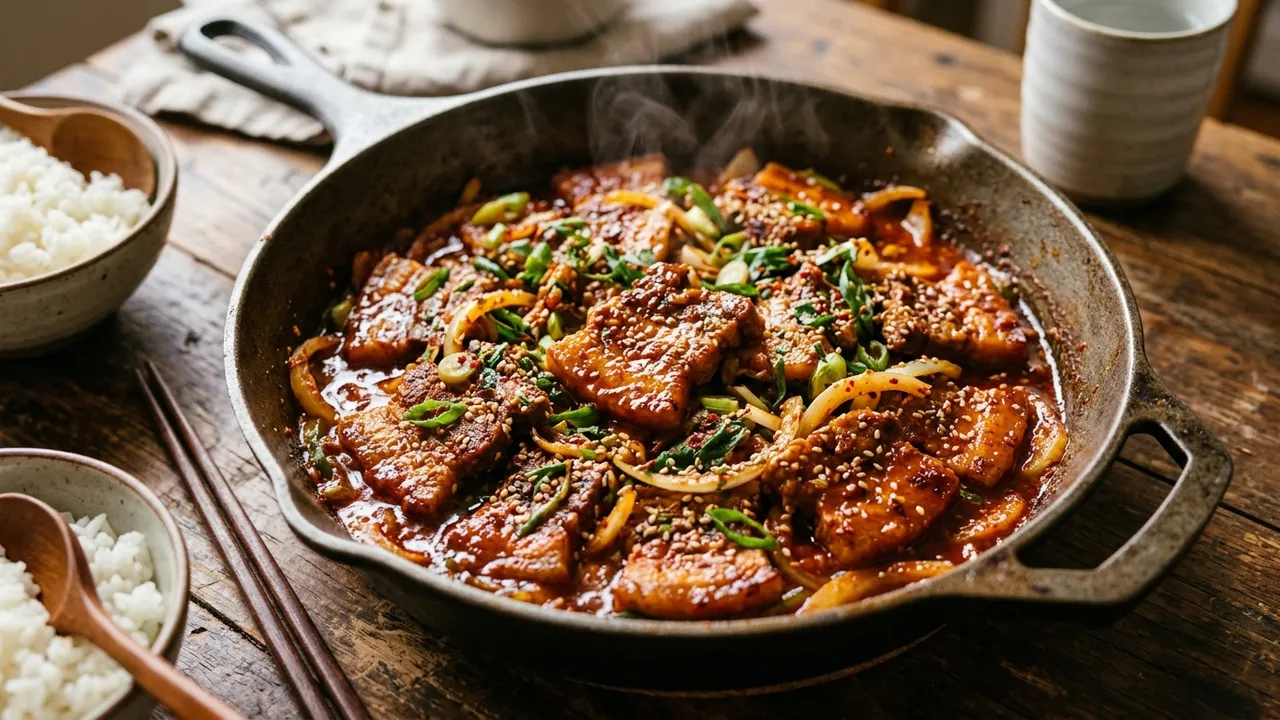
Chef Kim Dae-seok's Jeyuk Bokkeum Recipe
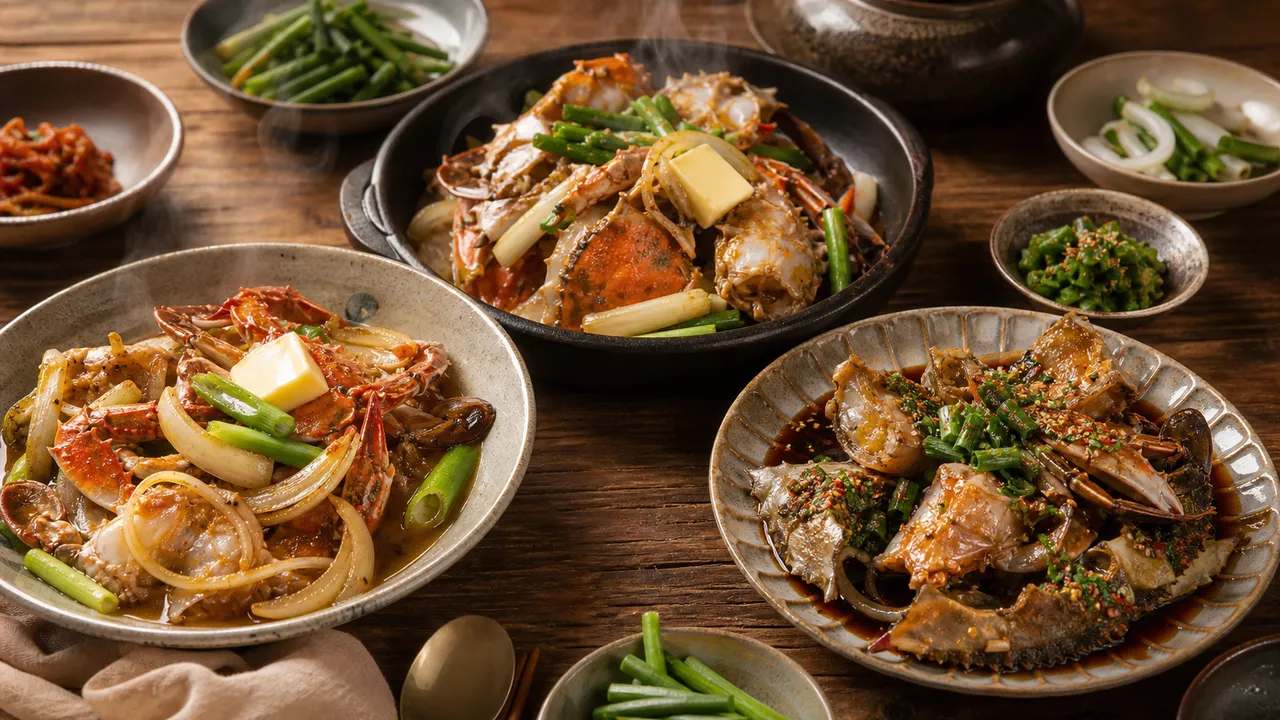
* 이미지는 AI가 생성한 참고 이미지로, 실제 조리 결과물과 다를 수 있습니다.
This Jeyuk Bokkeum (제육볶음) recipe by Chef Kim Dae-seok, featuring his 35 years of expertise, results in a dish that is wonderfully tender, free of gamey flavors, and exceptionally savory.
📝 Editor's Notes
This Jeyuk Bokkeum (제육볶음) recipe from Chef Kim Dae-seok, infused with his 35 years of expertise, delivers wonderfully tender meat free of gamey flavors and a deeply savory taste.
A key feature is the use of unrefined sugar and mirin for marinating the pork, and a small amount of doenjang (된장) in the sauce to enhance its depth of flavor.
The spicy, sweet, and savory combination is so irresistible, it's a true "rice thief." The cooking process is not complicated, making it easy for beginner cooks to try.
It's an excellent dish for a hearty meal, entertaining guests, or even for camping.
While delicious any time of year, it's especially recommended on days when you need a robust and energizing meal.
🛒 Ingredient Tips
For this Jeyuk Bokkeum (제육볶음), it's important to choose pork shoulder butt that is bright pink with a good balance of fat and lean meat.
Slightly thicker slices are better for a satisfying chew.
Avoid meat that has accumulated blood or appears dull in color, as this indicates reduced freshness.
For Cheongyang chili peppers (청양고추), select ones with fresh, green stems, a glossy appearance, and a firm texture to add fresh spiciness.
Lastly, the doenjang (된장) in the sauce is the hidden champion that makes the umami flavor of Jeyuk Bokkeum (제육볶음) truly explode.
Even a small amount of savory doenjang, rather than an overly salty one, can dramatically enhance the depth of flavor.
🔄 Substitution Guide
If you wish to use a cut other than pork shoulder butt, you can substitute it with pork belly or pork neck.
Pork belly and pork neck have a higher fat content than pork shoulder butt, offering a more tender and rich flavor, but keep in mind that the calorie count will be higher.
If you prefer a leaner and more economical cut, you can use pork hind leg, but it might become dry, so it's best to add a little more water during cooking to ensure it stays moist and prevent the sauce from burning.
If you don't have rice syrup (조청쌀엿), you can substitute it with corn syrup or oligo syrup (올리고당), which will provide similar sweetness and shine.
If using sugar as a substitute, reduce the amount to 1/2-2/3 to avoid excessive sweetness, though the gloss might be slightly less.
If the spiciness of Cheongyang chili pepper (청양고추) is too much, you can substitute it with Kkari-gochu (꽈리고추) or red chili peppers for color and a subtle aroma, or even bell peppers for a crunchy and sweet flavor.
🥘 Ingredients
👨🍳 Cooking Points
The first key to delicious Jeyuk Bokkeum (제육볶음) is marinating the meat.
By kneading 2 pinches of unrefined sugar and 1 tbsp of mirin into the pork shoulder butt and letting it rest for a moment, you can eliminate gamey odors and achieve a tender texture.
The second point is the order of cooking: first, stir-fry the pork in a pan with cooking oil over medium-high heat for about 3-4 minutes until golden brown to lock in the juices and enhance the flavor.
Then, reduce the heat before adding the sauce, which prevents the sauce from burning and allows it to penetrate deeply into the meat.
Finally, 1/3 tbsp of doenjang (된장) is the hidden secret to this recipe's umami.
Be sure to use only a small amount, as too much will overpower the dish with a strong doenjang flavor.
Remember to add the onion and green onion only when the sauce has almost fully coated the meat to preserve their crisp texture.
👨🍳 Directions
In a pan, add 10.6 oz (300g) of pork shoulder butt. Add 2 pinches of unrefined sugar and 1 tbsp of mirin, mix well to marinate, then set aside for a moment.
Cut 1/4 onion into appropriate sizes, slice 1/2 stalk of green onion diagonally, and thinly slice 1 Cheongyang chili pepper (청양고추). Set aside.
In a bowl containing the sliced Cheongyang chili pepper (청양고추), add 2 tbsp of Korean chili flakes (고춧가루), 1 lightly packed tbsp of minced garlic, 1/3 tbsp of doenjang (된장), 1 tbsp of soy sauce (진간장), 2 pinches of salt, 1 tbsp of rice syrup (조청쌀엿), 1 heaping tbsp of gochujang (고추장), 1/2 tbsp of sesame oil, and 1 tbsp of water. Mix well to create the sauce.
Heat 1 tbsp of cooking oil in a pan over medium-high heat. Stir-fry the marinated pork shoulder butt until golden brown.
Once the pork is nicely browned, reduce the heat, add the prepared sauce, and continue stir-frying until the pork is well coated and flavored.
When the sauce is almost fully absorbed by the pork, add the sliced onion and green onion and stir-fry together. Finally, sprinkle 1/2 tbsp of sesame seeds and serve.
💡 Tips
Marinating the pork shoulder butt with unrefined sugar and mirin helps eliminate gamey odors and results in tender meat.
Adding a small amount of doenjang (된장) to the sauce enhances the umami flavor of Jeyuk Bokkeum (제육볶음) and gives it a deliciously addictive taste.
To prevent the sauce from burning and to add more flavor to the meat, first stir-fry the pork over medium-high heat until golden brown, then reduce the heat before adding and stir-frying with the sauce.
If the sauce feels too thick during stir-frying, you can add a little water to adjust it to a more moist consistency.
📦 Storage & Reuse
Store leftover Jeyuk Bokkeum (제육볶음) in an airtight container in the refrigerator for 2-3 days to keep it fresh.
For longer storage, divide it into single-serving portions, place them in airtight containers or freezer bags, and freeze for up to about a month.
When reheating, gently warm it in a pan over low heat or use a microwave.
To prevent the sauce from becoming too thick or burning, it's good to add 1-2 tablespoons of water to keep it moist.
Leftover Jeyuk Bokkeum (제육볶음) is also delicious served over warm rice as a rice bowl or stir-fried with kimchi to make kimchi fried rice.
🥢 Who This Is For
This Jeyuk Bokkeum (제육볶음) is highly recommended for anyone looking for a hearty and delicious meal.
Those who enjoy spicy and sweet Korean dishes will undoubtedly be satisfied.
It's excellent for enjoying a special meal amidst a busy routine, or as a main dish for family gatherings or entertaining friends.
It's delicious when mixed with warm white rice, and even more flavorful when wrapped in fresh lettuce with garlic and Korean dipping sauce (쌈장).
It also pairs perfectly with a refreshing beer or Korean rice wine (막걸리), making it a versatile dish for various occasions.
🔥 Nutrition Info
One serving of Chef Kim Dae-seok's Jeyuk Bokkeum (제육볶음) (based on approx.
5.3 oz or 150g of pork shoulder butt) is estimated to be around 400-500 kcal.
The main ingredient, pork shoulder butt, provides over 30g of high-quality protein and is rich in vitamin B1 and iron, which are beneficial for relieving fatigue.
Fat content is about 20-30g, coming from the meat itself and the cooking oil and sesame oil used in preparation.
Approximately 30-40g of carbohydrates are obtained from the unrefined sugar, rice syrup (조청쌀엿), gochujang (고추장), and vegetables in the sauce.
Cheongyang chili peppers (청양고추) specifically activate metabolism with their capsaicin content, while onions and green onions add dietary fiber and vitamins.
Doenjang (된장) not only adds umami but also provides a small amount of beneficial bacteria and amino acids characteristic of fermented foods.
However, the overall sodium content may be somewhat high, so appropriate portion control is needed.
💬 Frequently Asked Questions
- Q. What ingredients do I need for Chef Kim Dae-seok's Jeyuk Bokkeum?
- Main ingredients include Pork shoulder butt, Unrefined sugar (or sugar), Mirin, Cooking oil, Onion. For this Jeyuk Bokkeum (제육볶음), it's important to choose pork shoulder butt that is bright pink with a good balance of fat and lean meat. Slightly thicker slices are better for a satisfying chew. Avoid meat that has accumulated blood or appears dull in color, as this indicates reduced freshness. For Cheongyang chili peppers (청양고추), select ones with fresh, green stems, a glossy appearance, and a firm texture to add fresh spiciness. Lastly, the doenjang (된장) in the sauce is the hidden champion that makes the umami flavor of Jeyuk Bokkeum (제육볶음) truly explode. Even a small amount of savory doenjang, rather than an overly salty one, can dramatically enhance the depth of flavor.
- Q. What are the key tips for making Chef Kim Dae-seok's Jeyuk Bokkeum?
- The first key to delicious Jeyuk Bokkeum (제육볶음) is marinating the meat. By kneading 2 pinches of unrefined sugar and 1 tbsp of mirin into the pork shoulder butt and letting it rest for a moment, you can eliminate gamey odors and achieve a tender texture. The second point is the order of cooking: first, stir-fry the pork in a pan with cooking oil over medium-high heat for about 3-4 minutes until golden brown to lock in the juices and enhance the flavor. Then, reduce the heat before adding the sauce, which prevents the sauce from burning and allows it to penetrate deeply into the meat. Finally, 1/3 tbsp of doenjang (된장) is the hidden secret to this recipe's umami. Be sure to use only a small amount, as too much will overpower the dish with a strong doenjang flavor. Remember to add the onion and green onion only when the sauce has almost fully coated the meat to preserve their crisp texture.
- Q. How should I store leftover Chef Kim Dae-seok's Jeyuk Bokkeum?
- Store leftover Jeyuk Bokkeum (제육볶음) in an airtight container in the refrigerator for 2-3 days to keep it fresh. For longer storage, divide it into single-serving portions, place them in airtight containers or freezer bags, and freeze for up to about a month. When reheating, gently warm it in a pan over low heat or use a microwave. To prevent the sauce from becoming too thick or burning, it's good to add 1-2 tablespoons of water to keep it moist. Leftover Jeyuk Bokkeum (제육볶음) is also delicious served over warm rice as a rice bowl or stir-fried with kimchi to make kimchi fried rice.
- Q. How many calories are in Chef Kim Dae-seok's Jeyuk Bokkeum?
- One serving of Chef Kim Dae-seok's Jeyuk Bokkeum (제육볶음) (based on approx. 5.3 oz or 150g of pork shoulder butt) is estimated to be around 400-500 kcal. The main ingredient, pork shoulder butt, provides over 30g of high-quality protein and is rich in vitamin B1 and iron, which are beneficial for relieving fatigue. Fat content is about 20-30g, coming from the meat itself and the cooking oil and sesame oil used in preparation. Approximately 30-40g of carbohydrates are obtained from the unrefined sugar, rice syrup (조청쌀엿), gochujang (고추장), and vegetables in the sauce. Cheongyang chili peppers (청양고추) specifically activate metabolism with their capsaicin content, while onions and green onions add dietary fiber and vitamins. Doenjang (된장) not only adds umami but also provides a small amount of beneficial bacteria and amino acids characteristic of fermented foods. However, the overall sodium content may be somewhat high, so appropriate portion control is needed.
- Q. Can I substitute ingredients in Chef Kim Dae-seok's Jeyuk Bokkeum?
- If you wish to use a cut other than pork shoulder butt, you can substitute it with pork belly or pork neck. Pork belly and pork neck have a higher fat content than pork shoulder butt, offering a more tender and rich flavor, but keep in mind that the calorie count will be higher. If you prefer a leaner and more economical cut, you can use pork hind leg, but it might become dry, so it's best to add a little more water during cooking to ensure it stays moist and prevent the sauce from burning. If you don't have rice syrup (조청쌀엿), you can substitute it with corn syrup or oligo syrup (올리고당), which will provide similar sweetness and shine. If using sugar as a substitute, reduce the amount to 1/2-2/3 to avoid excessive sweetness, though the gloss might be slightly less. If the spiciness of Cheongyang chili pepper (청양고추) is too much, you can substitute it with Kkari-gochu (꽈리고추) or red chili peppers for color and a subtle aroma, or even bell peppers for a crunchy and sweet flavor.
💬 Comments
No comments yet. Be the first to comment!