
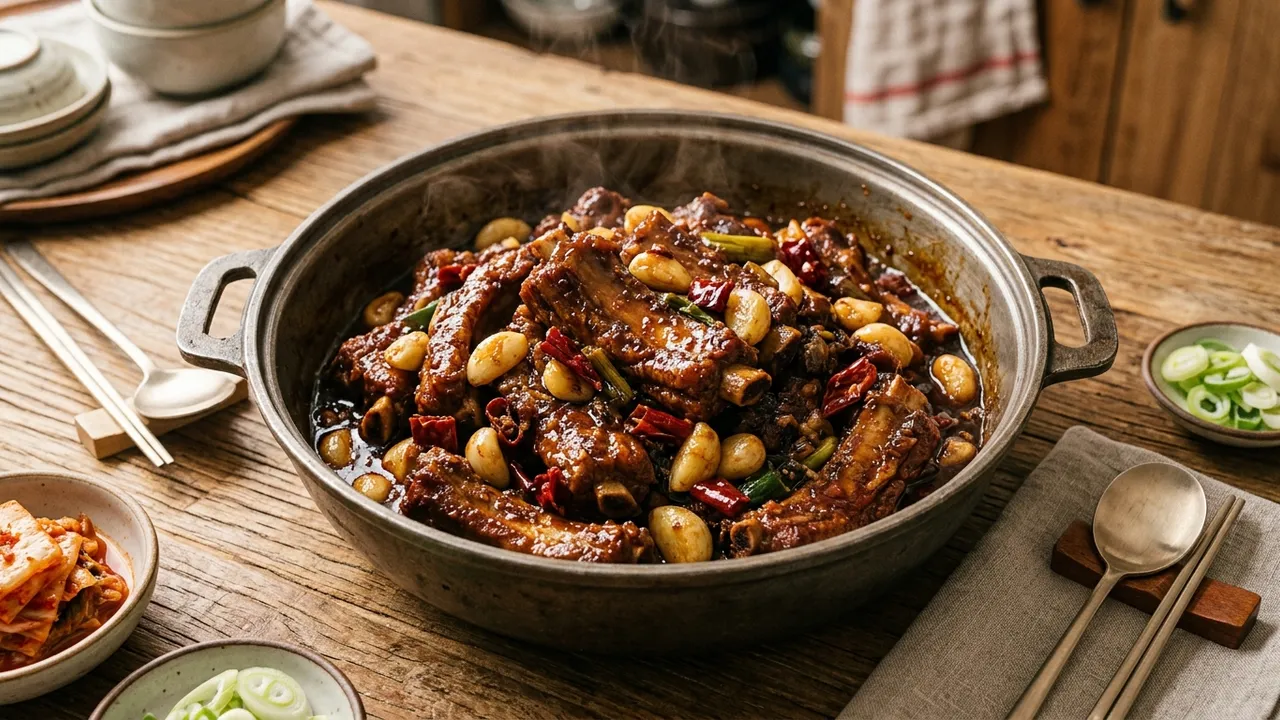
Crowd-Pleasing Braised Pork Ribs Recipe
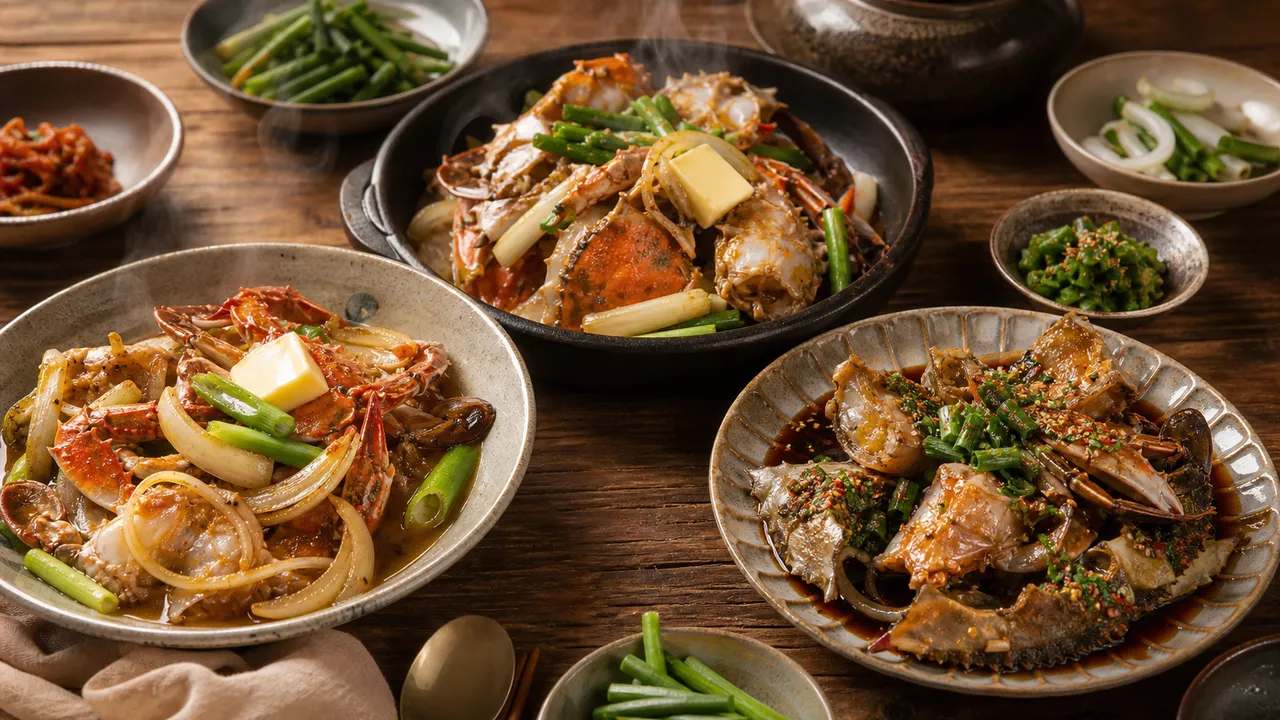
* 이미지는 AI가 생성한 참고 이미지로, 실제 조리 결과물과 다를 수 있습니다.
This is a sweet and savory braised pork ribs recipe that the whole family can deliciously enjoy. By removing the silver skin, thoroughly draining the blood, and using a golden ratio for the sauce, the ribs are stewed until moist and free of any gamey odor, enhancing their umami flavor.
📝 Editor's Notes
This braised pork ribs dish, perfect for the whole family, is a menu item where sweet and savory seasoning and tender ribs achieve a perfect harmony.
The ribs are stewed cleanly and moistly, free of any gamey odor, allowing the umami-rich sauce to penetrate deeply, delivering a flavor that will amaze everyone from the first bite.
Although it involves meticulous steps like parboiling and draining blood, it guarantees a profound flavor imbued with that much effort.
It's an exquisite dish loved by all ages, suitable as a main course for special occasions or a heartwarming home-cooked meal.
🛒 Ingredient Tips
The key to delicious braised ribs begins with selecting fresh pork ribs.
It's best to choose ribs that have a vibrant pink color and a good balance of fat.
Opt for cuts with generous amounts of meat rather than those where the bone and meat easily separate, for a more substantial dish.
For enhancing the flavor of the sauce, store-bought apple and onion juices are fine, but grating fresh ones yourself can add a fresher taste and aroma.
Note that using ganjang (간장) (Korean brewed soy sauce) is essential to achieve a deep and rich umami flavor.
🔄 Substitution Guide
Instead of pork ribs, you can use beef short ribs for braising.
However, note that beef short ribs are more expensive, may require longer cooking times, and will result in a different flavor profile.
Among pork cuts, pork neck or shoulder butt can be used whole, but you might miss the unique pleasure of eating meat off the rib bones.
If apple juice and onion juice are unavailable, you can substitute with pear juice, or grate fresh apples and onions directly.
However, if using fresh grated ingredients, the sauce consistency may vary slightly, so adjust the amount of water accordingly.
If you dislike spicy food, you can use Kkari-gochu (꽈리고추) or a small amount of Cheongyang chili (청양고추) instead of very spicy chili peppers.
🥘 Ingredients
👨🍳 Cooking Points
There are three crucial points in this recipe.
First, the process of removing the silver skin from the ribs, draining the blood, and parboiling.
Thoroughly completing these steps is essential to perfectly eliminate the distinct gamey odor of pork, allow the sauce to penetrate evenly, and achieve a tender texture.
Second, it's important to mix all the sauce ingredients together at once.
This prevents soy sauce or sugar from clumping and ensures they permeate the meat evenly, creating a deep flavor.
Third, when reducing the sauce, start over high heat with the lid slightly ajar to let out any gamey smell, and simmer sufficiently until the liquid is reduced and thick, allowing the seasoning to deeply infuse into the ribs.
👨🍳 Directions
Prepare 4.4 lbs of pork ribs, remove the silver skin, and make incisions on the bone side. If it's hard to do by hand, hold it with a paper towel and pull; it will be easier. Removing the silver skin allows the sauce to penetrate better, making it more delicious.
Soak the prepared ribs in ample cold water for at least 30 minutes to 1 hour to remove blood. It's even better to change the water once in between. You can stop draining the blood when the water turns light pink. Cut the ribs in half before draining the blood.
Pour plenty of water into a large pot, add 1 knob of sliced ginger, 1 tsp whole black peppercorns, and 3 bay leaves, then bring to a boil. Once the water is boiling vigorously, add the ribs, drizzle in 1 splash of Soju (소주), and boil for 10 minutes with the lid open to remove any gamey odor.
Remove the boiled ribs, drain the water, and cover them with a lid to cool to prevent drying out.
Make the sauce. Combine 1 cup apple juice, 0.5 cup onion juice, 10 tbsp soy sauce, 5 tbsp white sugar, 4 tbsp corn syrup, 4 tbsp Mirin (맛술), 1 tbsp minced garlic, 1 tbsp oyster sauce, and 2 cups water in a bowl and mix well. Mixing the sauce ingredients beforehand, rather than adding them separately, allows the flavors to blend evenly into the meat, making it more delicious.
Place the cooled ribs in a wide pan and pour the prepared sauce over them. Bring to a boil over high heat, basting the ribs with the sauce using a ladle to ensure even coating. Once boiling, remove the lid and boil for another 5 minutes to completely eliminate any remaining gamey odor. If serving to adults, add spicy chili peppers (such as dried Cheongyang chili (청양고추), Vietnamese chili, or dried red chili) and sliced garlic. Then, cover loosely with the lid and continue to simmer over high heat until the liquid is reduced and thick.
Once the sauce has reduced and thickened, add 1 tbsp sesame oil and sprinkle ground black pepper 5-6 times, then mix well. Gradually add the cornstarch slurry (made by mixing 1.5 tbsp cornstarch with 3.4 fl oz water) while stirring the sauce. When the sauce clings to the ribs and becomes glossy, turn off the heat.
💡 Tips
Removing the silver skin from the ribs and making incisions on the bones allows the sauce to penetrate the meat better, enhancing the umami flavor.
To effectively remove any gamey odor from the pork, boil the ribs with the lid open to allow the odor to dissipate, and add a splash of Soju (소주).
If the boiled meat is cooled while still too hot, it can easily dry out. It's best to cover it with a lid of appropriate size to maintain its moisture.
All sauce ingredients should be mixed together and then poured over the meat to ensure soy sauce, sugar, etc., don't clump in specific areas, but rather distribute evenly. Additionally, if you prefer a spicy kick, adding dried Cheongyang chili (청양고추), Vietnamese chili, or dried red chili along with sliced garlic will allow you to enjoy a richer flavor.
📦 Storage & Reuse
Once prepared, the braised ribs can be stored in an airtight container in the refrigerator for 3-4 days to maintain freshness.
If you wish to store them longer, we recommend portioning them into single servings and freezing.
They can be frozen for about 1-2 months.
When reheating after thawing, you can use a microwave or transfer them to a pot and gently warm over low heat.
To keep them moist, add a little water if the sauce reduces too much.
Leftover braised ribs are also delicious when the meat is removed from the bone and used as an ingredient for fried rice or enjoyed as a rice bowl topping.
🥢 Who This Is For
These braised pork ribs are highly recommended as a main dish for special occasions like holidays, birthdays, or housewarmings, where the whole family gathers.
Thanks to its sweet and savory taste, children will absolutely love it, and adults can enjoy a spicy kick by adding chili peppers, satisfying everyone's palate.
Served with warm rice, it makes a wonderful meal even without other side dishes.
Pairing it with refreshing Dongchimi (동치미) or crunchy Geotjeori (겉절이) will create an even more perfect combination.
🔥 Nutrition Info
This crowd-pleasing braised pork ribs dish, based on 6-8 adult servings, is estimated to be approximately 550-650 calories per serving.
Pork ribs are rich in protein, aiding in muscle formation and maintenance, providing about 40-50g of protein.
Fat content varies by rib cut but is typically around 30-40g, supplying energy.
Due to the sugar, corn syrup, and apple juice in the sauce, carbohydrates are estimated to be around 30-40g.
Pork is also rich in B vitamins (especially B1), iron, and zinc, which are beneficial for fatigue recovery and immune system enhancement.
💬 Frequently Asked Questions
- Q. What ingredients do I need for Crowd-Pleasing Braised Pork Ribs?
- Main ingredients include Pork Ribs, Ginger, Whole Black Peppercorns, Bay Leaves, Soju (소주). The key to delicious braised ribs begins with selecting fresh pork ribs. It's best to choose ribs that have a vibrant pink color and a good balance of fat. Opt for cuts with generous amounts of meat rather than those where the bone and meat easily separate, for a more substantial dish. For enhancing the flavor of the sauce, store-bought apple and onion juices are fine, but grating fresh ones yourself can add a fresher taste and aroma. Note that using ganjang (간장) (Korean brewed soy sauce) is essential to achieve a deep and rich umami flavor.
- Q. What are the key tips for making Crowd-Pleasing Braised Pork Ribs?
- There are three crucial points in this recipe. First, the process of removing the silver skin from the ribs, draining the blood, and parboiling. Thoroughly completing these steps is essential to perfectly eliminate the distinct gamey odor of pork, allow the sauce to penetrate evenly, and achieve a tender texture. Second, it's important to mix all the sauce ingredients together at once. This prevents soy sauce or sugar from clumping and ensures they permeate the meat evenly, creating a deep flavor. Third, when reducing the sauce, start over high heat with the lid slightly ajar to let out any gamey smell, and simmer sufficiently until the liquid is reduced and thick, allowing the seasoning to deeply infuse into the ribs.
- Q. How should I store leftover Crowd-Pleasing Braised Pork Ribs?
- Once prepared, the braised ribs can be stored in an airtight container in the refrigerator for 3-4 days to maintain freshness. If you wish to store them longer, we recommend portioning them into single servings and freezing. They can be frozen for about 1-2 months. When reheating after thawing, you can use a microwave or transfer them to a pot and gently warm over low heat. To keep them moist, add a little water if the sauce reduces too much. Leftover braised ribs are also delicious when the meat is removed from the bone and used as an ingredient for fried rice or enjoyed as a rice bowl topping.
- Q. How many calories are in Crowd-Pleasing Braised Pork Ribs?
- This crowd-pleasing braised pork ribs dish, based on 6-8 adult servings, is estimated to be approximately 550-650 calories per serving. Pork ribs are rich in protein, aiding in muscle formation and maintenance, providing about 40-50g of protein. Fat content varies by rib cut but is typically around 30-40g, supplying energy. Due to the sugar, corn syrup, and apple juice in the sauce, carbohydrates are estimated to be around 30-40g. Pork is also rich in B vitamins (especially B1), iron, and zinc, which are beneficial for fatigue recovery and immune system enhancement.
- Q. Can I substitute ingredients in Crowd-Pleasing Braised Pork Ribs?
- Instead of pork ribs, you can use beef short ribs for braising. However, note that beef short ribs are more expensive, may require longer cooking times, and will result in a different flavor profile. Among pork cuts, pork neck or shoulder butt can be used whole, but you might miss the unique pleasure of eating meat off the rib bones. If apple juice and onion juice are unavailable, you can substitute with pear juice, or grate fresh apples and onions directly. However, if using fresh grated ingredients, the sauce consistency may vary slightly, so adjust the amount of water accordingly. If you dislike spicy food, you can use Kkari-gochu (꽈리고추) or a small amount of Cheongyang chili (청양고추) instead of very spicy chili peppers.
💬 Comments
No comments yet. Be the first to comment!