
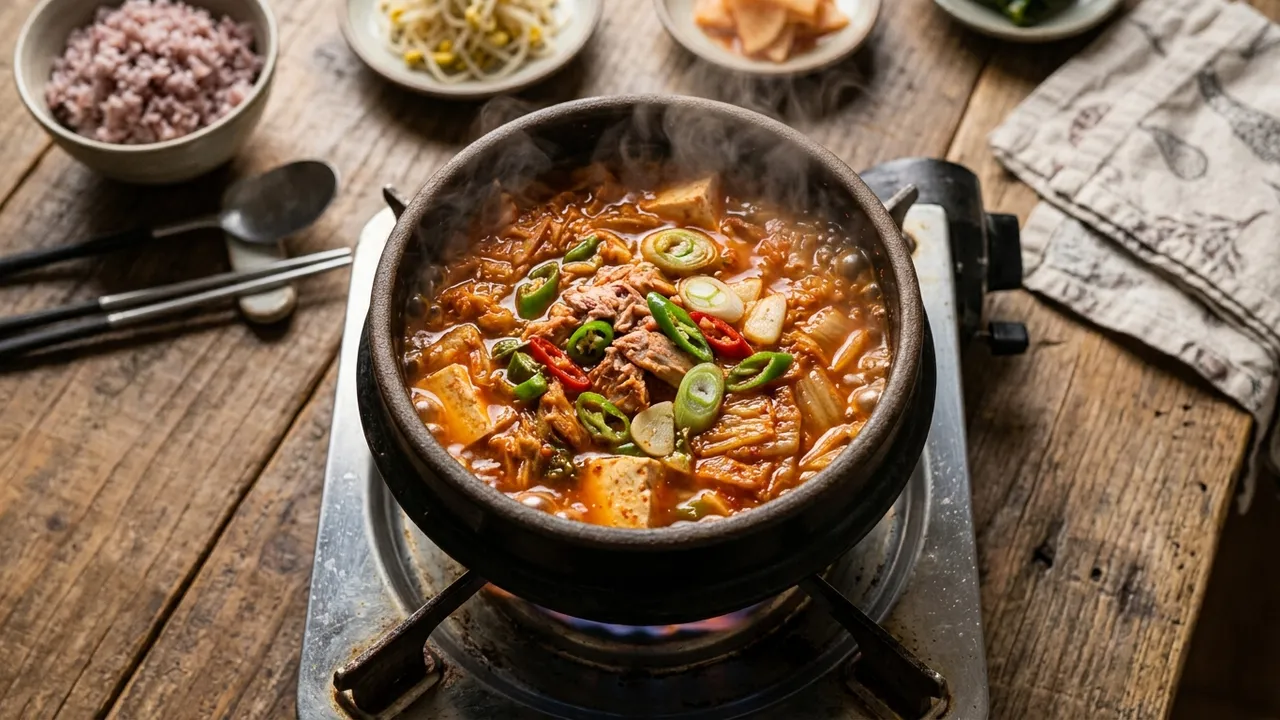
Bobchanam's Tuna Jjageul-jjigae (참치 짜글이 찌개) Recipe
* 이미지는 AI가 생성한 참고 이미지로, 실제 조리 결과물과 다를 수 있습니다.
A recipe for spicy and hearty Tuna Jjageul-jjigae (참치 짜글이 찌개), so delicious it's a 'rice thief'.
📝 Editor's Notes
This recipe is for a spicy yet savory Tuna Jjageul-jjigae (참치 짜글이 찌개) that's so exceptionally delicious, it's known as a 'rice thief'.
It features a rich flavor from a generous amount of various vegetables, and its thick, savory broth is enhanced by mashed tofu.
This is a medium-easy difficulty dish that anyone can make successfully by focusing on proper ingredient preparation and sautéing, without needing complex techniques.
It's a perfect meal for chilly days when you crave warm soup, or when you want to enjoy a hearty meal with your family.
🛒 Ingredient Tips
For a delicious jjageul-jjigae, it's important to choose fresh ingredients.
For a cleaner taste, slightly drain the oil from the canned tuna.
Choose onions that are firm and have shiny skin; thoroughly sautéing them will bring out their sweetness, enhancing the stew's flavor.
Select potatoes without sprouts and with smooth skin.
For tofu, use stewing or pan-frying tofu (buchi-yong dubu) to maintain a suitable texture when mashed, as soft tofu might not provide the desired savory, thick texture.
🔄 Substitution Guide
Instead of tuna, you can use sliced pork shoulder or pork neck to enjoy a jjageul-jjigae with a deeper meaty flavor.
In this case, stir-fry the pork first until cooked, then add the vegetables and continue sautéing.
If you don't have tofu, you can omit it, or if you prefer a softer texture, you can add soft tofu (yeondubu) lightly at the end, but you might not achieve the savory and thick texture of mashed tofu.
Adding daikon radish (mu) instead of potatoes can add a refreshing taste.
If you dislike spicy food, you can reduce the amounts of gochujang (고추장) and gochugaru (고춧가루) and season with soy sauce for a milder version.
🥘 Ingredients
👨🍳 Cooking Points
There are two main crucial points in this jjageul-jjigae recipe.
First, thoroughly sautéing the vegetables.
Especially, sautéing the onions for 5 to 10 minutes until they become tender and translucent will extract their sweetness and the deep flavor of the vegetables, making the jjageul-jjigae much richer.
Second, when adding the seasonings and stir-frying, make sure to reduce the heat.
Seasonings like gochugaru (고춧가루) or gochujang (고추장) can burn over high heat and become bitter, so stir-frying them gently over low heat until they are well combined with the vegetables is key.
Lastly, don't forget to add mashed tofu to enhance the savory flavor and thicken the broth!
👨🍳 Directions
Prepare vegetables such as zucchini, potato, onion, large green onion, and carrot by cutting them into small, pinky-fingernail sized pieces. Set aside the chili peppers as they will be added later.
Mash 1/2 block of tofu with the back of a knife.
Heat 2 tbsp of cooking oil in a wok or pot. Add 1 tbsp of minced garlic and stir-fry until fragrant.
Once the garlic aroma is sufficient, add the chopped vegetables (excluding chili peppers) and stir-fry thoroughly for 5 to 10 minutes until the onions become tender and translucent. Sautéing the vegetables thoroughly brings out a deeper flavor.
When the vegetables are translucent and slightly golden from being sufficiently stir-fried, reduce the heat. Add 1 tbsp soy sauce, 1 tbsp oyster sauce, 2 tbsp corn syrup, 3 tbsp mirin, 1 tbsp gochujang (고추장), 3-4 tbsp gochugaru (고춧가루), and 1 tbsp doenjang (된장), then stir-fry until the seasoning is well combined.
Once the seasoning and vegetables are well mixed, add 1 can of tuna and stir-fry together.
Add 2 cups (400 ml) of water and bring to a boil.
Once the stew starts bubbling, add the 1/2 mashed block of tofu, mix well, and bring to a boil again.
Taste and adjust seasoning with salt if needed. If more spiciness is desired, add a bit more gochugaru (고춧가루) to your preference.
Finally, add the 2 sliced chili peppers and simmer briefly to finish.
💡 Tips
Sautéing a generous amount of onions until tender and translucent will draw out their natural sweetness, adding a deeper flavor to the jjageul-jjigae.
Mashing the tofu before adding it thickens the broth and adds a savory depth, making the stew more substantial.
If it's bland or not spicy enough, taste and adjust by adding salt or gochugaru (고춧가루) to your preference.
For an even more delicious experience, serve the finished jjageul-jjigae in a ttukbaegi (뚝배기, earthenware pot) and bring it to a boil at the table.
🥢 Who This Is For
This Tuna Jjageul-jjigae is recommended for anyone looking for a spicy and hearty meal.
It pairs perfectly with rice, so serve generously over a bowl of warm white rice and mix it in – it's a true 'rice thief'!
On rainy or cold days, when you're craving a warm soup, this dish can offer a comforting embrace for both body and soul.
For accompanying dishes, soft steamed eggs (gyeran-jjim), refreshing soybean sprout soup (kongnamul-guk), or gim (김, roasted seaweed) would complete a more abundant dining experience.
🔥 Nutrition Info
This Tuna Jjageul-jjigae (참치 짜글이 찌개), based on 4-5 servings, is estimated to be approximately 280-350 kcal per serving.
You can get rich protein from tuna and tofu, and various vegetables (potatoes, zucchini, onions, etc.) provide carbohydrates, dietary fiber, and various minerals like vitamins A, C, and potassium.
Notably, tuna contains omega-3 fatty acids, which are beneficial for health.
However, due to seasonings like soy sauce, gochujang (고추장), and doenjang (된장), the sodium content may be relatively high, so it's advisable to adjust the amount of salt when seasoning if you are mindful of your health.
💬 Frequently Asked Questions
- Q. What ingredients do I need for Bobchanam's Tuna Jjageul-jjigae (참치 짜글이 찌개)?
- Main ingredients include Canned Tuna, Zucchini, Onion, Potato, Large Green Onion. For a delicious jjageul-jjigae, it's important to choose fresh ingredients. For a cleaner taste, slightly drain the oil from the canned tuna. Choose onions that are firm and have shiny skin; thoroughly sautéing them will bring out their sweetness, enhancing the stew's flavor. Select potatoes without sprouts and with smooth skin. For tofu, use stewing or pan-frying tofu (buchi-yong dubu) to maintain a suitable texture when mashed, as soft tofu might not provide the desired savory, thick texture.
- Q. What are the key tips for making Bobchanam's Tuna Jjageul-jjigae (참치 짜글이 찌개)?
- There are two main crucial points in this jjageul-jjigae recipe. First, thoroughly sautéing the vegetables. Especially, sautéing the onions for 5 to 10 minutes until they become tender and translucent will extract their sweetness and the deep flavor of the vegetables, making the jjageul-jjigae much richer. Second, when adding the seasonings and stir-frying, make sure to reduce the heat. Seasonings like gochugaru (고춧가루) or gochujang (고추장) can burn over high heat and become bitter, so stir-frying them gently over low heat until they are well combined with the vegetables is key. Lastly, don't forget to add mashed tofu to enhance the savory flavor and thicken the broth!
- Q. How many calories are in Bobchanam's Tuna Jjageul-jjigae (참치 짜글이 찌개)?
- This Tuna Jjageul-jjigae (참치 짜글이 찌개), based on 4-5 servings, is estimated to be approximately 280-350 kcal per serving. You can get rich protein from tuna and tofu, and various vegetables (potatoes, zucchini, onions, etc.) provide carbohydrates, dietary fiber, and various minerals like vitamins A, C, and potassium. Notably, tuna contains omega-3 fatty acids, which are beneficial for health. However, due to seasonings like soy sauce, gochujang (고추장), and doenjang (된장), the sodium content may be relatively high, so it's advisable to adjust the amount of salt when seasoning if you are mindful of your health.
- Q. Can I substitute ingredients in Bobchanam's Tuna Jjageul-jjigae (참치 짜글이 찌개)?
- Instead of tuna, you can use sliced pork shoulder or pork neck to enjoy a jjageul-jjigae with a deeper meaty flavor. In this case, stir-fry the pork first until cooked, then add the vegetables and continue sautéing. If you don't have tofu, you can omit it, or if you prefer a softer texture, you can add soft tofu (yeondubu) lightly at the end, but you might not achieve the savory and thick texture of mashed tofu. Adding daikon radish (mu) instead of potatoes can add a refreshing taste. If you dislike spicy food, you can reduce the amounts of gochujang (고추장) and gochugaru (고춧가루) and season with soy sauce for a milder version.
💬 Comments
No comments yet. Be the first to comment!