
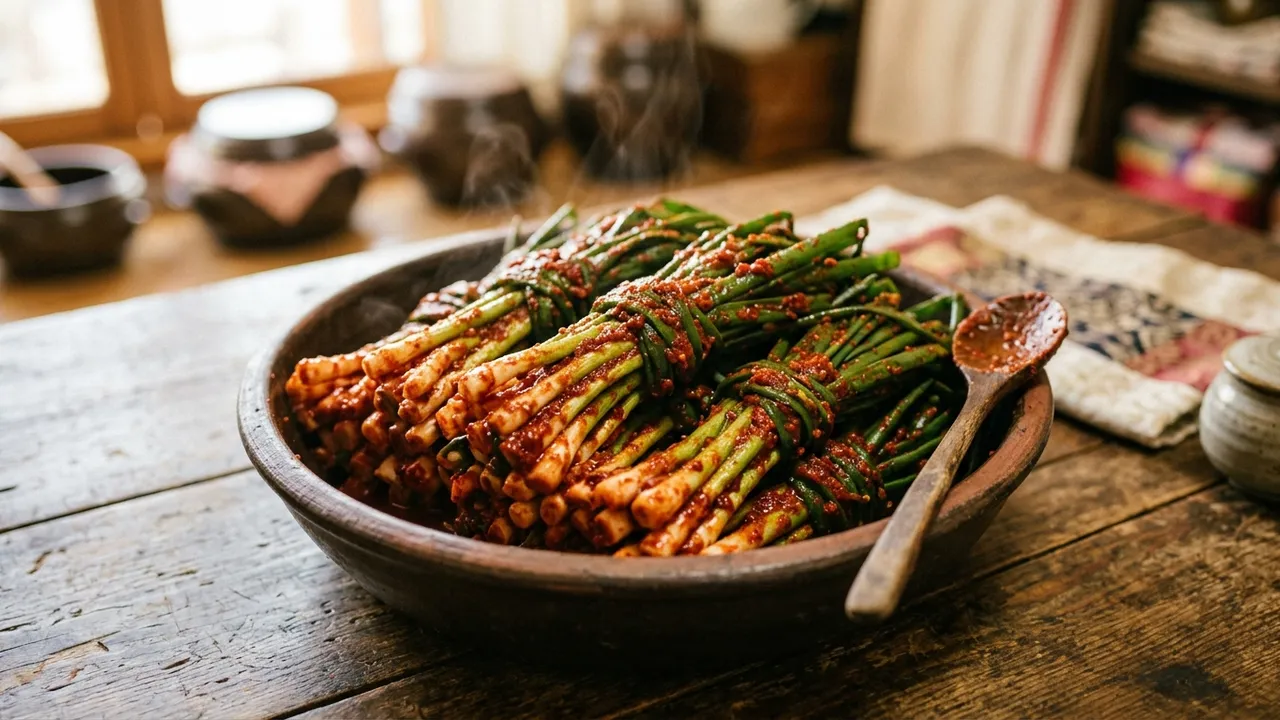
Grandma's Scallion Kimchi Recipe
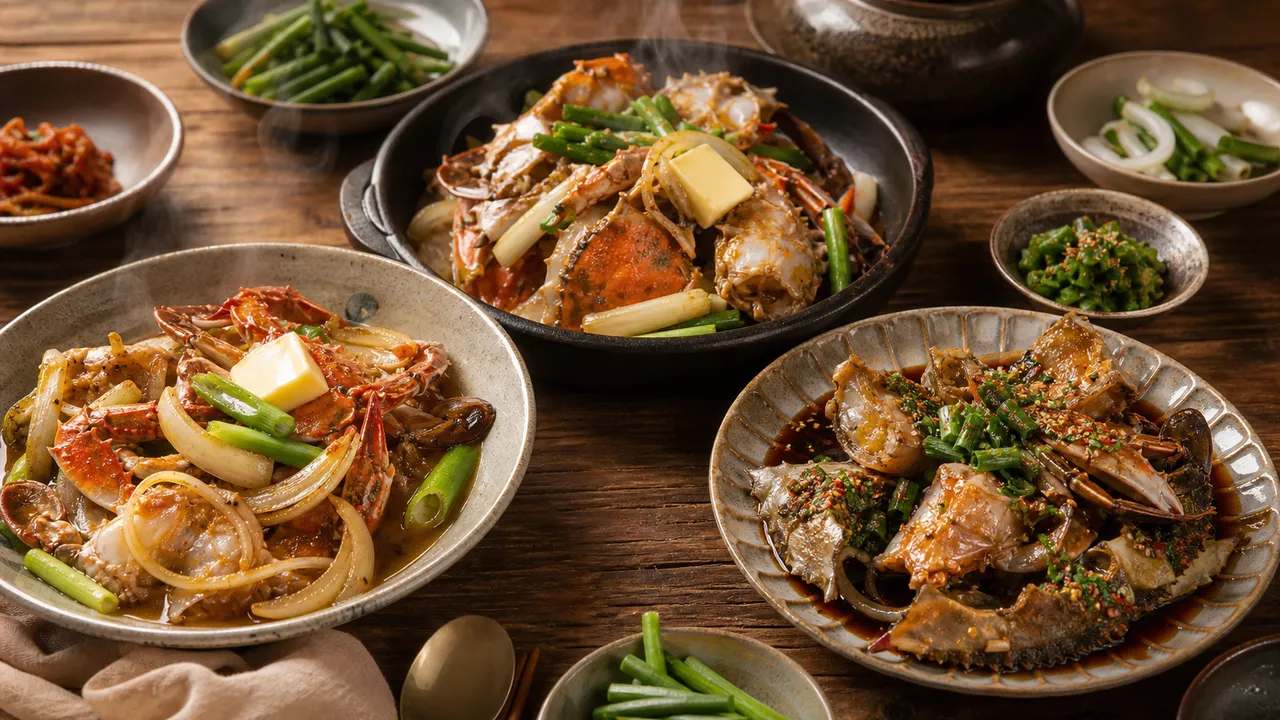
* 이미지는 AI가 생성한 참고 이미지로, 실제 조리 결과물과 다를 수 있습니다.
This is an easy and delicious scallion kimchi, a modified recipe designed for those who miss the taste of traditional scallion kimchi.
📝 Editor's Notes
Grandma's Scallion Kimchi, imbued with a homemade touch, is a recipe characterized by its natural sweetness and deep umami flavor.
The seasoning, made with vegetable broth carefully steeped over a long period and glutinous rice paste, results in a much softer and richer taste than regular scallion kimchi.
Its clean spiciness, without being overly pungent, makes it enjoyable for all ages.
While the preparation process takes some time, the special flavor it delivers makes it well worth the effort.
It's a perfect side dish for rice throughout the year, and it pairs wonderfully with meat dishes or soups.
This dignified kimchi is also ideal for serving guests.
🛒 Ingredient Tips
The key ingredients that determine the flavor of this scallion kimchi are the scallions and the apple used in the vegetable broth.
Choose fresh scallions with roots that are not too thick, green and firm stalks, and no withered or soft spots.
Scallions freshly harvested from a traditional market have a stronger aroma and better taste.
The apple plays an important role in creating the natural sweetness of the broth, so use a sweet and fresh one.
Kkanari aekjeot (까나리 액젓) or myeolchi aekjeot (멸치 액젓) added to the seasoning enhances the deep flavor of the kimchi; choose products that are well-aged and clear in color.
Remember that good ingredients make good taste.
🔄 Substitution Guide
If you need to use different ingredients instead of scallions, you can use chives or thicker green onions (daepa).
Chives offer a stronger aroma and softer texture than scallions, while green onions provide a crunchier and more refreshing taste.
However, green onions can be quite pungent and spicy, so it's good to lightly salt them beforehand.
If kkanari aekjeot (까나리 액젓) or myeolchi aekjeot (멸치 액젓) is unavailable, you can substitute with soy sauce for soup (gukganjang), but the unique deep umami and fermented aroma of fish sauce may be diminished.
In this case, it's recommended to slightly increase the amount of saeujeot (새우젓) or use more kelp broth to compensate for the umami.
If glutinous rice flour is not available, a very small amount of rice flour or wheat flour can be used to make the paste, but it may not achieve the same chewy and smooth consistency as glutinous rice paste.
🥘 Ingredients
👨🍳 Cooking Points
There are two crucial cooking points in this recipe.
First, when making the vegetable broth, controlling the temperature to 'prevent it from boiling' is key.
Gently simmer for one hour at an induction stove setting of 3-4, or the lowest flame on a gas stove, to extract only the good components from the ingredients.
Remember that if the water boils vigorously, it can become bitter or cloudy.
Second, when making the glutinous rice paste, ensure the glutinous rice flour is completely dissolved in the vegetable broth before turning on the heat to prevent lumps.
Once it starts boiling, reduce to medium-low heat and stir continuously with a wooden spoon to prevent it from burning at the bottom.
When it reaches a porridge-like consistency that flows slowly, turn off the heat and use it 'completely cooled' to ensure the seasoning is clean and doesn't spoil.
Lastly, if the seasoning lacks flavor, adjust with coarse sea salt instead of more fish sauce to avoid a bitter taste. This is key!
👨🍳 Directions
Prepare 2.2 to 2.6 lbs of scallions (typically one bunch from a traditional market). Place the scallions in a kimchi container or stainless steel container, fill with water, and gently shake to wash the roots, allowing dirt to settle. Repeat this process three times to clean thoroughly. Take the scallions in handfuls, gently run your hand from the root to the top to remove any dust, shake off excess water, align the stalks, and then drain.
Prepare the vegetable broth (fruit and vegetable broth). Thinly slice 2 apples and 1 onion, then place them in a pot. Add 2 liters of water, 4 pieces of kelp, a handful of green onion leaves (or one stalk of green onion), and 1 tbsp of goji berries. To prevent the water from boiling, set an induction stove to 3-4 (out of 12 maximum) or a gas stove to its lowest heat, and simmer gently for one hour. After steeping, without opening the lid, let it cool completely for at least 6 hours (e.g., on a balcony). Then strain the broth. (Caution: If the strained broth is left at room temperature for too long, it can spoil quickly.)
Make the glutinous rice paste. In 1.5 cups of vegetable broth, add 2 tbsp of glutinous rice flour and whisk well to dissolve the flour before turning on the heat. Begin boiling over high heat, then reduce to medium-low once it boils, and stir continuously with a wooden spoon until it thickens to a porridge-like consistency. (Be careful, as it can quickly burn at the bottom if you stop stirring.) When it reaches a consistency that flows slowly, turn off the heat and let it cool completely. (If you want to cool it down quickly, place the pot in a bowl of ice water.)
Prepare the kimchi seasoning. In a blender, combine 1 cup of vegetable broth, 0.5 apple, and 0.5 onion, then blend until smooth. Pour the blended ingredients into a bowl and add 1 cup of gochugaru (고춧가루), letting it soak for 20-30 minutes. Add 0.5 cup of kkanari aekjeot (까나리 액젓) (anchovy fish sauce is also possible) and stir. Crush 1 oz of garlic and 0.7 oz of ginger in a mortar and pestle (using a blender can make the kimchi bitter, so a mortar and pestle is recommended; too much ginger can also make the kimchi bitter). Add 2 tbsp of saeujeot (새우젓) (small, fine 'chujeot' is recommended) and mix. Finally, add the completely cooled glutinous rice paste to the seasoning and mix thoroughly. Taste and, if bland, adjust the saltiness with coarse sea salt instead of adding more fish sauce.
Mix and store the scallion kimchi. Lay a handful of washed scallions in the kimchi container. Scoop a ladleful of seasoning and generously spread it on the white root ends of the scallions while mixing. You don't need to coat every single strand perfectly; the seasoning will naturally seep down and marinate the scallions. Repeat this process, layering and mixing scallions with seasoning. Before closing the lid, sprinkle a small amount of coarse sea salt over the white root ends of the scallions to help them wilt faster. Leave the prepared kimchi at room temperature for about half a day, then store it in a kimchi refrigerator to enjoy for up to ten days.
For a special side dish, take any leftover seasoning, add a handful of hwangtaechae (황태채) and scallions cut to the same length as the hwangtaechae, and mix. Sprinkle with toasted sesame seeds, and you'll have a delightful hwangtaechae (황태채) and scallion salad (muchim). Do not wash the hwangtaechae (황태채) in water, as it will negatively affect the texture.
💡 Tips
When steeping the vegetable broth, maintain the lowest temperature to prevent the water from boiling.
After steeping, let the vegetable broth cool for at least 6 hours, covered, perhaps on a balcony, then strain and use. Be careful not to leave the strained broth at room temperature for too long, as it can spoil quickly.
Stir the glutinous rice paste continuously while cooking to prevent burning, and ensure it is completely cooled before use.
If the kimchi seasoning is bland, adjust the saltiness with coarse sea salt instead of more fish sauce to avoid a bitter taste.
It is recommended to crush garlic and ginger in a mortar and pestle instead of a blender, as too much ginger can make the kimchi bitter.
📦 Storage & Reuse
The finished scallion kimchi is best stored in an airtight container in the refrigerator.
Storing it in a kimchi refrigerator will keep it fresh for even longer.
Immediately after making, it might have a 'green' or fresh smell, so it's recommended to ripen it at room temperature for 1-2 days before refrigerating.
When stored in the refrigerator, it can be enjoyed for about 1-2 months, but as time passes, fermentation will progress, and the sourness will intensify.
Kimchi that has become very sour can be used in various dishes like kimchi stew, kimchi pancakes, or kimchi fried rice to enjoy a different flavor.
If you have leftover scallions, you can chop them and add them to ramen or steamed egg (gyeran-jjim), or make scallion pancakes.
🥢 Who This Is For
Grandma's Scallion Kimchi, with its deep and natural flavor, is perfect for the whole family to enjoy.
It's especially recommended for those who don't prefer overly spicy or salty flavors, or for children.
Served alongside grilled pork belly (samgyeopsal) or boiled pork slices (bossam), it cuts through the richness and enhances the flavor.
A bowl of warm rice with just this kimchi makes for a wonderful meal.
It's also exceptionally delicious with spicy ramen or hot gukbap (rice soup), adding a refreshing touch.
This dish is also an excellent thoughtful gift for loved ones.
🔥 Nutrition Info
Grandma's Scallion Kimchi is a health-conscious dish, combining the rich nutrients of scallions with the natural sweetness of vegetable broth.
Estimating for a single serving (approx.
100g), it's expected to have a low calorie count, around 50-70 kcal.
Carbohydrates are estimated at about 10-15g (from scallions, apple, glutinous rice flour, etc.), protein at about 3-5g (from fish sauce, saeujeot), and fat at less than 1g.
Scallions are rich in Vitamin K, Vitamin C, folate, and potassium, aiding in blood clotting, bone health, and immune system boost.
Apples provide dietary fiber and antioxidants, while garlic and ginger contain allicin and gingerol, which support immune function and have anti-inflammatory properties.
However, due to fish sauce and saeujeot, the sodium content may be somewhat high, so excessive consumption should be avoided.
💬 Frequently Asked Questions
- Q. What ingredients do I need for Grandma's Scallion Kimchi?
- Main ingredients include Scallions, Apple, Onion, Garlic, Ginger. The key ingredients that determine the flavor of this scallion kimchi are the scallions and the apple used in the vegetable broth. Choose fresh scallions with roots that are not too thick, green and firm stalks, and no withered or soft spots. Scallions freshly harvested from a traditional market have a stronger aroma and better taste. The apple plays an important role in creating the natural sweetness of the broth, so use a sweet and fresh one. Kkanari aekjeot (까나리 액젓) or myeolchi aekjeot (멸치 액젓) added to the seasoning enhances the deep flavor of the kimchi; choose products that are well-aged and clear in color. Remember that good ingredients make good taste.
- Q. What are the key tips for making Grandma's Scallion Kimchi?
- There are two crucial cooking points in this recipe. First, when making the vegetable broth, controlling the temperature to 'prevent it from boiling' is key. Gently simmer for one hour at an induction stove setting of 3-4, or the lowest flame on a gas stove, to extract only the good components from the ingredients. Remember that if the water boils vigorously, it can become bitter or cloudy. Second, when making the glutinous rice paste, ensure the glutinous rice flour is completely dissolved in the vegetable broth before turning on the heat to prevent lumps. Once it starts boiling, reduce to medium-low heat and stir continuously with a wooden spoon to prevent it from burning at the bottom. When it reaches a porridge-like consistency that flows slowly, turn off the heat and use it 'completely cooled' to ensure the seasoning is clean and doesn't spoil. Lastly, if the seasoning lacks flavor, adjust with coarse sea salt instead of more fish sauce to avoid a bitter taste. This is key!
- Q. How should I store leftover Grandma's Scallion Kimchi?
- The finished scallion kimchi is best stored in an airtight container in the refrigerator. Storing it in a kimchi refrigerator will keep it fresh for even longer. Immediately after making, it might have a 'green' or fresh smell, so it's recommended to ripen it at room temperature for 1-2 days before refrigerating. When stored in the refrigerator, it can be enjoyed for about 1-2 months, but as time passes, fermentation will progress, and the sourness will intensify. Kimchi that has become very sour can be used in various dishes like kimchi stew, kimchi pancakes, or kimchi fried rice to enjoy a different flavor. If you have leftover scallions, you can chop them and add them to ramen or steamed egg (gyeran-jjim), or make scallion pancakes.
- Q. How many calories are in Grandma's Scallion Kimchi?
- Grandma's Scallion Kimchi is a health-conscious dish, combining the rich nutrients of scallions with the natural sweetness of vegetable broth. Estimating for a single serving (approx. 100g), it's expected to have a low calorie count, around 50-70 kcal. Carbohydrates are estimated at about 10-15g (from scallions, apple, glutinous rice flour, etc.), protein at about 3-5g (from fish sauce, saeujeot), and fat at less than 1g. Scallions are rich in Vitamin K, Vitamin C, folate, and potassium, aiding in blood clotting, bone health, and immune system boost. Apples provide dietary fiber and antioxidants, while garlic and ginger contain allicin and gingerol, which support immune function and have anti-inflammatory properties. However, due to fish sauce and saeujeot, the sodium content may be somewhat high, so excessive consumption should be avoided.
- Q. Can I substitute ingredients in Grandma's Scallion Kimchi?
- If you need to use different ingredients instead of scallions, you can use chives or thicker green onions (daepa). Chives offer a stronger aroma and softer texture than scallions, while green onions provide a crunchier and more refreshing taste. However, green onions can be quite pungent and spicy, so it's good to lightly salt them beforehand. If kkanari aekjeot (까나리 액젓) or myeolchi aekjeot (멸치 액젓) is unavailable, you can substitute with soy sauce for soup (gukganjang), but the unique deep umami and fermented aroma of fish sauce may be diminished. In this case, it's recommended to slightly increase the amount of saeujeot (새우젓) or use more kelp broth to compensate for the umami. If glutinous rice flour is not available, a very small amount of rice flour or wheat flour can be used to make the paste, but it may not achieve the same chewy and smooth consistency as glutinous rice paste.
💬 Comments
No comments yet. Be the first to comment!