
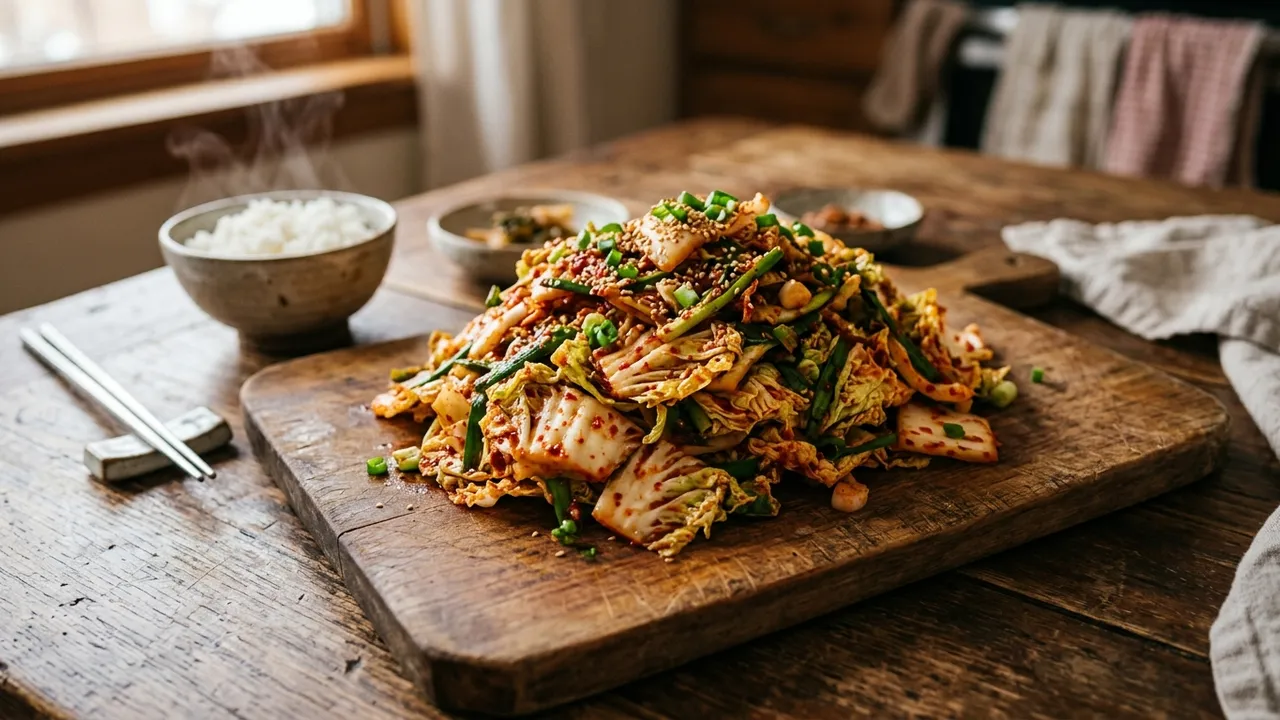
Baby Napa Cabbage Salad (알배추 겉절이 Style) Recipe
* 이미지는 AI가 생성한 참고 이미지로, 실제 조리 결과물과 다를 수 있습니다.
A unique salad recipe to enjoy baby napa cabbage in a unique way, even more delicious than kimchi or jeon (Korean pancakes).
📝 Editor's Notes
This Baby Napa Cabbage Salad is a unique dish that preserves the crisp texture and freshness of geotjeori (겉절이) while adding a Western salad flair with balsamic vinegar and a fragrant garlic olive oil dressing.
It's perfect for those who want a healthy and delicious side dish in their busy lives, as it can be whipped up quickly without the complexity of traditional kimchi making.
Its sweet, sour, and savory umami flavor is excellent, making it a great accompaniment not only for rice but also for meat or noodle dishes, completing a richer dining experience.
Its crisp texture and refreshing taste are particularly appetite-whetting, making it enjoyable all year round.
🛒 Ingredient Tips
The key to this salad is the 'baby napa cabbage (알배추)'.
Choose one that is tightly packed and heavy, with crisp, green outer leaves to truly enjoy its crunchy texture.
Baby napa cabbage that is not too large generally has a more tender and sweet flavor.
For carrots, select ones with a vibrant color, firm texture, and smooth surface.
Good carrots are sweet and rich in nutrients.
Using balsamic vinegar with a pleasant aroma and mild acidity will further enhance the salad's flavor.
For extra virgin olive oil, choose one with a rich aroma and freshness to create a deep flavor in the garlic oil.
🔄 Substitution Guide
You can also use other vegetables instead of baby napa cabbage.
If you enjoy a crisp texture, you can try using julienned lettuce or romaine lettuce.
However, the unique tender and sweet flavor of baby napa cabbage might be less prominent.
If you don't have balsamic vinegar, you can use 3 tbsp of regular vinegar as mentioned in the tips, adjusting the sweetness by adding allulose, honey, or oligo syrup.
In this case, the deep aroma and color characteristic of balsamic vinegar will be reduced, but the sour taste will remain.
Using sugar or honey instead of allulose will yield a similar sweetness but may increase the calorie count.
If using grapeseed oil or canola oil instead of extra virgin olive oil, the aroma of the garlic oil might be slightly weaker, so olive oil is recommended.
🥘 Ingredients
👨🍳 Cooking Points
The most crucial point determining the taste of this Baby Napa Cabbage Salad is 'how well you squeeze out the water from the salted baby napa cabbage.' Sufficiently removing water ensures a crisp texture and prevents the seasoning from becoming bland.
Use a vegetable spinner or squeeze thoroughly by hand.
The second point is 'making the garlic oil.' The key is to sauté the minced green onion and garlic until golden brown over medium-low heat without burning, to extract sufficient aroma.
Be careful not to cook it over too high heat, as the garlic can burn quickly and result in a bitter taste.
Lastly, pouring the warm garlic oil directly over the seasoned baby napa cabbage and mixing it allows the flavors to meld deeply.
👨🍳 Directions
Wash the baby napa cabbage and carrot thoroughly, then julienne thinly.
Sprinkle 1 tbsp of sea salt evenly over the julienned baby napa cabbage and carrot, then let them sit for 20-30 minutes to salt.
Rinse the salted baby napa cabbage once with water, then squeeze out excess water thoroughly by hand or using a vegetable spinner.
Add 4 tbsp of balsamic vinegar (or 3 tbsp of regular vinegar), 1 tbsp of allulose, 1 tbsp of fine red pepper powder (고춧가루), and a few dashes of black pepper to the baby napa cabbage. Mix well to season.
In a small frying pan, add 5 tbsp of extra virgin olive oil, 1 handful of minced green onion, and 1 tbsp of minced garlic. Sauté well over medium-low heat until it simmers and becomes fragrant, creating a garlic oil. Turn off the heat once the aroma of garlic and green onion intensifies.
Pour the prepared garlic oil directly over the seasoned baby napa cabbage and mix well again.
Transfer the finished baby napa cabbage salad into a jar and store in the refrigerator.
💡 Tips
It's crucial to squeeze out the water thoroughly from the baby napa cabbage after salting. Using a vegetable spinner makes it even easier.
If using regular vinegar instead of balsamic vinegar, adjust the sweetness to your preference by adding allulose, honey, or oligo syrup if you prefer a sweeter taste.
The finished baby napa cabbage salad pairs wonderfully with various dishes such as rice, noodle dishes (like ramyeon (라면) or bibim guksu (비빔국수)), gimbap (김밥), or meat.
Adding this baby napa cabbage salad to gimbap (김밥) instead of pickled radish provides a crunchy texture and a sweet and sour flavor, and it's particularly effective at balancing out the fishiness of tuna gimbap (참치김밥).
📦 Storage & Reuse
It's best to store the finished Baby Napa Cabbage Salad in an airtight container in the refrigerator.
As it's a fresh vegetable dish, it's recommended to consume it within 3-4 days to enjoy it at its crispiest and most delicious.
As time passes, the baby napa cabbage may lose its crispness and the seasoning may become more concentrated, so consuming it as soon as possible is recommended.
Leftover salad can be mixed with rice or used as a topping for warm noodle dishes like ramyeon (라면) or janchi guksu (잔치국수) for a unique flavor experience.
Adding it to sandwiches or toast to enhance the fresh vegetable flavor is also a good way to use it.
🥢 Who This Is For
This Baby Napa Cabbage Salad is recommended for everyone who loves fresh and crisp textures.
It's a fantastic pairing, especially with rice or noodle dishes like ramyeon (라면) or bibim guksu (비빔국수), as it cuts through richness and adds a refreshing tang.
When served with meat dishes, it effectively cleanses the palate.
Try adding it to gimbap (김밥) instead of pickled radish; its crisp texture and sweet-sour taste are superb, and it's particularly effective at balancing out the fishiness of tuna gimbap (참치김밥).
🔥 Nutrition Info
This Baby Napa Cabbage Salad is a highly beneficial dish for health, allowing you to consume plenty of fresh vegetables.
When made once, it serves approximately 4 people.
The estimated nutritional values per serving are around 240 kcal, with about 22g of fat, 18g of carbohydrates, and 3g of protein.
Specifically, baby napa cabbage and carrots provide an abundance of various vitamins such as Vitamin C, Vitamin K, and beta-carotene (a precursor to Vitamin A), as well as dietary fiber, which aids in gut health and immune system enhancement.
The unsaturated fatty acids in extra virgin olive oil and the allicin in garlic can also contribute positively to vascular health through their antioxidant effects.
💬 Frequently Asked Questions
- Q. What ingredients do I need for Baby Napa Cabbage Salad (알배추 겉절이 Style)?
- Main ingredients include Baby Napa Cabbage (알배추), Carrot, Sea Salt, Balsamic Vinegar, Allulose. The key to this salad is the 'baby napa cabbage (알배추)'. Choose one that is tightly packed and heavy, with crisp, green outer leaves to truly enjoy its crunchy texture. Baby napa cabbage that is not too large generally has a more tender and sweet flavor. For carrots, select ones with a vibrant color, firm texture, and smooth surface. Good carrots are sweet and rich in nutrients. Using balsamic vinegar with a pleasant aroma and mild acidity will further enhance the salad's flavor. For extra virgin olive oil, choose one with a rich aroma and freshness to create a deep flavor in the garlic oil.
- Q. What are the key tips for making Baby Napa Cabbage Salad (알배추 겉절이 Style)?
- The most crucial point determining the taste of this Baby Napa Cabbage Salad is 'how well you squeeze out the water from the salted baby napa cabbage.' Sufficiently removing water ensures a crisp texture and prevents the seasoning from becoming bland. Use a vegetable spinner or squeeze thoroughly by hand. The second point is 'making the garlic oil.' The key is to sauté the minced green onion and garlic until golden brown over medium-low heat without burning, to extract sufficient aroma. Be careful not to cook it over too high heat, as the garlic can burn quickly and result in a bitter taste. Lastly, pouring the warm garlic oil directly over the seasoned baby napa cabbage and mixing it allows the flavors to meld deeply.
- Q. How should I store leftover Baby Napa Cabbage Salad (알배추 겉절이 Style)?
- It's best to store the finished Baby Napa Cabbage Salad in an airtight container in the refrigerator. As it's a fresh vegetable dish, it's recommended to consume it within 3-4 days to enjoy it at its crispiest and most delicious. As time passes, the baby napa cabbage may lose its crispness and the seasoning may become more concentrated, so consuming it as soon as possible is recommended. Leftover salad can be mixed with rice or used as a topping for warm noodle dishes like ramyeon (라면) or janchi guksu (잔치국수) for a unique flavor experience. Adding it to sandwiches or toast to enhance the fresh vegetable flavor is also a good way to use it.
- Q. How many calories are in Baby Napa Cabbage Salad (알배추 겉절이 Style)?
- This Baby Napa Cabbage Salad is a highly beneficial dish for health, allowing you to consume plenty of fresh vegetables. When made once, it serves approximately 4 people. The estimated nutritional values per serving are around 240 kcal, with about 22g of fat, 18g of carbohydrates, and 3g of protein. Specifically, baby napa cabbage and carrots provide an abundance of various vitamins such as Vitamin C, Vitamin K, and beta-carotene (a precursor to Vitamin A), as well as dietary fiber, which aids in gut health and immune system enhancement. The unsaturated fatty acids in extra virgin olive oil and the allicin in garlic can also contribute positively to vascular health through their antioxidant effects.
- Q. Can I substitute ingredients in Baby Napa Cabbage Salad (알배추 겉절이 Style)?
- You can also use other vegetables instead of baby napa cabbage. If you enjoy a crisp texture, you can try using julienned lettuce or romaine lettuce. However, the unique tender and sweet flavor of baby napa cabbage might be less prominent. If you don't have balsamic vinegar, you can use 3 tbsp of regular vinegar as mentioned in the tips, adjusting the sweetness by adding allulose, honey, or oligo syrup. In this case, the deep aroma and color characteristic of balsamic vinegar will be reduced, but the sour taste will remain. Using sugar or honey instead of allulose will yield a similar sweetness but may increase the calorie count. If using grapeseed oil or canola oil instead of extra virgin olive oil, the aroma of the garlic oil might be slightly weaker, so olive oil is recommended.
💬 Comments
No comments yet. Be the first to comment!