
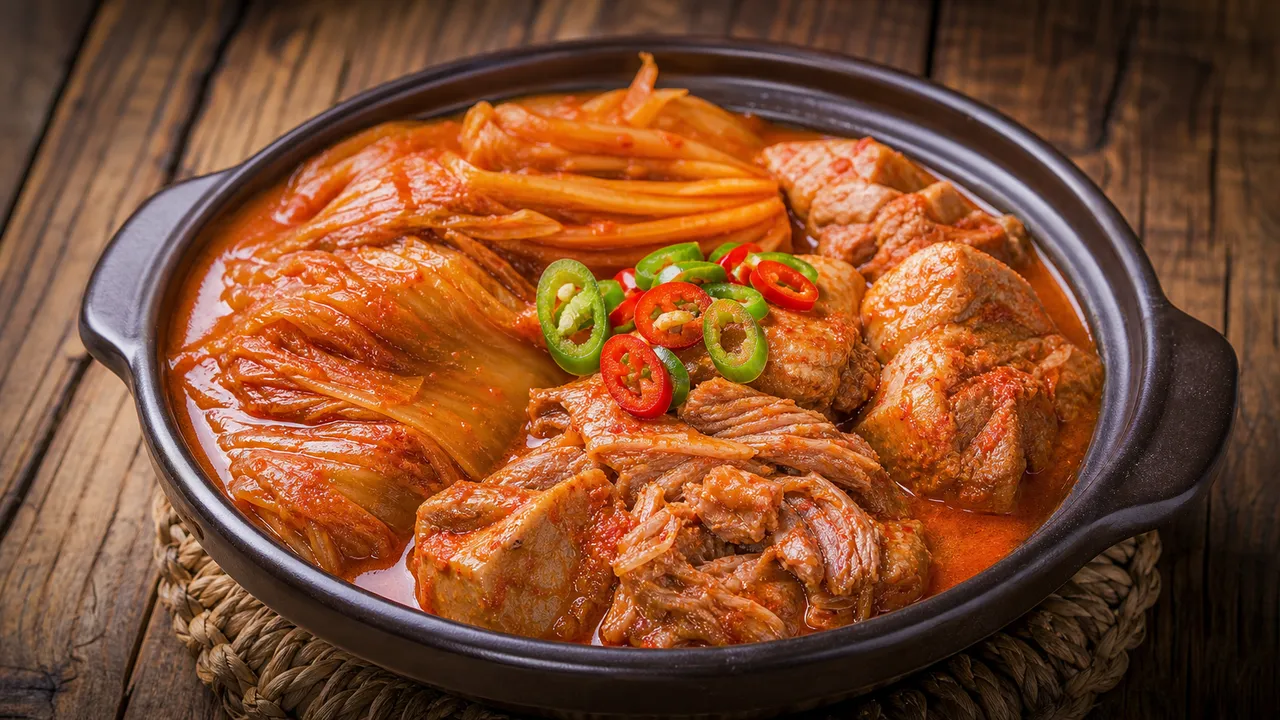
Cha Ye-ryun's Kimchi Jjim (김치찜) and Soy Sauce Egg Rice (Ganj
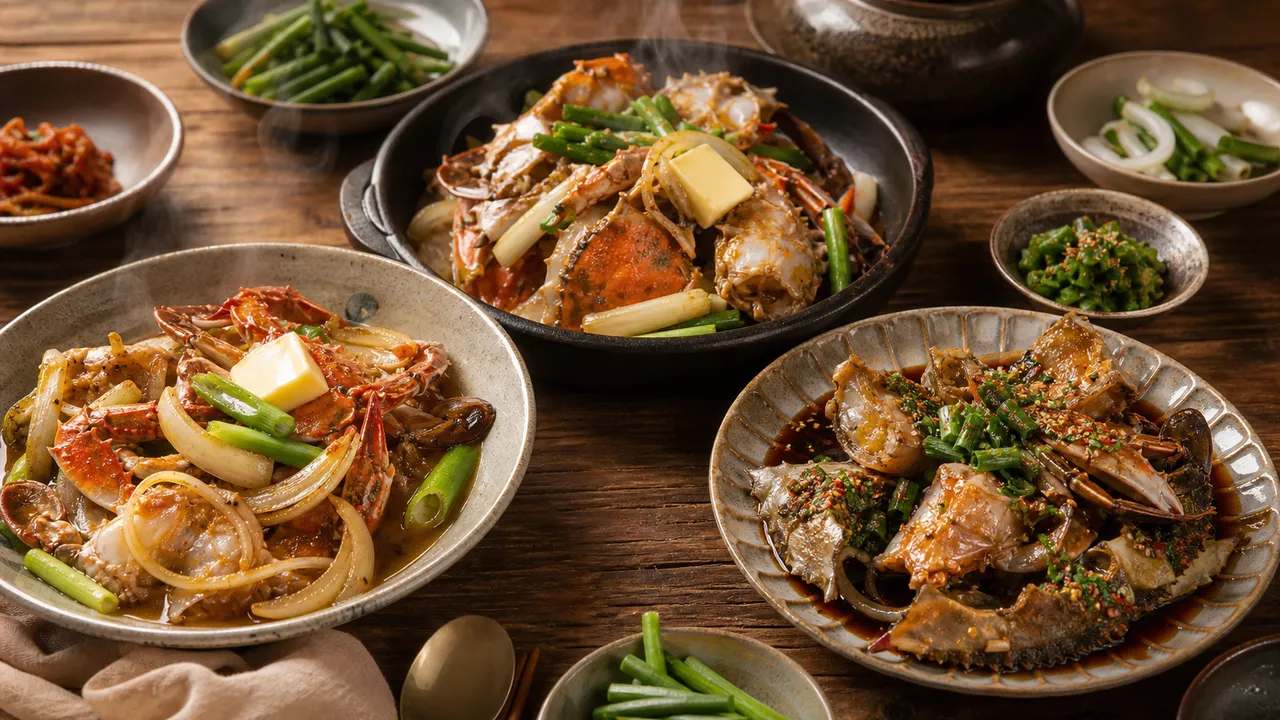
* 이미지는 AI가 생성한 참고 이미지로, 실제 조리 결과물과 다를 수 있습니다.
Introducing Cha Ye-ryun's home-cooked recipes that the whole family can enjoy: Kimchi Jjim (김치찜) with a deep flavor even without meat, easy-to-make Soy Sauce Egg Rice (Ganjang Gyeran-bap (간장 계란밥)), and even a noodle add-in (myeon sari (면 사리)) recipe using leftover Kimchi Jjim (김치찜).
📋 3 recipes — Select to view
Introducing Cha Ye-ryun's signature home-cooked recipes that the whole family can enjoy: a rich and flavorful Kimchi Jjim (김치찜) made without meat, an easy Soy Sauce Egg Rice, and even a noodle recipe using leftover Kimchi Jjim (김치찜).
📝 Editor's Notes
Today's featured Soy Sauce Egg Rice (간장 계란밥) is a versatile recipe that guarantees a hearty and delicious meal even in a busy daily life.
The savory spam, rich egg, and umami of soy sauce blend together to create a familiar yet special taste that everyone, young and old, will love.
The cooking process is very simple, and the ingredients are easy to find, so even beginner cooks can make it without fail.
It's an especially great menu to quickly whip up when you don't have an appetite or when there are no suitable ingredients in the refrigerator.
You'll feel a warm comfort spread throughout your body when you mix it with warm rice.
🛒 Ingredient Tips
For Soy Sauce Egg Rice (간장 계란밥), it's important to choose fresh eggs.
Fresh eggs have rough shells and make no sound when shaken.
For spam, you can choose original or light products according to your preference.
Using light spam can help reduce sodium intake.
Using seasoned soy sauce or soy sauce specifically for egg rice can create a much deeper and richer flavor.
If using regular dark soy sauce, it's a good idea to add a little sugar or oligo syrup for sweetness.
Be sure to add sesame oil (참기름) at the very end for its fragrant aroma.
Products labeled 'cold-pressed sesame oil' typically have a stronger and nuttier fragrance.
🔄 Substitution Guide
If you want to use ingredients other than spam, you can finely chop and use bacon or ham.
Bacon's unique smoky flavor will add a different aroma to the Soy Sauce Egg Rice (간장 계란밥).
In this case, it might be less salty than spam, so you may need to adjust the amount of soy sauce or add a little salt.
If you prefer to avoid meat, finely chopping and stir-frying mushrooms (such as shiitake or king oyster mushrooms) or crumbling and stir-frying tofu can be good alternatives.
Mushrooms provide a chewy texture, while tofu offers a soft texture and protein.
However, if substituting with mushrooms or tofu, the savory umami might be less than with spam, so it's a good idea to add a little more soy sauce or oyster sauce to adjust the seasoning.
🥘 Ingredients
👨🍳 Cooking Points
There are two crucial cooking points in this recipe.
First, when making the fried egg, it's best to cook it to a medium-soft yolk rather than fully cooked.
A runny yolk, when mixed with rice, offers a much softer and richer flavor.
Cooking over medium heat for about 2 minutes should be sufficient.
Second, when crumbling and frying the spam, make sure to fry it thoroughly with the egg.
The salty flavor of the spam will naturally infuse into the egg, balancing the overall seasoning.
Fry the crumbled spam with the egg for about 1-2 minutes.
Since spam is already well-seasoned, you can make delicious Soy Sauce Egg Rice (간장 계란밥) without adding extra salt.
Just remember this, and you'll be able to complete a delicious meal without fail.
👨🍳 Directions
In a pot, generously place whole pieces of various types of kimchi (김치), such as gifted kimchi or well-fermented kimchi, along with Gat Kimchi (갓김치) (optional). Add an appropriate amount of kimchi brine (김치 국물).
Add tuna sauce (참치액), cooking seasoning (요리맛샘), sand lance fish sauce (까나리 액젓), sugar, perilla oil (들기름), and soy sauce to your preference.
Pour enough rice water (쌀뜨물) to fully submerge the kimchi (김치).
Bring it to a boil over high heat. Once it's vigorously boiling, flip the kimchi (김치) once.
Adjust the heat to prevent it from boiling over. Add gochugaru (고춧가루) to taste. If the liquid reduces too much, add more rice water (쌀뜨물) and simmer for about 30-40 minutes.
Finally, add a little Cheongyang chili pepper (청양고추) and mix well to finish.
💡 Tips
When cooking rice, save the rice water (쌀뜨물) and store it in the refrigerator to use as broth for Kimchi Jjim (김치찜).
The longer you simmer it, the deeper the flavor of the Kimchi Jjim (김치찜) becomes. It's recommended to cook it in the morning and enjoy it for dinner.
Leftover kimchi (김치) from delivery can also be added and simmered with the Kimchi Jjim (김치찜) for a delicious meal.
Adding a generous amount of good quality perilla oil (들기름), such as 'Miajeon Perilla Oil,' to Kimchi Jjim (김치찜) makes it even more savory and delicious.
📦 Storage & Reuse
Soy Sauce Egg Rice (간장 계란밥) is best enjoyed immediately after cooking.
Leftover rice, egg, and spam stir-fry can be stored in an airtight container in the refrigerator for 1-2 days.
However, since it contains egg and spam, it can spoil easily, so it's best not to store it for too long.
To reheat, microwave for 1 minute 30 seconds to 2 minutes, or stir-fry gently in a pan over low heat until warm.
For leftover ingredients, finely chopped spam can be used in kimchi fried rice or budae jjigae (부대찌개), and eggs can be refrigerated and used the next morning for steamed eggs or egg drop soup.
🥢 Who This Is For
This Soy Sauce Egg Rice (간장 계란밥) is excellent for a busy breakfast or a simple lunch.
It's perfect as a solo meal and also a great nutritious snack for children.
Pairing it with warm seaweed soup or bean sprout soup makes for an even heartier meal.
If you enjoy spicy flavors, you can finely chop and add Cheongyang chili pepper (청양고추) or eat it with kimchi (김치); it pairs very well.
It's recommended as a warm and humble homemade meal for the whole family to enjoy.
🔥 Nutrition Info
One serving of this Soy Sauce Egg Rice (간장 계란밥) is estimated to be approximately 450-550 kcal.
This figure considers the main ingredients: rice (about 60-70g carbohydrates), egg (about 6g protein, 5g fat), spam (about 5g protein, over 15g fat), and soy sauce, sesame oil (참기름), etc.
Eggs are rich in high-quality protein and various vitamins (A, D, E, B12), as well as minerals like iron and zinc.
Spam is high in protein and fat, but also high in sodium, so it's important to consume it in moderation.
Sesame oil (참기름) is rich in unsaturated fatty acids, which can contribute to vascular health.
Overall, it's a meal that provides balanced carbohydrates, protein, and fat, offering substantial energy.
💬 Frequently Asked Questions
- Q. What ingredients do I need for Cha Ye-ryun's Kimchi Jjim (김치찜) and Soy Sauce Egg Rice (Ganjang Gyeran-bap (간장 계란밥)) Recipe (with Noodle Add-in Tips)?
- Main ingredients include Kimchi (김치), Kimchi brine, Rice water (ssal-tteumul (쌀뜨물)), Tuna sauce, Yorimassem (요리맛샘) cooking enhancer. The star of this Kimchi Jjim (김치찜) is undoubtedly the kimchi. For a deeper and richer flavor, use a generous half-quarter head or more of well-aged, sour kimchi. Mixing different types of kimchi can provide a more varied taste. Gat Kimchi (갓김치) is optional, but adding it will lend a slightly bitter yet clean taste, making it a unique treat. Additionally, perilla oil (deulgireum (들기름)) is a key ingredient that enhances the savory flavor of the kimchi jjim, so we recommend using a generous amount of fresh, high-quality perilla oil. Be sure to prepare rice water (ssal-tteumul (쌀뜨물)), as it helps to soften the flavor and thicken the broth of the kimchi jjim.
- Q. What are the key tips for making Cha Ye-ryun's Kimchi Jjim (김치찜) and Soy Sauce Egg Rice (Ganjang Gyeran-bap (간장 계란밥)) Recipe (with Noodle Add-in Tips)?
- This Kimchi Jjim (김치찜) illustrates that 'time creates flavor.' The first important point is to simmer it sufficiently for a long time. It needs to simmer gently over low heat for at least 30-40 minutes to allow the deep flavor of the kimchi to emerge. If you cook it in the morning and eat it for dinner, you'll experience an even deeper and richer taste. The second point is to utilize rice water (ssal-tteumul (쌀뜨물)). Pour in enough to cover the kimchi, and if the broth reduces, add more in between to maintain the flavor. Finally, when seasoning with various fish sauces (aekjeot (액젓)), sugar, and perilla oil (deulgireum (들기름)), it's crucial not to add too much at first. Taste as it simmers and adjust accordingly. This is the secret to making delicious kimchi jjim (김치찜) without fail.
- Q. How should I store leftover Cha Ye-ryun's Kimchi Jjim (김치찜) and Soy Sauce Egg Rice (Ganjang Gyeran-bap (간장 계란밥)) Recipe (with Noodle Add-in Tips)?
- Finished Kimchi Jjim (김치찜) can be stored fresh in an airtight container in the refrigerator for about 3-4 days. Since it's a dish that deepens in flavor the longer it's cooked, you might find it even more delicious a day or two later. If you wish to store it for longer, portion it out into single servings and freeze it. It can be stored in the freezer for about a month. When reheating after freezing, warm it gently over low heat or use a microwave. At this time, it's a good idea to add a little water or rice water (ssal-tteumul (쌀뜨물)) to prevent the broth from reducing too much. Leftover kimchi jjim (김치찜) broth can also be used to cook ramyeon or make kimchi fried rice (kimchi bokkeumbap (김치볶음밥)) for another delightful dish.
- Q. How many calories are in Cha Ye-ryun's Kimchi Jjim (김치찜) and Soy Sauce Egg Rice (Ganjang Gyeran-bap (간장 계란밥)) Recipe (with Noodle Add-in Tips)?
- This meat-free Kimchi Jjim (김치찜) can be a relatively low-calorie yet nutritionally excellent meal. A single serving is estimated to be around 200-250 kcal. Kimchi, the main ingredient, is rich in dietary fiber, which aids in gut health. As a fermented food, kimchi also contains lactic acid bacteria, which can positively impact immune system enhancement. Perilla oil (deulgireum (들기름)) is rich in omega-3 fatty acids, beneficial for cardiovascular health. Protein content may be low, so consuming it with eggs or tofu can ensure more balanced nutrition. Carbohydrates can be partially obtained from kimchi and rice water (ssal-tteumul (쌀뜨물)), along with vitamins C and K. Sodium content may be slightly high due to fish sauce (aekjeot (액젓)) and kimchi brine, so it's advisable to moderate intake.
- Q. Can I substitute ingredients in Cha Ye-ryun's Kimchi Jjim (김치찜) and Soy Sauce Egg Rice (Ganjang Gyeran-bap (간장 계란밥)) Recipe (with Noodle Add-in Tips)?
- If you don't have well-aged kimchi (muk-eunji (묵은지)), you can add a little vinegar to regular napa cabbage kimchi to enhance its sourness and a bit more sugar to mimic the taste of aged kimchi. However, it might lack some of the deep umami flavor. If tuna sauce or sand lance fish sauce (kkanari aekjeot (까나리 액젓)) is unavailable, you can substitute with anchovy fish sauce (myeolchi aekjeot (멸치액젓)) or Korean soup soy sauce (guk ganjang (국간장)). The depth of umami might vary depending on the type of fish sauce, so it's important to start with a small amount and adjust to taste. Using regular water instead of rice water (ssal-tteumul (쌀뜨물)) is acceptable, but rice water helps make the broth smoother and more savory, so it's recommended if possible. If you don't have perilla oil (deulgireum (들기름)), sesame oil can be substituted, but sesame oil has a strong aroma that can overpower the authentic taste of kimchi jjim, so it's best to use a small amount or omit it entirely.
💬 Comments
No comments yet. Be the first to comment!