
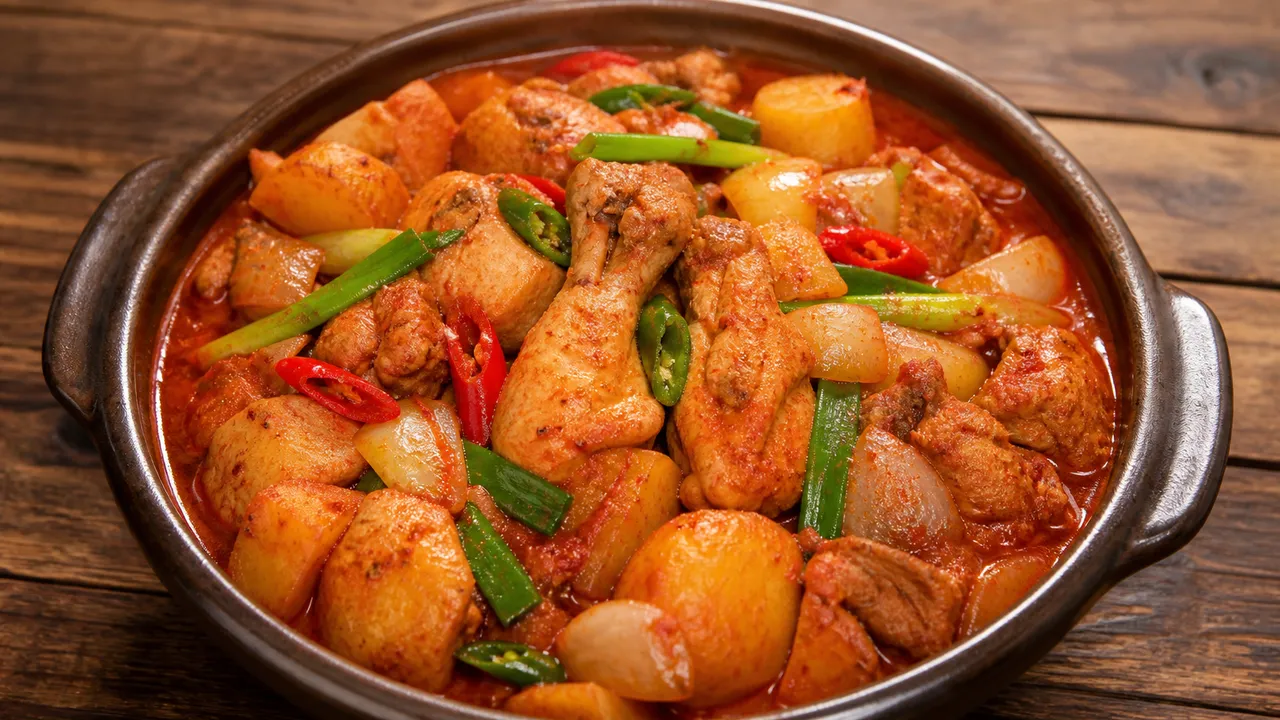
Collection of 3 Braised Spicy Chicken Recipes (Dakbokkeumtan
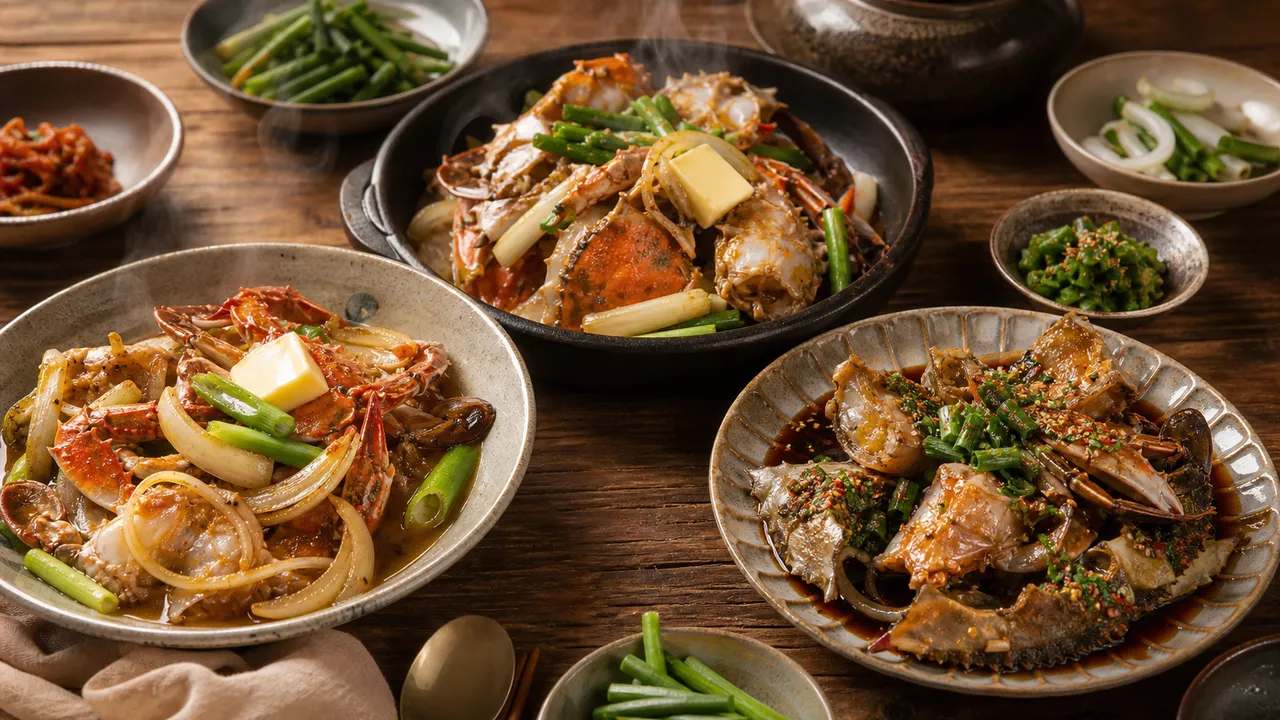
* 이미지는 AI가 생성한 참고 이미지로, 실제 조리 결과물과 다를 수 있습니다.
Introducing three different Dakbokkeumtang (닭볶음탕) recipes, offering a variety of flavors and cooking methods. From the spicy and fiery basic Dakbokkeumtang, to a delicious aged kimchi Dakbokkeumtang where deeply fermented kimchi harmonizes with tender chicken, and a piquant and spicy Dakdoritang (닭도리탕) that will awaken even the lost appetite. Create a hearty meal for the whole family to enjoy.
📋 3 recipes — Select to view
A spicy and hearty Korean braised chicken stew, also known as Dakbokkeumtang (닭볶음탕).
📝 Editor's Notes
Muk Eun Ji Dakdoritang (묵은지 닭도리탕) is a representative Korean dish where deeply fermented aged kimchi (묵은지) and tender chicken combine to create a rich and profound flavor.
Its tangy yet spicy broth is an undeniable 'rice thief' (bap-doduk).
This particular recipe stands out for its addition of doenjang (된장) to eliminate gamey odors and add a savory depth, boasting an even richer taste.
With its simple process of putting all ingredients together and simmering, it's easily approachable for beginner cooks.
On a chilly day, a warm bowl of dakdoritang (닭도리탕) shared with family will warm both body and soul.
It's a versatile dish, perfect as a drinking snack or a hearty meal.
🛒 Ingredient Tips
Aged kimchi (묵은지) is a crucial ingredient that determines the flavor of dakdoritang (닭도리탕).
Choose one that has been aged for at least one year, with a strong tangy taste and deep umami.
If it's too sour, you can adjust the acidity by adding a little sugar.
It's best to use fresh, domestically sourced chicken for dakbokkeumtang (닭볶음탕).
Selecting chicken that is meaty and firm will result in a more delicious dish.
Prepare soju (소주) or sake (청주) in advance, as they are excellent for removing chicken odors.
Using anchovy-kelp broth (멸치 다시마 육수) will significantly enhance the depth of flavor, so preparing it beforehand or using commercially available broth is a good idea.
🔄 Substitution Guide
If you use pork neck or pork belly instead of chicken, you can enjoy it as a Muk Eun Ji Pork Stew (묵은지 돼지고기찜).
You'll experience a different deep and rich flavor compared to dakdoritang (닭도리탕).
If doenjang (된장) is unavailable, a small amount of miso paste (미소 된장) or cheonggukjang (청국장) powder can provide a similar savory taste, though the aroma might differ slightly.
If ginger syrup (생강청) is not available, you can substitute with about 1/2 tbsp of minced ginger.
However, since ginger syrup also provides sweetness, it's recommended to supplement the sweetness with oligosaccharide (올리고당) or sugar when substituting.
Using plain water instead of broth may result in a less profound flavor, so it's recommended to at least add an anchovy-kelp broth (멸치 다시마 육수) packet.
🥘 Ingredients
👨🍳 Cooking Points
The first key point of this recipe is to thoroughly remove any gamey odors from the chicken.
Blanching the chicken once in boiling water with 3 tbsp of soju (소주) will result in a clean taste without any unpleasant smell.
It's crucial to immediately remove and wash the chicken as soon as it comes to a rolling boil.
The second point is to cook the aged kimchi (묵은지) thoroughly.
Covering and simmering for about 20 minutes ensures the kimchi becomes tender and absorbs the seasoning well.
Finally, one tablespoon of doenjang (된장) is a 'game-changer'.
Doenjang (된장) helps remove gamey chicken odors and adds a savory umami to the broth, so make sure to include it.
It's best to add green onions at the very end to preserve their fresh aroma.
👨🍳 Directions
Trim excess fat from 2 lbs (900g) of chicken and wash thoroughly.
Bring water to a boil, add the chicken, and as soon as it comes to a rolling boil, turn off the heat and wash the chicken thoroughly again.
Cut 4 potatoes into bite-sized pieces.
Roughly chop half an onion.
Cut 1 stalk of green onion into 2 cm (approx. 0.8 inch) lengths.
Thinly slice 2 Cheongyang chili peppers (청양고추) and 2 red chili peppers.
Place the blanched and washed chicken in a pan and stir-fry until the moisture evaporates. (This helps remove any fishy or gamey odors.)
Once the moisture has evaporated, add 2 tbsp of cooking oil and stir-fry.
Add 3 tbsp of sake (청주) and stir-fry until the fishy and gamey odors are gone.
Add the potatoes and stir-fry once more.
Add 2 cups (500mL) of water, 2 tbsp of soy sauce, 2 tbsp of minced garlic, 1 tbsp of gochugaru (고춧가루), 2 tbsp of gochujang (고추장), and 2 tbsp of oyster sauce, then bring to a boil.
Add 2 tbsp of oligosaccharide (올리고당) and boil over high heat until the chicken and potatoes are cooked. (Cover the pot partially to prevent overflowing.)
Once the chicken and potatoes are fully cooked, add the onion and chili peppers, reduce heat to medium-low, and simmer for about 15 more minutes. (Be careful not to reduce the sauce too much.)
Add the green onion and let it simmer on low heat for about 2 minutes to meld the flavors.
Finish by adding a pinch of black pepper to taste.
💡 Tips
Blanching the chicken once removes any fishy smell and makes the meat tender, resulting in a clean and delicious dish.
Adding sake (청주) when stir-frying the chicken completely eliminates any fishy or gamey odors, keeping the flavor clean.
If you trim the edges of the potatoes, they won't crumble during cooking and will maintain a nice shape.
If the sauce reduces too much, the flavor will be less appealing, so adjust to medium-low heat while simmering.
Green onions cook quickly, so even 1-2 seconds of cooking is enough for good flavor. Autumn green onions are sweet and delicious even with minimal cooking.
📦 Storage & Reuse
Leftover Muk Eun Ji Dakdoritang (묵은지 닭도리탕) can be stored in an airtight container in the refrigerator for 2-3 days.
As it is a dish with a lot of broth, it can also be frozen.
For freezing, divide it into smaller portions for convenient use whenever needed.
After thawing, reheat it in a pot over medium heat.
You can add a little water or broth to adjust the consistency and season with salt or fish sauce if necessary.
The leftover dakdoritang (닭도리탕) broth can be used to make a delicious fried rice by adding rice, shredded seaweed, and sesame oil.
🥢 Who This Is For
This Muk Eun Ji Dakdoritang (묵은지 닭도리탕) is a great dish for the whole family to enjoy.
Those who love kimchi (김치) will be especially satisfied.
Its spicy yet deep flavor makes it an excellent choice for a housewarming party or when you crave a warm stew on a rainy day.
It's perfect as a hearty meal with rice, or as a superb drinking snack with soju (소주) or makgeolli (막걸리).
Don't forget to try frying rice in the leftover sauce—it's incredibly delicious.
🔥 Nutrition Info
One serving of this Muk Eun Ji Dakdoritang (묵은지 닭도리탕) (based on 4 servings) is estimated to be approximately 450-550 kcal.
It will contain about 40-50g of protein, 25-35g of fat, and 20-30g of carbohydrates.
Chicken is a good source of high-quality protein, and aged kimchi (묵은지) is rich in probiotics and dietary fiber, which aid in gut health.
Additionally, vegetables like garlic, onion, and green onion provide vitamins and minerals.
Especially, cooking without the chicken skin can reduce fat intake.
As sodium content can be high, it's advisable to moderate your broth consumption.
💬 Frequently Asked Questions
- Q. What ingredients do I need for Collection of 3 Braised Spicy Chicken Recipes (Dakbokkeumtang)?
- Main ingredients include Chicken, Potatoes, Onion, Green onion (scallion), Cheongyang chili peppers. When selecting ingredients for delicious Dakbokkeumtang, remember a few key things! 🐔 First, freshness is paramount for the chicken. Choose chicken that is firm, glossy, and odor-free. Approximately 900g is a generous amount for a family of 3-4. You can purchase pre-cut chicken for stew or focus on chicken thighs for a more tender texture. For potatoes, it's best to choose those that are heavy, firm, and free of blemishes. Avoid potatoes that have sprouted or have a green tint. As mentioned in the cooking tips, rounding the edges of the potatoes will prevent them from breaking apart during cooking and help them maintain their shape. Autumn potatoes are especially sweet and delicious, so try to use them when in season! Cheongyang chili peppers and red chili peppers are fresh when they have vibrant colors, a glossy sheen, and are firm. If you enjoy extra spice, feel free to add more Cheongyang chili peppers.
- Q. What are the key tips for making Collection of 3 Braised Spicy Chicken Recipes (Dakbokkeumtang)?
- Here are three key cooking points for a successful Dakbokkeumtang! ✨ First, pay close attention to removing any gamey odor from the chicken. As indicated in the recipe, it's crucial to blanch the chicken once and immediately remove it from the water and wash it as soon as it comes to a rolling boil. Afterward, stir-fry the chicken in a pan until all moisture has evaporated, then add 2 tbsp of cooking oil and 3 tbsp of sake (cheongju) and stir-fry again. This process will completely eliminate any unpleasant smell and make the meat even more tender. This is the secret to a clean flavor. Second, adhere to proper heat control and simmering times. The key is to bring the dish to a boil over high heat after adding the seasoning, then reduce to medium-low heat and simmer for about 15 more minutes once the chicken and potatoes are cooked. During this time, cover the pot partially and check occasionally to prevent the sauce from reducing too much. The dish is most delicious when there's still a generous amount of sauce. Third, add vegetables at different stages. While potatoes need to cook thoroughly with the chicken, onions and chili peppers should be added during the final 15-minute simmering stage to prevent them from becoming too soft. Green onions (scallions) should be added almost at the very end and cooked for only about 2 minutes to preserve their fresh aroma and crisp texture.
- Q. How should I store leftover Collection of 3 Braised Spicy Chicken Recipes (Dakbokkeumtang)?
- Enjoy your delicious Dakbokkeumtang even as leftovers by storing it properly! 🍲 Once the finished Dakbokkeumtang has cooled completely, store it in an airtight container in the refrigerator for 2-3 days to keep it fresh. Freezing is also possible, but please note that potatoes may become mealy upon thawing. It's best to consume frozen portions within 1-2 weeks. To reheat, place it in a pot and gently warm over medium-low heat. If the sauce has reduced too much, add about 1/4 cup of water and bring it to a simmer again to maintain its moisture. You can also make a delicious fried rice by adding rice, shredded seaweed (gim-garu), and sesame oil to the leftover Dakbokkeumtang sauce, or enjoy it by mixing in udon or ramyeon noodles for another delightful treat!
- Q. How many calories are in Collection of 3 Braised Spicy Chicken Recipes (Dakbokkeumtang)?
- Based on a 4-serving recipe, this Dakbokkeumtang is estimated to provide approximately 450-550 kcal per serving. The main ingredient, chicken, is rich in high-quality protein, providing about 30-40g, which aids in muscle building and maintenance. Potatoes serve as a primary source of carbohydrates, offering about 30-40g, and are also rich in Vitamin C and potassium, contributing to fatigue relief and sodium excretion. Onions and chili peppers supplement dietary fiber and Vitamins A and C, benefiting immune system strengthening. However, the sauces like gochujang (고추장) and oyster sauce can be high in sodium, so it's important to cook it not too salty and control your broth intake for health. Oligosaccharide has fewer calories than sugar and can act as a prebiotic, beneficial for gut health.
- Q. Can I substitute ingredients in Collection of 3 Braised Spicy Chicken Recipes (Dakbokkeumtang)?
- If you're missing certain ingredients or prefer different flavors, try utilizing some substitutions. 👩🍳 First, you can use soju or white wine instead of sake (cheongju). Soju has a similar effect in removing gamey odors, while white wine can add a more Western flavor. If using mirin, be aware that it adds sweetness, so you may need to adjust the amount of oligosaccharide. There might be a slight difference from the clean taste of sake, but it's effective for odor removal. Second, if you don't have oyster sauce or have a seafood allergy, you can omit it or mix soy sauce, sugar, and a bit of umami seasoning. Oyster sauce adds deep umami and thickness, so substituting it might result in a slightly less rich flavor. Adding a small amount of cooking wine (like mirin) or fish sauce is also a good option. Third, for the chicken cut, using only chicken thighs instead of pre-cut Dakbokkeumtang pieces will result in more tender meat. If using chicken breast, you can reduce fat content, but be careful to shorten cooking time to prevent it from becoming dry.
💬 Comments
No comments yet. Be the first to comment!