
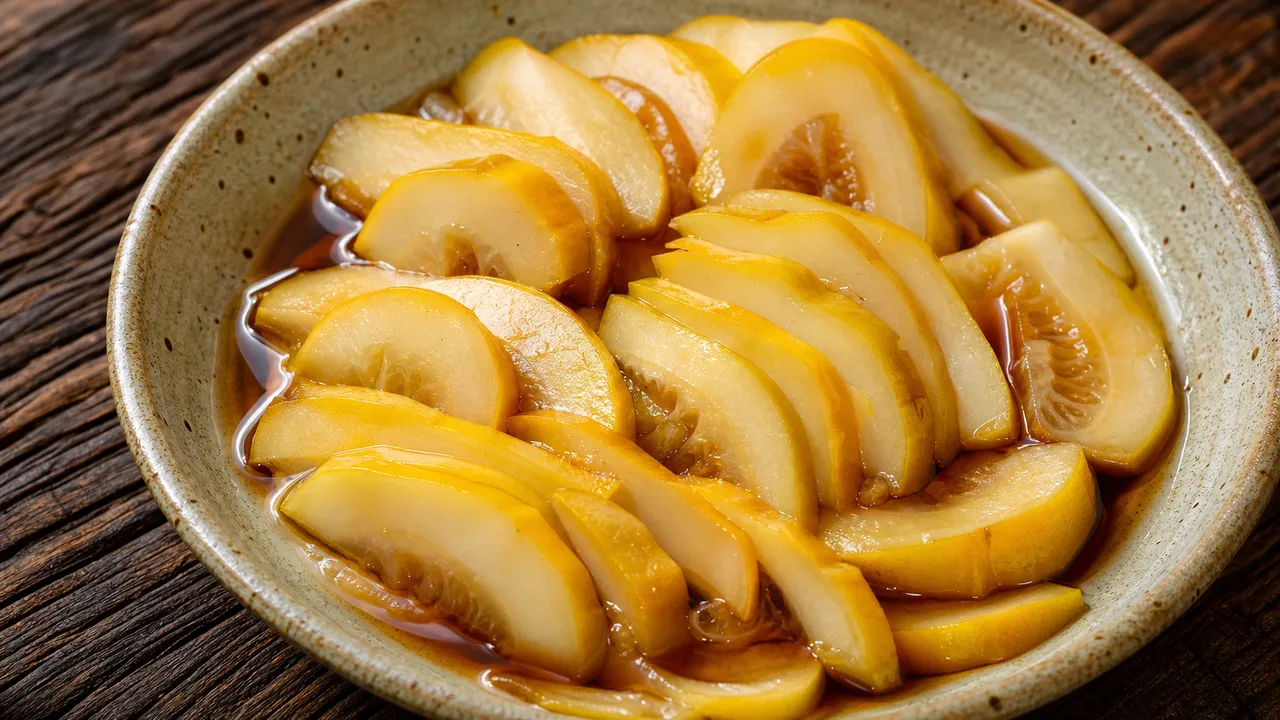
3 Recipes Using Seasonal Korean Melon (Chamoe Jangajji, Cham
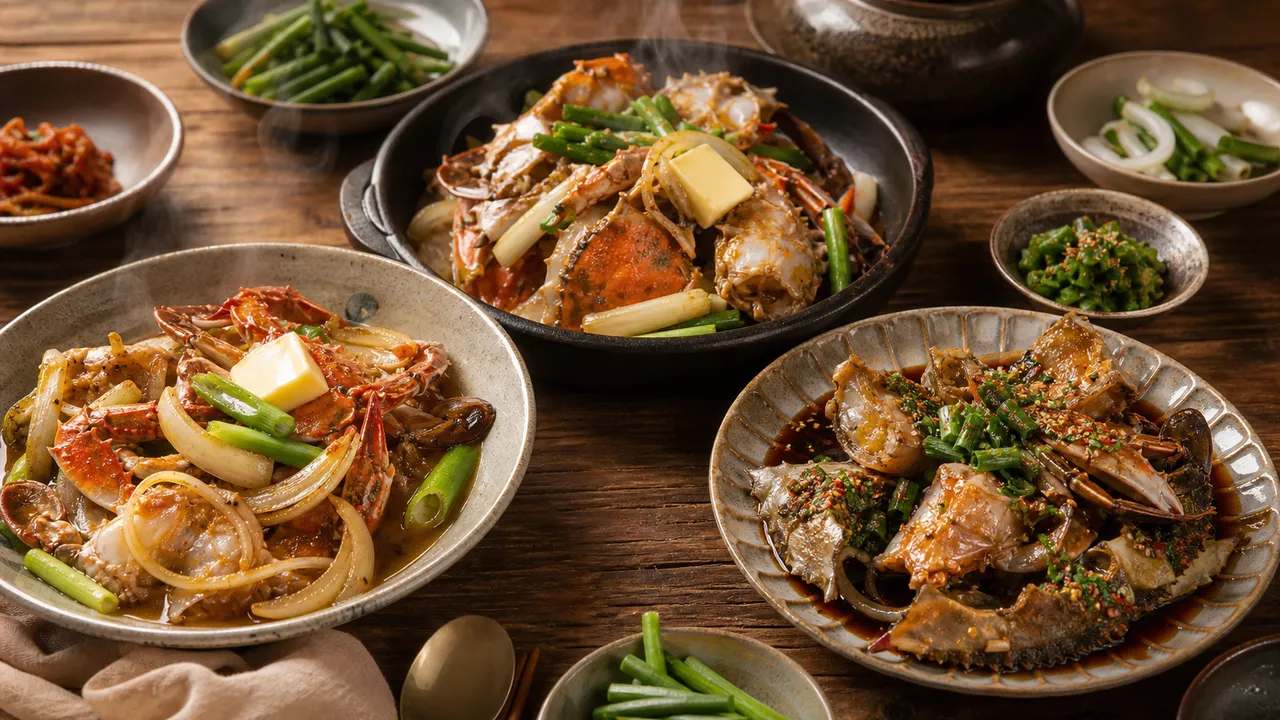
* 이미지는 AI가 생성한 참고 이미지로, 실제 조리 결과물과 다를 수 있습니다.
These recipes utilize seasonal Korean melon (참외) to create sweet and savory Korean Melon Pickles (참외 장아찌), refreshing Korean Melon Ice Cream, and a thirst-quenching Korean Melon Smoothie.
📋 3 recipes — Select to view
This recipe for Chamoe Jangajji (Korean Melon Pickles) offers a delightful balance of sweet, sour, and salty flavors, making it a perfect 'rice thief' side dish.
📝 Editor's Notes
Korean Melon Ice Cream (Chamoe Ice Cream) is a refreshing dessert recipe that captures the natural sweetness and fragrant aroma of Korean melon without artificial sweeteners.
Made only with fresh Korean melon, heavy cream, lemon juice, and a pinch of salt, it allows you to enjoy the authentic flavors of the ingredients.
The cooking process is simple, making it easy for beginner cooks to try.
It's especially excellent for quenching thirst and stimulating appetite on hot summer days.
For those who find the sweetness of store-bought ice cream overwhelming, this will be a healthy and special homemade treat.
Its natural sweetness and smooth texture make it a delightful summer delicacy.
🛒 Ingredient Tips
When choosing Korean melons, look for ones with a yellow, glossy skin and deep, distinct grooves.
A fresh Korean melon will have a vibrant stem and feel slightly firm when pressed.
Avoid any that are too soft or bruised.
For heavy cream, using animal-based cream with a high milk fat content will result in richer and smoother ice cream.
Vegetable-based cream can also be used, but the flavor may be slightly weaker.
For lemons, choose fresh, firm ones that are good for juicing, and add only a small amount of salt, as it enhances sweetness rather than adding saltiness.
🔄 Substitution Guide
If you want to use other fruits instead of Korean melon, you can substitute fruits with high water content and good sweetness, such as cantaloupe or watermelon.
Cantaloupe ice cream will offer a richer aroma and sweetness, while watermelon ice cream will provide a refreshing and cool taste.
However, you should adjust the amount of sugar or honey according to the fruit's sweetness.
If you don't have heavy cream or have dairy allergies, you can substitute coconut milk.
Coconut milk adds an exotic flavor, and the texture may become slightly lighter and smoother.
Salt plays a role in balancing the flavors, so omitting it won't cause a major issue, but the taste might be a bit bland.
Lemon juice can be replaced with lime juice to add a tangy flavor.
🥘 Ingredients
👨🍳 Cooking Points
The most crucial cooking point for this recipe is to make sure to squeeze out the juice from the Korean melon seeds and add it.
This juice is the secret to maximizing the natural sweetness of the Korean melon.
Place the seeds on a fine-mesh sieve and press them firmly with a spoon or similar utensil to extract as much juice as possible.
The second point is to put all ingredients into a food processor or high-speed blender and blend them very finely.
The Korean melon pulp should be smoothly incorporated without lumps for a good ice cream texture.
Finally, don't forget to stir the mixture with a fork once every hour while it freezes.
This process incorporates air, making the ice cream smoother and creamier.
Skipping this step can result in hard ice crystals.
👨🍳 Directions
Prepare 600g (about 2 large or 4 small) Korean melons. Since they are eaten with the skin, wash them thoroughly. Cut them in half lengthwise and remove the seeds from the center.
Place the prepared Korean melon diagonally in a container. Add 50g salt, 180g sugar, 1/2 cup (120ml) soju or sake, and 1/2 cup (120ml) vinegar, in that order. Let it ferment at room temperature for 3 days.
After 3 days of fermentation, slice the Korean melon thinly, about 3-5mm (1/8-1/4 inch) thick, then lightly squeeze out any excess liquid and set aside.
Combine 1 tsp (5g) minced garlic, 1 tbsp (6g) gochugaru (고춧가루), 1 tbsp (15ml) honey, and 1 tbsp (15ml) sesame oil with the sliced melon. Mix everything together by hand until the gochugaru (고춧가루) paste is well incorporated and colors the melon. Finally, add 1 tbsp (6g) finely chopped green onion and mix gently to finish.
💡 Tips
Since jangajji (pickles) are salty, it is best to slice them thinly.
You can substitute sugar for honey.
Sprinkling toasted sesame seeds at the end is also a good idea.
📦 Storage & Reuse
Store the finished Korean melon ice cream in an airtight container in the freezer.
Minimizing exposure to air prevents the ice cream from drying out or forming ice crystals.
The recommended storage period is about 1-2 weeks in the freezer.
If stored for too long, the fresh taste and aroma of the Korean melon may diminish, so it's best to consume it as soon as possible.
Before serving, remove it from the freezer and let it sit at room temperature for 5-10 minutes to achieve a softer consistency.
Leftover Korean melon flesh can be used for Korean melon salad or juice, and the thoroughly washed Korean melon skin can be julienned and made into a seasoned side dish.
🥢 Who This Is For
This Korean melon ice cream is recommended for anyone in need of a refreshing treat on a hot summer day.
It's especially great as a snack for children and a healthy dessert that seniors can enjoy without burden.
It's also perfect for a light palate cleanser after a meal or as a special dessert when entertaining guests.
You can also enjoy it with other fruits, topping a fruit salad, or with yogurt for a unique flavor.
Try adding it as a refreshing finish to your brunch menu.
🔥 Nutrition Info
Based on 300g Korean melon, 80ml heavy cream, lemon juice, and salt, the estimated calories per serving (approx.
100g) for this recipe are around 150-180kcal.
This may vary depending on the amount of Korean melon used.
It is estimated to contain approximately 1-2g protein, 10-13g fat (depending on the type of heavy cream), and 15-20g carbohydrates.
Korean melon has high water content and is rich in potassium, which helps excrete sodium from the body.
It also contains vitamin C, beneficial for immune system strengthening and skin health.
Additionally, its rich fiber content positively impacts gut health.
While heavy cream has a high-fat content, moderate amounts can be utilized as an energy source.
💬 Frequently Asked Questions
- Q. What ingredients do I need for 3 Recipes Using Seasonal Korean Melon (Chamoe Jangajji, Chamoe Ice Cream, Chamoe Smoothie)?
- Main ingredients include Korean melon (참외), Salt, Sugar, Soju (소주) or Sake, Vinegar. The freshness and quality of Korean melon (참외), the key ingredient for Korean Melon Pickles (참외 장아찌), are crucial. Since it's used with the skin, thorough washing is the most important step. A good Korean melon has yellow, glossy skin, clear stripes, and feels firm when touched. Also, one that is not too large and feels heavy in your hand is likely to be sweeter. Seasonal Korean melons harvested in summer have high water content, providing a crisp texture and a more refreshing taste when made into pickles. For salt, it's good to use general sea salt, and soju (소주) or sake helps remove unwanted odors and aids fermentation.
- Q. What are the key tips for making 3 Recipes Using Seasonal Korean Melon (Chamoe Jangajji, Chamoe Ice Cream, Chamoe Smoothie)?
- There are three key points to making delicious Korean Melon Pickles (참외 장아찌). First, since the Korean melon (참외) is used with its skin, thorough washing is essential, and be sure to remove the seeds from the center. Removing the seeds helps maintain a crisp texture later and prevents it from becoming mushy. Second, the process of fermenting it at room temperature for 3 days with salt, sugar, soju (소주), and vinegar. It's important that the container is airtight to prevent air circulation, and an appropriate room temperature, rather than too hot or cold, helps the flavors develop well. Third, after fermentation, it's crucial to thinly slice the Korean melon to 3-5mm thickness and lightly squeeze out the liquid. Slicing it too thickly can make it too salty, and squeezing out the right amount of moisture helps create a chewy and crunchy texture.
- Q. How should I store leftover 3 Recipes Using Seasonal Korean Melon (Chamoe Jangajji, Chamoe Ice Cream, Chamoe Smoothie)?
- Store the finished Korean Melon Pickles (참외 장아찌) in an airtight container in the refrigerator. As it's a fermented food, it can be stored relatively long, but it's recommended to consume it within 2 weeks for the best taste. The flavor may intensify over time, so it's best to take out an appropriate amount and slice it thinly each time you eat it. Storing it cold will make it crispier and more refreshing. Beyond being a side dish, you can also finely chop it and add it to bibimbap or rice balls for a unique flavor.
- Q. How many calories are in 3 Recipes Using Seasonal Korean Melon (Chamoe Jangajji, Chamoe Ice Cream, Chamoe Smoothie)?
- These Korean Melon Pickles (참외 장아찌) are a good way to consume the nutrients of seasonal Korean melon (참외). Korean melon is high in water, good for thirst relief, and rich in dietary fiber, which can help gut health. It also contains vitamin C and potassium, contributing to fatigue recovery and sodium excretion. Based on the entire recipe, it's approximately 1300-1400 kcal, and dividing this into 6 servings, each serving is estimated to be about 210-240 kcal. Carbohydrate content is high due to sugar and honey, and a small amount of fat is obtained from sesame oil. However, due to the nature of pickles, the sodium content can be somewhat high, so it's recommended to slice thinly and consume in moderation.
- Q. Can I substitute ingredients in 3 Recipes Using Seasonal Korean Melon (Chamoe Jangajji, Chamoe Ice Cream, Chamoe Smoothie)?
- If you don't have Korean melon (참외) or want a different taste for Korean Melon Pickles (참외 장아찌), you can use a few alternative ingredients. Using cucumber instead of Korean melon will maintain the crisp texture but reduce the unique subtle sweetness and aroma of Korean melon. In this case, it's good to slightly increase the amount of sugar or honey. Using daikon radish will create pickles with a firmer and more refreshing taste than Korean melon. If you don't have soju (소주) or sake, you can substitute with cheongju (Korean rice wine) or mirin, but mirin can be quite sweet, so adjust the sugar amount accordingly. You can use sugar instead of honey, and using oligo syrup is also a good option if you want to reduce sweetness. However, since preserving the natural flavor of Korean melon is most important, it's recommended to use Korean melon if possible.
💬 Comments
No comments yet. Be the first to comment!