
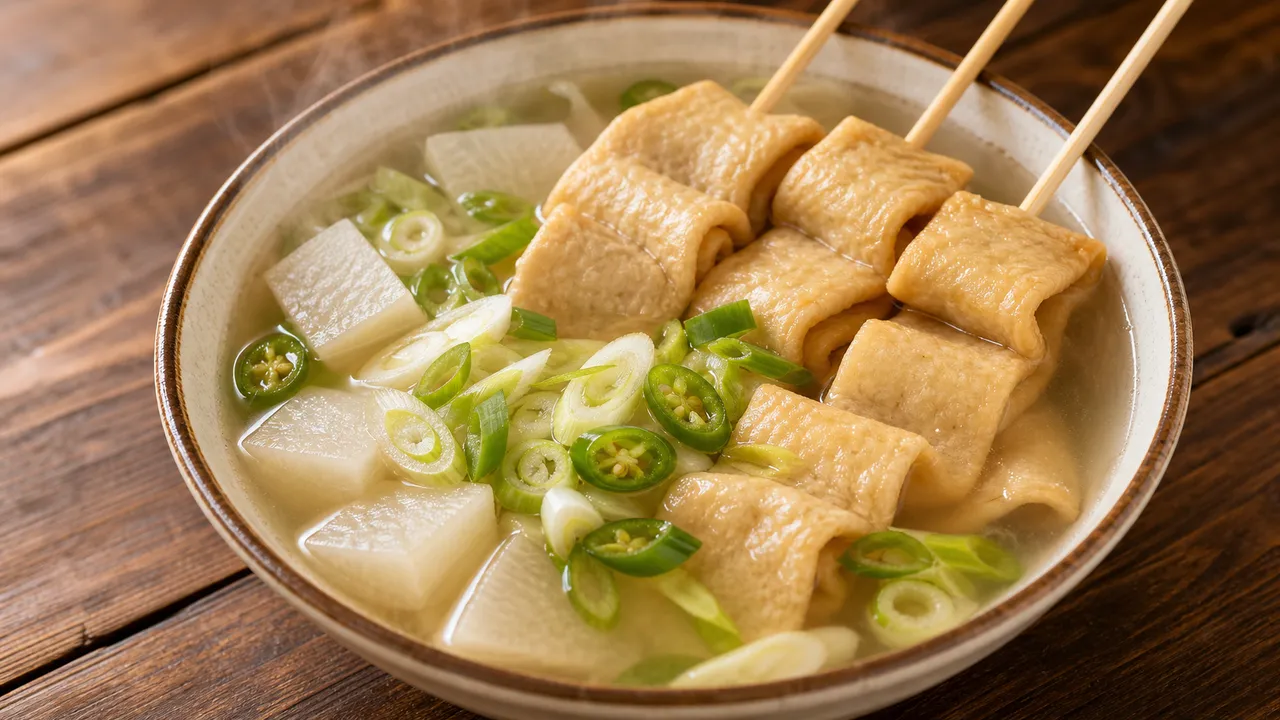
Street Style Fish Cake Soup Recipe and Fish Cake Dipping Sau
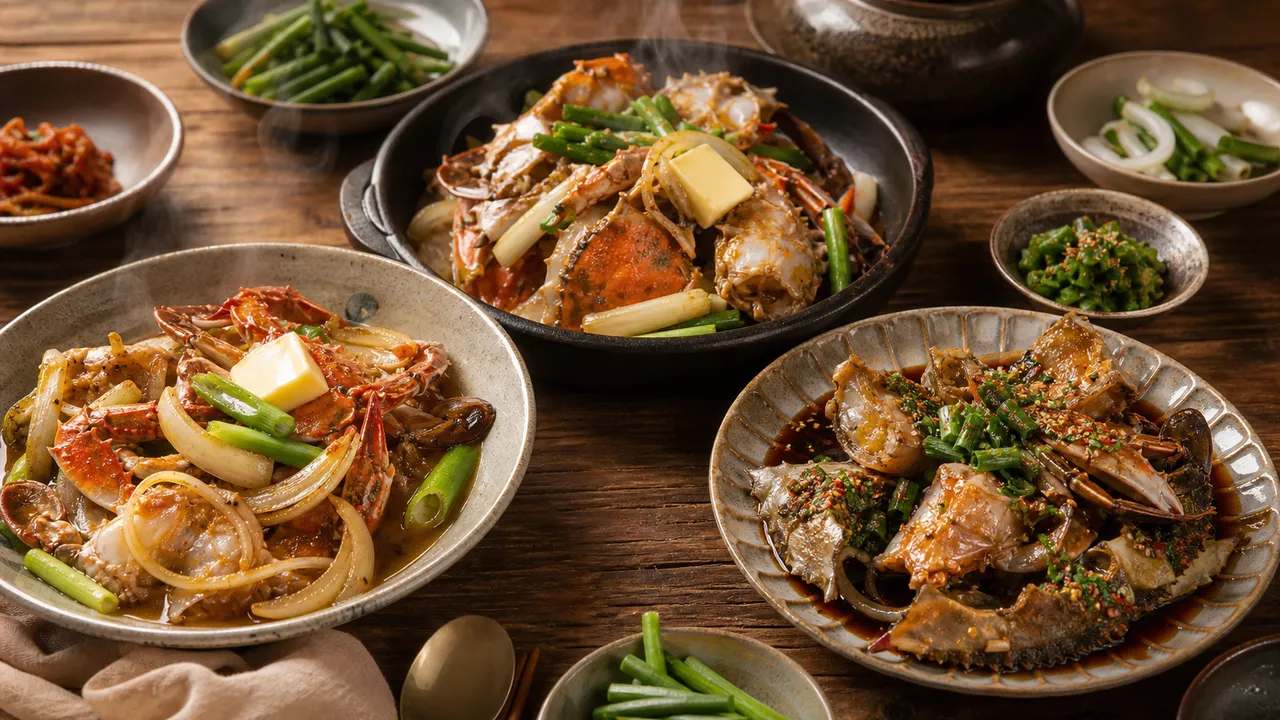
* 이미지는 AI가 생성한 참고 이미지로, 실제 조리 결과물과 다를 수 있습니다.
A recipe to easily recreate the deep and refreshing taste of street style fish cake soup at home. We introduce a special tip for infusing daikon radish flavor, the golden ratio for the broth seasoning, and the know-how for making a delicious fish cake dipping sauce.
📋 2 recipes — Select to view
A street-style fish cake soup (Eomuk-tang) with an exceptionally deep and refreshing broth.
📝 Editor's Notes
This Eomuk Ganjang (fish cake soy sauce) recipe is a magical dipping sauce that elevates the flavor of Eomuk-tang (fish cake soup).
The deep savoriness of soy sauce, subtle sweetness of mirin, refreshing tang of vinegar, and the fresh aroma and spiciness of garlic, green onion, and Cheongyang chili pepper (청양고추) combine to create a complex umami experience.
It's incredibly simple to make, allowing even beginner cooks to prepare delicious Eomuk Ganjang without fail.
Paired with warm Eomuk-tang on a chilly day, it makes for a comforting and satisfying meal that warms both body and soul.
This sauce is key to recreating the nostalgic taste of street vendor Eomuk-tang right at home.
🛒 Ingredient Tips
The key ingredients that determine the flavor of this Eomuk Ganjang are soy sauce (Jin Ganjang, 진간장), mirin, and Cheongyang chili pepper (청양고추).
Jin Ganjang offers a deeper and richer flavor than regular soy sauce, so it's recommended to choose a high-quality brewed soy sauce or Jin Ganjang.
Mirin adds sweetness and gloss, and helps to remove unwanted odors; among commercially available mirin, we recommend choosing a product with less artificial sweetness and a pleasant fermented aroma.
For the Cheongyang chili pepper (청양고추), select fresh, firm, and glossy peppers to fully enjoy their spicy and clean taste.
Avoid those that are too soft or discolored.
🔄 Substitution Guide
If mirin is unavailable, you can add 2 tbsp of cheongju (Korean rice wine) or soju, and then add about 1/2 tbsp more sugar to compensate for the sweetness.
However, the unique umami and glossy finish characteristic of mirin might be somewhat lacking.
If Cheongyang chili pepper (청양고추) feels too spicy or is hard to find, you can mince regular green chili peppers or increase the amount of gochugaru (고춧가루, Korean chili powder) from 1/2 tbsp to 1 tbsp to adjust the spiciness.
However, the refreshing and pungent taste of fresh chili might be slightly reduced.
Instead of minced green onion, you can use chives, and if neither is available, finely minced onion can be used, though it will differ from the fragrant notes of green onion or chives.
🥘 Ingredients
👨🍳 Cooking Points
The most crucial cooking point when making Eomuk Ganjang is to mix it thoroughly until the sugar is completely dissolved.
If sugar granules remain, the sauce's flavor can be inconsistent and unpleasant in the mouth, so stir it to the bottom with a spoon or small whisk.
The second point is to use fresh aromatic vegetables like minced garlic, green onion, and Cheongyang chili pepper (청양고추), chopped just before use.
Chopping them in advance can cause the aroma to dissipate, so chopping them right before making the sauce will result in a more fragrant and flavorful ganjang.
Finally, after mixing all ingredients, it's essential to taste and adjust the spiciness or sweetness according to your preference.
👨🍳 Directions
Fold the fish cakes into thirds and skewer them.
Split 1/2 stalk of green onion lengthwise, then cut into pieces about two finger-widths long.
Cut 1 Cheongyang chili pepper (청양고추) into 3 large pieces.
Place 3-4 slices of Korean radish (mu, 무) on a plate, cover with plastic wrap, and microwave for 2 minutes.
Arrange the skewered fish cakes, sliced green onion, Cheongyang chili pepper (청양고추), and microwaved Korean radish (mu, 무) nicely in a hot pot.
Pour 3½ cups (800ml) of water into the pot, then add 1-2 pieces of dried kelp (dashima, 다시마) or 1/2 tbsp of dried seaweed (miyeok, 미역).
Add 1/2 tbsp Dashida (다시다), 1 tbsp soy sauce (Jin Ganjang, 진간장), 1/2 tbsp minced garlic, black pepper to taste, 1/3 tbsp Miwon (미원), and 1/2 tbsp Hondashi (ほんだし) to the pot, cover, and bring to a boil.
Once the broth boils, continue to simmer for another 3-4 minutes to allow the fish cakes to release their flavor.
💡 Tips
When skewering the fish cakes, fold them into thirds to ensure a pretty shape and prevent them from unraveling.
Microwaving the Korean radish (mu, 무) for 2 minutes before adding it helps to quickly and intensely extract its flavor into the broth.
If dried kelp (dashima, 다시마) is unavailable, you can substitute with 1/2 tbsp of dried seaweed (miyeok, 미역) to achieve a refreshing and deep flavor.
Adding Miwon (미원) and Hondashi (ほんだし) helps to replicate the deep and refreshing broth flavor characteristic of street-style fish cake soup.
📦 Storage & Reuse
Store the prepared Eomuk Ganjang in an airtight container in the refrigerator.
Since it contains fresh green onion, garlic, and Cheongyang chili pepper (청양고추), it's best to consume it as soon as possible, ideally within 3-5 days.
The fresh aroma of the ingredients may diminish and the taste may change with longer storage.
Leftover ganjang can be used beyond Eomuk-tang, such as a seasoning for boiled eggs, pan-fried tofu, or simple stir-fried vegetables.
Freezing is not recommended as it can alter the texture and aroma of the fresh vegetables.
🥢 Who This Is For
This Eomuk Ganjang is best enjoyed with warm Eomuk-tang.
Especially when served alongside a spicy and refreshing Eomuk-tang, it truly enhances the flavor of the fish cakes.
It is more recommended for adults who enjoy spicy flavors rather than children.
Serving it with Eomuk-tang for guests will make your table setting stand out with thoughtful care.
Beyond Eomuk-tang, it also pairs wonderfully as a dipping sauce for various pan-fried dishes like mandu (dumplings), kimchi jeon (kimchi pancake), or haemul pajeon (seafood green onion pancake), as well as fried foods.
🔥 Nutrition Info
Based on one tablespoon (approx.
15-20g) of this Eomuk Ganjang, the estimated calorie content is around 20-30 kcal.
Carbohydrates primarily come from soy sauce (Jin Ganjang, 진간장), mirin, and sugar, while protein and fat content are very low.
Sodium content is relatively high due to the soy sauce, so it's advisable not to consume it excessively.
Minced garlic and green onion provide small amounts of allicin and vitamins C and K, while Cheongyang chili pepper (청양고추) contains capsaicin and vitamin C, which can help boost immunity and provide antioxidant benefits.
Enjoy it deliciously, but it's recommended to consume in moderation considering sodium intake.
💬 Frequently Asked Questions
- Q. What ingredients do I need for Street Style Fish Cake Soup Recipe and Fish Cake Dipping Sauce?
- Main ingredients include Fish cakes (flat, rectangular), Green onion (scallion), Cheongyang chili pepper (청양고추), Daikon radish, Water. Pay a little attention to ingredient selection for a delicious fish cake soup. First, prepare thin, rectangular fish cakes (eomuk) to best evoke the street food atmosphere. Choosing products with a high fish paste content will give you a chewier texture and deeper flavor. Daikon radish should be firm, smooth-skinned, and heavy when lifted. Winter radishes, with their excellent sweet flavor, are especially recommended when in season. Good quality dried kelp (dasima) is dark, of moderate thickness, and has a white powdery coating. This white powder is an umami-enhancing compound, so do not wipe it off.
- Q. What are the key tips for making Street Style Fish Cake Soup Recipe and Fish Cake Dipping Sauce?
- There are three crucial cooking points for this recipe. First, microwaving the daikon radish for 2 minutes. This simple step allows you to extract the refreshing and deep flavor of the radish sufficiently without long simmering. Second, it's important to fold the fish cakes three times when threading them onto skewers. This prevents them from falling apart, maintains a nice shape, and helps them absorb the broth flavor better. Lastly, once all ingredients are added and the broth begins to boil, simmer for only another 3-4 minutes. Boiling for too long can make the fish cakes mushy and the broth cloudy. The key is to simmer just long enough for the fish cakes to slightly expand and for their flavor to infuse into the broth.
- Q. How should I store leftover Street Style Fish Cake Soup Recipe and Fish Cake Dipping Sauce?
- It's best to store leftover fish cake soup by separating the broth and fish cakes into airtight containers and refrigerating them. The broth can be kept fresh for 2-3 days, and the fish cakes for 1-2 days. When reheating, simmer gently over low heat. If the broth has reduced too much, add a little water and adjust the seasoning. Don't discard leftover fish cake soup broth; it can be used to cook ramen or as a base for tteokbokki (떡볶이) seasoning for even more delicious dishes. Leftover fish cakes can also be stir-fried with other vegetables.
- Q. How many calories are in Street Style Fish Cake Soup Recipe and Fish Cake Dipping Sauce?
- Based on approximately 4 servings, this recipe is estimated to be around 180-230 kcal per serving. Protein (approx. 12-18g) and fat (approx. 7-10g) primarily come from the fish cakes, while carbohydrates (approx. 10-15g) are from the flour content in the fish cakes and the daikon radish. Daikon radish provides vitamin C and dietary fiber, aiding digestion. However, as various umami-enhancing ingredients like Dashida (다시다), soy sauce, Mi-won (미원, MSG), and Hondashi (혼다시) are used, the sodium content may be somewhat high. Individuals with high blood pressure should adjust the seasoning accordingly. This dish offers a hearty and satisfying meal with chewy fish cakes and a refreshing broth.
- Q. Can I substitute ingredients in Street Style Fish Cake Soup Recipe and Fish Cake Dipping Sauce?
- If you wish to use other ingredients instead of fish cakes, consider tofu or mushrooms. If you have a fish cake allergy or prefer a lighter taste, you can skewer tofu or add shiitake or oyster mushrooms to enhance the deep flavor of vegetables. However, please note that the unique chewy texture and fish flavor of fish cakes may be diminished. If dried kelp (dasima) is unavailable, you can add dried shrimp or anchovies to bring out a seafood umami. If you're hesitant to use Mi-won (미원, MSG) or Hondashi (혼다시), a good alternative is to make a broth by thoroughly simmering dried kelp (dasima) and anchovies, and adding onions or green onion roots for a natural sweetness and depth of flavor. However, the characteristic umami of street-style fish cake soup might be slightly less prominent.
💬 Comments
No comments yet. Be the first to comment!