
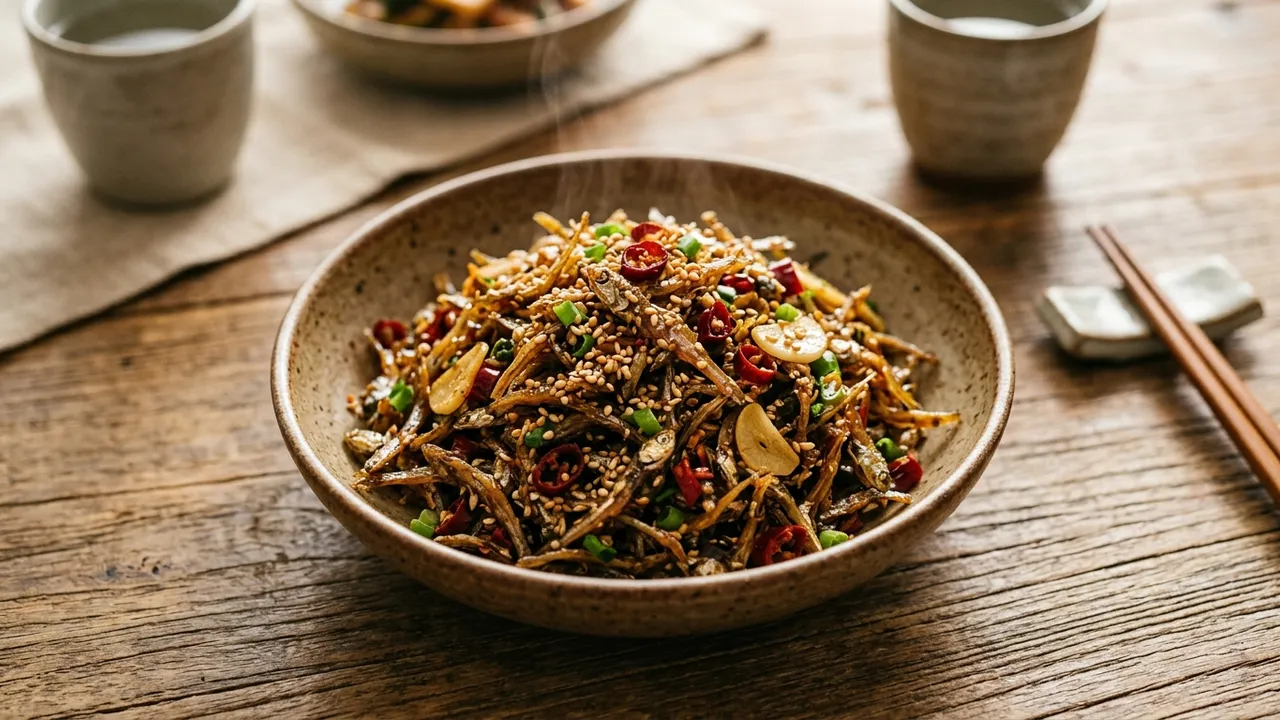
Crispy, Sweet, and Salty Stir-fried Baby Anchovies (Jangmyeo
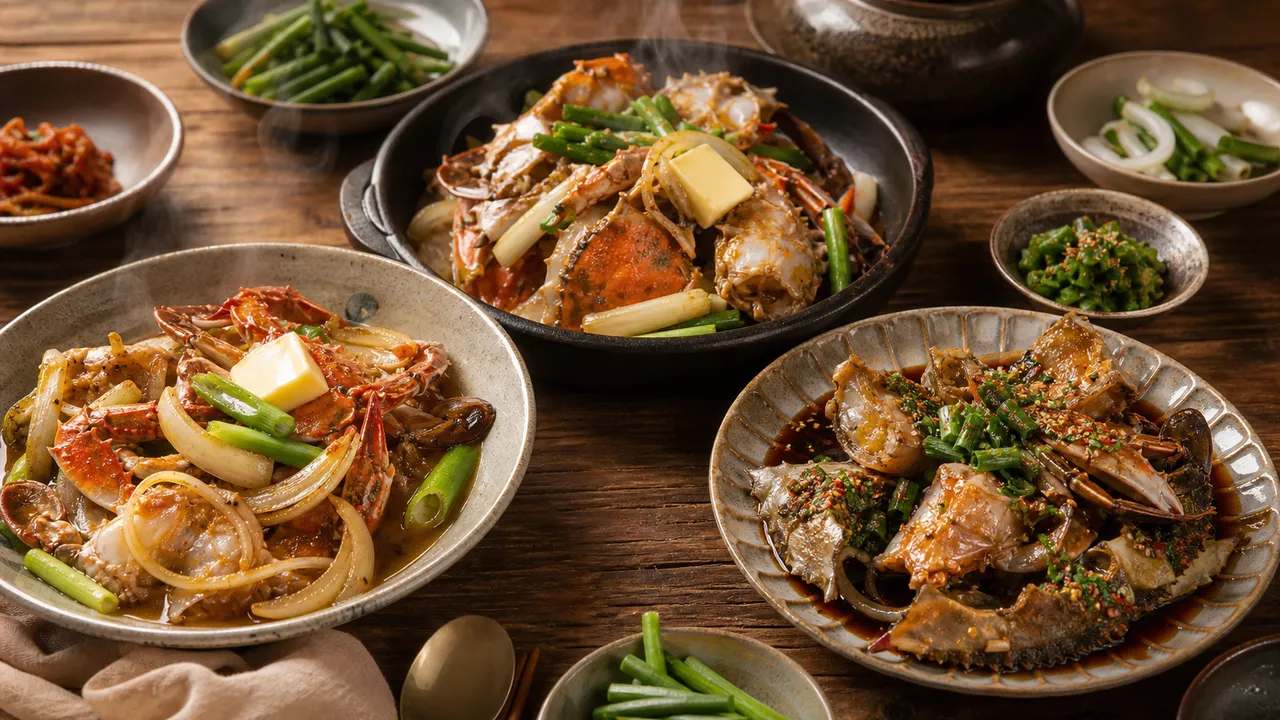
* 이미지는 AI가 생성한 참고 이미지로, 실제 조리 결과물과 다를 수 있습니다.
This recipe for Jangmyeolchi-bokkeum (잔멸치볶음) results in a crispy, sweet, and savory dish with no fishy smell, perfect as a side dish for rice or even a snack.
📝 Editor's Notes
This Jangmyeolchi-bokkeum (잔멸치볶음) recipe creates a dish that is crispy, sweet, and savory with absolutely no fishy taste.
It's excellent as a side dish for rice, a nutritious snack for children, or a simple accompaniment to drinks for adults.
The harmonious flavors of garlic and chili add richness, and its crispy texture whets the appetite.
The cooking process is not complicated, making it a moderately easy side dish for beginner cooks.
It's a versatile dish that the whole family can enjoy year-round.
🛒 Ingredient Tips
The key ingredient that determines the taste of Jangmyeolchi-bokkeum (잔멸치볶음) is the anchovies themselves.
Choose baby anchovies (semyeolchi) that are clear and bright in color to ensure a less salty and more delicious result.
Avoid anchovies that appear dark or dull.
For garlic, select large, firm cloves and slice them thickly; this will enhance the texture and bring out a richer, savory garlic flavor, making the dish even more special.
Finally, ginger juice is a secret ingredient that cleanly removes any fishy smell from the anchovies and adds a refined aroma to the dish, so using freshly grated ginger for its juice is highly recommended.
🔄 Substitution Guide
If you're missing certain ingredients or want a different flavor, several substitutions are possible.
If using medium anchovies instead of baby anchovies (semyeolchi), remove the heads and entrails, and adjust the amount of soy sauce as medium anchovies can be saltier.
The texture may also be slightly firmer than baby anchovies.
You can use common cooking oils like grapeseed oil or canola oil instead of olive oil, which is a good alternative for those who find olive oil's aroma too strong.
If you don't have corn syrup or oligosaccharide, try jocheong (조청) (Korean malt syrup).
Jocheong provides a subtle sweetness along with a deeper flavor and glossy finish.
However, if using honey, its distinct aroma might be too strong, so it's recommended to use a small amount or substitute with another ingredient.
Lastly, if you don't have ginger juice, you can use a very small amount of ginger powder or slightly increase the amount of Mirin (미림) to help remove the fishy smell from the anchovies.
🥘 Ingredients
👨🍳 Cooking Points
There are three key points for successfully making this Jangmyeolchi-bokkeum (잔멸치볶음).
First, it's crucial to perfectly eliminate the anchovies' fishy smell.
Spread the anchovies evenly on a wide plate and microwave for 2 minutes.
After removing, flip them once and shake off any moisture.
This process also helps achieve that crispy texture.
Second, adequately infuse the oil with garlic flavor.
Sauté the sliced garlic over medium heat until slightly golden brown, extracting a rich, savory aroma.
Third, the timing of adding the sauce and controlling the heat are essential.
After stir-frying the anchovies, turn off the heat, add the sauce ingredients first, and dissolve the sugar.
Then, turn the heat back on, and once the sauce boils vigorously, mix it with the anchovies.
Especially with corn syrup or oligosaccharide, add them last over low heat and stir-fry just enough for the ingredients to combine, then immediately turn off the heat.
This prevents the anchovies from becoming hard and helps them maintain a tender crispiness.
👨🍳 Directions
Spread 100g of baby anchovies evenly on a wide plate. Microwave for 2 minutes to remove any fishy smell and impurities.
Flip the microwaved anchovies once to shake off and evaporate any moisture.
Slice 10 garlic cloves thickly in a round direction to prepare garlic slices. (If the garlic cloves are large, use only 5.)
Heat the largest pan over high heat, add 3 tbsp olive oil, then add the sliced garlic. Reduce heat to medium and infuse the oil with garlic flavor.
Once the garlic begins to gently sizzle, add the finely chopped red chili and stir-fry together. (For a spicier dish, you can add Cheongyang chili (청양고추) along with it.)
After stir-frying the red chili, add the microwaved anchovies. Using two spatulas, stir-fry vigorously over high heat for about 1 minute until the oil is well absorbed and the anchovies are fragrant. (Be careful with heat control if using an induction cooktop.)
Add ½ tbsp ginger juice and continue to stir-fry over heat until all moisture in the pan has evaporated, then turn off the heat.
Push the stir-fried anchovies to one side of the pan. With the heat off, add 2 tbsp Mirin (미림), 1.5 tbsp white sugar, and 1 tsp soy sauce.
Turn the heat back on and stir only the sauce mixture until it bubbles vigorously and the sugar dissolves completely.
Once the sauce is vigorously boiling, mix the anchovies thoroughly with the sauce. When the sauce coats the anchovies well, reduce the heat to low.
Over low heat, add 1 tbsp corn syrup or oligosaccharide, ½ tbsp sesame oil, and 1 tbsp toasted sesame seeds. Stir-fry briefly once, then immediately turn off the heat.
Mix well with the residual heat to ensure the sauce is fully absorbed. It's done!
💡 Tips
For a less salty and more delicious result, choose anchovies that are clear and bright in color rather than dark or dull.
Instead of minced garlic, slicing whole garlic cloves thickly in a round direction makes the dish visually appealing and adds a good chewy texture.
The easiest way to remove the fishy smell and impurities from anchovies is to spread them out on a wide plate and microwave for 2 minutes. (Flip them once and shake them to remove moisture.)
Ginger juice is a secret ingredient that eliminates the fishy smell of anchovies and adds a refined flavor.
If you boil corn syrup or oligosaccharide for too long, the anchovies can become hard. Stir-fry only until the ingredients are well combined over low heat, then immediately turn off the heat.
📦 Storage & Reuse
Once prepared, Jangmyeolchi-bokkeum can be stored in an airtight container in the refrigerator for about a week.
While it's delicious served cold from the fridge, if you prefer it warm, take out only the desired amount and microwave it for 20-30 seconds, or gently reheat it over low heat in a dry pan.
Be careful not to overheat it, as it can become hard.
Leftover Jangmyeolchi-bokkeum is also delicious wrapped in warm rice and seaweed, used as a filling for rice balls, or as a topping for bibimbap (비빔밥).
🥢 Who This Is For
This Jangmyeolchi-bokkeum (잔멸치볶음) is a flavor enjoyed by people of all ages and makes an excellent side dish, especially for supporting calcium intake in growing children.
Served over warm rice, it's so satisfying that you might not need any other side dishes.
It's also great for lunchboxes, or as a simple filling for rice balls or gimbap (김밥).
Thanks to its crispy, sweet, and savory taste, it's perfect as a snack when you're hungry, or as a light accompaniment to a cold beer.
🔥 Nutrition Info
This Jangmyeolchi-bokkeum (잔멸치볶음) is also an excellent side dish nutritionally.
The main ingredient, 100g of baby anchovies (semyeolchi), is rich in calcium, essential for bone health in growing children and helpful in preventing osteoporosis in seniors.
It also contains high-quality protein and unsaturated fatty acids.
Olive oil provides healthy fatty acids, while allicin from garlic and capsaicin from chili contribute to immune system enhancement and antioxidant activity.
Considering the entire recipe yields 4-5 servings, one serving is estimated to provide approximately 150-200 calories, with about 8-10g of protein, 8-10g of fat, and 15-20g of carbohydrates.
It's a healthy side dish that allows for a balanced intake of various nutrients, including vitamins and minerals.
💬 Frequently Asked Questions
- Q. What ingredients do I need for Crispy, Sweet, and Salty Stir-fried Baby Anchovies (Jangmyeolchi-bokkeum)?
- Main ingredients include Baby anchovies (semyeolchi), Olive oil, Garlic cloves, Red chili (finely chopped), Cheongyang chili (청양고추) (finely chopped, optional). The key ingredient that determines the taste of Jangmyeolchi-bokkeum (잔멸치볶음) is the anchovies themselves. Choose baby anchovies (semyeolchi) that are clear and bright in color to ensure a less salty and more delicious result. Avoid anchovies that appear dark or dull. For garlic, select large, firm cloves and slice them thickly; this will enhance the texture and bring out a richer, savory garlic flavor, making the dish even more special. Finally, ginger juice is a secret ingredient that cleanly removes any fishy smell from the anchovies and adds a refined aroma to the dish, so using freshly grated ginger for its juice is highly recommended.
- Q. What are the key tips for making Crispy, Sweet, and Salty Stir-fried Baby Anchovies (Jangmyeolchi-bokkeum)?
- There are three key points for successfully making this Jangmyeolchi-bokkeum (잔멸치볶음). First, it's crucial to perfectly eliminate the anchovies' fishy smell. Spread the anchovies evenly on a wide plate and microwave for 2 minutes. After removing, flip them once and shake off any moisture. This process also helps achieve that crispy texture. Second, adequately infuse the oil with garlic flavor. Sauté the sliced garlic over medium heat until slightly golden brown, extracting a rich, savory aroma. Third, the timing of adding the sauce and controlling the heat are essential. After stir-frying the anchovies, turn off the heat, add the sauce ingredients first, and dissolve the sugar. Then, turn the heat back on, and once the sauce boils vigorously, mix it with the anchovies. Especially with corn syrup or oligosaccharide, add them last over low heat and stir-fry just enough for the ingredients to combine, then immediately turn off the heat. This prevents the anchovies from becoming hard and helps them maintain a tender crispiness.
- Q. How should I store leftover Crispy, Sweet, and Salty Stir-fried Baby Anchovies (Jangmyeolchi-bokkeum)?
- Once prepared, Jangmyeolchi-bokkeum can be stored in an airtight container in the refrigerator for about a week. While it's delicious served cold from the fridge, if you prefer it warm, take out only the desired amount and microwave it for 20-30 seconds, or gently reheat it over low heat in a dry pan. Be careful not to overheat it, as it can become hard. Leftover Jangmyeolchi-bokkeum is also delicious wrapped in warm rice and seaweed, used as a filling for rice balls, or as a topping for bibimbap (비빔밥).
- Q. How many calories are in Crispy, Sweet, and Salty Stir-fried Baby Anchovies (Jangmyeolchi-bokkeum)?
- This Jangmyeolchi-bokkeum (잔멸치볶음) is also an excellent side dish nutritionally. The main ingredient, 100g of baby anchovies (semyeolchi), is rich in calcium, essential for bone health in growing children and helpful in preventing osteoporosis in seniors. It also contains high-quality protein and unsaturated fatty acids. Olive oil provides healthy fatty acids, while allicin from garlic and capsaicin from chili contribute to immune system enhancement and antioxidant activity. Considering the entire recipe yields 4-5 servings, one serving is estimated to provide approximately 150-200 calories, with about 8-10g of protein, 8-10g of fat, and 15-20g of carbohydrates. It's a healthy side dish that allows for a balanced intake of various nutrients, including vitamins and minerals.
- Q. Can I substitute ingredients in Crispy, Sweet, and Salty Stir-fried Baby Anchovies (Jangmyeolchi-bokkeum)?
- If you're missing certain ingredients or want a different flavor, several substitutions are possible. If using medium anchovies instead of baby anchovies (semyeolchi), remove the heads and entrails, and adjust the amount of soy sauce as medium anchovies can be saltier. The texture may also be slightly firmer than baby anchovies. You can use common cooking oils like grapeseed oil or canola oil instead of olive oil, which is a good alternative for those who find olive oil's aroma too strong. If you don't have corn syrup or oligosaccharide, try jocheong (조청) (Korean malt syrup). Jocheong provides a subtle sweetness along with a deeper flavor and glossy finish. However, if using honey, its distinct aroma might be too strong, so it's recommended to use a small amount or substitute with another ingredient. Lastly, if you don't have ginger juice, you can use a very small amount of ginger powder or slightly increase the amount of Mirin (미림) to help remove the fishy smell from the anchovies.
💬 Comments
No comments yet. Be the first to comment!