
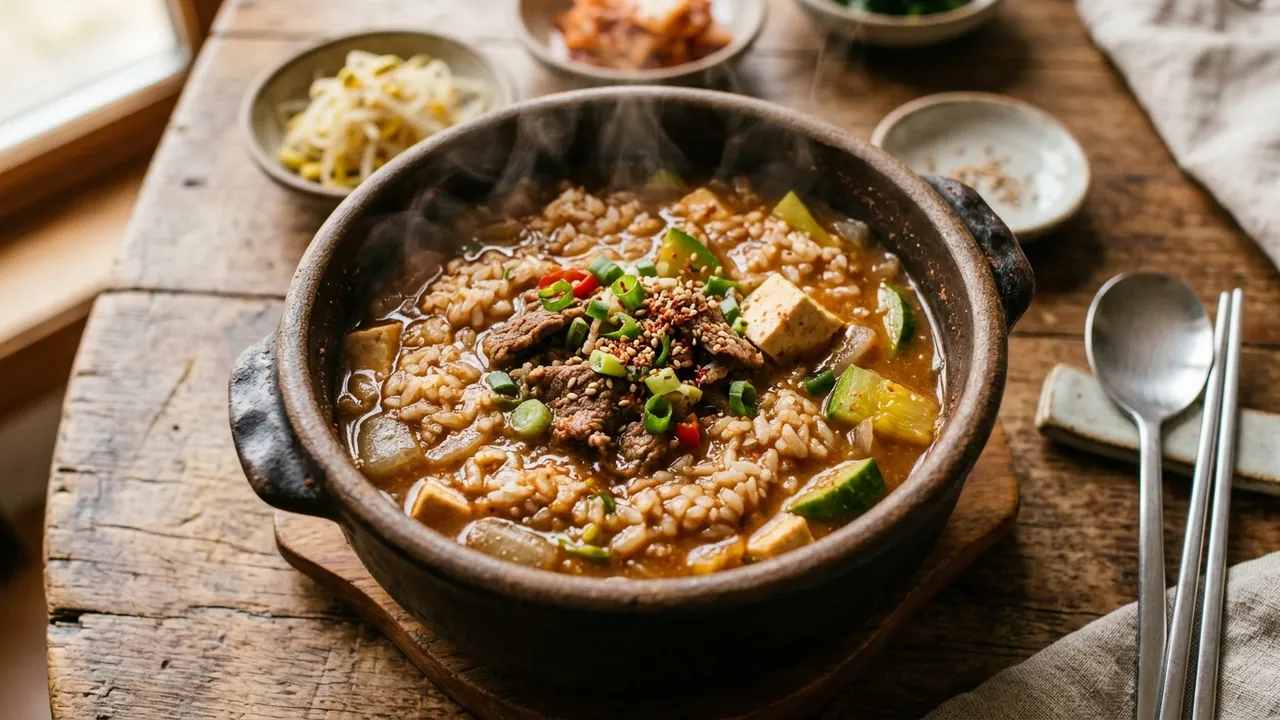
Chadol Doenjang Soolbap (Beef Brisket Soybean Paste Stew wit
* 이미지는 AI가 생성한 참고 이미지로, 실제 조리 결과물과 다를 수 있습니다.
Perfect for the current weather when you crave a warm stew, 'Chadol Doenjang Soolbap' is excellent whether enjoyed with rice or paired with alcohol.
📝 Editor's Notes
On days when you crave a warm stew, this Chadol Doenjang Soolbap (Beef Brisket Soybean Paste Stew with Rice) is a versatile dish, perfect as a hearty meal or an accompaniment to drinks.
The savory fat rendered from the beef brisket point (chadolbagi) combined with the rich doenjang (된장) creates a deep and robust broth.
The addition of gochujang (고추장) and gochugaru (고춧가루) gives it a wonderfully spicy and clean finish.
The cooking process is straightforward, making it accessible even for beginner cooks.
It's a special doenjang-jjigae (된장찌개) that the whole family can enjoy, especially comforting on cold days or when feeling tired.
🛒 Ingredient Tips
The core of this recipe lies in the beef brisket point (chadolbagi) and doenjang (된장).
Choose fresh chadolbagi with good marbling; it will render plenty of flavorful fat when stir-fried, enriching the broth.
Moderately thick slices are better than overly thin or poorly thawed ones.
For doenjang, we recommend using traditional supermarket-bought varieties for a deep, savory flavor that balances the overall taste.
All vegetables, including tofu, Korean zucchini (aehobak), and onion, should be diced into bite-sized pieces to ensure proper blending of flavors and textures with the broth.
Especially for tofu, cut it into cubes that can easily be picked up with a spoon.
🔄 Substitution Guide
If beef brisket point (chadolbagi) is unavailable or too expensive, you can substitute it with thinly sliced beef flank (woosamgyeop) or thinly sliced pork belly (daepae samgyeopsal), though the savory richness might be slightly reduced.
Woosamgyeop offers a similar flavor profile to chadolbagi but with a slightly different texture, while daepae samgyeopsal will introduce a stronger pork-specific flavor and aroma, altering the overall taste.
For a richer, more fermented flavor, you can use cheonggukjang (청국장) instead of doenjang (된장), but its distinct aroma might not appeal to everyone.
If oyster sauce and tuna fish sauce (참치액젓) are unavailable, you can substitute them with 1 tbsp of guk-ganjang (국간장, Korean soup soy sauce) and 1 tbsp of myeolchi aekjeot (멸치액젓, anchovy fish sauce) for umami.
In this case, a deep seafood flavor will be added, but it's important to adjust the seasoning to balance the overall taste.
🥘 Ingredients
👨🍳 Cooking Points
Three key cooking points define the taste of this Chadol Doenjang Soolbap.
First, stir-fry the beef brisket point (chadolbagi) without oil to render out its savory fat sufficiently.
Be careful not to cook it too quickly over high heat, as it can become tough; start with medium heat and cook until lightly browned.
Second, stir-fry the doenjang (된장), gochujang (고추장), and minced garlic with the brisket.
This process allows the seasonings to deeply infuse into the meat, creating a richer umami flavor.
Third, briefly stir-fry the gochugaru (고춧가루) over low heat to prevent burning, as this enhances the color and aroma of the broth, making it more appetizing.
Finally, for the best texture of the vegetables and tofu, simmer the stew until the broth is slightly reduced (jajak-hage); after it boils, continue simmering over medium heat for about 5-7 minutes.
👨🍳 Directions
Dice the tofu, Korean zucchini (aehobak), and onion into bite-sized pieces. Ensure the tofu is cut into cubes that fit easily on a spoon, and slice the zucchini and onion to a similar size as the tofu. Slice the green onion (daepa) as well, completing the vegetable preparation.
In a pot, add 200g of beef brisket point (chadolbagi) and stir-fry it as if grilling, without adding oil. (Continue stir-frying the brisket while you prepare the vegetables.)
Once the beef brisket point is slightly cooked, add 1 tbsp of minced garlic, 2 tbsp of doenjang (된장), and 1 tbsp of gochujang (고추장), and stir-fry them together. (Use traditional doenjang sold in supermarkets.)
When enough oil has rendered from the beef brisket point, add 2 tbsp of gochugaru (고춧가루) and stir-fry briefly over low heat, making sure it doesn't burn.
Pour in 2 cups (500ml) of water, add 1 tbsp of oyster sauce and 1 tbsp of tuna fish sauce (참치액젓) to season. Then, add all the pre-cut vegetables, including onion, Korean zucchini, and green onion, and bring to a boil.
Once the doenjang-jjigae (된장찌개) starts boiling, add the diced tofu and simmer until the broth reduces slightly and thickens. (As it boils, moisture rises, and the consistency will be adjusted.)
Serve by placing rice in a dolsot (돌솥) or earthenware pot, generously pouring in the finished Chadol Doenjang-jjigae, and simmering it while eating. Alternatively, serve the stew separately over rice and mix it in.
💡 Tips
For a spicier kick, slice and add Cheongyang chili peppers (청양고추) instead of gochugaru (고춧가루).
It's best to dice vegetables like tofu, Korean zucchini (aehobak), and onion into bite-sized pieces so they fit easily in one mouthful. Slicing them too broadly will prevent the flavors from blending properly.
For the rich, savory flavor of the meat, it's recommended to use beef brisket point (chadolbagi) or thinly sliced beef flank (woosamgyeop) rather than thinly sliced pork belly (daepae samgyeopsal).
Simmer the stew until the broth is slightly reduced (jajak-hage) to better enjoy the chewiness of the tofu and vegetables.
Chadol Doenjang Soolbap is most delicious when served hot, simmering with rice in a dolsot (돌솥) or earthenware pot.
🥢 Who This Is For
This Chadol Doenjang Soolbap is an excellent choice when you're craving a warm stew on a chilly day, or when you need a hearty accompaniment for a casual drink.
It's also a fantastic family meal.
When served simmering with rice in a dolsot (돌솥), it rivals any special restaurant dish.
If you enjoy spicy food, try adding Cheongyang chili peppers (청양고추).
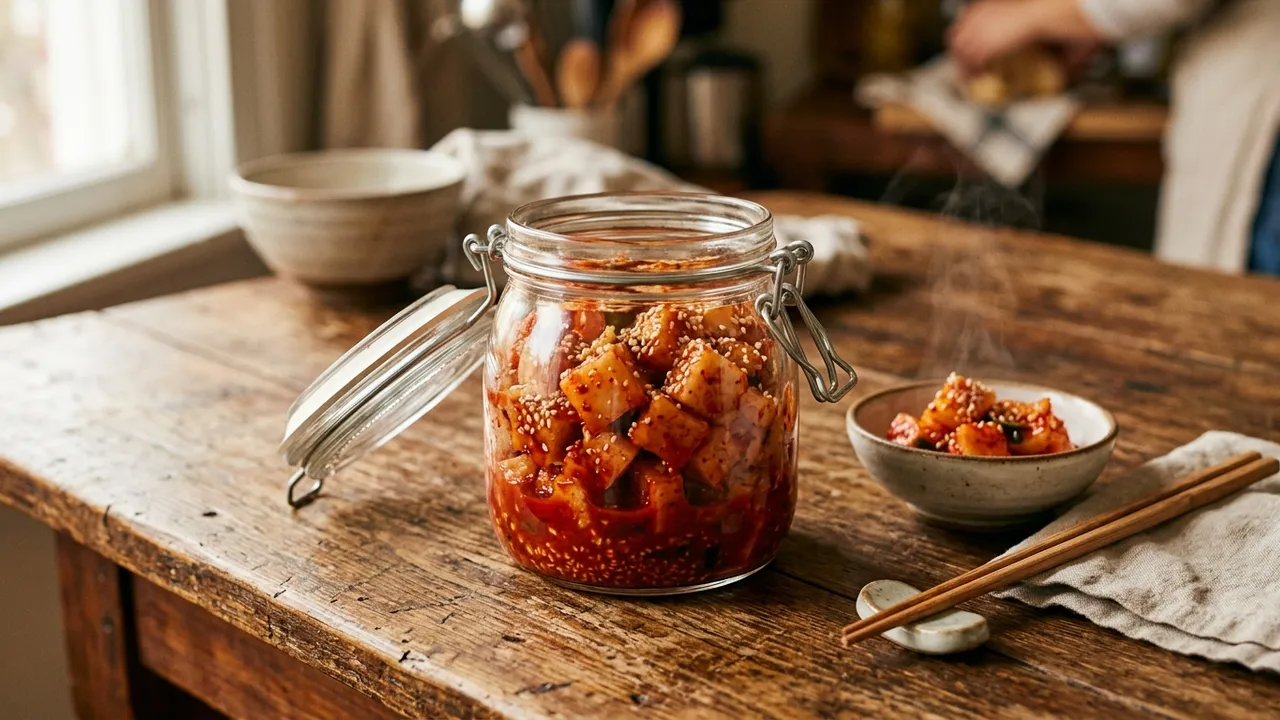
For side dishes, Korean accompaniments like refreshing kkakdugi (깍두기, diced radish kimchi) or crunchy oi-muchim (오이무침, spicy cucumber salad) pair wonderfully.
For a simpler meal, a single serving of kimchi is more than enough to enjoy it deliciously.
🔥 Nutrition Info
One serving of this Chadol Doenjang Soolbap (excluding rice) is estimated to be around 400-550 kcal.
With 200g of beef brisket point (chadolbagi) for a two-serving recipe, each serving contains approximately 100g of chadolbagi, making it high in fat and protein.
Protein content is estimated at about 30-40g, and fat at about 30-45g.
Carbohydrates from vegetables, doenjang (된장), and gochujang (고추장) are around 15-20g.
Chadolbagi is rich in iron and B vitamins, while tofu provides plant-based protein and calcium, and vegetables like Korean zucchini (aehobak) and onion supply dietary fiber and vitamins.
However, due to the use of doenjang, gochujang, oyster sauce, and tuna fish sauce (참치액젓), the sodium content can be high.
It is advisable to consume in moderation for health.
💬 Frequently Asked Questions
- Q. What ingredients do I need for Chadol Doenjang Soolbap (Beef Brisket Soybean Paste Stew with Rice)?
- Main ingredients include Beef Brisket Point (chadolbagi), Tofu, Korean Zucchini (aehobak), Onion, Green Onion (daepa). The core of this recipe lies in the beef brisket point (chadolbagi) and doenjang (된장). Choose fresh chadolbagi with good marbling; it will render plenty of flavorful fat when stir-fried, enriching the broth. Moderately thick slices are better than overly thin or poorly thawed ones. For doenjang, we recommend using traditional supermarket-bought varieties for a deep, savory flavor that balances the overall taste. All vegetables, including tofu, Korean zucchini (aehobak), and onion, should be diced into bite-sized pieces to ensure proper blending of flavors and textures with the broth. Especially for tofu, cut it into cubes that can easily be picked up with a spoon.
- Q. What are the key tips for making Chadol Doenjang Soolbap (Beef Brisket Soybean Paste Stew with Rice)?
- Three key cooking points define the taste of this Chadol Doenjang Soolbap. First, stir-fry the beef brisket point (chadolbagi) without oil to render out its savory fat sufficiently. Be careful not to cook it too quickly over high heat, as it can become tough; start with medium heat and cook until lightly browned. Second, stir-fry the doenjang (된장), gochujang (고추장), and minced garlic with the brisket. This process allows the seasonings to deeply infuse into the meat, creating a richer umami flavor. Third, briefly stir-fry the gochugaru (고춧가루) over low heat to prevent burning, as this enhances the color and aroma of the broth, making it more appetizing. Finally, for the best texture of the vegetables and tofu, simmer the stew until the broth is slightly reduced (jajak-hage); after it boils, continue simmering over medium heat for about 5-7 minutes.
- Q. How many calories are in Chadol Doenjang Soolbap (Beef Brisket Soybean Paste Stew with Rice)?
- One serving of this Chadol Doenjang Soolbap (excluding rice) is estimated to be around 400-550 kcal. With 200g of beef brisket point (chadolbagi) for a two-serving recipe, each serving contains approximately 100g of chadolbagi, making it high in fat and protein. Protein content is estimated at about 30-40g, and fat at about 30-45g. Carbohydrates from vegetables, doenjang (된장), and gochujang (고추장) are around 15-20g. Chadolbagi is rich in iron and B vitamins, while tofu provides plant-based protein and calcium, and vegetables like Korean zucchini (aehobak) and onion supply dietary fiber and vitamins. However, due to the use of doenjang, gochujang, oyster sauce, and tuna fish sauce (참치액젓), the sodium content can be high. It is advisable to consume in moderation for health.
- Q. Can I substitute ingredients in Chadol Doenjang Soolbap (Beef Brisket Soybean Paste Stew with Rice)?
- If beef brisket point (chadolbagi) is unavailable or too expensive, you can substitute it with thinly sliced beef flank (woosamgyeop) or thinly sliced pork belly (daepae samgyeopsal), though the savory richness might be slightly reduced. Woosamgyeop offers a similar flavor profile to chadolbagi but with a slightly different texture, while daepae samgyeopsal will introduce a stronger pork-specific flavor and aroma, altering the overall taste. For a richer, more fermented flavor, you can use cheonggukjang (청국장) instead of doenjang (된장), but its distinct aroma might not appeal to everyone. If oyster sauce and tuna fish sauce (참치액젓) are unavailable, you can substitute them with 1 tbsp of guk-ganjang (국간장, Korean soup soy sauce) and 1 tbsp of myeolchi aekjeot (멸치액젓, anchovy fish sauce) for umami. In this case, a deep seafood flavor will be added, but it's important to adjust the seasoning to balance the overall taste.
💬 Comments
No comments yet. Be the first to comment!